 Birch Bay Siding
 Living on the Point: What the Climate Actually Does to a House
Point Roberts sits out on its own piece of land, surrounded on three sides by Boundary Bay and the Strait of Georgia. That exposure means homes here catch wind and salt-laden air more directly than houses set back in town or tucked behind tree lines elsewhere in Whatcom County. Salt air is corrosive to fasteners, trim, and paint film over time, and it works its way into every seam and joint on a home's exterior. Combine that with driving rain that comes in sideways during winter storms, and you get moisture pushed into places builders don't always plan for — under window flashing, behind poorly lapped siding, into end-cuts that were never sealed.
Then there's moss. The long, wet stretch of fall through spring in this part of Washington gives moss and algae months to establish themselves on north-facing walls, shaded siding, and anything that stays damp longer than it should. Moss holds moisture against a surface, and moisture held against wood-based siding or trim is exactly how rot gets started. None of this is unique to Point Roberts, but the combination — constant wind exposure, salt, and a long moss season — hits harder here than in more sheltered parts of the county.
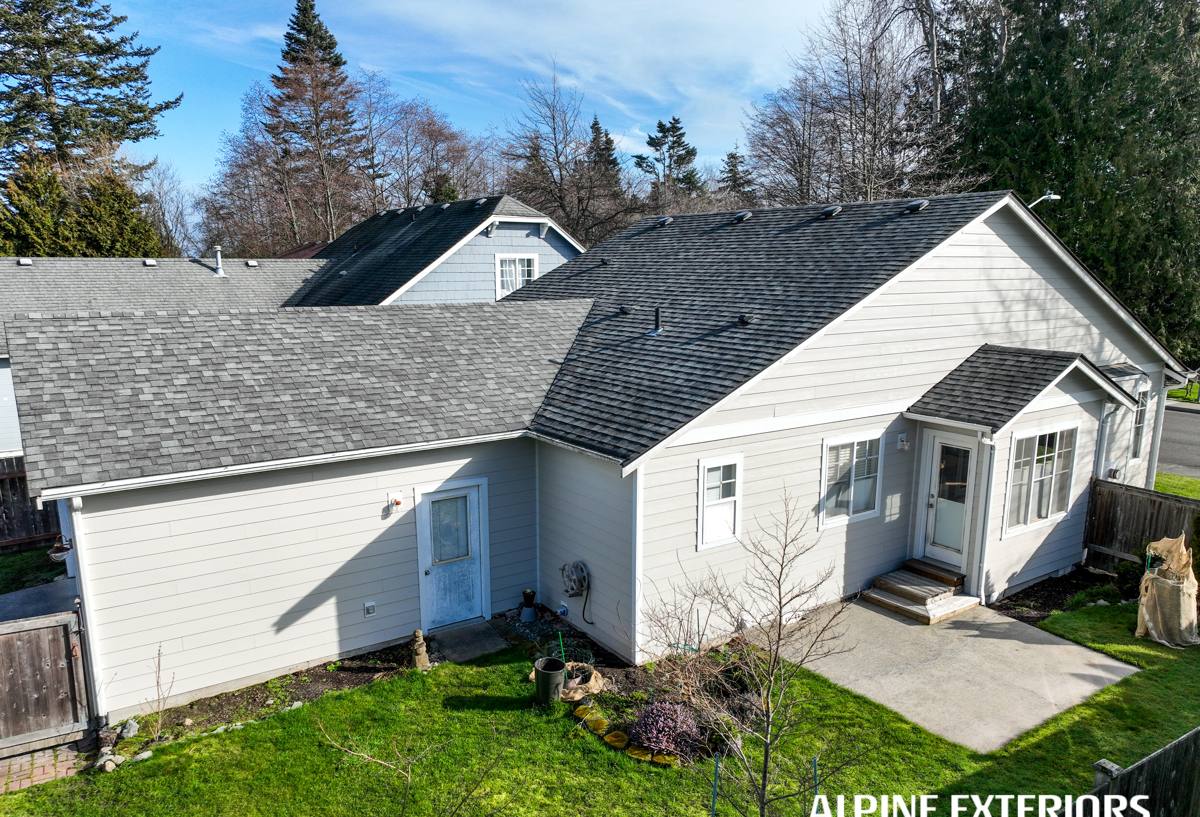
Why We Only Install James Hardie Fiber Cement
We made a decision a long time ago to install one siding product: James Hardie fiber cement. We don't install vinyl, LP SmartSide, Cemplank, Allura, primed spruce, or cedar. That's not a marketing angle — it's a standard we hold because of what we've seen these products do, and not do, on homes exposed to exactly the conditions Point Roberts sees.
What Fiber Cement Handles That Others Struggle With
Fiber cement is non-combustible, dimensionally stable, and doesn't feed moisture the way wood-based products can. James Hardie's ColorPlus factory-applied finish is baked on under controlled conditions, which gives it more consistent adhesion and color retention over years of UV and salt exposure than field-applied paint typically achieves. Hardie also engineers regional product lines — its HZ5 and HZ10 formulations are built with different moisture and temperature performance targets depending on climate zone, which matters in a place that swings between damp winters and drier summer stretches.
Where We Draw the Line on Other Products
Vinyl siding is affordable and low-maintenance in mild conditions, but it can become brittle and crack in cold snaps, and wind-driven rain can get behind loose panels more easily than most homeowners realize. LP SmartSide and other engineered wood products perform reasonably well when installation and caulking are perfect and stay perfect — but on a peninsula with this much wind and salt, any lapse in maintenance shows up faster as edge swelling. Primed spruce and cedar are beautiful, traditional choices, but they require an ongoing painting and sealing commitment that most homeowners underestimate, especially with moss season working against bare or thinly coated wood for months at a time. We'd rather install one product correctly than offer five and hope maintenance keeps up.
Beyond Siding: Roofing, Windows, and Decks Take the Same Beating
Siding isn't the only exterior surface fighting this climate, and treating a home as one connected system rather than a collection of separate trades matters more here than in milder areas.
Roofing
Wind uplift and driving rain put real stress on roof edges, flashing, and any transition point where two roof planes or a roof and wall meet. Moss on a roof does the same damage it does on siding — it holds water against the surface and works into granule loss and shingle lift over time.
Windows
Older windows on wind-exposed walls often show their age first at the flashing and sealant, not the glass. Wind-driven rain finds any gap in window integration, and once water gets behind a window frame it can travel a surprising distance before it shows up as a stain or soft spot inside.
Decks
Outdoor living spaces here take a direct hit from both salt air and standing moisture. Fasteners corrode faster, ledger board connections need careful flashing, and board spacing that doesn't allow for drainage and airflow turns into a moss and rot problem within a few seasons.
The Exclave Factor: Why a Local, Border-Savvy Crew Matters
Point Roberts has a geographic quirk that shapes how exterior work gets done: it's separated from the rest of Whatcom County by water and the international border, so getting a crew, equipment, and materials onto the peninsula by land means crossing through Canada. A contractor who hasn't planned for that reality can turn a straightforward project into a scheduling headache — delayed material deliveries, crews caught off guard by border wait times, or work stretched out because logistics weren't accounted for up front.
A crew that treats Point Roberts as a normal part of its service area, rather than an inconvenient outlier, plans deliveries and scheduling around that reality instead of discovering it mid-project. That's a big part of why we say local crew matters here — it's not just about knowing the climate, it's about knowing how to actually get the job done on this particular piece of geography without surprises.
Signs Your Point Roberts Home Needs Exterior Attention
Because wind, salt, and moisture work on this home's exterior harder and faster than in sheltered areas, it's worth checking a few things at least once a year, especially after the wetter months.
- Moss or dark streaking building up on north- or west-facing siding and roof sections
- Paint or finish that's chalking, fading unevenly, or peeling near seams and trim
- Soft spots, bubbling, or visible swelling at siding butt joints and window trim
- Rust staining around fasteners, flashing, or hardware
- Gaps or separation where siding meets window and door trim
- Deck boards that stay damp longer than the rest of the yard after rain
- Any musty smell or discoloration on interior walls near exterior corners
What a Siding Replacement Project Looks Like
A full siding replacement isn't just removing old material and nailing up new panels. On a wind- and salt-exposed home, the details underneath the siding matter as much as the siding itself.
Assessment and Prep
We look at the existing wall assembly, check for hidden moisture damage, and confirm the sheathing underneath is sound before anything new goes up. Skipping this step is how homeowners end up with new siding over a problem that was never actually fixed.
Water Management First
Proper house wrap, flashing at every window, door, and penetration, and correctly lapped seams are what actually keep wind-driven rain out — the siding itself is the last line of defense, not the only one.
Installation to Manufacturer Spec
James Hardie's warranty coverage depends on installation following the manufacturer's specifications for fastening, clearances, and joint treatment. We install to that standard, not around it, because a warranty is only as good as the installation behind it.
Cost Factors for Exterior Work in a Coastal-Exposed Setting
Every home is different, but a few factors consistently move the price on Point Roberts projects more than they would on a sheltered inland home.
| Factor | Why It Affects Cost Here |
|---|---|
| Wall exposure and wind loading | More exposed walls often need additional flashing and fastening attention |
| Existing moisture damage | Hidden rot from long-term wind-driven rain intrusion adds repair scope before new material goes on |
| Trim and detail complexity | Homes with more window and roofline transitions need more flashing and cut work |
| Access and logistics | Material delivery and crew scheduling factor in the peninsula's border-crossing access |
| Product line selection | Hardie's regional HZ formulations and trim profiles vary in price |
| Scope of work | Siding-only versus a combined siding, window, and roofing project changes total investment and sequencing |
Maintenance That Actually Matters in This Climate
James Hardie siding is low-maintenance compared to wood-based alternatives, but "low-maintenance" doesn't mean "no maintenance," especially with a long moss season working against any exterior surface.
- Rinse siding and trim periodically to clear salt residue and organic buildup before it sets in
- Keep gutters clear so overflow doesn't run down and pool against siding or trim
- Trim back vegetation that shades walls and traps moisture against the surface
- Check caulking at window and door trim yearly and re-seal where it's cracked or gapped
- Address any moss growth on siding, roofing, or decking promptly rather than letting it establish
- Inspect fasteners and hardware for rust or corrosion, particularly on decks and railings
If you're seeing any of these signs on a Point Roberts home, or you're just due for an honest look at how your siding, roof, windows, or deck are holding up against this stretch of coastline, we're happy to come take a look. The estimate is free, there's no pressure, and you'll get a straight answer about what's actually going on and what it would take to fix it.