 Birch Bay Siding
 Exterior Contracting for Sumas Homes
Sumas sits at the far edge of Whatcom County, and homes out here deal with a climate that's demanding in ways that aren't always obvious until siding starts to fail. Long stretches of damp weather, shaded lots backed up against trees and fields, and the kind of temperature swings that come with being tucked against the foothills all add up over the years. We work throughout Whatcom County, and Sumas is part of that service area — not an afterthought or a drive-by job.
Birch Bay Siding Company handles siding, roofing, windows, and decks. For a lot of homeowners, siding is the entry point because it's the most visible sign that something's wrong — but the same moisture and weather exposure that wears down siding is usually working on the roof, trim, and window flashing at the same time. We look at the whole exterior envelope, not just the piece that's currently bothering you.
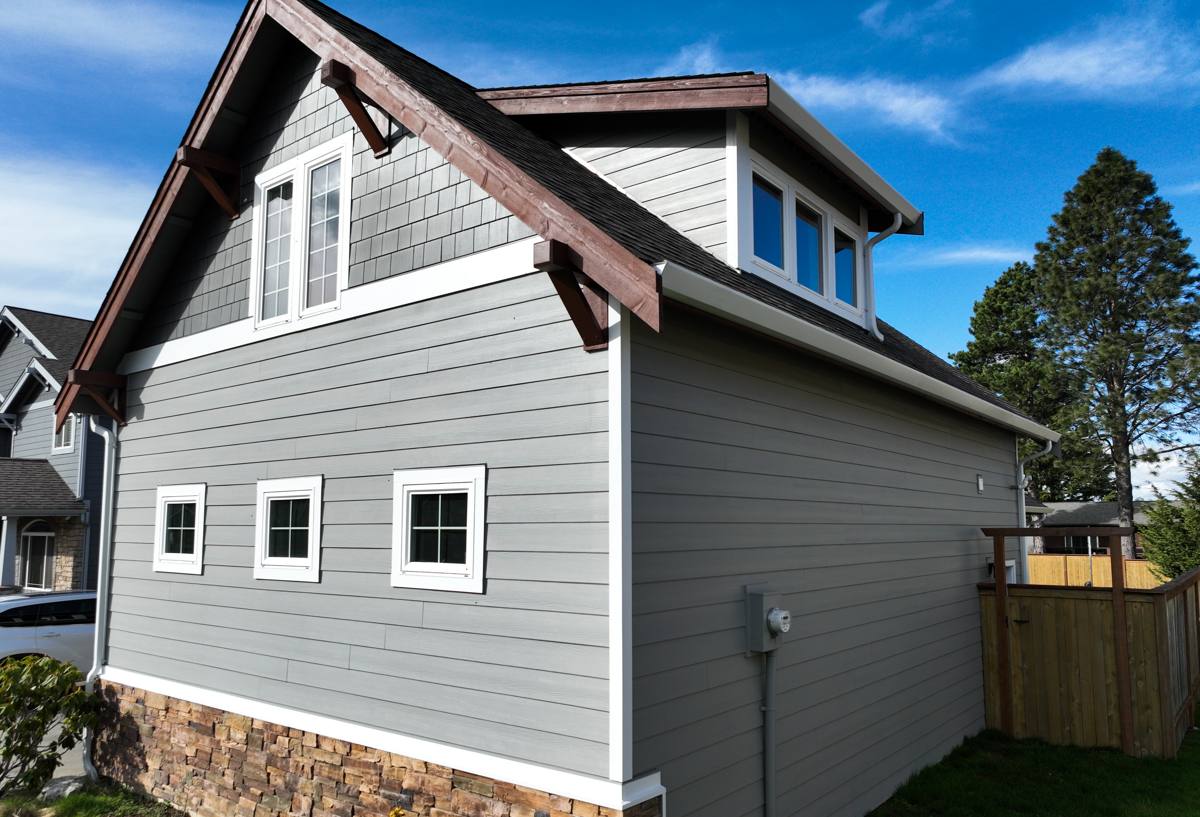
What the Climate Does to Siding Out Here
Western Washington's marine-influenced weather doesn't stop at the coastline. Moist Pacific air moves inland across Whatcom County, and by the time it reaches communities like Sumas it's still carrying enough humidity to keep exterior surfaces damp for days at a stretch, especially on north-facing walls and anywhere shaded by trees or outbuildings. That's the setup moss and algae need to take hold, and once they do, they hold moisture against the siding surface even longer.
Add in driving rain that comes sideways during winter storms, and you've got water finding its way into every seam, nail hole, and butt joint that wasn't sealed and installed correctly the first time. Sumas also sees more of a temperature swing than areas right on the water — colder snaps in winter, warmer summer days — and that freeze-thaw cycling is hard on materials that absorb moisture, because water trapped in the material expands when it freezes and slowly breaks down the substrate from the inside.
The Usual Failure Points
- North and shaded walls that stay damp longest and grow moss and algae fastest
- Butt joints and seams where water intrusion starts, especially on older or poorly caulked installations
- Bottom courses near grade, decks, and downspouts where splashback keeps siding wet
- Window and door trim where flashing wasn't detailed correctly during the original install
- Wood or wood-composite siding that's absorbed moisture over multiple wet seasons and started to soften or delaminate
Why We Only Install James Hardie
We made a decision a while back to install James Hardie fiber cement siding exclusively, and we don't install LP SmartSide, vinyl, Cemplank, Allura, primed spruce, or cedar. That's a real limitation on what we offer, and we think homeowners deserve to know why before they hire us.
Wood-based and engineered-wood siding products can perform well when everything goes right — sound installation, consistent maintenance, and a bit of luck with exposure. But in a climate like ours, where damp conditions stick around for months, those products depend on an intact factory coating and diligent upkeep to keep moisture out. Once that coating is compromised at a cut edge, a fastener hole, or a joint that wasn't caulked well, moisture gets into the substrate and the clock starts on rot, swelling, and delamination. Vinyl siding avoids that particular problem but brings its own trade-offs: it expands and contracts with temperature swings, can crack in cold snaps, and doesn't hold up well against impact the way fiber cement does.
James Hardie fiber cement is engineered specifically for this kind of climate. It's a cement-based product, so it doesn't rot, swell, or feed the moss and mildew that thrive on organic materials. The ColorPlus factory finish is baked on rather than field-applied, which means better color retention and fewer touch-ups than site-painted siding. Hardie also builds regional-specific HZ product lines engineered for exactly the moisture and temperature conditions we get in the Pacific Northwest. It's non-combustible, which matters as wildfire smoke seasons have become a bigger part of summer here, and it carries a strong transferable warranty when installed to spec. We stopped installing the alternatives because we got tired of watching them fail early in this climate — Hardie is what we believe holds up.
Siding Options and Trade-Offs
| Product | Moisture Behavior in Our Climate | Maintenance | Longevity |
|---|---|---|---|
| James Hardie fiber cement | Doesn't absorb moisture or rot; resists moss growth better than organic materials | Occasional wash; factory finish resists fading | Decades when installed correctly, backed by a strong transferable warranty |
| Engineered wood (LP SmartSide and similar) | Performs well if coating stays intact; vulnerable at cuts, joints, fasteners | Regular inspection and prompt caulk/paint touch-ups | Shorter lifespan if moisture gets behind the coating |
| Vinyl | Doesn't absorb water but can warp or crack with temperature swings | Low, but damage usually means full panel replacement | Moderate; UV and impact are the weak points |
| Cedar / natural wood | Attractive but highly moisture-sensitive; needs a sound finish at all times | Highest — refinishing on a regular cycle | Shortest without diligent upkeep |
Roofing, Windows, and Decks Face the Same Weather
Siding doesn't fail in isolation. A roof with worn or missing flashing sends water straight down behind the siding at the wall-roof intersection. Windows with degraded seals or old flashing let moisture into the wall cavity right at the trim line, which is one of the more common places we find hidden damage during a siding tear-off. Decks that were never properly ledger-flashed against the house can channel water directly into the rim joist and the siding above it.
Because we handle all four — siding, roofing, windows, and decks — we're not just patching the piece you called about. If we're re-siding a wall and notice flashing that's failed at a window or a roof edge, we'll tell you, because leaving it alone just means the new siding fails at the same spot for the same reason a few years down the road.
What a Full Exterior Assessment Looks Like
- Walk the exterior and check every wall orientation, not just the side that's visibly failing
- Check flashing at windows, doors, and roof-to-wall intersections
- Probe suspect siding for soft spots, especially near grade and at butt joints
- Check deck ledger connections and any siding directly above or behind a deck
- Look at gutter and downspout function, since poor drainage accelerates almost every problem above
What Replacement Involves
A proper re-side starts with tearing off the old material and inspecting the sheathing underneath. In our climate, it's common to find some degree of moisture damage behind failing siding, particularly at corners, window trim, and lower courses — that gets addressed before anything new goes up, not covered over. We install a weather-resistant barrier, flash penetrations and openings correctly, and then install the Hardie product with the fastening pattern and clearances the manufacturer specifies. Skipping steps in that sequence is exactly how siding fails early, regardless of the product on the outside.
Cost Factors Homeowners Should Understand
| Factor | Why It Matters |
|---|---|
| Amount of sheathing repair needed | Hidden moisture damage discovered at tear-off is common in older homes and adds material and labor cost |
| Home size and wall complexity | More corners, dormers, and trim details mean more cutting, flashing, and labor time |
| Siding profile and finish | Lap width, texture, and color selection affect material pricing |
| Access and site conditions | Steep lots, limited access, or extensive landscaping around the foundation can add setup time |
| Scope beyond siding | Bundling trim, flashing repair, or window replacement into the same project can be more efficient than doing it in phases |
We won't quote a number without seeing the house — anyone who does is guessing, and guesses on siding jobs tend to be wrong in the homeowner's favor right up until change orders start.
Why Hire Local
A crew that works Whatcom County regularly knows what this weather does to a house over time, not just what a spec sheet says a product should do. That matters when you're deciding how a wall gets detailed at a window, how much clearance siding needs above a deck or a roofline, and where moss is going to come back no matter how well the initial job was done. It also matters for warranty and service — a contractor with deep roots in the area is going to be around, and reachable, years after the install if you ever need something looked at.
We're not a national franchise cycling crews through the region on a project-by-project basis. We live in this climate too, and the standards we hold to on your house are the same ones we'd want on our own.
Choosing a Contractor for This Kind of Work
- Ask specifically what siding products they install and why — and be wary of anyone who installs everything with no clear standard
- Confirm they're licensed and insured in Washington, and ask to see proof
- Ask how they handle moisture damage discovered during tear-off, and whether that's disclosed before work continues
- Ask about flashing details at windows, doors, and roof intersections specifically — this is where most failures start
- Get a written scope that specifies underlayment, fastening, and clearances, not just "siding replacement"
- Ask about warranty coverage on both materials and labor, and get it in writing
Get an Estimate
If you're dealing with failing siding, moss buildup that won't quit, or you're just planning ahead for a home in Sumas, we're happy to take a look and walk you through what we're seeing and why. There's no pressure and no obligation — just a straight assessment from a crew that knows this climate. Fill out the form below to request a free estimate.