 Birch Bay Siding
 Sandy Point's Exterior Is Working Harder Than Most
Sandy Point sits right up against the water at the northern edge of Birch Bay, in a low-lying, wind-exposed corner of Whatcom County. Homes here don't get the luxury of a sheltered lot or a tree line breaking up the weather. They face open water, steady wind, and a marine climate that pushes moisture into every seam, joint, and fastener hole on the outside of a house. If you've owned a home in Sandy Point for more than a few years, you already know this isn't hypothetical — it shows up as chalky paint, soft trim, streaked siding, and a north wall that never quite dries out between storms.
We're not a national franchise cycling through Whatcom County on a route. We're a local crew that works Birch Bay, Sandy Point, and the surrounding Whatcom County coastline regularly enough to know which walls take the worst of the weather and which details actually hold up out here. That matters more in a place like this than it does twenty miles inland.
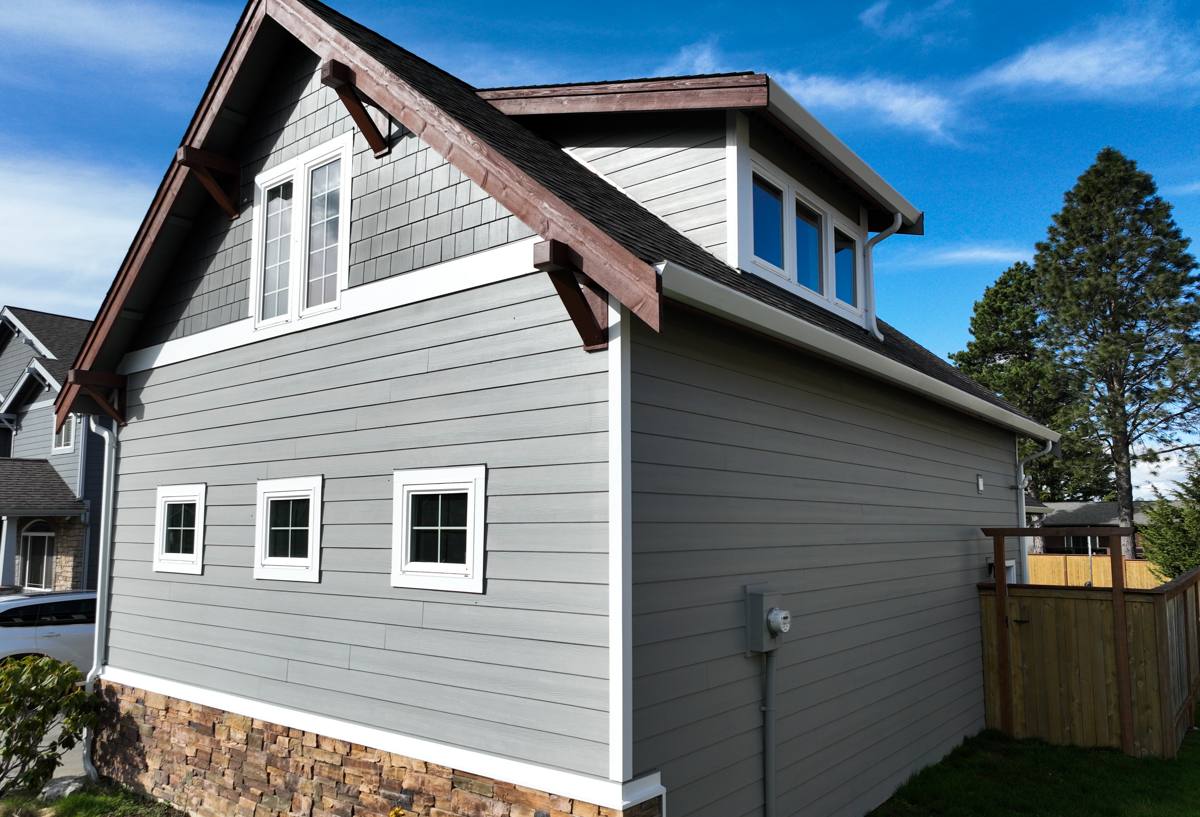
What Salt Air and Wind-Driven Rain Actually Do
Salt Air
Proximity to saltwater means airborne salt settles on every exterior surface — siding, trim, fasteners, window hardware, deck railings. Salt is hygroscopic, meaning it pulls moisture out of the air and holds it against the surface it's sitting on. On the wrong material, that's a slow, steady process of corrosion and finish breakdown that inland homes simply don't deal with at the same rate. Fasteners rust faster. Paint fails faster. Metal flashing and hardware need to be rated for it, not just standard-grade.
Driving Rain and Wind
Open exposure toward the water means wind-driven rain hits Sandy Point homes at an angle, not straight down. That matters for siding because it means water gets forced sideways into laps, seams, and butt joints that would stay dry on a more sheltered lot. Materials and installation details that are marginal elsewhere — a poorly caulked joint, an undersized J-channel, a trim board without proper flashing — fail faster here because the water actually finds them.
The Long Moss Season
Western Whatcom County's mild, wet winters and shoulder seasons give moss and algae months of ideal growing conditions, and low-lying, shaded, or north-facing walls in Sandy Point get hit especially hard. Moss holds moisture against a wall long after the rain has stopped, and on porous or wood-based siding that constant dampness is what eventually leads to rot, cupping, and paint failure. It's not just a cosmetic issue — sustained moisture contact is one of the biggest drivers of premature siding failure on the Whatcom County coast.
- Green or black streaking on north- and west-facing walls, especially near roof lines and downspouts
- Soft, spongy trim boards around windows or at the base of walls
- Paint that's chalking, peeling, or bubbling within a few years of a repaint
- Visible gaps or separation at siding seams and butt joints
- Fastener heads bleeding rust streaks down the face of the siding
- Caulking that's cracked, shrunk, or pulled away from trim
If you're seeing more than one or two of these on a Sandy Point exterior, it's worth having someone local take a real look before small problems turn into sheathing and framing repairs.
Why We Only Install James Hardie Fiber Cement
We get asked fairly often why we don't offer vinyl, LP SmartSide, cedar, or budget fiber cement alternatives like Cemplank or Allura. The honest answer is that we've made a standard for ourselves based on what actually holds up in this climate, and we'd rather turn down a job than install something we don't believe will perform on a Sandy Point exterior.
Vinyl siding is affordable and easy to install, and for a lot of the country it's a perfectly reasonable choice. But it's a thin plastic product that expands and contracts significantly with temperature swings, can warp or crack in sustained wind exposure, and isn't fire-resistant. In a coastal, wind-exposed spot like Sandy Point, we've seen it underperform compared to a heavier, engineered material.
LP SmartSide and other engineered wood products use a wood-strand core with a resin-treated surface. It's a real improvement over old-fashioned plywood or hardboard siding, but it's still wood-based at its core — which means it's more sensitive to sustained moisture exposure than a cement-based product, and the failure mode when it does go wrong (swelling, edge softening) tends to be more expensive to catch early because it isn't always visible until it's advanced.
Cedar and primed spruce are beautiful, traditional materials, but they demand a maintenance schedule most homeowners underestimate — repainting or resealing every few years, careful caulking, and vigilance about moss and mildew — especially with the moss season Sandy Point gets. Skip a cycle or two and you're often looking at rot repair.
Cemplank and Allura are also fiber cement, and fiber cement as a category is the right call for this climate. But we standardized specifically on James Hardie because of its ColorPlus factory-baked finish, its HZ5 product engineering for wet, wind-driven climates, the consistency we've seen from their manufacturing, and the strength of their transferable warranty when the install is done to spec. It's a narrower lineup than "any fiber cement," but it's the one we're willing to put our name behind.
Siding Material Comparison
| Material | Moisture Resistance | Fire Resistance | Maintenance | Typical Lifespan |
|---|---|---|---|---|
| James Hardie Fiber Cement | Excellent — cement-based, engineered for wet climates | Non-combustible | Low — factory ColorPlus finish, occasional wash | 30+ years |
| Vinyl | Fair — seams and panels can allow water intrusion | Poor — melts/warps under heat | Low, but prone to cracking/fading over time | 15-25 years |
| LP SmartSide / Engineered Wood | Fair — wood core vulnerable if finish is compromised | Moderate | Moderate — finish and caulking upkeep | 20-25 years |
| Cedar / Primed Wood | Poor to fair without diligent upkeep | Combustible | High — repainting/sealing every few years | 15-25 years with upkeep |
These are general performance patterns, not guarantees for any single product — installation quality and site conditions still matter enormously. But in a climate like Sandy Point's, the category differences above are exactly why we've narrowed our offering to one material.
It's Not Just Siding: Roofing, Windows, and Decks
A siding replacement rarely happens in isolation on a coastal Whatcom County home — the same wind, salt, and moisture that stress your siding are working on your roof, windows, and any deck exposed to the weather. We handle all four because they need to work together as a system, not as separate projects patched together over the years.
Roofing
Roofs on exposed Sandy Point lots take more wind-driven rain and moss growth than sheltered inland roofs. Proper underlayment, flashing, and ventilation details matter more here, and a roof that's failing quietly can undermine even brand-new siding by pushing water down behind it.
Windows
Window flashing and sealing are one of the most common failure points we find during a siding tear-off. Old or poorly flashed windows are a direct path for wind-driven rain to get behind the wall assembly, and replacing siding without addressing that is just covering the problem back up.
Decks
Decks facing open water take direct sun, salt spray, and standing moisture in a way that inland decks rarely see. Fastener choice, board spacing for drainage, and ledger flashing all matter more out here.
What a Local Crew Brings to a Sandy Point Job
Whatcom County's coastal microclimates aren't uniform — Sandy Point's exposure is different from a sheltered lot a mile inland, and it's different again from the more protected side of Birch Bay itself. Crews who work this specific stretch of coastline regularly know where the wind loads up, which walls need extra flashing attention, and how the moss and drainage issues here tend to show up before they become expensive. That local repetition is worth something you can't get from a crew passing through once.
Cost Factors to Plan Around
| Factor | Why It Matters in Sandy Point |
|---|---|
| Wall exposure | Water- and wind-facing walls often need more flashing detail and labor time |
| Existing wall condition | Rot or sheathing damage found during tear-off adds repair scope |
| Trim and detail complexity | More corners, windows, and transitions mean more flashing and cut work |
| Access | Waterfront and dike-adjacent lots can have tighter or more limited equipment access |
| Scope bundling | Combining siding with roofing, window, or deck work can reduce redundant setup and tear-off costs |
Ready When You Are
If you're noticing moss buildup, soft trim, or a repaint that isn't holding like it used to on your Sandy Point home, it's worth getting a straightforward, no-pressure look from a crew that actually works this stretch of the Whatcom County coast. We'll walk the exterior with you, point out what we're actually seeing — not a sales pitch — and give you an honest estimate for siding, roofing, windows, or decks. Reach out through the form below to get started.