 Birch Bay Siding
 Siding Built for Lummi Island's Waterfront Climate
Lummi Island sits out in the water, and that changes what a house has to put up with compared to homes further inland in Whatcom County. Salt-laden air comes off the water and settles on every exterior surface. Wind-driven rain hits siding at angles that never get a chance to dry between storms. And the shaded, damp stretches of the island — under trees, on north-facing walls, along fence lines and rooflines — grow moss and algae for a good chunk of the year. None of this is unusual for the San Juan and Salish Sea shoreline, but it does mean siding choices that work fine in a drier inland town can fail early out here.
Birch Bay Siding Company works this whole corner of Whatcom County, and Lummi Island is part of our regular service area. We know what salt exposure does to fasteners and finishes over a few winters, and we build every job around that reality instead of hoping it won't matter.
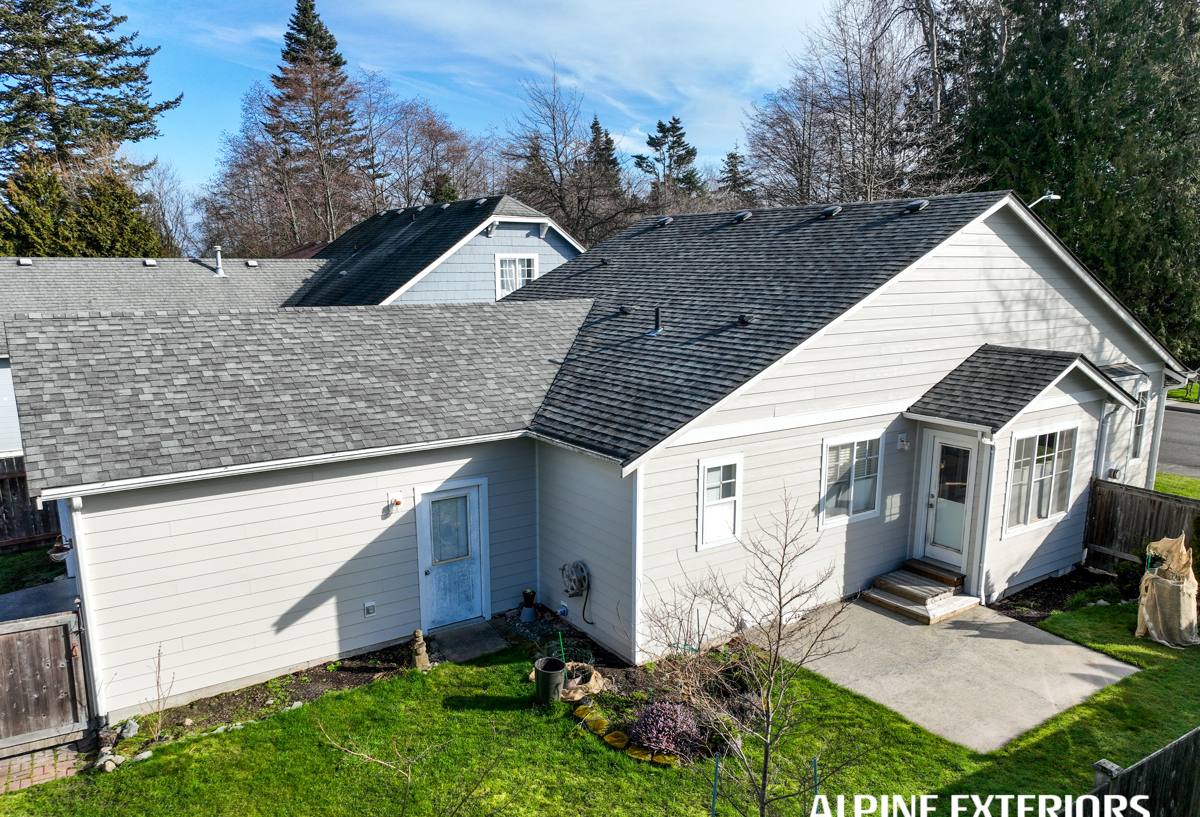
What Salt Air, Rain, and Moss Actually Do to a House
Salt Air
Airborne salt is corrosive. It accelerates rust on exposed steel fasteners, pits and dulls unprotected metal trim, and slowly breaks down cheaper paint films faster than the same product would fail a few miles inland. Over years, a house facing open water can show finish wear on its west and southwest sides well before the rest of the siding shows any age at all.
Driving Rain
Wind off the water pushes rain sideways, not straight down. That means water finds its way into laps, seams, and butt joints that would stay dry in a calmer setting. Siding materials that swell, wick moisture, or rely on perfect field caulking to stay sealed are put to the test here in a way they aren't in more sheltered parts of the county.
Moss and Algae
Shaded, moisture-retaining surfaces on Lummi Island grow moss almost year-round in the wetter months. Moss holds water against a wall, keeps that section of siding damp long after the rest of the house has dried, and speeds up any moisture-related decay if the material underneath isn't built to tolerate it.
Why We Only Install James Hardie Fiber Cement Here
Birch Bay Siding Company installs one siding system: James Hardie fiber cement. We don't offer vinyl, LP SmartSide, Cemplank, Allura, primed spruce, or cedar, and on a site like Lummi Island that's not a marketing position — it's a practical one.
Fiber cement is non-combustible and dimensionally stable, meaning it doesn't swell, cup, or expand and contract with moisture the way wood-based products can. That matters directly here: a product that stays stable when it's damp holds paint and caulk lines longer, which means fewer failure points for wind-driven rain to exploit. Hardie's ColorPlus factory finish is baked on under controlled conditions rather than field-applied, and it's built to hold color and resist the kind of fade and chalking that salt air and UV speed up on lesser finishes. It also gives us a consistent, factory-controlled surface to seal against moss growth, rather than a porous or engineered-wood substrate that can be more forgiving of neglect but less forgiving of a missed maintenance cycle.
We're not going to claim other products can't be made to work somewhere with a disciplined maintenance schedule. But on an exposed, salt-air site, the honest trade-off is that engineered wood siding needs more attentive upkeep to keep water out of cut edges and seams, vinyl can become brittle and show UV wear faster under strong reflected coastal light, and job-site-primed wood products put a lot of the long-term performance in the hands of field painting and caulking quality. We'd rather install a product engineered for exactly this exposure and back it with a strong transferable warranty than sell something that needs a perfect maintenance record to hold up.
How This Plays Out Over a Whatcom County Winter
A typical wet season here runs from fall through spring, with long stretches of low clouds, drizzle, and the occasional heavier wind event off the strait. Homes on Lummi Island don't get much of a dry-out window during that stretch. That's why detailing matters as much as the siding material itself:
- Proper flashing above windows, doors, and any horizontal trim so water sheds outward instead of tracking behind the siding
- Correct fastener spacing and type to avoid the corrosion and pull-through issues that show up in salt-exposed installs done to a lower standard
- Adequate clearance between the bottom of the siding and grade, decks, or roof lines, so splash-back and standing moisture don't sit against the material
- Rainscreen or drainage detailing where the wall assembly calls for it, giving any moisture that does get behind the cladding a way out
- Careful joint and seam work at butt joints and corners, since these are the first places driving rain finds a way in on a poorly installed job
Correct installation is what makes the material's warranty and real-world lifespan mean anything. A great product installed carelessly will still fail early in a spot like this.
Siding Product Comparison for a Coastal Site
| Factor | James Hardie Fiber Cement | Vinyl | Engineered Wood (e.g. LP SmartSide) |
|---|---|---|---|
| Moisture stability | Dimensionally stable, doesn't swell with damp exposure | Stable but can warp/distort under heat and stress | Wood-based; edges and cuts are moisture-sensitive |
| Salt air / coastal exposure | Engineered for climate-specific performance (HZ lines) | Can chalk and become brittle faster under strong coastal UV | Requires diligent sealing and maintenance to resist moisture intrusion |
| Fire resistance | Non-combustible | Combustible, can melt/deform near heat | Combustible |
| Finish | Factory-applied ColorPlus, consistent and durable | Color molded through, can fade unevenly | Typically field-primed and painted on site |
| Maintenance in moss-prone areas | Cleanable, stable surface | Cleanable but can crack with pressure washing over time | More sensitive to sustained moisture and organic growth |
Roofing, Windows, and Decks on the Same Coastal Logic
Siding is rarely the only exterior component under stress on a waterfront property. We also handle roofing, windows, and decks, and the same salt-air, driving-rain, moss reasoning applies across all of them. A roof exposed to the same wind and moisture cycle needs flashing and material choices that won't corrode or trap water at valleys and penetrations. Windows facing open water take a heavier beating from wind-driven rain at the sill and need properly detailed flashing to keep water out of the wall assembly behind them. Decks in shaded, damp spots are exactly where moss and slick surfaces become a real safety issue, not just a cosmetic one. When we're on site for a siding project, it's worth having us look at the rest of the exterior at the same time, since these systems interact — poor flashing at a window or roofline can undermine even a well-installed siding job right next to it.
What to Expect from a Local Crew
A crew that works Whatcom County's coastal communities regularly knows the difference between a wall detail that's fine in Ferndale and one that needs extra attention on an island facing open water. That shows up in small decisions — how tight to run a rainscreen gap, where to add extra flashing, which corners of a house get the most exposure and deserve the most care during install. It also means realistic scheduling around ferry logistics and weather windows, and a crew that isn't guessing at what a Lummi Island winter actually does to an exterior.
Questions Worth Asking Any Contractor Before You Hire
- Do you install to the manufacturer's written specifications for coastal/high-exposure zones?
- What fastener type and flashing details do you use on salt-air sites specifically?
- Is your crew factory-trained on the siding system you're installing, and can you show it?
- What does your warranty actually cover — material, labor, or both — and is it transferable?
- Have you worked on Lummi Island or similar waterfront sites in Whatcom County before?
Planning a Siding Project on Lummi Island
Whether you're dealing with siding that's showing early wear from salt and moisture, replacing something that was never suited to this exposure in the first place, or building new, the right approach starts with an honest look at what your specific site faces — sun exposure, wind direction, shade patterns, and how sheltered or exposed the house actually is. That's what shapes the flashing details, drainage plan, and material choice we recommend.
If you'd like a straightforward, no-pressure look at your home's exterior and what it would take to get it set up right for Lummi Island's climate, reach out for a free estimate using the form below.