 Birch Bay Siding
 Siding Built for Lynden's Climate
Lynden sits inland in Whatcom County, in the shadow of the Nooksack River valley and within a short drive of the Salish Sea. That location gives the area its own version of Northwest weather: long stretches of steady, soaking rain from fall through spring, humidity that lingers in low-lying farmland, and short bursts of summer heat that dry things out fast before the wet season sets back in. Homes closer to Birch Bay and the water deal with direct salt air on top of that. Lynden's exposure to salt is lighter, but the broader Whatcom County climate still pushes moisture into every seam, joint, and fastener hole a siding product has.
The result, over years, is the same story we see across the county: paint that fails early, wood trim that softens at the bottom edges, and a persistent green-black film of moss and algae on north-facing walls that never get direct sun. None of that is unusual for this region. It's just what happens when a house sits through decade after decade of Pacific Northwest weather without a siding system engineered to handle it.
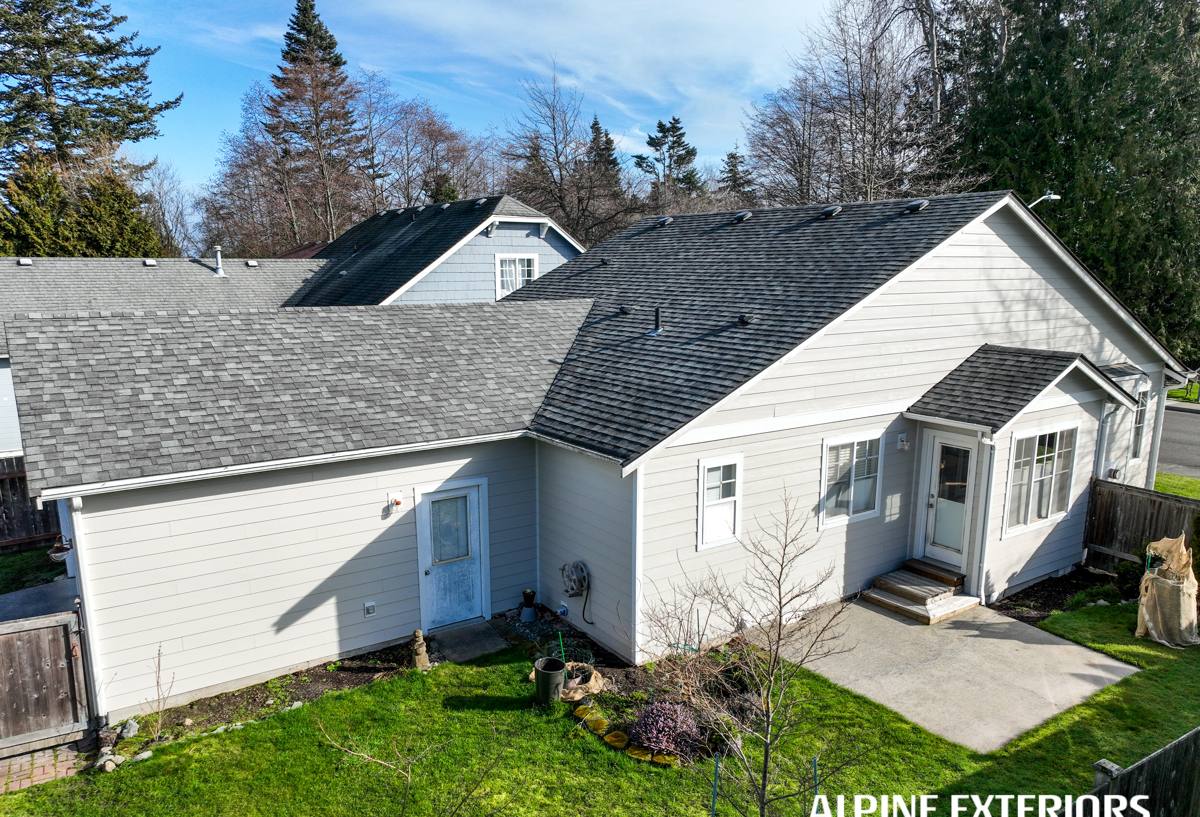
What Whatcom County Weather Does to Common Siding Materials
Driving Rain and Wind-Driven Moisture
Rain here doesn't just fall straight down. Wind off the Strait of Georgia and the open farmland around Lynden pushes moisture sideways into wall assemblies, working it into laps, corners, and butt joints. Materials that swell, wick, or delaminate when wet lose their fight against this pattern faster than most homeowners expect.
The Long Moss Season
Moss and algae need shade, moisture, and time — Lynden's climate offers all three for most of the year. Shaded elevations and areas under mature trees or eaves stay damp longer, and organic growth takes hold on surfaces that don't shed water and dry quickly. Over time, that growth traps additional moisture against the siding surface, which accelerates whatever underlying problem the material already has.
Freeze-Thaw and Temperature Swings
Whatcom County winters bring occasional hard freezes following saturated stretches of rain. Materials that have absorbed moisture and then freeze are prone to cracking, splitting, or bond failure at the surface. It's a slower, quieter form of damage than a big storm, but it adds up year after year.
Why We Install James Hardie — and Nothing Else
Birch Bay Siding Company made a deliberate decision to install James Hardie fiber cement siding exclusively. We don't install vinyl, LP SmartSide, Cemplank, Allura, primed spruce, or cedar. That's not a marketing angle — it's a standard we hold because of what we've seen these products do, and not do, in exactly the kind of weather Lynden gets.
Fiber cement is a mix of cement, sand, and cellulose fibers, engineered to be dimensionally stable in wet climates. It doesn't absorb and swell the way wood-based products can, and it doesn't soften or warp under sustained moisture exposure. James Hardie backs its siding with the HZ5 product line, engineered specifically for climates with freeze-thaw cycles and heavy moisture — which describes Whatcom County well. It's also non-combustible, which matters increasingly as wildfire smoke and dry-season risk become a bigger part of every Washington homeowner's calculus, even in a historically wet region like this one.
The factory-applied ColorPlus finish is another piece of why we standardized on Hardie. It's baked on in a controlled environment rather than field-applied, which gives it far more consistent adhesion and UV resistance than a job-site paint job — and it comes with its own finish warranty separate from the substrate warranty. For homeowners tired of repainting every five to seven years, that's a real, measurable difference in long-term cost and effort.
We're not saying every other product is without merit — vinyl is inexpensive and low-maintenance in the right application, engineered wood has real advantages in dry climates, and cedar has genuine aesthetic appeal. But for the specific combination of moisture, temperature swings, and moss pressure that Lynden and the rest of Whatcom County deal with, James Hardie fiber cement is the product we're willing to put our name behind.
Our Process for Lynden Projects
Every project starts with an on-site walkthrough, not a phone estimate. We look at your home's specific exposure — which walls take the most weather, where moss has already established, where trim and flashing show early wear — and build the scope around what your house actually needs rather than a generic package.
- On-site assessment of existing siding, trim, flashing, and any moisture damage behind the current cladding
- Written estimate covering materials, labor, disposal of old siding, and timeline
- Inspection and repair of sheathing and weather barrier before new siding goes on — a step that's easy to skip and expensive to regret
- Installation to James Hardie's published specifications, including proper fastening, clearances, and flashing details
- Final walkthrough and warranty paperwork
That third step matters more than most homeowners realize. Fiber cement siding is only as good as what's underneath it. If sheathing has already taken on moisture damage from years of a failing product, installing new siding over it without addressing that first just locks the problem in.
Roofing, Windows, and Decks — The Full Exterior Picture
Siding doesn't work in isolation. A roof that's shedding granules or has failing flashing sends water straight down into the wall assembly behind good siding. Windows with worn seals let moisture in around the frame regardless of what cladding surrounds them. Decks exposed to the same rain and moss cycle need their own maintenance and material decisions.
Because we handle siding, roofing, windows, and decks, we can look at a Lynden home's exterior as one connected system rather than a series of unrelated projects. That matters when you're planning a renovation — it's often more efficient, and less disruptive, to coordinate a roof and siding project together than to do them years apart with two different crews making assumptions about each other's work.
What Drives Project Cost
| Factor | Why It Matters |
|---|---|
| Home size and wall complexity | More corners, gables, and trim details mean more labor and material cuts |
| Existing siding removal | Tear-off and disposal of old material adds time versus a bare-wall install |
| Sheathing and moisture repair | Damage found once old siding is off can add scope, but it's cheaper to fix now than after new siding is up |
| James Hardie product line and profile | Lap siding, panel systems, and trim boards vary in material cost and installation time |
| ColorPlus vs. field-applied finish | Factory-finished material costs more up front but avoids a future repaint |
| Site access | Steep lots, limited driveway access, or tight setbacks affect staging and labor time |
We give written estimates after seeing the actual home, not a phone quote or a rough square-footage guess. Whatcom County homes vary enough in age, construction, and prior repair history that a fair number requires an actual walkthrough.
Why a Local Crew Matters
A crew that works Whatcom County regularly knows what a Lynden winter does to a job site, how long a weather window realistically lasts between rain systems, and what moisture problems tend to look like once old siding comes off in this area. That's knowledge you build by doing the work here repeatedly, not by reading a regional weather summary.
It also means accountability. If a warranty question comes up two, five, or ten years down the road, you're calling a company that's still working in the same county, not chasing down a crew that came through once from out of the area.
Maintenance Homeowners Can Actually Do
James Hardie siding is low-maintenance, not no-maintenance. A little attention keeps it performing the way it's designed to for decades.
- Rinse siding annually with a garden hose to clear pollen, dust, and early moss spores before they take hold
- Trim back vegetation and tree limbs that keep siding shaded and damp longer than necessary
- Check caulking at trim joints and penetrations yearly, and re-caulk where it's cracked or pulled away
- Keep gutters clear so overflow doesn't run down the face of the siding repeatedly
- Look at north-facing and shaded walls each fall, since that's where moss establishes first
- Address any impact damage or cracked boards promptly rather than letting moisture get behind them
Signs It's Time to Talk to a Contractor
Some warning signs are easy to miss until they've become a bigger repair than they needed to be. Persistent moss or algae that comes back within weeks of cleaning, soft or spongy spots on wood-based siding, paint that's peeling rather than just fading, and visible gaps or warping at seams are all signals worth a professional look. Caught early, most of these are manageable. Left alone through another wet Whatcom County winter, they tend to compound.
If you're seeing any of those signs on a Lynden-area home, or you're planning ahead for a siding, roofing, window, or deck project, we're happy to come take a look. We offer free, no-pressure estimates — no obligation, just an honest read on where your home stands and what it would take to fix it right.