 Birch Bay Siding
 Composite Decking Built for Lynden's Climate
Lynden sits far enough inland from the Strait of Georgia to escape the worst of the salt spray that hammers waterfront homes, but it still sits squarely in Whatcom County's wet weather pattern. Long stretches of drizzle, heavy fall and winter rain, morning dew that lingers under tree cover, and a moss season that can run from October through April all put real stress on an outdoor deck. Composite decking handles that environment better than wood when it's installed correctly — but "installed correctly" is doing a lot of work in that sentence, and it's where a lot of decks in this area go wrong.
We build and repair composite decks throughout the Lynden area as part of our regular service territory out of Birch Bay. This page covers what a composite deck actually needs to hold up here, how we approach the job, and what to ask before you hire anyone for the work.
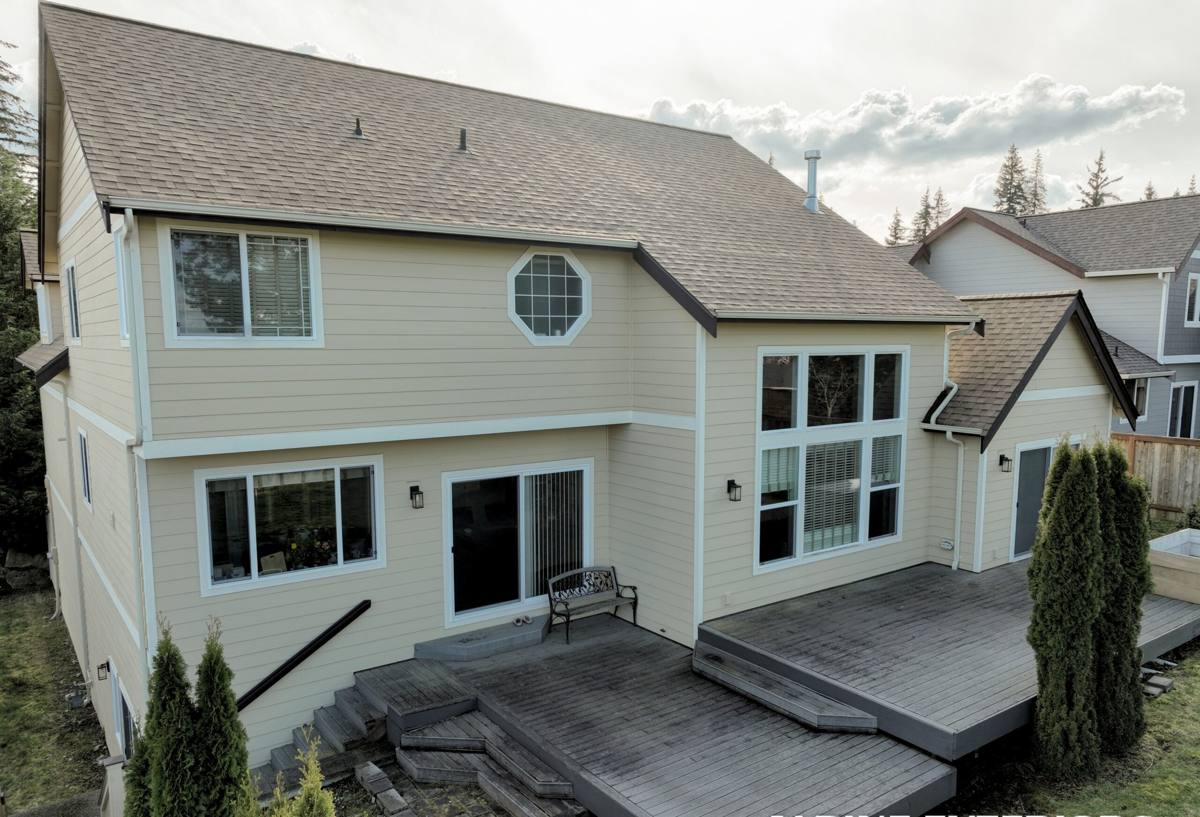
Why Standard Deck Advice Doesn't Quite Fit Lynden
Composite decking is marketed as low-maintenance everywhere it's sold, and in a dry climate that's mostly true. In Whatcom County, moisture is the variable that changes the equation. A deck here spends a much larger share of the year damp than a deck in a dry climate state, and that changes three things:
- Drainage and airflow under the deck matter more. Standing moisture under a low-clearance deck breeds mold, attracts pests, and can eventually affect the framing even if the composite boards themselves are unaffected.
- Moss and algae growth on the board surface happens faster. Composite boards don't rot like moss-covered wood, but moss on any deck surface gets slick and needs to be managed, especially on shaded sections or under overhangs.
- Fastener and framing choices carry more weight. The composite boards themselves are quite weather-resistant; the substructure underneath them is usually still wood, and that's where poor material choices or sloppy flashing show up as problems years later.
None of this means composite decking is a bad fit for Lynden — it's actually one of the better options for this climate. It means the installation details matter more here than they would in a drier region.
What a Correct Composite Deck Installation Includes
Framing and Structure
The composite boards are only as good as what's underneath them. We use pressure-treated framing rated for ground contact where it's close to grade, and we pay attention to joist spacing — composite boards often require tighter joist spacing than wood decking, and manufacturer specs vary by product. Running joists at wood-decking spacing under composite boards is a common shortcut that leads to bounce and, over time, board sag between joists.
Ledger Attachment and Flashing
Where the deck attaches to the house, proper flashing is non-negotiable in a climate this wet. A ledger board that's bolted on without correct flashing is one of the most common ways water gets behind siding and into a rim joist, and it's a slow, hidden kind of damage that doesn't show up until it's expensive. This is also the point where deck work and siding work overlap, which is part of why we handle both.
Hidden Fastener Systems
Most composite lines are designed for hidden fastener clips rather than face screws. Done right, this gives a cleaner look and avoids the tiny gaps around screw heads where moisture and grime can collect. Clip spacing and the gap left between boards both affect drainage across the deck surface — too tight, and water sits on the boards longer than it should.
Ventilation Underneath
On decks with skirting or low clearance to grade, we make sure there's a path for air to move underneath. In a dry climate this is a nice-to-have; in Whatcom County it's part of what keeps the substructure from staying damp for weeks at a time during a wet stretch.
Composite vs. Other Decking Materials, Side by Side
| Factor | Composite | Pressure-Treated Wood | Cedar |
|---|---|---|---|
| Upfront cost | Higher | Lowest | Mid-to-high |
| Refinishing needed | None | Every 1-2 years | Every 2-3 years |
| Moss/algae resistance | Good, still needs periodic cleaning | Poor without regular sealing | Fair |
| Splintering/warping risk | Low | Moderate to high over time | Moderate |
| Typical lifespan | 25-30+ years | 10-15 years before major repair | 15-20 years with upkeep |
| Best fit for our climate | Strong | Workable with diligent maintenance | Workable, higher upkeep |
Composite costs more to install, but for homeowners who don't want a sanding-and-sealing routine every couple of years, it typically pays that difference back in avoided maintenance over the life of the deck — especially in a climate that's hard on unsealed wood.
Our Process for a Lynden Composite Deck Project
- On-site assessment. We look at grade, drainage, existing structure (for replacement or resurfacing jobs), and how the deck ties into the house.
- Honest scope and estimate. We walk through board options, framing needs, and what's driving the cost — no pressure toward the most expensive product line if a mid-tier one fits the project and budget.
- Framing and flashing first. Before a single composite board goes down, the structure and any ledger connections are built and flashed correctly. This is the step that determines how the deck ages, and it's the step that's easiest to shortcut if you're not paying attention.
- Board installation. Hidden fasteners, correct board gapping, and attention to drainage direction across the deck surface.
- Final walkthrough. We go over basic care — what light cleaning it needs, how to handle moss if it shows up on shaded sections, and what (if anything) is still under manufacturer warranty.
Repair, Resurfacing, or Full Replacement
Not every deck problem in Lynden calls for tearing everything out. We evaluate three levels of work depending on what we find:
- Repair: A handful of damaged boards, a loose railing, or a fastener issue on an otherwise sound deck. Often the most cost-effective option if the framing underneath is still solid.
- Resurfacing: The substructure is sound but the surface — often old wood decking — has reached the end of its useful life. We can frequently reuse or reinforce existing framing and install composite boards on top, which saves demolition cost.
- Full replacement: Framing has moisture damage, spacing is wrong for composite, or the deck footprint is changing. This is the point where it's worth doing the structure right rather than building new decking on a compromised base.
We'll tell you honestly which category your deck falls into rather than defaulting to the biggest job.
Maintaining a Composite Deck in a Wet Climate
Composite decking is low-maintenance, not no-maintenance, especially here. A simple seasonal routine goes a long way:
- Sweep off leaves and debris regularly, especially in fall — trapped organic matter under leaves is what feeds moss growth on the board surface.
- Rinse the deck periodically with a hose or low-pressure wash; avoid high-pressure washing directly into board grooves, which can force water into fastener channels.
- Check that gaps between boards stay clear so water can drain through rather than pooling.
- Look at railing posts and stair connections once or twice a year for any movement.
- Address moss on shaded areas early with a mild deck-safe cleaner rather than letting it build up over a wet winter.
Why It Matters That We Already Work in Lynden
We're based in Birch Bay and work throughout Whatcom County, including Lynden, on a regular basis. That matters for a few practical reasons: we're familiar with how local building departments handle deck permits in this area, we know what drainage and grading issues tend to show up on properties around here, and we're not learning the regional climate on your project. A crew that mostly installs decking in drier parts of the state doesn't always plan for a moss season or a wet winter the way a crew that deals with it every year does.
It also means we're a phone call away if something needs a look after the install — not a company that did one job in the area and moved on.
Questions to Ask Before You Hire a Deck Contractor
- Do you carry manufacturer certification for the composite brand you're proposing?
- What joist spacing will you use, and does it match this specific product's requirements?
- How will the ledger board be flashed where it meets the house?
- What's included in the manufacturer warranty versus your own workmanship warranty?
- Can you walk me through drainage and ventilation for my specific site and grade?
If a contractor can't answer these clearly, that's worth noticing before you sign anything.
If you're weighing a new composite deck, a resurface, or a repair on an existing deck in Lynden, we're happy to take a look and give you a straightforward estimate — no pressure, no upsell, just an honest read on what your deck actually needs. Use the form below to request a free estimate.