 Birch Bay Siding
 Exterior Work Built for Birch Bay Village
Birch Bay Village sits close enough to the water that salt air is part of daily life, not an occasional nuisance. Homes here take a steady beating from onshore wind, driving winter rain, and the kind of persistent damp that keeps moss and algae active for most of the year. If you've lived in this neighborhood for more than a season or two, you've probably already noticed how exterior materials that hold up fine forty miles inland start to struggle here — soft siding corners, streaked north-facing walls, roof edges that stay dark and slick long after the rest of the property has dried out.
We work on homes throughout Whatcom County, and Birch Bay Village is one of the areas where the difference between a generic exterior job and one that actually accounts for local conditions shows up fastest. Siding, roofing, windows, and decks all have to be chosen and installed with the coastal exposure in mind, not just picked off a standard spec sheet.
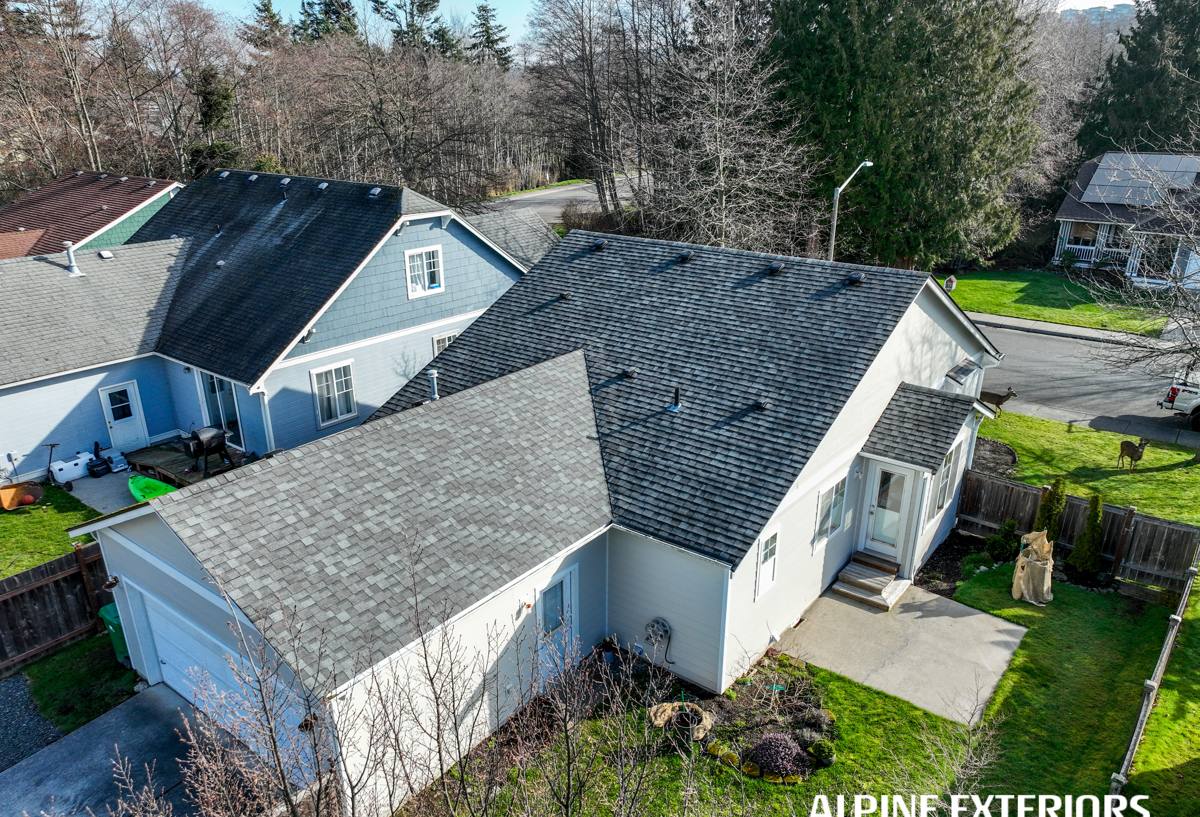
What the Climate Actually Does to a Home Here
It helps to be specific about what's working against your exterior in this part of the county, because "coastal weather" covers a lot of ground.
Salt Air and Wind-Driven Moisture
Proximity to the bay means airborne salt settles on siding, trim, and roofing materials, especially on the west- and north-facing sides of a house that catch the prevailing weather. Combined with wind-driven rain, that salt film accelerates the breakdown of materials that aren't built to resist moisture intrusion — swelling at seams, corroding fasteners, and degrading paint or coatings faster than they would in a drier, inland setting.
A Long, Active Moss Season
Western Whatcom County doesn't get a real dry season the way some parts of the state do. Shaded rooflines, north walls, and anything under tree cover stay damp long enough for moss and algae to take hold and keep growing for much of the year. Left alone, that growth holds moisture directly against the surface underneath it, which is where real damage starts — whether that's a roof deck, a fascia board, or a siding panel.
Freeze-Thaw and Wind Exposure
Birch Bay winters bring enough freezing nights, mixed with damp conditions, to stress any material that absorbs water. Materials that swell when wet and then freeze are prone to cracking, splitting, or delaminating at the joints over time. Add in the open wind exposure common to properties near the water, and fastening, flashing, and joint detailing matter more here than they do in a sheltered inland lot.
Why We Install Only James Hardie Fiber Cement Siding
We get asked fairly often why we don't offer vinyl, LP SmartSide, or other engineered wood and composite siding products. It's a fair question, and the honest answer is that we made a standard for ourselves based on what actually holds up under conditions like the ones Birch Bay Village sees every year.
Vinyl siding is inexpensive and low-maintenance in mild climates, but it's a thin material that can warp in temperature swings, crack in cold snaps, and fade unevenly under UV and salt exposure over time — and once it's damaged, repair usually means replacing whole panels rather than patching a spot. Engineered wood products like LP SmartSide use wood strand cores that, while treated, are still wood-based; that means they depend heavily on caulking, paint maintenance, and correct installation to keep moisture out of cut edges and seams. In a location with this much sustained dampness and salt exposure, that's a maintenance burden we don't think is fair to put on a homeowner without a very clear conversation about it.
James Hardie fiber cement is a cement-and-cellulose composite, not a wood or vinyl product. It doesn't rot, it isn't a food source for pests, and it's non-combustible — a genuine advantage in a state where wildfire risk gets more attention every year. Hardie's ColorPlus finish is baked on at the factory under controlled conditions, which gives it more consistent, longer-lasting color than field-applied paint, and their HardieZone HZ10 product line is engineered specifically for the wetter, milder climate found on this side of the Cascades. It's also backed by a strong, transferable limited warranty, which matters if you ever sell the home.
None of this means other products are junk — they work fine in the right setting. It means that for a coastal Whatcom County property, we don't think they're the right long-term investment, and we'd rather turn down that installation than put something on your house we don't believe in.
Siding Product Comparison
| Factor | Vinyl | Engineered Wood (LP SmartSide) | James Hardie Fiber Cement |
|---|---|---|---|
| Moisture/rot resistance | Doesn't rot, but seams can trap water | Treated, but wood-based core is moisture-sensitive | Cement-based; does not rot |
| Salt air performance | Can fade and become brittle over time | Coating and edge sealing need regular upkeep | Engineered for coastal/marine exposure (HZ10) |
| Fire resistance | Can soften or melt under heat | Combustible, treated for ignition resistance | Non-combustible |
| Finish longevity | Color molded in, can chalk/fade | Field-applied paint, needs recoating | Factory-baked ColorPlus finish |
| Typical maintenance | Low, but hard to spot-repair | Regular caulk/paint upkeep needed | Periodic washing, minimal repainting |
How the Job Works, Start to Finish
For siding, roofing, window, or deck work in Birch Bay Village, the process is the same regardless of scope — we just adjust the details to what your home actually needs.
Assessment and Estimate
We start with an on-site walk of the exterior, looking at exposure direction, existing moisture damage, roof condition, and any areas where past work may have cut corners on flashing or sealing. You get a clear, written estimate before anything is scheduled — no pressure, no surprise add-ons buried in fine print.
Moisture and Substrate Check
Before new siding or roofing goes on, we check what's underneath. In a damp coastal environment, covering up existing rot or compromised sheathing just hides a problem that will resurface later, usually as a bigger repair. If we find soft spots or water damage during tear-off, we'll walk you through what we're seeing and what it takes to fix it properly.
Installation to Spec
James Hardie siding has manufacturer installation requirements around fastener spacing, clearances, caulking, and flashing — and those details matter more in a wind- and rain-exposed location like Birch Bay Village than they would somewhere sheltered. Correct installation is what makes the difference between siding that performs for decades and siding that fails early despite being a good product.
Final Walkthrough
We finish with a walkthrough so you can see the completed work, ask questions, and understand what maintenance (if any) is recommended going forward.
Roofing, Windows, and Decks in a Coastal Setting
Siding gets a lot of attention, but the same climate factors apply to the rest of your home's exterior.
Roofing
Roofs in this area deal with the same moss and moisture pressure as siding, often worse, since a roof is more exposed to standing water and shade cycles. Proper ventilation, underlayment, and flashing at penetrations are what keep a roof performing through a long wet season rather than developing leaks at the first hard windstorm.
Windows
Wind-driven rain finds weak points at window flashing and seals faster near the water than it does inland. Correctly flashed, properly sealed window installation is one of the most common places we find prior workmanship issues when we open up a wall during a siding job.
Decks
Outdoor living space near the bay deals with the same salt and moisture exposure as the rest of the exterior, plus foot traffic and UV. Material choice and proper fastening at ledger boards and joints matter for both safety and longevity.
Signs Your Exterior May Need Attention
- Soft, spongy, or visibly swollen siding, especially at corners and seams
- Persistent moss or algae growth on siding or roofing that comes back quickly after cleaning
- Paint that's peeling, bubbling, or chalking faster than expected
- Streaking or dark staining concentrated on north- or west-facing walls
- Drafts, fogging, or visible gaps around window frames
- Missing, curling, or moss-covered roof shingles
- Soft or discolored decking boards, or rust at deck fasteners
- Higher heating bills without an obvious cause, which can point to failing exterior seals
Why a Local Crew Matters Here
A crew that mostly works drier, inland jobs doesn't always think about salt exposure, prevailing wind direction, or moss cycles the way a crew that works this stretch of the county every week does. We see the same conditions repeatedly in Birch Bay Village and the surrounding coastal areas, which shapes how we flash a window, where we pay extra attention on a north wall, and which siding line we recommend for a given exposure. That familiarity isn't a marketing point — it's the reason the work holds up.
What to Ask Before Hiring Any Exterior Contractor
- Are they licensed and insured to work in Washington State?
- Will they provide a written, itemized estimate before work begins?
- Do they check for and address existing moisture damage before covering it up?
- Can they explain why they recommend a specific product for your home's exposure?
- Do they follow manufacturer installation specs, and can they explain what those involve?
- What does their warranty actually cover, and is it transferable if you sell the home?
Cost Factors to Expect
Every exterior job is different, but a few things consistently drive cost for homes in this area:
| Factor | Why It Matters |
|---|---|
| Home size and wall complexity | More corners, gables, and dormers mean more cutting, flashing, and labor time |
| Existing damage found during tear-off | Rot or compromised sheathing needs repair before new material goes on |
| Siding profile and trim detail | Lap width, shingle-style panels, and custom trim add material and labor cost |
| Access and site conditions | Steep lots, limited access, or mature landscaping can affect setup and staging |
| Scope bundling | Combining siding with roofing, window, or deck work can reduce overall disruption and sometimes cost |
Get a Straightforward Estimate
If you're noticing early signs of wear on your siding, roof, windows, or deck, it's worth having a local crew take a look before small issues turn into bigger repairs. We'll walk the property, tell you honestly what we see, and put together a clear, no-pressure estimate for your Birch Bay Village home — use the form below to get started.