 Birch Bay Siding
 A Common Question From Birch Bay Homeowners
Primed spruce siding comes up a lot when homeowners in Birch Bay are pricing out a re-side. It's a familiar product, it's usually the lower bid, and on paper it looks like a straightforward wood siding option with the priming already done at the mill. We get asked why we won't install it fairly often, so this page lays out the honest answer: what primed spruce actually is, what it does well, and where it runs into trouble specifically in a waterfront Whatcom County climate with salt air, driving rain, and a moss season that can stretch most of the year.
This isn't a knock on anyone who has primed spruce siding on their home now or on the contractors who install it. It's a straightforward explanation of the trade-offs we kept seeing on service calls and tear-offs, and why we made the professional call to install James Hardie fiber cement instead.
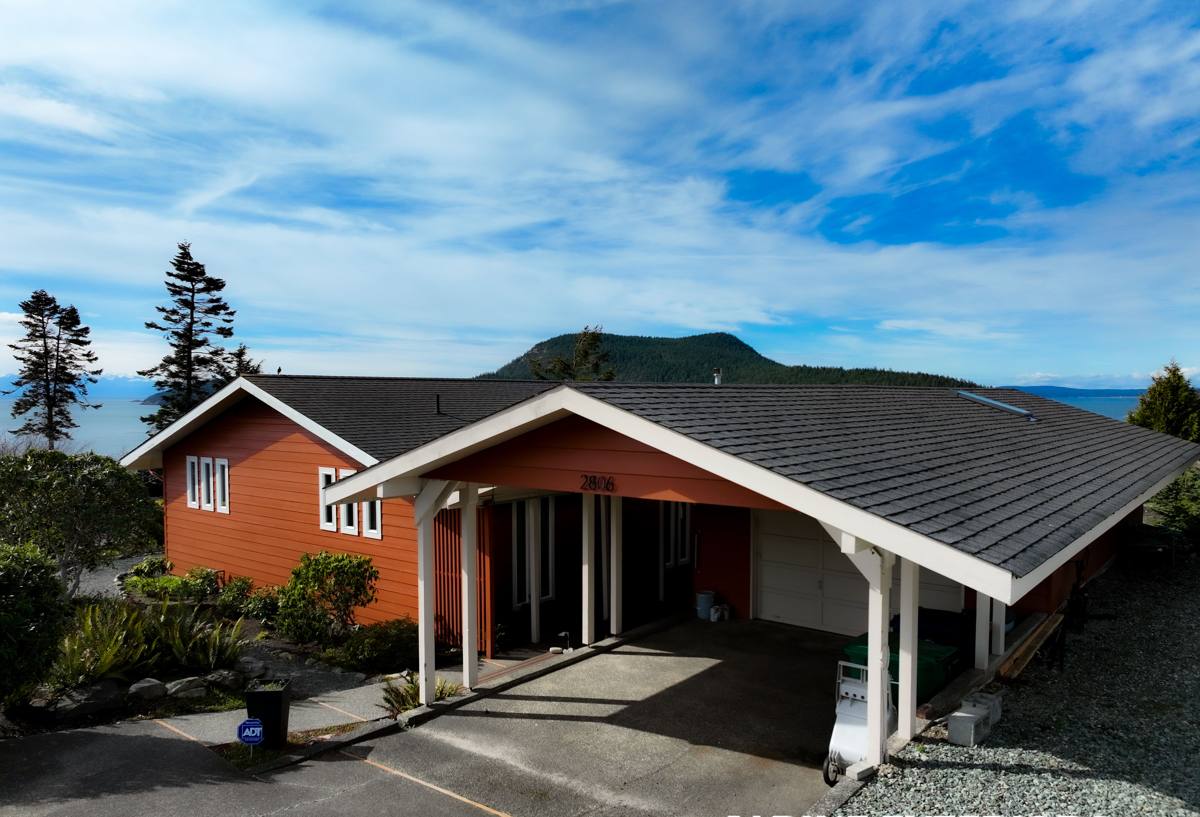
What Primed Spruce Siding Actually Is
Primed spruce is solid-wood siding, typically milled as bevel or lap boards, sometimes finger-jointed from shorter lengths of spruce to reduce cost and waste. It arrives from the mill with a coat of primer already applied, which is meant to give the finish coat of paint a better surface to bond to and to slow moisture absorption during transport and storage. It is not a factory finish in the way a baked-on coating is — the primer is a paint base, not a weather barrier, and the boards still need a finish coat of exterior paint applied after installation.
As a solid wood product, spruce carries the natural characteristics of the species: it's a lightweight softwood, easy to cut and nail, takes paint reasonably well when properly prepped, and gives a traditional lap-siding look that a lot of homeowners like. Cost is usually its biggest selling point — primed spruce is typically less expensive up front than fiber cement or higher-grade wood species like cedar.
What Primed Spruce Gets Right
We're not going to pretend there's no case for it. In the right setting, primed spruce has real advantages:
- Lower material cost compared to fiber cement or premium wood species, which matters on a tight budget
- Easy to work with — it cuts, nails, and copes cleanly with standard carpentry tools
- Traditional appearance that some homeowners specifically want, especially on older or historically styled homes
- Field-repairable — a damaged section can be patched, sanded, and repainted without much specialized equipment
For a sheltered, inland building with an owner committed to a real maintenance schedule, primed spruce can hold up reasonably well. The problem is that "sheltered and inland" doesn't describe Birch Bay.
Where Primed Spruce Struggles
The Primer Isn't a Moisture Seal
The factory primer on spruce siding is there to help paint adhere — it isn't a sealed, weather-resistant coating the way a baked-on factory finish is. Every board that gets cut on site exposes raw, unprimed end grain, and end grain absorbs water far faster than the face of the board. Unless every single cut is field-primed and sealed before installation — and this step gets skipped more often than it should on real job sites — those cut ends become entry points for moisture from day one.
Softwood Moisture Movement
Spruce is a lightweight softwood, which is part of why it's easy to work with, but that same low density means it takes on and releases moisture readily. Repeated wetting and drying cycles cause the wood to swell and shrink, which over time leads to cupping, checking, and paint film failure as the coating can't keep flexing with the wood underneath it. Once the paint film cracks, moisture gets under it directly, and the cycle accelerates.
Repainting Is Not Optional Maintenance
Unlike a factory-finished product, primed spruce depends entirely on the homeowner keeping a paint film intact over the life of the siding. That typically means a full repaint cycle every five to seven years in a mild climate, and often sooner in a wet, salt-exposed one. Skipping a cycle doesn't just cost curb appeal — it lets moisture into the wood, and wood that stays wet is wood that starts to rot.
Rot, Fungal Growth, and Pest Vulnerability
Untreated or under-maintained wood siding is a food source for decay fungi and an attractive target for woodpeckers and carpenter ants once it starts to soften. In a climate where siding can stay damp for extended stretches of the year, that risk is higher than it is in a dry inland region, and it's a slower, harder problem to catch early since a lot of the damage happens from the inside of the board out.
Combustibility
Solid wood siding is combustible, which is a straightforward material fact rather than a scare tactic. It's a factor some homeowners weigh for insurance purposes and general fire safety, and it's part of the reason we standardized on a non-combustible fiber cement product instead.
What This Climate Specifically Does to Wood Siding
Birch Bay sits directly on the water in northern Whatcom County, and that location changes the math on wood siding maintenance compared to homes further inland.
Salt Air
Salt-laden air off the bay accelerates the breakdown of paint films and speeds corrosion on fasteners and trim. A paint coating that might last six or seven years in a drier inland climate often shows chalking, fading, and film cracking sooner here, which shortens the window before the wood underneath is exposed again.
Driving Rain
Waterfront exposure means wind-driven rain that gets pushed sideways into lap joints, cut ends, and butt seams rather than just falling straight down off the wall. Wood siding depends on lap coverage and caulked joints to keep that water out, and any gap, open joint, or unsealed cut end becomes a direct path for moisture to get behind the board.
The Long Moss Season
Mild temperatures and near-constant moisture give Whatcom County a moss and mildew season that can run most of the year on shaded or north-facing walls. Wood siding that stays damp under moss or mildew growth for extended periods is exactly the condition that lets decay fungi get established, and it's harder to catch early because the growth itself hides the early signs of trouble underneath.
Comparing Primed Spruce to James Hardie Fiber Cement
| Factor | Primed Spruce | James Hardie Fiber Cement |
|---|---|---|
| Finish | Field-applied paint over mill primer; homeowner-dependent | Factory-applied ColorPlus finish, baked on under controlled conditions |
| Moisture behavior | Absorbs and releases moisture; prone to swelling and cupping | Dimensionally stable; engineered to resist moisture-driven movement |
| Cut-edge vulnerability | High — raw end grain must be field-primed and sealed on every cut | Low — factory formulation resists moisture wicking at cut edges |
| Repaint cycle | Roughly every 5-7 years, often sooner in coastal exposure | Finish typically holds well beyond a decade before repainting is needed |
| Combustibility | Combustible | Non-combustible core |
| Pest and rot vulnerability | Susceptible if maintenance lapses | Not a food source for decay fungi or wood-boring pests |
| Warranty | Typically limited to material defects, if any | Strong transferable warranty when installed to spec |
Why We Standardized on James Hardie Instead
We install James Hardie fiber cement exclusively, and we don't install LP SmartSide, vinyl siding, Cemplank, Allura, primed spruce, or cedar. That standard came out of what we kept seeing on service calls in this exact climate, not a supplier arrangement. A few of the specific reasons Hardie fits a Birch Bay home better than primed spruce:
- Factory-applied ColorPlus finish that doesn't depend on the homeowner keeping up a repaint schedule to protect the substrate underneath it
- Climate-engineered HZ5 formulation, built for regions with heavy moisture exposure — a good match for waterfront Whatcom County
- Dimensional stability that resists the swelling and cupping wood siding goes through with repeated wetting and drying
- Non-combustible core, which matters for safety and can matter for insurance
- A strong transferable warranty, backed by the manufacturer when installation follows Hardie's published spec
Fiber cement only delivers on those advantages when it's installed correctly — proper fastener spacing, correct clearance from grade and rooflines, and joints detailed the way Hardie specifies. A poorly installed Hardie job can still develop problems in this climate, so the installation itself matters just as much as the material choice.
A Checklist If You're Weighing Wood Siding Anyway
Some homeowners have a specific reason to want a wood look and are willing to commit to the upkeep it takes. If that's you, here's what to ask about before moving forward with primed spruce or any wood siding on a Birch Bay property:
- Will every field cut be primed and sealed on all sides before installation, not just the face?
- What's the realistic repaint interval in this specific climate, and is that written into a maintenance plan?
- How will lap joints and butt seams be detailed and caulked to shed wind-driven rain?
- What warranty coverage, if any, applies to the siding material itself versus just workmanship?
- Is there a plan for inspecting shaded, north-facing walls for moss and moisture buildup each year?
Talk to Us Before You Decide
If you're comparing siding options for a Birch Bay home, we're glad to walk you through what we've seen hold up in this climate and what tends to cause problems down the road, primed spruce included. Reach out below for a free, no-pressure estimate and an honest read on what your home actually needs.