 Birch Bay Siding
 Why Moisture Is the Real Enemy of Siding in Birch Bay
Every siding failure we get called out to inspect in Whatcom County comes down to the same root cause: water got behind the cladding and had nowhere to go. Paint fades, colors chalk, caulk cracks — those are cosmetic problems. Rot is a structural one, and it almost always starts quietly, behind the siding, long before anything shows on the surface.
Birch Bay sits right on the water, which means homes here deal with a combination few inland Washington towns face at the same intensity: salt-laden air off the bay, wind-driven rain that hits walls sideways instead of falling straight down, and a wet season that stretches from fall through spring with barely a dry month to let building materials recover. Add the shade and dampness that let moss and algae colonize north-facing walls and rooflines, and you have a climate that tests siding harder than most manufacturers' lab conditions ever do.
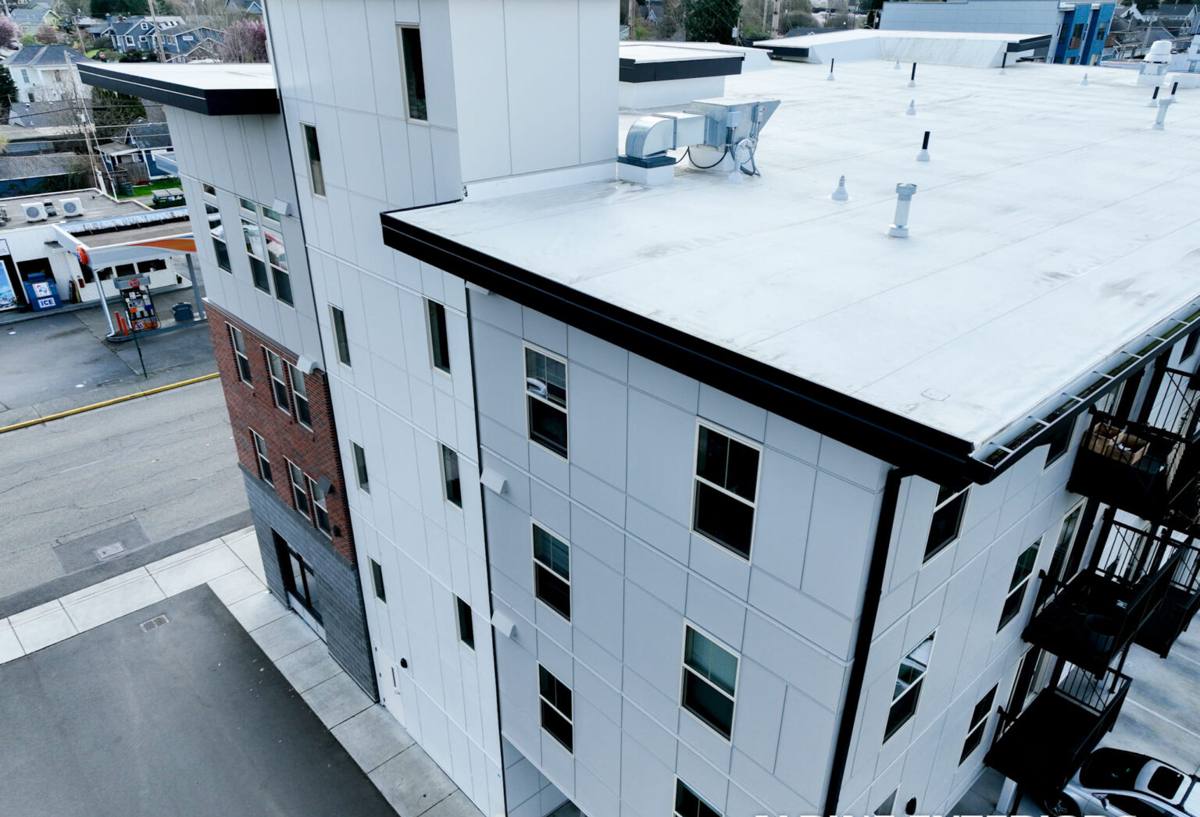
How Water Actually Gets Into a Wall System
Homeowners often picture rot as something that happens because siding "leaks," but the more common path is subtler. Water gets in through:
- Nail holes, seams, and butt joints where caulking has shrunk, cracked, or was never applied correctly
- Window and door flashing that was installed out of sequence with the water-resistive barrier
- Capillary action, where wood or wood-based siding draws moisture upward from a wet foundation, deck ledger, or grade that sits too close to the wall
- Vapor that migrates through the wall from inside the house and condenses when it hits cold sheathing in winter
- Direct saturation of a porous or edge-swelling material during weeks of sustained driving rain
Once moisture is trapped against wood sheathing or framing, the clock starts. Wood-decay fungi need four things to grow: oxygen, moderate temperature, a food source (wood), and moisture above roughly 20% content. Coastal Whatcom County supplies the first three year-round. The only variable a homeowner and contractor actually control is the fourth.
Salt Air's Specific Role
Salt itself doesn't rot wood, but it accelerates the failure of the things that are supposed to protect it. Salt-laden air speeds corrosion of exposed fasteners, degrades certain caulk and sealant formulations faster than inland-rated products, and holds moisture against surfaces longer because salt is hygroscopic — it pulls humidity out of the air. A fastener head that corrodes and loosens opens a new entry point for water exactly where you don't want one: through the face of the siding.
Why Some Siding Materials Handle This Better Than Others
Not all siding responds to moisture the same way, and the differences matter more in a bay-front climate than they would somewhere drier. The table below is a general comparison of how common siding materials behave when they're exposed to sustained moisture — not a claim about any specific product failing, just how each material class is engineered to respond.
| Material | Moisture behavior | Key vulnerability in this climate |
|---|---|---|
| Primed spruce / solid wood | Absorbs and releases moisture readily; swells, cups, and checks with repeated wetting | Long wet seasons don't give it time to fully dry between rain events |
| Cedar (untreated or site-finished) | Naturally rot-resistant heartwood, but sapwood and cut edges are not; finish must be maintained | Salt air and UV degrade site-applied finishes faster, shortening the maintenance window |
| Vinyl | Doesn't rot itself, but isn't a water barrier — relies entirely on what's behind it | Expands/contracts with temperature swings; seams and J-channels can let wind-driven rain track behind panels |
| Engineered wood (e.g., OSB-based products) | Resin-treated to resist moisture, but the core is still wood fiber | Edge and cut-end sealing is critical; any breach lets moisture wick through the fiber core |
| Fiber cement (James Hardie) | Cement, sand, and cellulose fiber — the material itself does not rot, swell, or feed fungal growth | Still requires correct flashing, gapping, and fastening; the material resists moisture damage, but the assembly still needs to be built right |
The point of this comparison isn't that any one product is "bad." It's that wood-based sidings put the burden of moisture management almost entirely on finish maintenance and installation precision, in a place where the climate gives that margin very little room for error. That's the honest trade-off homeowners here are weighing, whether they realize it or not.
What Moss Season Does to a Home's Exterior
Whatcom County's moss and algae season isn't just a cosmetic nuisance. Moss holds moisture against whatever surface it grows on, shades that surface so it dries slower after rain, and its root structures can work into seams, laps, and caulk lines over time. On roofs this is well understood; on siding it's less talked about but follows the same physics. North- and west-facing walls under tree cover, or walls that stay shaded most of the day, are the ones we see with the heaviest growth and the earliest signs of trapped moisture underneath.
Pressure washing moss off siding without addressing why it's growing there — usually shade, poor drainage, or a wall assembly that stays damp longer than it should — just resets the clock until it comes back, and aggressive pressure washing can itself force water into seams it wouldn't otherwise reach.
Early Warning Signs Homeowners Can Actually Check
Most rot is invisible until it's advanced, but there are signs worth checking a couple of times a year, especially after the wettest stretch of winter:
- Soft or spongy spots when you press on siding near the bottom courses, around windows, or at deck and porch attachment points
- Paint that's peeling or bubbling in a localized area rather than uniformly across a wall — often a sign of moisture pushing out from behind
- Visible gaps, cracked caulk, or separated joints at trim, corners, and butt seams
- A musty smell in an adjacent interior room, particularly near exterior walls or below window sills
- Staining or dark streaking that doesn't wash off, which can indicate water tracking down from a failed seam above
- Siding that's noticeably swollen, warped, or has a different texture than the surrounding area
If you find any of these, the priority isn't necessarily new siding — it's finding out how far the moisture has traveled into the wall assembly before deciding on a repair scope.
Installation Details That Matter More Than the Material
We say this even though we only install one product: material choice matters, but installation quality is what actually determines whether a wall stays dry. A premium material installed wrong will fail faster than a modest material installed right. The details that make the real difference in a climate like Birch Bay's include:
Water-Resistive Barrier and Flashing Sequence
Every wall needs a continuous drainage plane behind the siding, and flashing at windows, doors, and horizontal transitions has to be layered so water sheds outward and downward — never trapped behind a layer above it. This sequencing is invisible once the siding goes on, which is exactly why it's the step most likely to get rushed on a low-bid job.
Rainscreen Gap
A small air gap between the back of the siding and the water-resistive barrier lets any moisture that does get behind the cladding drain and dry out instead of sitting against the sheathing. In a high-rainfall, high-humidity coastal climate, this detail does a disproportionate amount of the long-term protection.
Fastening and Clearances
Correct fastener type, spacing, and depth prevent the kind of loosening that opens new water paths — and matters even more near salt air, where the wrong fastener corrodes faster. Ground clearance, deck ledger flashing, and gutter performance all affect how much water siding is exposed to at its most vulnerable lower courses.
Why We Standardized on James Hardie
We made the decision to install James Hardie fiber cement exclusively after weighing exactly the trade-offs above. Fiber cement doesn't rot, doesn't feed fungal growth, and doesn't swell or delaminate the way wood-based products can when a coastal climate throws sustained wet weather at it year after year. James Hardie's ColorPlus factory finish is baked on under controlled conditions rather than applied on-site, which matters in an area where wind, salt, and moisture make field-applied finishes harder to get right and quicker to fail. Their HZ5 product line is engineered specifically for climates with freeze-thaw cycling and moisture exposure, which describes Whatcom County's coastal weather closely.
None of that replaces correct installation — flashing, rainscreen detailing, and fastening still have to be done right regardless of material. But it removes one major variable from the equation: the siding material itself is no longer the thing you have to worry about rotting.
What to Do If You Suspect Moisture Damage
If you're seeing any of the warning signs above, the right first step is an inspection that actually checks behind the siding at suspect areas, not just a visual walk-around. A honest assessment tells you whether you're looking at a localized repair — replacing a section of siding and re-flashing a window, for example — or a sign of a broader wall assembly problem that needs a fuller scope. We'd rather tell a Birch Bay homeowner the truth about a small problem than let it turn into a big one.
If you'd like a second set of eyes on your siding, or you're planning a replacement and want to understand your options honestly, we offer free, no-pressure estimates and inspections for homes throughout Birch Bay and Whatcom County.