 Birch Bay Siding
 The Real Appeal of Cedar Siding
We understand why homeowners ask about cedar. It's a beautiful, natural material with a warmth that manufactured products try hard to imitate. Western red cedar is grown right here in the Pacific Northwest, it smells good fresh off the mill, and a freshly stained cedar home has a look that turns heads in any Birch Bay neighborhood. If you love that look, we're not going to tell you it's a bad material in the abstract. Cedar has real rot resistance compared to other softwoods, it's lightweight, and it's been used on homes in this region for over a century.
The problem isn't cedar as a species of wood. The problem is what happens to any wood siding, cedar included, when it's asked to be the primary weather barrier on a home sitting a few miles from the Strait of Georgia, through Whatcom County's wet season, year after year. That's the honest conversation we have with every homeowner who asks us about it.
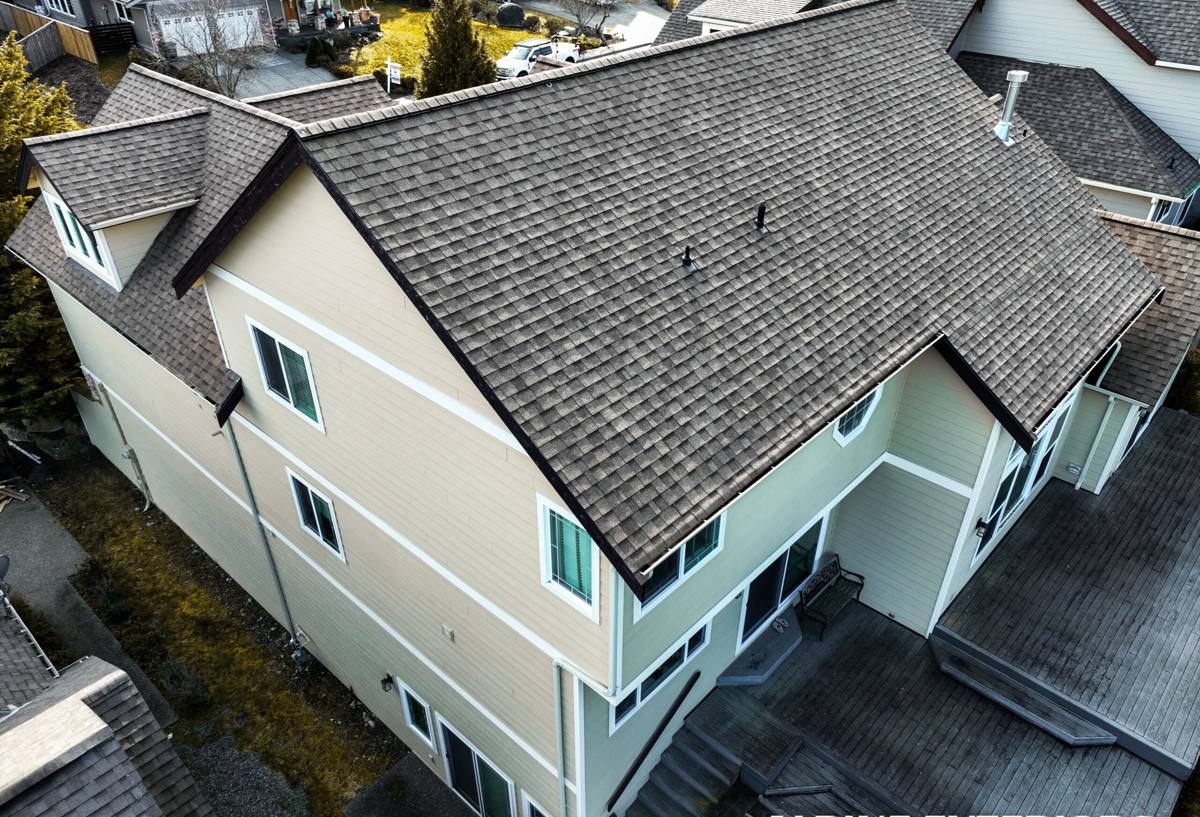
What Birch Bay's Climate Actually Does to Wood Siding
Birch Bay sits directly on the water, which means every home here deals with three things at once: salt-laden air coming off the bay, long stretches of driving rain pushed in by winter storms, and a moss and algae season that can run eight months or more in shaded, north-facing spots under fir and cedar tree cover. Any one of these is manageable. Together, they're what wears down painted and stained wood siding faster than homeowners expect.
Salt Air
Salt spray carries onto siding, settles into the wood grain, and accelerates the breakdown of paint and stain film. It also holds moisture against the surface longer than dry air would, which matters more than the salt itself.
Driving Rain
Whatcom County's marine storms don't just fall straight down — wind-driven rain gets pushed sideways into wall assemblies, especially on west and south-facing elevations that catch weather off the water. Wood siding depends on an intact paint or stain film to keep that water out of the fiber. Once that film cracks or thins, water gets into the wood itself.
Moss and Algae Season
Shaded, damp walls in Birch Bay grow moss and algae for most of the year, not just a few weeks. That growth holds moisture against the siding surface almost continuously on north-facing walls and anywhere tree cover blocks sun and airflow. Wood siding under a moss mat stays wet far longer than the same wall would in a drier climate, and that constant moisture is what eventually leads to soft spots, delamination, and rot at butt joints and fastener heads.
The Maintenance Cedar Actually Requires Here
Every cedar siding manufacturer and every credible painting contractor will tell you the same thing: cedar needs a maintained finish to perform. In a mild, dry inland climate that might mean recoating every 6-8 years. On the water in Birch Bay, with the salt, rain, and moss exposure described above, that cycle compresses significantly, and it isn't uniform across the house — sun-exposed south walls fade and check faster, while shaded north walls fight moss and staying damp.
| Maintenance Task | Typical Interval Elsewhere | Typical Interval in Birch Bay |
|---|---|---|
| Stain or paint recoat | 6-8 years | 3-5 years, sooner on water-facing walls |
| Moss/algae treatment and wash | As needed | Annually, especially shaded elevations |
| Caulk joint inspection and renewal | Every few years | Every 2-3 years |
| Full board replacement (rot/warp) | Rare before 20+ years | Can begin in isolated spots well before then if maintenance lapses |
None of that is a defect in cedar. It's simply what wood siding costs in upkeep when the climate is this wet and salty. We install a lot of siding in this area, and the calls we get about failing wood siding almost always trace back to a missed recoat cycle or a moss mat that sat against the wall for a season or two too long.
Where Cedar Actually Fails: Moisture, Not Cosmetics
The cosmetic fading of an unmaintained cedar wall is the visible warning sign, not the real damage. The real damage happens underneath, where moisture that gets past a thinning finish sits in the wood fiber. Cedar resists rot better than many softwoods, but it isn't immune, and once moisture is trapped behind or within the boards — especially at butt joints, around window trim, and near ground contact at the bottom courses — rot can progress before it's visible from the yard.
By the time a homeowner notices soft boards or paint that won't hold anymore, the fix usually isn't a simple recoat. It's replacing individual boards, resealing the water-resistive barrier behind them, and hoping the rest of the wall assembly wasn't compromised. That's a harder, more expensive repair than most people expect from a "just needs painting" project.
Combustibility and Insurance Realities
Wood siding, cedar included, is combustible. That matters less right on the immediate coastline than it does further inland in Whatcom County where wildfire exposure is a growing concern for insurers, but it's part of the broader picture. Fiber cement siding is non-combustible, and more insurance carriers are factoring exterior cladding material into underwriting and premiums than they did even five years ago. For a lot of homeowners, that's a quiet but real factor in the wood-versus-fiber-cement decision that has nothing to do with looks.
Cost Over the Life of the Siding
Cedar siding is often less expensive to install than fiber cement up front. That's a fair point in cedar's favor and we won't pretend otherwise. But the honest comparison isn't installed cost — it's cost over the years you'll actually own the house.
| Factor | Cedar Siding | James Hardie Fiber Cement |
|---|---|---|
| Upfront installed cost | Generally lower | Generally higher |
| Finish maintenance | Recoat every 3-5 years in this climate | ColorPlus factory finish holds significantly longer; repaint only if desired |
| Moisture/rot risk | Real risk if maintenance lapses | Not a wood-rot material; moisture management still matters at the assembly level |
| Combustibility | Combustible | Non-combustible |
| Typical warranty | Varies by installer; material warranty usually limited | Long transferable manufacturer warranty on the material |
When we walk homeowners through the math on a 15-20 year ownership horizon, the recoating alone on a cedar home in this climate often closes most or all of the gap in installed cost, before accounting for the risk of a rot repair.
Why We Standardized on James Hardie Instead
We made a deliberate choice as a company to install only James Hardie fiber cement siding, and we don't install LP SmartSide, vinyl, cedar, or the other engineered wood and cement-board alternatives on the market. It's a narrower lineup than most siding contractors offer, and we're upfront about that trade-off. We made it because we got tired of being the crew called back out to a house three years after a "budget-friendly" install to deal with problems that a different material wouldn't have had in the first place.
Hardie's HZ10 product line is engineered specifically for climates like ours — wet, marine, moss-prone — and it's a non-combustible material that doesn't rot, swell, or feed moss and mildew the way wood does. The factory-applied ColorPlus finish is baked on under controlled conditions rather than field-applied, which is a meaningfully different process than painting a wall on site, and it's backed by a real finish warranty in addition to the substrate warranty on the board itself. For a coastal Whatcom County home, that combination addresses the three specific things that wear cedar down here: moisture, salt, and sustained shade-driven moss growth.
What Correct Hardie Installation Actually Involves
Fiber cement isn't a forgiving product if it's rushed, and a lot of the complaints people hear about any siding material trace back to installation shortcuts rather than the material itself. Correct installation matters as much as the product choice.
- Proper water-resistive barrier and flashing detail behind every board, not just at windows
- Correct fastener type, spacing, and placement per Hardie's published installation specs
- Minimum clearance gaps at grade, decks, and roof lines to keep board bottoms out of standing water
- Properly caulked and sealed joints using compatible sealants, not general-purpose caulk
- Field-cut edges primed or sealed before installation, since factory finish doesn't cover a fresh cut
- Adequate ventilation gap behind the cladding on the assembly, not boards installed tight to the sheathing
Skipping any of those steps can undermine even the best material. We build our crews' process around getting these details right on every job, because a fiber cement wall installed poorly can still develop moisture problems, just from different causes than a wood wall would.
Making the Right Call for Your Birch Bay Home
If a homeowner wants cedar because they love the look and they're committed to the recoating and moss-management schedule that a marine climate demands, that's a legitimate choice, and there are contractors who install and maintain it well. We simply chose not to be that company. We'd rather install one material extremely well and stand behind it for decades than offer a menu of options and hope each one works out for the client who picked it.
For most homeowners we talk to in Birch Bay, once they hear what the actual maintenance schedule looks like this close to the water, the appeal of a lower-upkeep, non-combustible, factory-finished material becomes pretty clear. It's not about cedar being a poor product — it's about matching the material to what this specific stretch of coastline actually puts a house through.
If you're weighing cedar, fiber cement, or another option for your Birch Bay home, we're happy to walk your property, point out what your specific exposure looks like, and give you a straight answer — even if that answer includes telling you what we won't install. Reach out for a free, no-pressure estimate using the form below.