 Birch Bay Siding
 Why Color Choice Is a Bigger Decision Than It Looks
Picking a siding color feels like the fun part of a project, but on a home in Birch Bay it's also a durability decision. Salt-laden air off Semiahmoo Bay and Boundary Bay, driving winter rain, and a long moss season all work on painted surfaces year after year. The color and the finish system underneath it determine whether your siding looks fresh in ten years or chalky and streaked in three. That's true no matter what siding material you choose, but it's especially relevant with James Hardie fiber cement, because the color comes baked into the product at the factory rather than sprayed on after installation.
This page walks through how James Hardie's ColorPlus finish actually works, how to think about color selection for a coastal Whatcom County home, and what "correct installation" means for keeping that finish looking good for decades.
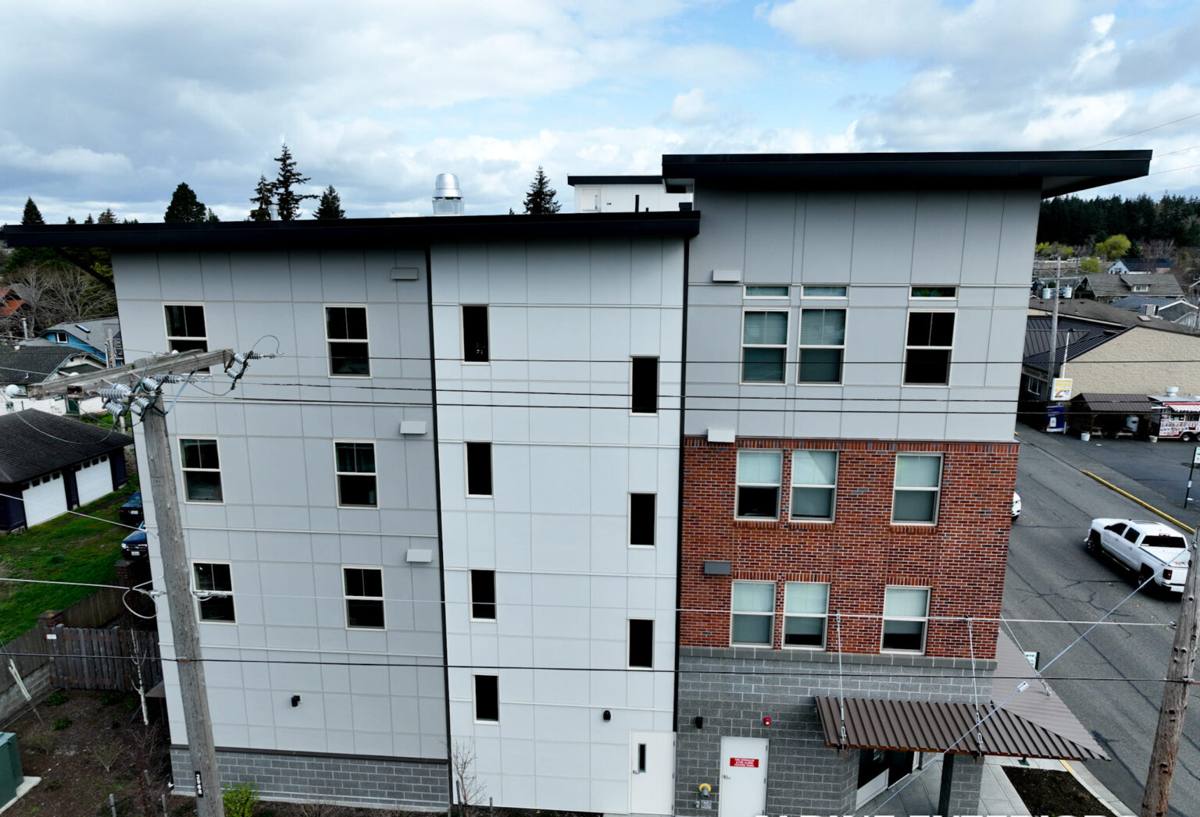
What ColorPlus Technology Actually Is
ColorPlus is James Hardie's factory-applied finish system. Instead of shipping raw fiber cement boards to be field-painted after installation, Hardie applies multiple coats of a baked-on, 100% acrylic finish to each board and trim piece under controlled factory conditions before it ever reaches the jobsite. The finish is cured with heat, which bonds it to the substrate more consistently than a coat of paint applied outdoors in variable temperature and humidity.
Why That Process Matters in This Climate
Field-applied paint depends on the weather the day it's sprayed or rolled — humidity, temperature, and dry time all affect how well it bonds. In a marine climate like Birch Bay's, where damp air and drizzle are common for large parts of the year, getting ideal painting conditions on-site is not something a contractor controls. A factory finish removes that variable entirely. It's cured before the truck leaves the plant, so the bond quality doesn't depend on what the weather is doing in Whatcom County that week.
What You Get With ColorPlus vs. Field Paint
- Consistent color and sheen across every board, since it's applied and cured in a controlled environment
- A finish warranty backing the color itself, separate from the substrate warranty
- No painting labor or paint costs baked into the original installation
- Touch-up product available from the same finish system if a board gets nicked during handling or a later repair
- Fewer repaint cycles over the life of the siding compared to field-painted materials
How Salt Air and Moss Season Affect Painted Siding
Birch Bay sits right on the water, which means airborne salt is a constant low-level presence on every exterior surface. Salt is abrasive to weaker finishes and can accelerate fading and chalking on paints that aren't formulated to resist it. Combine that with a moss and algae season that runs long here — anywhere shaded, north-facing, or under tree cover stays damp for extended stretches — and you have two separate stresses working on your siding's color at once: UV/salt fading on sun-exposed walls, and organic growth staining shaded ones.
A resilient finish doesn't stop moss from ever growing on a wall (nothing does, if that wall stays wet enough long enough), but it does affect how easily grime and organic staining rinse off during routine cleaning, and how much the color underneath continues to fade or chalk over time. This is one of the practical reasons we standardized on Hardie's ColorPlus system rather than field-painted alternatives — the baked-on finish holds pigment and sheen more consistently under this kind of repeated coastal exposure.
Choosing a Color for a Coastal Whatcom County Home
Think About Sun Exposure Per Elevation
Most homes have one or two elevations that take the brunt of afternoon sun and weather, and others that stay shaded most of the day. Darker colors absorb more heat and, over time, can show fading differently than the same color on a shaded wall. It's worth discussing with your contractor which elevations face west and south before finalizing a color, especially for deep or saturated tones.
Consider the Neighborhood and Terrain
Birch Bay's mix of waterfront homes, wooded lots, and open coastal properties all read color differently. A muted, cooler-toned palette tends to sit naturally against Pacific Northwest greenery and gray coastal skies, while brighter or warmer tones can stand out more starkly. Neither is wrong — it's a matter of what fits the lot and what you want the house to say from the street.
Match Trim and Field Color Intentionally
Hardie's lineup includes both field (main wall) colors and coordinated trim colors designed to be paired together. Using the manufacturer's intended pairings takes the guesswork out of contrast and makes sure the finish warranty applies cleanly across every component, since mixing in unrelated painted trim can complicate both the look and the warranty coverage.
Comparing Finish Approaches
| Factor | ColorPlus (Factory-Applied) | Field-Applied Paint |
|---|---|---|
| Where it's applied | Factory, controlled environment | On-site, weather-dependent |
| Cure process | Heat-cured before shipping | Air-dried outdoors |
| Consistency board-to-board | Uniform across the run | Varies with application conditions |
| Typical repaint interval | Longer, finish-specific warranty applies | Shorter, depends on paint quality and prep |
| Salt/UV resistance | Engineered into the finish formulation | Depends entirely on paint chosen |
| Touch-up availability | Matched touch-up product from Hardie | Requires custom color matching |
HZ5 Engineering and Why It Pairs With the Finish
James Hardie makes climate-specific product lines called HZ (HardieZone) systems, engineered for different regional exposure levels. Homes in this part of Washington fall under the HZ5 line, formulated for wetter, harsher climates including wind-driven rain and moisture cycling. The point of pairing HZ5 substrate engineering with the ColorPlus finish is that the board itself and the color on top of it are both built for the same conditions, rather than a general-purpose board wearing a general-purpose paint job. That combination is a core reason we install Hardie exclusively rather than mixing in other fiber cement or composite products that don't offer the same region-specific engineering.
What Correct Installation Means for Color Longevity
Even the best finish underperforms if the installation doesn't respect the manufacturer's specifications. A few installation details directly affect how well ColorPlus holds up over time:
- Proper fastener placement — face nailing or blind nailing per Hardie's specs prevents cracking that exposes unfinished substrate
- Correct gaps and clearances — siding held off decks, roof lines, and grade at the specified distances prevents chronic moisture wicking that stresses the finish from behind
- Sealed cut edges — field cuts need touch-up sealant on exposed edges so moisture can't get behind the factory finish
- Compatible caulking and paint at trim joints — using products that aren't compatible with the ColorPlus system can cause visible mismatch or premature wear at seams
- Correct flashing behind the cladding — the best finish in the world doesn't help a wall that's staying wet behind the boards
This is why we treat installation as part of the color decision, not a separate step. A beautiful color choice installed poorly will show problems at the seams and cut edges well before the finish itself would normally show wear.
Maintaining ColorPlus Siding in This Climate
ColorPlus siding is low-maintenance, not no-maintenance. A periodic gentle rinse — garden hose pressure, not a pressure washer aimed directly at seams — removes salt residue and surface grime before it has a chance to dull the finish. Keeping gutters clear and trimming back vegetation that shades a wall helps limit the moss and algae growth that's common in shaded, damp spots around Birch Bay. If a board is ever damaged, Hardie's matched touch-up system means a repair doesn't require repainting an entire elevation to blend it in.
Quick Color-Selection Checklist
- Identify which elevations get the most direct sun and weather exposure
- Request physical color samples and view them on-site in different light, not just on a screen
- Confirm trim and field colors are from Hardie's coordinated palette
- Ask your contractor which HZ5 product line and profile fit your home's exposure
- Review the finish warranty terms separately from the product warranty
- Plan a simple rinse-down maintenance routine before the siding goes up, not after
Our Approach
We install James Hardie fiber cement exclusively — no vinyl, no LP SmartSide, no primed wood, no other fiber cement brands. That's a deliberate standard, not a default. For homes on this stretch of Whatcom County coastline, we've found that the combination of HZ5-engineered substrate and factory-cured ColorPlus finish holds color and performs against salt air, driving rain, and moss season more reliably than the alternatives, and it lets us stand behind both the material and the installation with one consistent system.
If you're weighing color options or just want to see physical samples against your home's actual light and exposure, we're happy to walk through it with you. Reach out for a free, no-pressure estimate — there's a form right below this page.