 Birch Bay Siding
 Siding Built for the California Creek Stretch of Birch Bay
California Creek sits along the quieter southern edge of Birch Bay, where the shoreline curves and the marine influence off the Salish Sea stays close year-round. Homes here get a steady dose of what makes Whatcom County exteriors work harder than exteriors almost anywhere else in the state: salt-laden air moving in off the water, long stretches of driving rain in the fall and winter, and a moss season that can run from October well into spring. If you own a home near California Creek, you already know your siding, trim, and roofline take a different kind of beating than a house twenty miles inland.
We're a local crew that works this coastline regularly, and this page walks through what that climate actually does to a house here, how we approach siding, roofing, window, and deck work for this specific area, and why the products we choose to install (and the ones we don't) matter more here than in a drier climate.
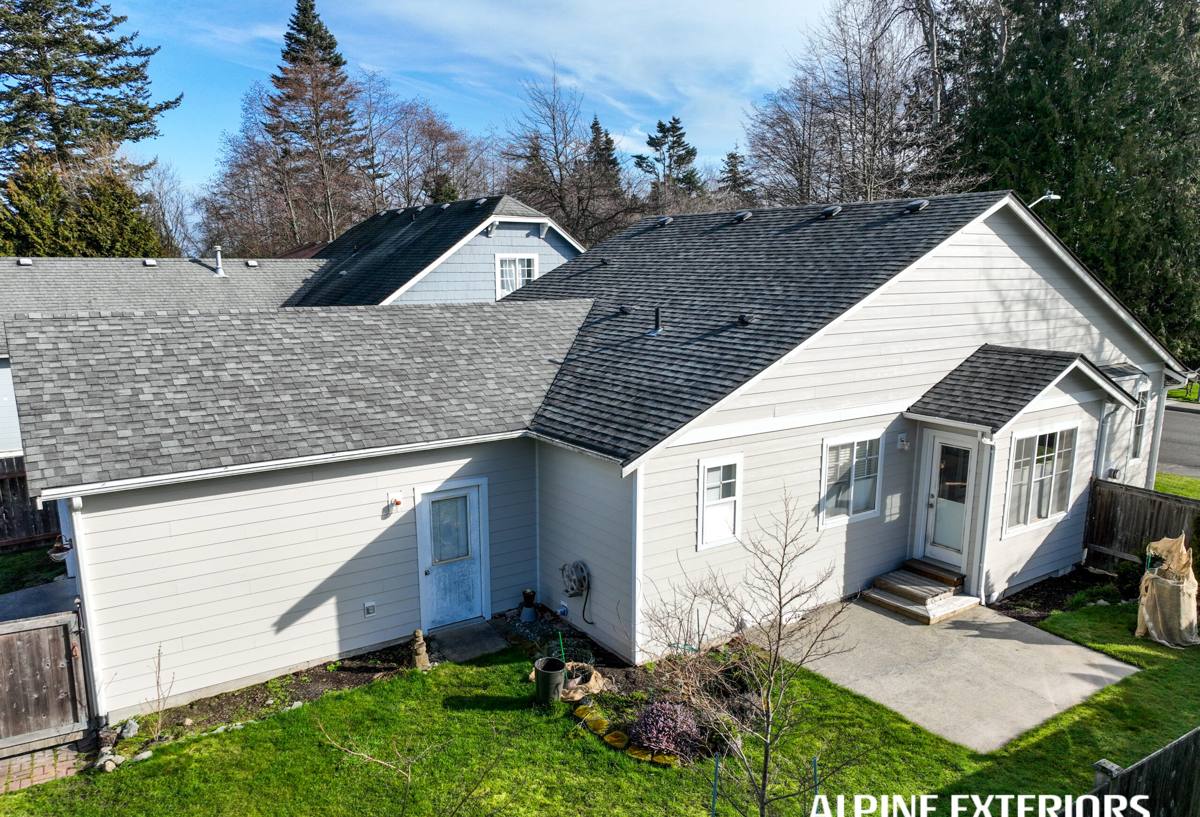
What the Climate Does to Homes Near California Creek
Salt Air and Metal Fasteners
Proximity to Birch Bay's shoreline means airborne salt settles on siding, trim, and any exposed metal. Over years, that accelerates corrosion on uncoated or poorly coated fasteners and hardware. It also means paint films and caulk joints get tested constantly — salt air combined with UV and moisture cycling breaks down lesser coatings faster than a straightforward "rain and sun" climate would.
Driving Rain
Storms coming off the water don't just fall straight down — wind-driven rain gets pushed sideways into wall assemblies, especially on west- and south-facing elevations. That's a water-management problem as much as a materials problem. Flashing details, house wrap laps, and how siding is installed around windows and penetrations matter as much as what the siding itself is made of.
Moss and Sustained Moisture
Whatcom County's long wet season keeps north-facing walls, shaded siding, and anything under tree cover damp for extended stretches. That's exactly the environment moss and algae need to take hold. On wood-based or fiber products that aren't properly sealed and finished, sustained moisture exposure also raises the risk of swelling, delamination, and rot at edges and cut ends over time.
Why We Install Only James Hardie Fiber Cement
We made a decision a long time ago to standardize on James Hardie siding and trim, and we don't install LP SmartSide, vinyl, Cemplank, Allura, primed spruce, or cedar. That's not a marketing position — it's a practical one, shaped by watching how different materials actually perform in this climate over years, not just in a showroom.
What Each Alternative Gets Right — and Where It Struggles Here
- Vinyl is inexpensive and low-maintenance in mild climates, but it expands and contracts significantly with temperature swings, can crack in impact or cold, and isn't fire-resistant — a real consideration as regional wildfire smoke and dry-season risk have become more common even in wetter coastal counties.
- Primed spruce and cedar are attractive, traditional choices, but they're wood. Wood needs consistent repainting and caulking to stay ahead of moisture, and in a climate with this much sustained dampness and moss pressure, that maintenance window shrinks fast. Cut ends and butt joints are especially vulnerable to water intrusion.
- LP SmartSide is an engineered wood product with real strengths, but like other wood-based sidings it depends heavily on intact factory coatings and careful field sealing of every cut edge — miss one spot in a climate this wet, and moisture finds it.
- Cemplank and Allura are both fiber cement competitors to James Hardie, and fiber cement as a category is the right general direction for this climate. Our choice to install Hardie specifically comes down to their ColorPlus factory-finish process, their HZ5 product engineering for cold/wet climates, and the strength of their transferable warranty — differences in manufacturing consistency and finish durability that show up over a 20- or 30-year timeline, not in the first few years.
Why James Hardie Specifically
James Hardie fiber cement is non-combustible, doesn't support moss and mildew growth the way wood does, and holds its shape in both the wet winters and the increasingly warm, dry summers Whatcom County has seen. The ColorPlus factory finish is baked on under controlled conditions — not brushed on in the field — which means better fade resistance and a coating that isn't dependent on job-site weather the day it's applied. Hardie's HZ5 product line is specifically engineered for climates like ours, with freeze-thaw and moisture cycling built into the spec. And when it's installed to Hardie's guidelines, the transferable warranty is one of the strongest in the industry — something that matters if you ever sell the home.
How We Approach Siding Installation Near California Creek
| Step | Why It Matters in This Climate |
|---|---|
| Inspect and repair sheathing | Wind-driven rain finds weak spots — soft or water-damaged sheathing gets addressed before new siding goes up, not covered over. |
| Install or verify weather-resistive barrier | A continuous, properly lapped house wrap is the layer that actually keeps bulk water out behind the siding. |
| Detail flashing at windows, doors, and penetrations | These are the highest-risk points for wind-driven rain intrusion on shoreline-adjacent homes. |
| Install James Hardie panels or lap siding to spec | Correct fastener spacing, gapping, and caulking are what the Hardie warranty is actually built on. |
| Prime and seal all field-cut edges | Factory finish only protects factory edges — every cut made on site needs to be sealed the same day. |
| Final inspection for gaps, clearances, and drainage | Siding needs proper clearance from grade, decks, and roof lines so water has somewhere to go. |
Roofing, Windows, and Decks in the Same Climate
Siding doesn't work in isolation — the roof, windows, and any attached deck are all part of the same building envelope, and they're all exposed to the same salt air, driving rain, and moss conditions. When we're on site for a siding project near California Creek, we're also looking at how the roof edge, gutters, and window flashing interact with the new wall assembly. A tight, well-flashed roof-to-wall transition and windows that are properly integrated with the water-resistive barrier matter as much as the siding material itself.
Decks in this area face their own version of the same problem: sustained moisture, shaded ground-level framing that stays damp, and salt-influenced hardware corrosion. Whether we're replacing siding, re-roofing, swapping out aging windows, or rebuilding a deck, the goal is the same — manage water, use materials suited to a marine climate, and detail the connections between systems correctly.
Signs Your Siding Is Struggling in This Climate
- Persistent moss or dark streaking on north-facing or shaded walls that comes back shortly after cleaning
- Soft spots, bubbling, or visible swelling at panel seams or cut edges
- Paint that's chalking, peeling, or failing faster than expected for its age
- Gaps opening up at trim boards or corner joints
- Rust staining running down from fasteners or metal flashing
- Rising energy bills that may point to a compromised wall assembly letting in moisture and drafts
None of these are emergencies on their own, but they're worth a professional look before they turn into sheathing or framing repairs.
Why a Local Crew Matters Here
California Creek and the surrounding Birch Bay area have a specific microclimate — closer to open water, more directly exposed to wind-driven weather, and slower to dry out than inland parts of Whatcom County. A crew that works this shoreline regularly knows which elevations tend to take the worst of the weather, how local permitting and inspection work, and what actually holds up here versus what looks fine on a spec sheet. We're not generalists working from a national playbook — we're building and repairing exteriors in this exact climate, on this exact coastline, on a regular basis.
What to Expect from a Project Here
Planning and Product Selection
We start with an on-site look at your home's current siding, trim, and any moisture or ventilation issues, then talk through James Hardie's product lines, textures, and ColorPlus color options that fit both your home's style and this climate's demands.
Scheduling Around Weather
Given how much rain this area sees in fall and winter, we plan installation windows carefully and sequence work to keep your home protected through the process — sheathing and house wrap don't sit exposed longer than necessary.
Cleanup and Final Walkthrough
Every project ends with a full site cleanup and a walkthrough where we point out flashing details, clearances, and anything you should keep an eye on going forward — especially around moss-prone areas.
Get a Free, No-Pressure Estimate
If your siding, roof, windows, or deck near California Creek are showing signs of wear from the salt air, rain, and moss that come with living on this stretch of the Whatcom County coast, we're happy to take a look. Use the form below to request a free estimate — no pressure, just a straight assessment of what your home actually needs.