 Birch Bay Siding
 Exterior Work Built for Life Near the Water
Point Whitehorn sits along the Whatcom County shoreline just outside Birch Bay, close enough to the Salish Sea that homes here live with a different set of exterior conditions than houses a few miles inland. Wind off the water carries salt and moisture onto siding, trim, and roofing almost year-round. Rain arrives sideways as often as it falls straight down. And the shaded, damp stretches of the year give moss and algae plenty of time to take hold on anything that stays wet too long. None of that is unusual for this part of Washington, but it does mean exterior materials and installation practices that work fine in a drier climate can fall short here.
We work throughout Birch Bay and the surrounding Whatcom County shoreline, and Point Whitehorn is a neighborhood we know well. This page walks through what the local climate actually does to a house over time, how we handle siding, roofing, windows, and decks to hold up against it, and why we standardized on one siding product instead of offering a menu of options.
What Salt Air, Driving Rain, and Moss Actually Do to a House
Salt Air
Airborne salt is corrosive to unprotected metal fasteners, flashing, and trim, and it accelerates the breakdown of finishes that aren't engineered to resist it. Over years, homes closer to the water tend to show fading, chalking, and finish failure earlier than homes set back from the shoreline, even when the underlying material is the same.
Driving Rain
Wind-driven rain doesn't just wet a wall surface, it pushes water sideways into laps, seams, and any gap in the flashing or caulking. A siding system that depends on paint film or caulk alone to stay watertight is more exposed here than in a calmer inland setting. The details at butt joints, window and door openings, and horizontal trim matter more in a place like Point Whitehorn than almost anywhere else in the county.
Moss and Algae
Whatcom County's damp, mild winters and shaded lots near the water give moss, algae, and mildew a long window to establish themselves on roofs, siding, and decking. Surfaces that hold moisture, or that have textured or porous finishes, are more hospitable to growth. Left unaddressed, sustained moisture and organic growth can work into seams and fastener points and shorten the life of the material underneath.
Why We Install Only James Hardie Fiber Cement Siding
We get asked fairly often why we don't offer vinyl, LP SmartSide, cedar, primed spruce, or other fiber cement brands. It comes down to a simple standard: we only put products on a home that we're confident will perform in this specific climate for decades, not just look good on installation day.
James Hardie fiber cement is non-combustible, dimensionally stable, and manufactured with regional climate in mind. Hardie's HZ5 product line is engineered specifically for the wetter, cooler conditions of the Pacific Northwest, which matters directly for a shoreline neighborhood like Point Whitehorn. The ColorPlus factory-applied finish is baked on under controlled conditions rather than field-painted, which gives it more consistent resistance to fading and moisture intrusion than a finish applied on site. Hardie backs the product with a strong transferable warranty, which carries real weight for the eventual resale of a coastal home.
Fiber cement isn't magic. It still needs correct flashing, proper clearance from grade and hard surfaces, and attention to every seam and penetration. But the material itself doesn't absorb water and swell or rot the way wood-based products can, and it doesn't become brittle or discolored under UV and salt exposure the way some vinyl products do over a long enough timeline. That combination is why we standardized on it rather than carrying multiple product lines.
How Common Siding Materials Compare in This Climate
| Material | Moisture & Salt Air Behavior | Maintenance | Typical Lifespan | Fire Resistance |
|---|---|---|---|---|
| James Hardie fiber cement | Engineered for wet coastal climates; does not absorb water like wood | Occasional wash; factory finish resists fading | Multiple decades with correct install | Non-combustible |
| Vinyl | Can warp, fade, or become brittle with prolonged sun and salt exposure | Low, but panels can crack and are hard to color-match when replaced | Variable, often shorter in harsh coastal exposure | Combustible |
| Cedar / primed spruce | Absorbs moisture; prone to rot, cupping, and moss growth if not maintained | Regular repainting/staining and moisture monitoring required | Shorter unless aggressively maintained | Combustible |
| LP SmartSide (engineered wood) | Treated to resist moisture, but still wood-based and seam-sensitive | Caulking and finish upkeep needed at seams and cuts | Depends heavily on installation and upkeep | Combustible |
Roofing for Point Whitehorn Homes
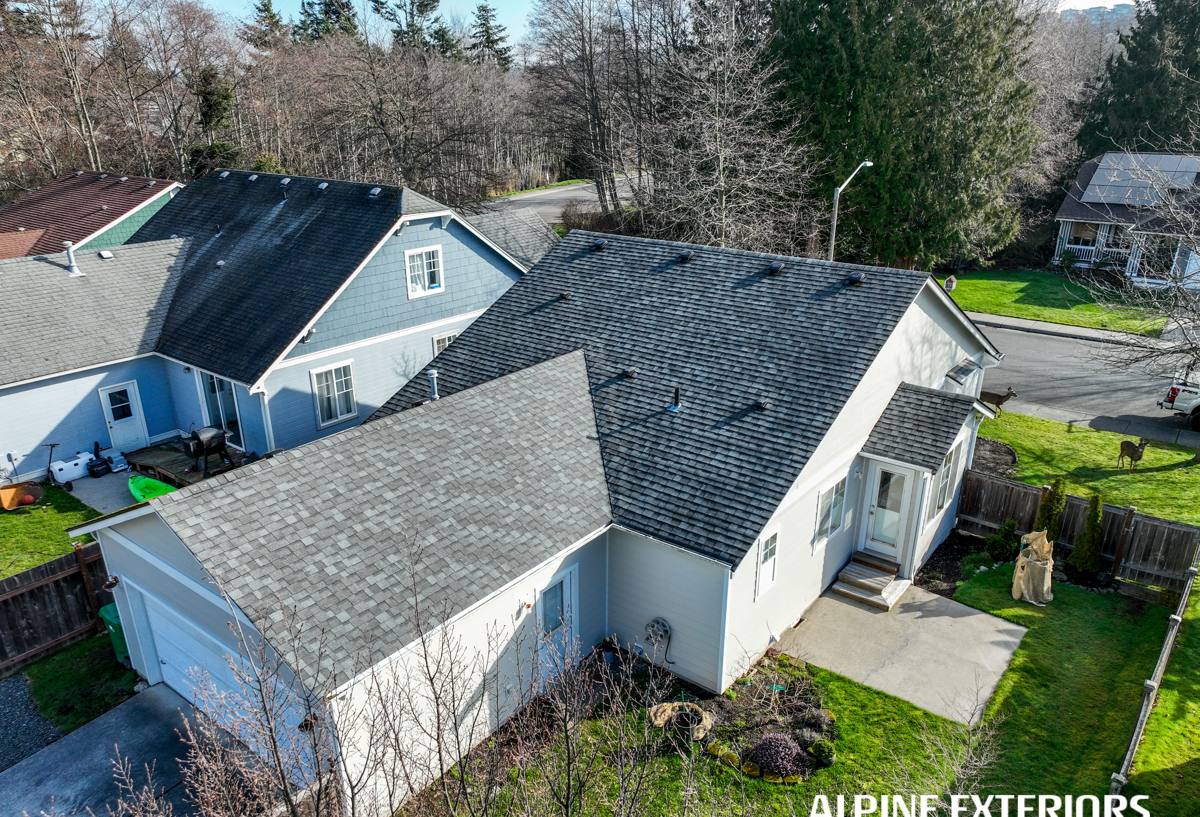
A roof near the water takes a similar beating to siding, just from a different angle. Moss buildup on north-facing and shaded roof slopes is one of the most common issues we see in Birch Bay and the surrounding shoreline neighborhoods, and it's rarely just cosmetic. Moss holds moisture against roofing material and can work under shingle edges over time. Flashing at valleys, chimneys, and roof-to-wall transitions is where wind-driven rain finds its way in, so those details get particular attention on any roof we install or repair here. We look at ventilation too — a roof deck that can't breathe traps moisture underneath, which speeds up problems whether or not moss is visible from the ground.
Windows That Actually Keep the Weather Out
Window performance in a place like Point Whitehorn is as much about installation as it is about the window itself. Flashing and sealing around the rough opening determine whether wind-driven rain stays outside or finds its way into the wall cavity. We integrate window flashing with the siding water-management plan rather than treating them as separate trades, because a gap between the two is one of the most common sources of hidden moisture damage in coastal homes. Beyond weather-tightness, updated windows also help with the temperature swings and condensation that come with a marine climate, particularly in older homes with original single-pane or early double-pane units.
Decks Built for a Marine Climate
Outdoor living space is part of why people choose to live near the water, but decks here face the same moisture and moss pressure as roofs and siding, plus foot traffic and sun exposure on top of it. Ledger board attachment and flashing where the deck meets the house is one of the most important — and most often overlooked — details in deck construction, since it's a direct path for water into the structure if it's done wrong. Decking material choice, gap spacing for drainage, and joist protection all affect how well a deck resists the moss and mildew that show up on shaded or infrequently used outdoor surfaces in this climate.
Why a Local Crew Matters
Whatcom County's shoreline communities don't all behave the same way. A house set back in the trees a few miles inland can dry out between storms faster than a home with open exposure toward the water. Crews who work Birch Bay and the surrounding area regularly develop a feel for which details need extra attention on a given lot — where moss tends to establish first, which wall faces take the worst of the driving rain, where drainage tends to be a problem. That local pattern recognition doesn't replace a proper inspection of your specific home, but it does mean fewer surprises and fewer callbacks for issues that a crew unfamiliar with this climate might not think to check.
What to Look For Before Hiring for Exterior Work
- A written scope that specifies flashing details at windows, doors, and horizontal trim, not just "siding installation"
- Confirmation of proper clearance between siding and grade, decks, patios, and roof lines
- Manufacturer training or certification for the specific siding product being installed
- A clear explanation of how the crew handles moisture-prone areas: butt joints, penetrations, and roof-to-wall transitions
- References or examples of work completed in similarly exposed coastal conditions
- A warranty that's explained in plain terms, including what's covered by the manufacturer versus the installer
Getting Started
Whether you're dealing with visible moss on the roof, siding that's showing its age, drafty windows, or a deck that needs attention before it becomes a bigger repair, the first step is usually just an honest look at what's actually going on and what it will take to fix it right. If you're in Point Whitehorn or anywhere else around Birch Bay, we're glad to come take a look, answer questions, and put together a free, no-pressure estimate for the work your home actually needs.