 Birch Bay Siding
 Exterior Work Built for Cottonwood Beach's Coastal Conditions
Cottonwood Beach sits right up against the water along Birch Bay in Whatcom County, and that beachfront location shapes almost everything about how a house ages here. Homes in this neighborhood take a steady diet of salt-laden air, wind-driven rain coming off the bay, and long stretches of gray, damp weather that keep north-facing walls and shaded siding runs wet for days at a time. Add in the moss and algae growth that thrives in our mild, wet Pacific Northwest winters, and you've got a set of conditions that will find every weak point in a home's exterior — a hairline gap in caulking, a section of siding that was never back-primed, a roof valley that traps debris.
We're a local siding, roofing, window, and deck contractor working the Birch Bay area, and Cottonwood Beach is part of our regular service territory. We're not a national outfit dispatching a different crew every time — we know how homes on this stretch of shoreline actually perform over the years, because we're the ones who get called back when a product or an installation shortcut didn't hold up to the salt air and rain.
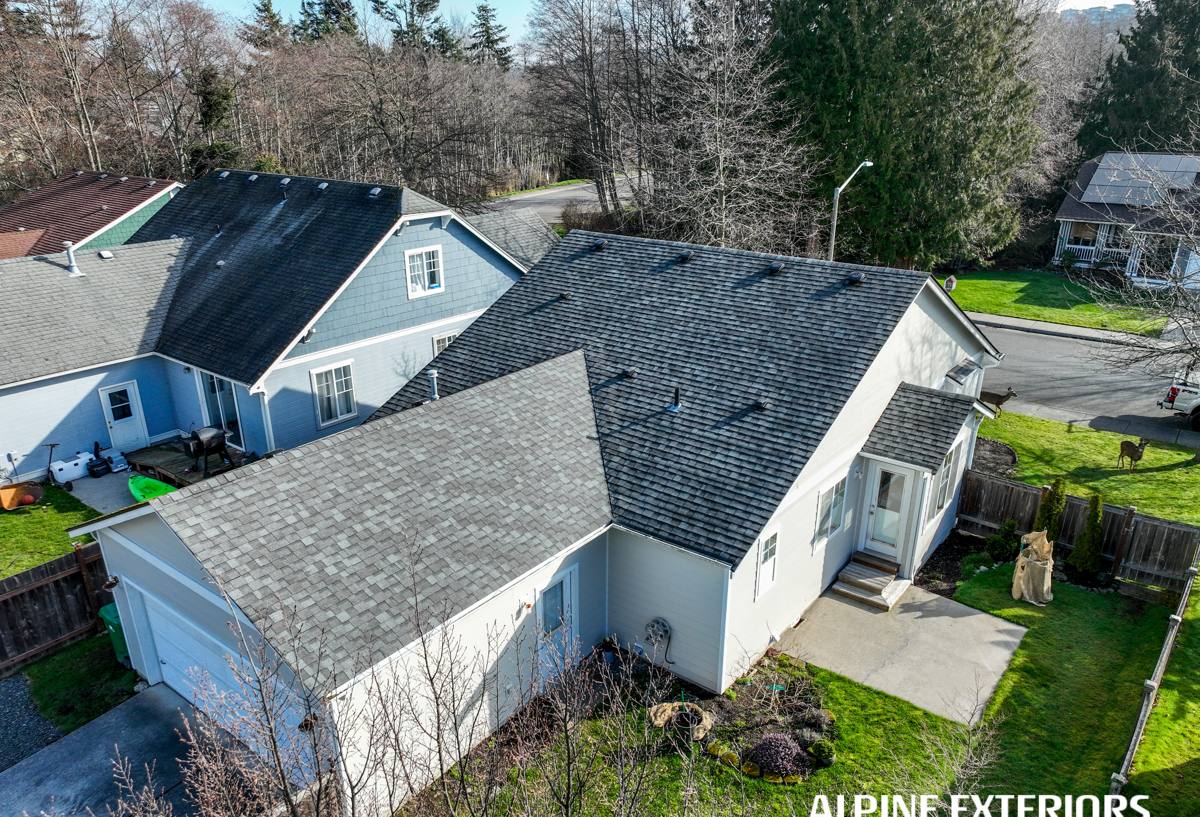
What Salt Air and Driving Rain Actually Do to a House
Salt Air
Airborne salt is corrosive to metal fasteners, flashing, and hardware, and it accelerates the breakdown of paint films and caulking. On a beachfront property like the ones in Cottonwood Beach, that corrosive exposure isn't occasional — it's constant, carried in on the wind off the bay whether or not there's a storm happening. Materials and fasteners that aren't rated for coastal exposure will show pitting, rust streaks, and premature paint failure years before they would inland.
Driving Rain
Wind off the water doesn't just drop rain straight down — it drives it sideways into wall assemblies, siding laps, window frames, and door thresholds. That means the details matter more here than they do on a sheltered inland lot: proper flashing above windows and doors, correctly lapped siding courses, sealed penetrations, and a house wrap or weather-resistive barrier that's actually doing its job. A siding job that would hold up fine in a low-wind neighborhood can fail within a few years on a bay-facing wall if the installer skipped the details.
Moss and Sustained Moisture
Our wet season here runs long, and shaded or north-facing exterior surfaces can stay damp for extended periods. That's exactly the environment moss and algae need to take hold on roofing, siding, and decking. Beyond the cosmetic green streaking, sustained moisture against a wood-based product accelerates rot, and moss growth on a roof can lift shingles and hold water against the surface longer than it should sit.
Siding: Why We Only Install James Hardie Fiber Cement
Given what Cottonwood Beach homes are up against — salt exposure, wind-driven rain, and constant moisture cycling — we made a deliberate decision as a company to install only James Hardie fiber cement siding. We don't install vinyl, LP SmartSide, Cemplank, Allura, primed spruce, or cedar, and we think homeowners deserve an honest explanation of why, not just a sales pitch for what we do offer.
The Trade-offs With Other Products
- Vinyl siding is affordable and low-maintenance in mild climates, but it can become brittle over time, and its seams and panel design aren't the best match for sustained wind-driven rain — water can find its way behind panels at a coastal exposure like this one.
- Wood-based siding (LP SmartSide, primed spruce, cedar) has real appeal — natural look, workability — but wood-based products are fundamentally more vulnerable to the moisture and moss conditions we see here. Even with quality primer and paint, cut edges and fastener penetrations are entry points for water, and a long wet season doesn't give the material much chance to fully dry out between rain events.
- Other fiber cement brands (Cemplank, Allura) are legitimate competitors to Hardie in the fiber cement category, and we're not going to make unfounded claims about their performance. Our decision to standardize on Hardie specifically comes down to their climate-engineered HZ product lines, factory-applied ColorPlus finish, and the depth of their installed track record and warranty support — consistency we can stand behind on every job, rather than managing multiple product lines and installation specs.
Why Hardie Fits This Coastline
James Hardie fiber cement is non-combustible, dimensionally stable, and engineered specifically for the freeze-thaw and moisture cycling of Pacific Northwest weather through its HZ5 product line. The factory-applied ColorPlus finish is baked on under controlled conditions, which gives it better fade and chip resistance than field-applied paint — a real advantage when a wall is facing constant salt air and sun exposure. Hardie also backs its siding with a strong transferable limited warranty, which matters to homeowners who may sell before the siding's full service life is up.
None of that replaces correct installation. Fiber cement performs the way it's designed to only when it's installed to Hardie's published specifications — proper clearances, fastening patterns, and flashing details. That's the other half of why we standardized on one product system: it lets our crews build deep, consistent expertise in installing it correctly, rather than spreading that expertise thin across five different product lines with five different installation quirks.
Roofing for a Bay-Facing Roofline
A roof in Cottonwood Beach deals with the same wind and moisture load as the siding below it, plus direct exposure to sun, wind uplift off the water, and moss colonization in shaded valleys and north slopes. We look at ventilation, underlayment quality, flashing at penetrations and valleys, and how well the roofing material sheds the kind of driving rain this location gets. Regular moss treatment and debris clearing go a long way toward extending a roof's service life here — a roof that's allowed to hold wet moss mats will fail well ahead of its expected lifespan, regardless of how good the shingle or material was to begin with.
Windows: Sealing Out Wind-Driven Rain
Windows are one of the most common failure points on a beachfront home, not because the window unit itself failed, but because the flashing and sealant around it did. Wind-driven rain will exploit any gap around a window frame, and once water gets behind the exterior cladding it can travel and cause damage well away from the original entry point before anyone notices. When we replace windows in Cottonwood Beach, correct flashing integration with the wall's water-resistive barrier is treated as seriously as the window unit itself. We also talk with homeowners about glass and frame options suited to coastal wind exposure and energy performance, since a bay-facing home often has more exposed glazing area and benefits from a tighter, better-sealed unit.
Decks: Built for Wet, Salty Air
Outdoor living space is part of the appeal of living on the bay, but decks here take a beating — salt air corrodes standard fasteners and hardware, and sustained moisture plus shade encourages algae and moss growth on deck boards, making them slick and accelerating wear. We build and repair decks with fastening hardware and structural connectors rated for coastal, corrosive exposure, and we talk through decking material trade-offs — traditional wood versus composite — based on how much maintenance a homeowner actually wants to keep up with a deck exposed to bay conditions year-round.
Cost Factors for Cottonwood Beach Exterior Projects
Every home and project is different, so we don't publish blanket pricing, but these are the main factors that tend to move the number on siding, roofing, window, and deck work in this area:
| Factor | Why It Matters Here |
|---|---|
| Home size and wall/roof complexity | More corners, dormers, and valleys mean more flashing detail and labor, especially where wind-driven rain needs extra attention |
| Existing exterior condition | Hidden moisture or rot damage behind old siding or around window openings is more common on long-exposed coastal homes and can add scope once uncovered |
| Access and site conditions | Waterfront lots can have limited staging area or steeper grades, affecting equipment and labor time |
| Material selection | Fiber cement siding profile, trim details, and Hardie color/finish choice affect material cost |
| Fastener and hardware specification | Coastal-rated, corrosion-resistant fasteners cost more than standard hardware but are necessary this close to the water |
| Scope of work | Full siding replacement versus repair, or bundling siding with roofing/window/deck work, changes both cost and long-term value |
What a Cottonwood Beach Homeowner Should Check On Their Own Exterior
- Moss or algae streaking on north-facing or shaded siding and roof sections
- Rust staining around fasteners, hinges, or metal trim and flashing
- Caulking that's cracked, shrunk, or pulled away from window and door trim
- Soft or spongy spots on wood-based siding, trim, or deck boards, especially near ground contact or fastener penetrations
- Paint that's chalking, peeling, or fading unevenly, particularly on walls facing the bay
- Standing water or debris buildup in roof valleys or gutters
- Deck hardware showing corrosion or deck boards that feel slick even when dry
Why a Local Crew Matters Here
A contractor who mostly works inland jobs may not think twice about standard fasteners, a lighter caulking spec, or skipping extra flashing detail because it usually doesn't come back to bite them. On a bay-facing home in Cottonwood Beach, those shortcuts show up fast — within a few seasons, not a few decades. Working this area regularly means we see how our own past work holds up, and we adjust our approach based on that real-world feedback rather than a generic spec sheet. That's true whether we're on a project in Cottonwood Beach itself or elsewhere around Birch Bay and Whatcom County.
If you're noticing moss buildup, salt-related wear, or rain intrusion around your siding, roof, windows, or deck, we're glad to take a look. Reach out for a free, no-pressure estimate using the form below.