 Birch Bay Siding
 California Creek sits close enough to the water that its homes take a different kind of weather beating than houses a few miles inland in Whatcom County. Salt-laden air off the Strait works into window frames and hardware year-round, driving rain finds every gap in a tired seal, and the long moss season keeps everything damp for months at a stretch. If your windows are original to the house or getting up into their second or third decade, you've probably already noticed the signs: sticking sashes, fogged glass, drafts you can feel from across the room, or wood trim that's gone soft at the corners.
Window replacement in this part of Birch Bay isn't a cosmetic upgrade — it's maintenance against a specific climate. We've worked on homes throughout California Creek and the surrounding area long enough to know which failure points show up first here, and we build every install around avoiding them.
Why California Creek Windows Wear Out Faster
Homes a mile or two inland don't fight the same battle. Proximity to saltwater changes how fast metal components corrode, how quickly wood finishes break down, and how much moisture a wall assembly has to shed over a given winter. A few things we see consistently in this neighborhood:
- Corroded hardware — locks, cranks, and balance mechanisms pit and seize well before the glass itself fails, especially on the side of the house facing the water.
- Failed seals on dual-pane units — once the seal between panes lets go, moisture gets between the glass and you get permanent fogging that no amount of cleaning fixes.
- Soft or rotted wood framing — sustained dampness and moss growth around sills and lower corners break down untreated or poorly sealed wood over time.
- Wind-driven rain intrusion — older flashing details and worn weatherstripping let water push past the frame during storms coming off the water, not just run down the glass.
None of this means every window needs replacing on a set schedule. It means the region shortens the realistic lifespan of a lot of window types, and it changes what "correct installation" actually requires here versus a drier inland climate.
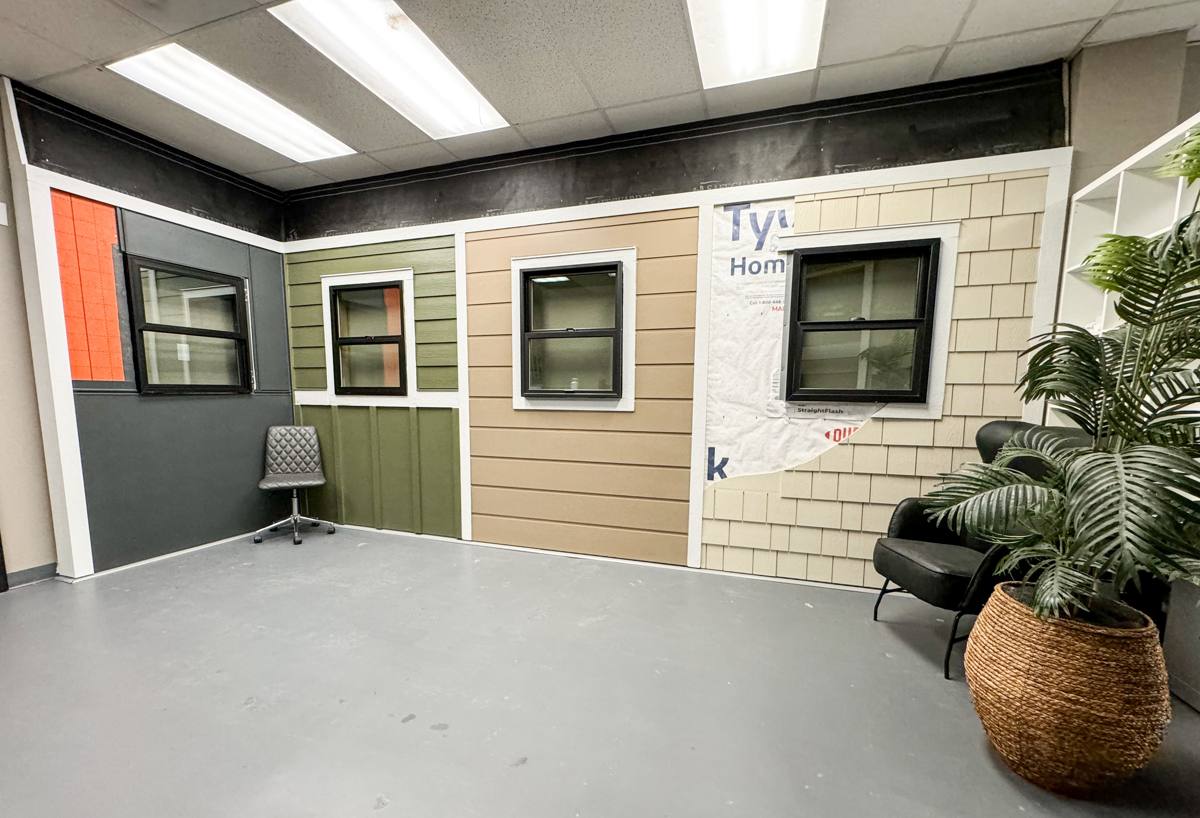
What a Correct Job Looks Like Here
A window replacement done right in California Creek isn't just popping in a new unit and caulking the edges. The details that matter most in this climate are mostly the ones you won't see once the job is finished.
Flashing and Water Management
Every opening gets flashed to shed water down and out, not just sealed with caulk and hoped for. Sill pans, proper head flashing, and correct lap sequencing (each layer overlapping the one below it) are what actually keep driving rain from working its way behind the window over the years. Caulk alone is a maintenance item that eventually fails — flashing is a system that doesn't depend on a bead of sealant staying perfect forever.
Sealing Against Salt Air, Not Just Draft
Standard weatherstripping and sealant choices that work fine twenty miles inland can degrade faster this close to the water. We pay attention to hardware finishes and sealant products that hold up under salt exposure, so you're not back to sticking locks and cracked gaskets in five years.
Framing and Rot Repair Before the New Unit Goes In
If there's soft wood, water staining, or moss buildup around the existing opening, that gets addressed before a new window ever goes in. Installing a new window into a compromised rough opening just hides a problem temporarily — it doesn't fix it, and it can void the warranty on the new unit.
Choosing the Right Window Type for This Climate
There's no single "best" window for every California Creek home — it depends on your home's age, exposure to weather off the water, and what you're trying to solve (drafts, condensation, noise, appearance). Here's how the common options generally compare for a marine, high-moisture setting like this one:
| Frame Material | Moisture/Salt Air Behavior | Maintenance | Typical Fit |
|---|---|---|---|
| Vinyl | Doesn't rot or corrode; performs well near salt air | Low — no painting or sealing needed | Most homes prioritizing durability and value |
| Fiberglass | Very stable in temperature and moisture swings | Low | Homes wanting a stronger frame with paintable finish |
| Aluminum | Prone to corrosion pitting near saltwater over time | Moderate — hardware and finish need monitoring | Best limited to covered or less-exposed openings |
| Wood (clad exterior) | Interior wood warmth with exterior protection, but any breach in cladding invites rot | Higher — depends on cladding integrity | Homeowners prioritizing interior appearance over lowest maintenance |
For most California Creek homes we work on, vinyl or fiberglass frames make the most sense simply because they don't give salt air and moisture a foothold. That said, we'll walk through your specific exposure and goals before recommending a direction — a covered porch window facing away from the water doesn't need the same spec as one taking wind straight off the Strait.
Glass Options Worth Understanding
Beyond the frame, the glass package affects comfort and condensation control, which matters in a climate that stays damp much of the year.
- Double-pane, low-E glass — the standard for most replacements now; cuts heat loss and reduces interior condensation compared to older single-pane or basic dual-pane units.
- Argon or krypton gas fill — improves insulating performance between panes; a modest upgrade that pays off in comfort near exterior walls.
- Triple-pane — worth considering on north- or water-facing walls where wind and cold are most persistent, though it adds cost and weight.
Whatever glass package you choose, the seal quality matters as much as the spec sheet. A cheap unit with a poor edge seal will fog and fail years before a mid-grade unit installed correctly.
Our Process, Start to Finish
- On-site assessment — we look at each opening individually, checking for rot, flashing condition, and exposure to weather and salt air, not just window count and size.
- Honest recommendation — you get straight answers on what actually needs replacing now versus what can wait, and which frame/glass combination fits your home and budget.
- Measurement and ordering — precise measurements to avoid gaps that create long-term sealing problems.
- Removal and opening prep — old units come out carefully, and any soft framing or water damage found underneath gets repaired before anything new goes in.
- Installation with proper flashing — sill pans, flashing, and sealing done in the correct sequence, not shortcuts that look fine on install day and fail in year three.
- Interior and exterior finish work — trim, caulking, and cleanup so the finished opening looks right from both sides.
- Final walkthrough — we check operation, sealing, and answer any questions before we call it done.
What Affects Cost
Every home is different, but a few factors consistently drive the price of a window replacement project in this area:
| Factor | Why It Matters |
|---|---|
| Frame material chosen | Vinyl is typically the most budget-friendly; fiberglass and clad-wood options cost more upfront |
| Number of openings | Whole-house projects generally reduce per-window cost versus a single replacement |
| Existing rot or framing damage | Repair work needed before installation adds time and material |
| Window size and configuration | Larger units, special shapes, or multi-panel configurations cost more than standard sizes |
| Access and second-story work | Harder-to-reach openings take more time and equipment |
We don't quote blind. A short on-site visit lets us give you numbers that reflect your actual home rather than a generic estimate that changes once we're on the ladder.
Signs You're Overdue for Replacement
Not sure if it's time? These are the most common indicators we see on California Creek homes:
- Fogging or moisture trapped between panes that won't clear
- Windows that are difficult to open, close, or lock
- Visible gaps, drafts, or cold spots near the frame
- Soft, discolored, or moss-covered wood around the sill or trim
- Noticeably higher heating costs without another clear cause
- Condensation forming on interior glass or frames regularly through the wet season
Why Local Experience Matters for This Job
Window replacement isn't a one-spec-fits-all trade, and it matters even more in a coastal-influenced area like Birch Bay. A crew that mostly works drier inland jobs may not think twice about hardware finish, flashing detail, or sealant choice — because inland, those shortcuts often don't get punished for years. Close to the water, they get punished fast. Working regularly in California Creek and the surrounding Whatcom County coastline means we've already seen which details hold up here and which ones don't, and we build that into every quote and every install.
If your windows are drafty, fogged, sticking, or just old enough that you're wondering, we're happy to take a look. Reach out for a free, no-pressure estimate — we'll walk your home, tell you honestly what needs attention now versus later, and give you real numbers before any work begins. The form below is the easiest way to get started.