 Birch Bay Siding
 Building a Deck in One of Whatcom County's Toughest Spots
Point Roberts sits out on its own peninsula, surrounded on three sides by water and cut off by land from the rest of the United States. That geography is part of what makes it a beautiful place to have a deck — and part of what makes decks there fail faster than they should. Homes here take on salt-laden air off the Strait of Georgia and Boundary Bay almost constantly, along with driving winter rain and a moss season that can stretch from fall well into spring. A deck built with the same assumptions you'd use inland doesn't hold up the same way out here.
We build and replace decks for homeowners across Birch Bay and the surrounding Whatcom County coastline, and Point Roberts is part of that regular route for us. This page is about what a composite deck actually needs to hold up in this specific environment, and what we do differently because of it.
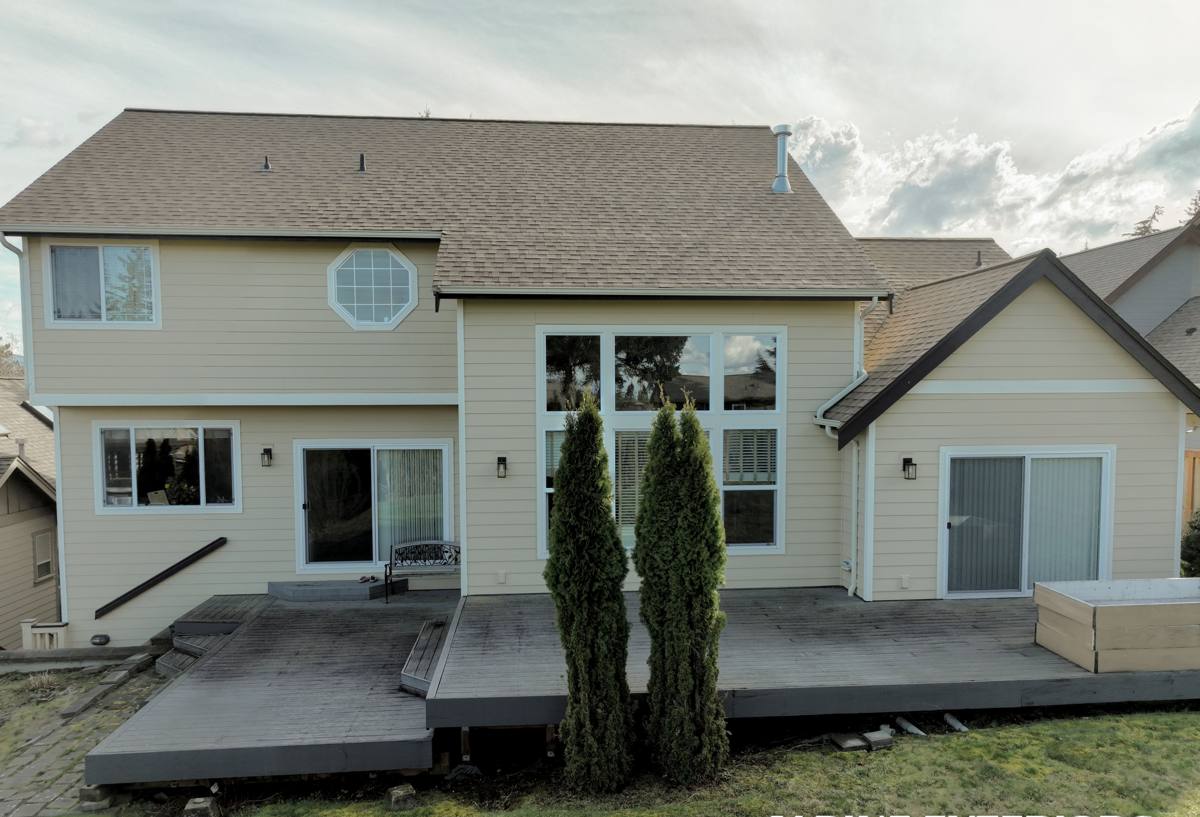
What Salt Air, Rain, and Moss Actually Do to a Deck
It's worth separating out the three main stresses, because they attack a deck in different ways and a correct build has to answer all three.
Salt Air
Airborne salt doesn't just sit on the surface — it works into fasteners, hardware, and any exposed metal connection. Over years, salt exposure accelerates corrosion in the wrong fasteners and framing connectors, which is often the real reason a deck starts to feel loose or wobbly long before the boards themselves look bad.
Driving Rain
Wind-driven rain off the water doesn't fall straight down — it gets pushed sideways and up under boards, into ledger connections, and behind fascia. A deck built without real attention to water shedding and ventilation underneath will trap moisture in exactly the places you can't see it.
Moss and Mildew
Whatcom County's long wet season gives moss and mildew months of shaded, damp conditions to establish themselves, especially on the north or tree-shaded sides of a house. On a deck, that shows up as green film on boards, slick spots that are a real slip hazard, and — on the wrong substructure — surface material that stays damp instead of drying between rains.
Why Composite Decking Is the Right Call for This Environment
We're not against wood decking as a category, and there are homeowners for whom it's the right choice. But for a peninsula environment like Point Roberts, composite decking solves problems that wood decking makes you manage forever.
- Composite boards don't absorb water the way wood does, so they're far less prone to cupping, splitting, or rot from trapped moisture.
- They don't need annual staining or sealing — a real maintenance burden on a property that isn't always easy to get to for quick weekend upkeep.
- Modern capped composite resists mold and mildew growth on the surface better than bare wood, which matters directly in a heavy moss season.
- Color and texture are baked through the cap layer, so salt air and UV don't gray or bleach the boards the way they do with wood.
The trade-off is honest: composite costs more upfront than pressure-treated lumber, and it has to be installed correctly to get the long service life it's capable of. That second part — correct installation — is where most composite deck problems actually come from, not the material itself.
What a Correct Composite Deck Build Involves
A composite deck is only as good as what's underneath it. Here's what we treat as non-negotiable on every build, and especially on a coastal property like this one.
Framing and Fasteners
We use corrosion-resistant fasteners and connectors rated for coastal exposure, not standard interior-grade hardware. In a salt air environment, this single decision is often the difference between a substructure that's solid at fifteen years and one that's failing at five.
Ledger Board Flashing
Where the deck attaches to the house, proper flashing keeps wind-driven rain from working its way behind the ledger and into the wall assembly. This is one of the most common points of hidden water damage on any deck, and it's not visible once the deck is finished — which is exactly why it has to be done right the first time.
Joist Protection
We wrap or tape joists to protect the wood framing underneath the composite decking from moisture intrusion at fastener points, extending the life of the structural frame itself, not just the visible boards.
Airflow and Drainage
Board spacing and substructure height are set to allow air to move underneath the deck so it can actually dry out between rain events, rather than staying damp — which is exactly the condition moss and mildew need to take hold.
Hidden Fastening Systems
Hidden fastener systems keep the deck surface free of exposed screw heads, which means fewer points where water and salt residue can sit and start corrosion, and a cleaner finished look.
Our Process, Start to Finish
- Site visit and assessment — we look at sun and wind exposure, drainage, existing structure condition if this is a replacement, and any tree cover contributing to moss buildup.
- Honest scope and estimate — what the job actually needs, including any substructure repair, framed out clearly before work starts.
- Material selection — matching board profile, color, and cap type to the home and to how much sun or shade the deck actually gets.
- Demo and structural prep — removing old decking, inspecting and repairing framing, addressing any hidden moisture damage found underneath.
- Flashing and framing correction — the unglamorous work that determines whether the deck lasts.
- Composite installation — hidden fastening, correct spacing, and attention to board direction for drainage.
- Final walkthrough — going over the finished deck with you, including basic care so it stays looking right.
Comparing Decking Options for a Coastal Property
| Factor | Pressure-Treated Wood | Composite Decking |
|---|---|---|
| Moisture resistance | Absorbs water; prone to cupping, splitting, checking over time | Resists absorption; far less prone to warping |
| Salt air performance | Finish breaks down faster near the water; needs more frequent refinishing | Color and surface hold up well without recoating |
| Moss and mildew resistance | Bare wood surface is more hospitable to growth in shaded, damp spots | Capped composite resists surface growth better |
| Annual maintenance | Cleaning, sanding, staining or sealing on a regular cycle | Periodic washing; no staining or sealing required |
| Upfront cost | Lower material cost | Higher material cost |
| Typical service life with correct install | Shorter before major refinishing or board replacement is needed | Longer stretch before boards need attention |
Neither option is "wrong" in every case — but for a property that takes the kind of weather Point Roberts gets, composite's lower ongoing maintenance and better moisture behavior generally outweigh the higher material cost over the life of the deck.
Keeping a Composite Deck Looking Right Between Visits
Composite decking is low-maintenance, not no-maintenance. A little regular attention goes a long way in this climate:
- Sweep off leaves, needles, and debris regularly, especially in fall — trapped organic material holds moisture and feeds moss growth.
- Rinse the deck with a hose a few times a year to clear salt residue and grime before it builds up.
- Use a soft-bristle brush and a mild soap-and-water solution for general cleaning — avoid harsh pressure-washing settings that can damage the cap layer.
- Check and clear gaps between boards periodically so water and debris keep draining the way they're designed to.
- Keep an eye on shaded, north-facing sections where moss is most likely to start, and address it early with a gentle cleaner made for composite surfaces.
- Trim back overhanging branches or shrubs that keep sections of the deck shaded and damp longer than necessary.
The Logistics of Working on Point Roberts
Point Roberts is a U.S. exclave — reachable by land only through Canada, or by water. That's not a reason to avoid building here, but it is a reason project logistics matter more than they would on a typical job. Material deliveries, crew scheduling, and equipment need to be planned around border crossings, not handled the way a same-day supply run works elsewhere in Whatcom County.
A crew that doesn't already build on this peninsula regularly ends up learning that logistics on your project's timeline — with delays, missed material windows, or costs passed along to you. We plan Point Roberts jobs around that reality from the estimate stage, so it doesn't become a surprise mid-project.
Permits and Building Requirements
Point Roberts falls under Whatcom County jurisdiction for permitting and building code, so the same standards that apply elsewhere in the county apply here — there isn't a separate local building department to navigate. What does change is the practical side of getting inspections scheduled and coordinated around the peninsula's access, which is something we account for when we build out your project timeline.
Why Hiring Local Experience Matters Here
A deck built by a crew that's never worked a coastal exclave property tends to make the same mistakes: standard hardware instead of corrosion-resistant fasteners, ledger flashing details that assume a drier climate, and maintenance guidance that doesn't account for a real moss season. None of those show up on day one — they show up in year three or four, as a wobble, a stain, or a soft spot you didn't expect.
We build decks for this stretch of the Washington coast because it's our home service area, not a job we drove in for once. That means we already know what this environment does to a structure over time, and we build accordingly from the first framing decision.
If you're planning a new composite deck or replacing one that's showing its age, we're happy to come take a look and walk you through what your property specifically needs — no pressure, no obligation. Use the form below to request a free estimate.