 Birch Bay Siding
 Asphalt Shingle Roofing in Terrell Creek: A Climate That Doesn't Forgive Shortcuts
Terrell Creek sits in the Birch Bay area of Whatcom County, close enough to the water that homes here take on a different kind of weather load than roofs even a few miles further inland. Salt-laden marine air moves through the trees and drainages around the creek corridor, wind-driven rain comes in at an angle instead of falling straight down, and shaded, tree-covered lots stay damp long enough each year to grow a serious moss problem. An asphalt shingle roof can be a solid, cost-effective choice in this setting, but only if it's specified and installed with that exposure in mind from the first course of underlayment to the last cap shingle at the ridge.
This page is specifically about asphalt shingle roofing for homes in and around Terrell Creek — what the local climate does to a shingle roof over time, what a correctly built system actually involves, and why working with a crew that's already spent time on roofs in this exact neighborhood makes a measurable difference in how long that roof lasts.
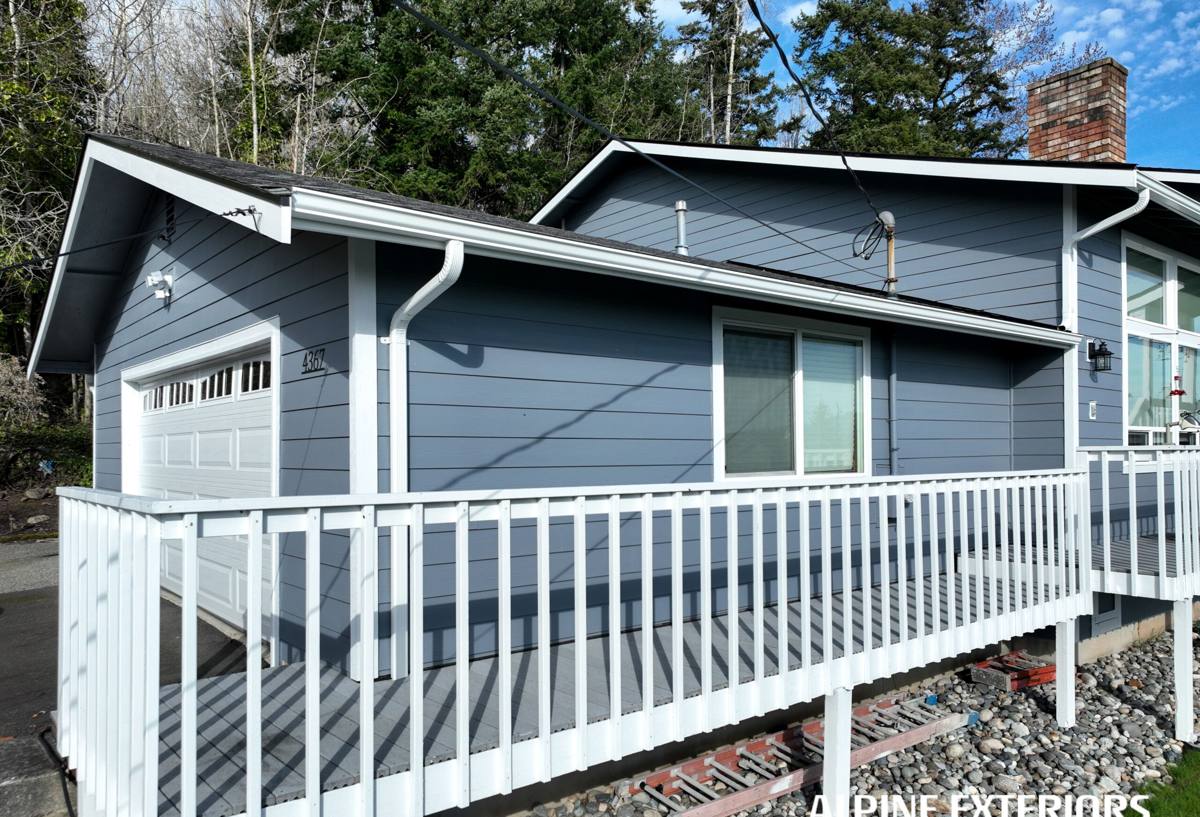
What This Climate Does to an Asphalt Shingle Roof
Salt Air and Metal Corrosion
Being close to Birch Bay means Terrell Creek homes get more salt exposure in the air than properties set further back from the water. Salt accelerates corrosion in exposed metal — nail heads, flashing, drip edge, and vent stacks all take that hit over time. A roof built with standard, non-corrosion-resistant fasteners and flashing can start showing rust streaks and weakened metal years before a comparable roof would in a drier, less coastal-influenced location. That's a material selection problem, not a shingle problem, and it's one of the first things we account for on any Terrell Creek roof.
Driving Rain and Wind Uplift
Proximity to the water also means more wind, and wind-driven rain behaves differently than a simple straight-down rainfall. It gets pushed sideways and even slightly upward under wind pressure, which puts real stress on shingle tabs, hip and ridge details, and anywhere two roof planes meet. Shingles that are under-fastened or installed with the wrong nailing pattern can lift at the tabs during a windstorm, and once a tab lifts even slightly, water starts working its way underneath on the next rain event. Flashing at chimneys, skylights, and roof-to-wall transitions takes the same wind-driven load and needs to be lapped correctly to shed water moving sideways, not just downhill.
A Long Moss and Moisture Season
Tree cover and shade around Terrell Creek keep a lot of roof surfaces damp for extended stretches, especially on north-facing slopes and anywhere overhanging branches block direct sun. That combination of shade and moisture is exactly what moss needs to establish, and moss doesn't just sit on top of a shingle roof — it holds moisture against the granule surface, works into shingle laps, and can lift edges over time as it grows. Left unaddressed for a few seasons, moss growth shortens the usable life of an otherwise sound shingle roof by holding water where it doesn't belong.
What Correct Asphalt Shingle Installation Involves
An asphalt shingle roof is a system, not just a layer of shingles nailed to plywood. In a climate like Terrell Creek's, every layer of that system needs to be right, because a weak point anywhere in the assembly gets found by wind-driven rain sooner rather than later.
- Deck inspection and prep: The roof deck gets checked for soft spots, delamination, or prior water damage before anything new goes down — covering a compromised deck just hides the problem.
- Ice-and-water or synthetic underlayment: A quality synthetic underlayment, with self-adhering membrane at eaves and valleys, gives the roof a backup layer if wind-driven rain gets past the shingles themselves.
- Drip edge at eaves and rakes: Metal drip edge directs water off the roof edge cleanly instead of letting it wick back under the shingles or into the fascia.
- Correct nailing pattern: Manufacturer-specified nail count and placement is what gives a shingle its rated wind resistance — this is one of the most commonly rushed steps on lower-quality installs.
- Step flashing and counter-flashing at walls and chimneys: These transitions are where most roof leaks actually originate, and they need to be built in layers that shed water downhill, not caulked over as an afterthought.
- Balanced attic ventilation: Intake at the eaves and exhaust at the ridge lets the roof deck dry out between storms and helps prevent moisture buildup that feeds moss and rot from underneath.
Choosing the Right Shingle for a Terrell Creek Home
Not every asphalt shingle product is built the same way, and the right choice depends on how much wind exposure a specific roof gets and how much of the year it stays shaded and damp.
| Shingle Type | Wind Resistance | Moss/Algae Resistance | Typical Fit for Terrell Creek |
|---|---|---|---|
| Standard 3-tab | Lower rated wind uplift resistance | None built in unless specified | Budget option; more exposed sites may see earlier tab lift |
| Architectural (laminated) | Higher wind rating, heavier and more rigid | Optional algae-resistant granules available | Common choice; good balance of durability and cost |
| Impact-rated architectural | Highest wind and impact rating in the shingle category | Optional algae-resistant granules available | Best fit for the most wind- and debris-exposed lots near the water |
We also recommend algae-resistant granule shingles for most Terrell Creek roofs, particularly on shaded, north-facing slopes where moss and algae growth show up first. It's a modest upgrade in material cost that directly addresses the specific moisture and organic growth pattern this area deals with.
Signs a Terrell Creek Roof Needs Attention
- Moss growth returning on the same slope or valley shortly after cleaning
- Granules collecting in gutters or at the base of downspouts
- Curling, cupping, or lifted shingle tabs, especially after a windy stretch
- Rust streaking below flashing, vent stacks, or exposed fasteners
- Water staining on an interior ceiling near an exterior wall or chimney chase
- Visible daylight or soft decking noticed from inside the attic
Repair, Roof-Over, or Full Replacement
Not every roofing problem on a Terrell Creek home calls for full replacement, but the decision needs to be based on what's actually happening underneath the shingles, not just their age.
| Situation | Typical Approach | Why |
|---|---|---|
| Isolated flashing leak, deck otherwise sound | Targeted repair | The shingle field is fine; the failure is localized to a flashing detail |
| Widespread moss damage, deck still solid | Full tear-off and reroof | Moss-related wear tends to be spread across a slope, not isolated to one spot |
| Aging roof, no known deck damage, homeowner budget-conscious | Case-by-case; roof-over sometimes viable | Depends on existing layer count and current shingle condition — not always the right call in this climate |
| Soft decking, active leaks, or rot found during inspection | Full tear-off and reroof required | Compromised decking can't be roofed over safely regardless of shingle age |
We're straightforward about which category a roof falls into. A roof-over can look like the cheaper option upfront, but on a home dealing with sustained moisture and moss exposure, it can trap existing problems under a new shingle layer instead of resolving them.
Our Process
We start with a full roof and attic inspection, not just a walk around the yard looking up. That means checking the attic for moisture staining or ventilation issues, checking the deck condition where it's visible, and looking closely at flashing details around chimneys, skylights, and wall transitions — the spots that fail first in this climate. From there we put together a clear, written scope covering shingle selection, underlayment, flashing detail, and ventilation, so there's no ambiguity about what's included before work starts. During the job, we treat proper nailing pattern, flashing, and ventilation as standard practice, not optional add-ons priced separately.
Why a Crew That Already Works Terrell Creek Matters
A roofing crew that regularly works this specific stretch of Birch Bay already knows which slopes hold moss the longest, how far wind-driven rain typically pushes under a poorly lapped flashing detail, and which fastener and flashing materials actually hold up against the salt exposure here versus a roof a few miles inland. That familiarity shows up in small decisions — an extra course of ice-and-water membrane in a valley that collects debris, a heavier-gauge flashing at a chimney facing the prevailing wind — that a crew unfamiliar with this specific microclimate might not think to make.
Questions Worth Asking Before Hiring a Roofer in This Area
- What underlayment and flashing details do they use specifically for wind-driven rain, not just standard rainfall?
- Do they recommend algae-resistant shingles for shaded or north-facing slopes, and why?
- Can they explain their attic ventilation approach and how it ties into moisture control?
- Are they licensed and insured for roofing work in Washington, with proof available on request?
- Will they provide a written scope of work, including manufacturer and shingle line, before any contract is signed?
If you're weighing a repair, a roof-over, or a full replacement for a Terrell Creek home, we're glad to walk the roof and attic with you and give a straightforward read on what it actually needs. Reach out below for a free, no-pressure estimate.