 Birch Bay Siding
 Siding That Actually Holds Up in Lynden
Lynden sits inland from the water in the Nooksack Valley, but it shares the same wet, marine-influenced weather pattern that defines Whatcom County — long stretches of steady rain from fall through spring, heavy morning dew off the valley floor, and shaded north sides of homes that never fully dry out between storms. Add in the region's driving rain during winter wind events and a moss season that can run half the year, and siding here is under more sustained moisture pressure than most homeowners realize until a wall starts showing it.
Fiber cement siding, installed correctly, is built for exactly this kind of exposure. It does not absorb water the way engineered wood products can, it does not host moss and algae growth the way bare wood or textured vinyl often does, and it holds paint and factory finishes far longer than wood siding exposed to this much rain. This page covers what Lynden homes specifically need from their siding, what a correct fiber cement job looks like, and why we install only James Hardie products rather than the wider range of siding materials on the market.
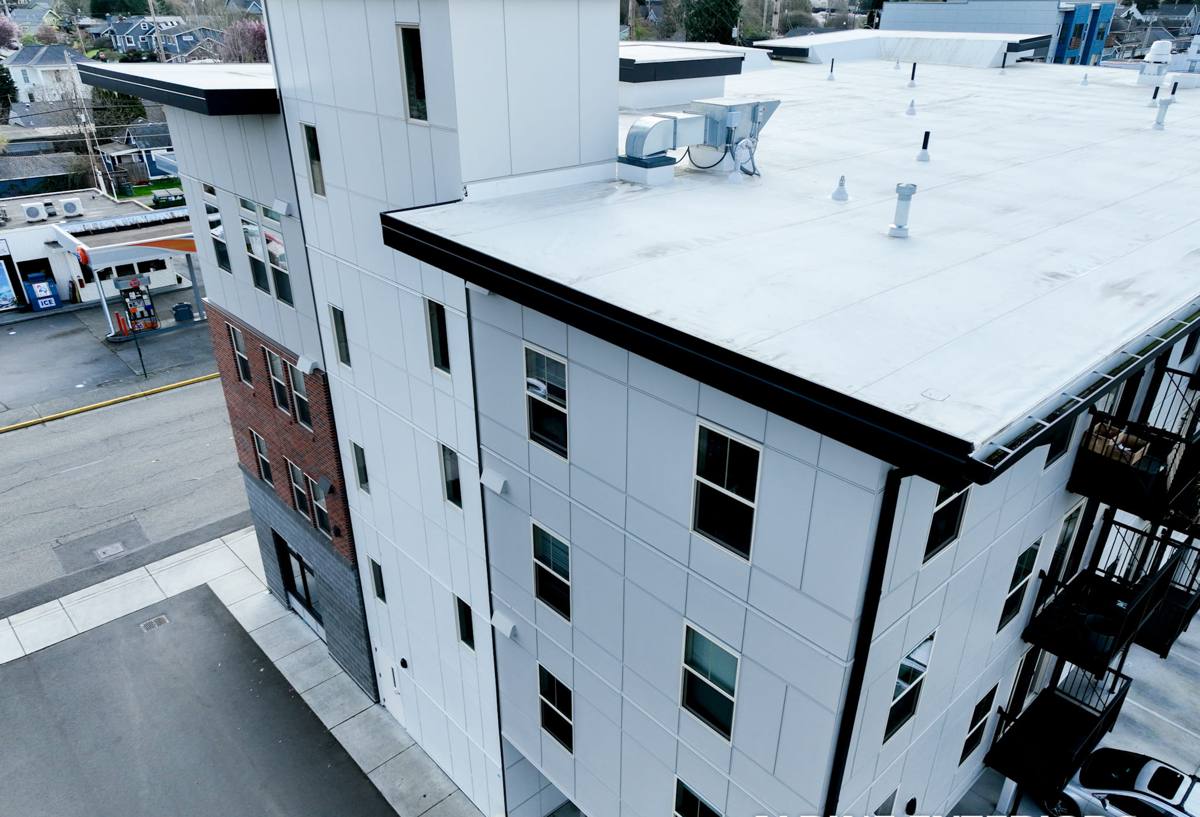
How Whatcom County's Wet Season Affects Your Siding
Three things drive most of the siding problems we see on inland Whatcom County homes, Lynden included:
- Prolonged moisture exposure. Rain here doesn't just fall and stop — it settles in for days, and homes with limited sun exposure on shaded sides stay damp longer than the material was ever designed to handle if it's the wrong product.
- Moss and algae growth. A long, mild, wet season is ideal growing conditions for moss on any siding surface that holds moisture, especially on north- and east-facing walls and under eaves with reduced airflow.
- Wind-driven rain. Storm systems moving through the valley push rain sideways into wall assemblies, which means the flashing and water-management details behind the siding matter as much as the siding material itself.
None of this is unique to Lynden, but it is a real, ongoing condition that any siding installed on a Lynden home has to be able to handle for decades, not just look good for the first few years.
Why We Only Install James Hardie Fiber Cement
We made the decision years ago to standardize on James Hardie fiber cement siding exclusively. We don't install LP SmartSide, vinyl, Cemplank, Allura, primed spruce, or cedar. That's not a marketing position — it's a professional judgment call based on how these products perform over time in exactly the climate Lynden sits in.
Engineered wood products like LP SmartSide use a wood-strand core that, while treated, is still wood — it can swell, delaminate, or fail at cut edges and joints if moisture gets past the finish over enough winters. Vinyl is inexpensive and low-maintenance but it expands and contracts with temperature swings, can crack in cold snaps, and fades unevenly over time, with no real repair option short of replacement. Cedar and primed spruce are attractive but require an ongoing maintenance commitment — repainting, caulking, and moisture monitoring — that most homeowners underestimate until the wood starts cupping or rotting at the bottom courses. Fiber cement from other manufacturers can be a reasonable product, but we've standardized on one system so our crews install it the same correct way, every time, with warranty support behind it.
The HardieZone System for Pacific Northwest Homes
James Hardie engineers its siding by climate zone rather than selling one universal product nationwide. Washington falls in the HZ5 zone, which covers colder, wetter climates with freeze-thaw cycles — the formulation and testing behind HZ5 products account for exactly the sustained moisture exposure and cooler temperatures Lynden sees. That's a meaningfully different product than what gets installed on a home in the Southeast or Southwest, and it's part of why we don't treat siding as a one-size-fits-all material.
ColorPlus Factory Finish vs Field-Painted Siding
Most of the Hardie siding we install uses the ColorPlus finish — a multi-coat, baked-on finish applied in a controlled factory environment rather than painted on-site. It resists fading and holds up to UV exposure and moisture cycling better than field-applied paint, and it comes backed by its own finish warranty separate from the product warranty. For homeowners who want a specific custom color, field painting is still an option, but ColorPlus is what we recommend for most Lynden projects because it removes one more maintenance task from the homeowner's plate.
What a Correct Fiber Cement Installation Actually Involves
Fiber cement siding is only as good as the installation behind it. A rushed or incorrect install can lead to moisture problems regardless of how good the material is — which is exactly the failure mode we're trying to prevent by controlling the whole process ourselves rather than subcontracting it out piecemeal.
Flashing and Moisture Management
Correct installation starts before a single piece of siding goes up. That means proper weather-resistant barrier installation, correctly lapped and sealed flashing at every window, door, and roofline intersection, and a drainage plane that lets any moisture that does get behind the siding find its way back out instead of sitting against the wall sheathing. This is the part of the job that's invisible once it's finished, and it's the part that determines whether siding lasts twenty years or fails at eight.
Fastening, Clearances, and Joints
James Hardie specifies exact fastener types, spacing, and penetration depth, along with minimum clearances from grade, roof lines, and decks — all details that matter more in a climate where standing moisture and splashback are a regular occurrence. Butt joints need to be properly sealed or shielded with flashing, not just caulked and hoped for. We follow Hardie's published installation specifications on every project, because doing so is also what keeps the manufacturer's product warranty intact — installation errors are one of the most common reasons a siding warranty claim gets denied.
How Fiber Cement Compares to Other Siding Options
| Material | Moisture Resistance | Moss/Algae Resistance | Maintenance | Typical Lifespan |
|---|---|---|---|---|
| James Hardie Fiber Cement | High — non-combustible, engineered for wet climates | High with proper finish | Low — occasional wash, no repainting with ColorPlus | 30+ years |
| Vinyl | Moderate — can trap moisture behind panels | Moderate | Low, but limited repair options | 20-30 years |
| Engineered Wood (LP-type) | Moderate — vulnerable at cut edges/joints | Moderate | Moderate — finish upkeep needed | 15-25 years |
| Cedar/Wood | Low without diligent upkeep | Low — prone to moss without maintenance | High — regular painting/sealing | 15-25 years with upkeep |
These are general performance patterns, not guarantees for every product on the market — but they reflect why fiber cement, and specifically a climate-engineered fiber cement product, tends to be the better long-term fit for a place like Lynden.
Our Process for Lynden Siding Projects
- Inspection and estimate. We walk the home, check the condition of the existing siding and sheathing, and note anything specific to the property — sun exposure, drainage, roofline complexity.
- Product and color selection. We go over Hardie's plank, panel, and shingle profiles and ColorPlus color options based on the home's style and the homeowner's preference.
- Prep and removal. Old siding comes off, sheathing is inspected and repaired if needed, and the weather-resistant barrier and flashing are installed correctly before any new siding goes up.
- Installation. Siding is installed to James Hardie's published specifications for fastening, clearances, and joint treatment.
- Final walk-through. We inspect the finished job with the homeowner and address anything before calling it complete.
What Affects the Cost of Fiber Cement Siding in Lynden
| Cost Factor | Why It Matters |
|---|---|
| Home size and number of stories | More surface area and higher work means more material and labor |
| Condition of existing sheathing | Rot or water damage found during tear-off needs repair before new siding goes on |
| Siding profile and trim complexity | Shingle-style accents, extensive trim, or architectural detail take more time than plain lap siding |
| ColorPlus vs field-applied paint | Factory finish adds cost upfront but removes future repainting |
| Site access | Tight lots, fencing, or landscaping that limits equipment access can affect labor time |
We give every homeowner a specific, itemized estimate after seeing the actual property — broad ranges without an inspection tend to be more misleading than helpful.
Signs Your Lynden Home's Siding Needs Attention
- Visible moss or algae streaking, especially on north- or east-facing walls
- Soft or spongy spots when you press on the siding, particularly near the bottom courses
- Paint that's peeling, bubbling, or chalking well before it should
- Warping, cupping, or gaps opening up at seams and joints
- Rising energy bills that might point to a compromised weather barrier behind the siding
- Visible daylight or drafts felt from inside near exterior walls
Why a Crew That Already Works in Lynden Matters
Whatcom County's building requirements, the realities of installing on the rural and mixed-lot properties common around Lynden, and the specific moisture behavior of this climate all take local, repeated experience to get right consistently. A crew that only occasionally works this far from the coast is more likely to treat every job as a generic install rather than accounting for the valley's shaded sides, drainage patterns, and moss pressure. We work this area regularly, we install one product system to spec every time, and we stand behind that work with the manufacturer's warranty intact because the installation was done correctly from the first fastener to the last.
If your Lynden home's siding is showing its age, or you're planning ahead for a replacement, we're happy to take a look and give you a straightforward, no-pressure estimate — just fill out the form below.