 Birch Bay Siding
 Why Sandy Point's Waterfront Setting Is Hard on Windows
Sandy Point sits right up against the water, and that location comes with a trade-off. The same exposure that makes the neighborhood desirable also puts homes in the direct path of salt-laden air, wind-driven rain, and the long, damp moss season that Whatcom County is known for. Windows take the brunt of it. Frames, hardware, and sealants that would last decades in a sheltered inland neighborhood can start failing years early here if they weren't built or installed with that exposure in mind.
Salt air is corrosive to metal hardware — hinges, locks, and cranks — even on products marketed as coastal-rated. Driving rain, especially with wind behind it, finds any gap in flashing or caulking and pushes water sideways and upward, not just straight down. And moss doesn't just grow on roofs; it colonizes window sills, tracks, and shaded corners of trim, holding moisture against wood and finishes for months at a time. Any one of these on its own is manageable. All three together, year after year, is what actually wears a window system down.
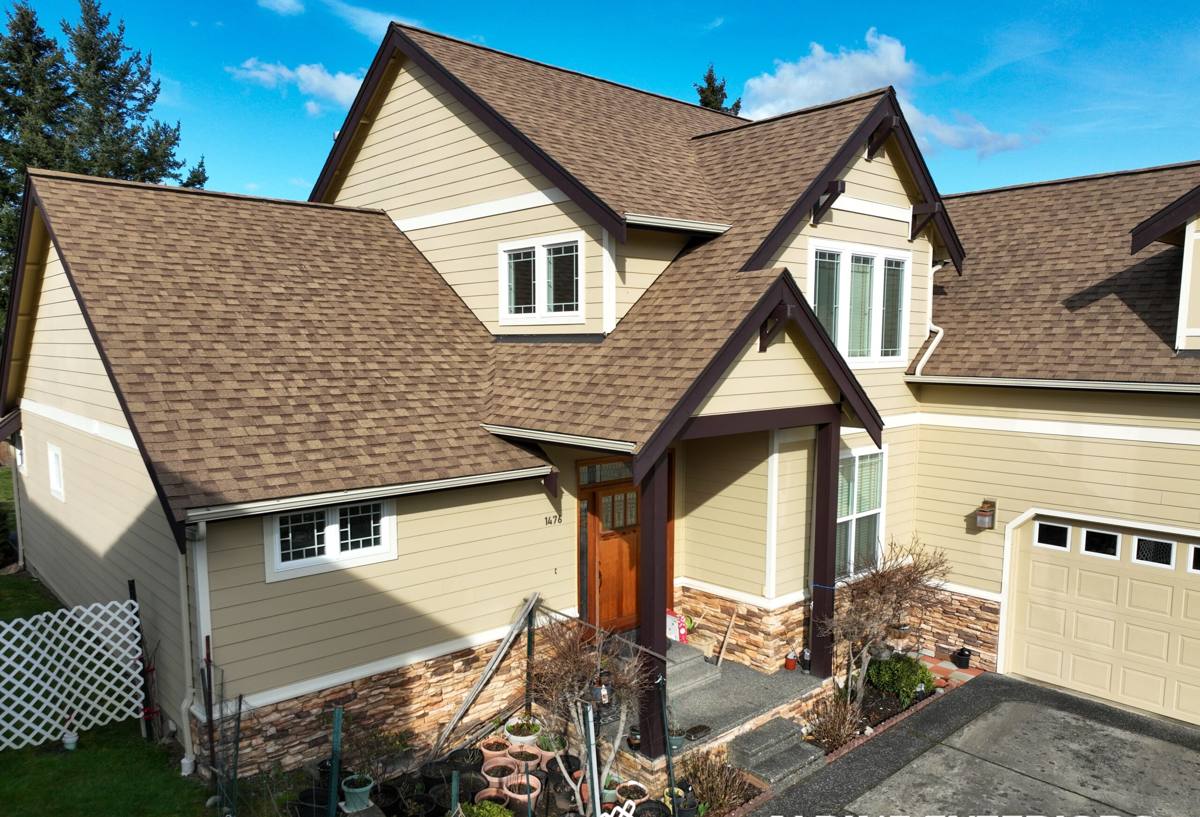
Warning Signs Worth Catching Early
Because the damage from salt air and moisture is gradual, a lot of Sandy Point homeowners don't notice a window problem until it's already inside the wall. A few signs are worth acting on before that happens:
- Fogging or condensation between panes — the seal has failed and the insulating gas has escaped
- Hardware that's stiff, corroded, or hard to lock — a sign salt exposure is attacking the metal
- Visible gaps, soft spots, or peeling paint around the frame or sill
- Drafts or a noticeable temperature difference near the window on windy days
- Moss or dark staining building up in the track or lower corners of the frame
- Difficulty opening or closing — often a sign the frame has swollen from trapped moisture
Any of these can be an isolated issue, but on an older window near the water they're usually a sign the window's protective barrier has already been compromised.
What a Correct Installation Actually Involves
Window installation looks straightforward from the outside — pull the old unit, set the new one, trim it out. In a marine environment, the parts nobody sees are what determine whether the window lasts 25 years or fails in five.
Flashing and Weather Barriers
Every opening needs to be flashed so that any water that gets past the exterior finish is directed back out, not into the wall cavity. That means proper sill pan flashing, correctly lapped house wrap or weather-resistant barrier at the sides and head, and a drainage path that doesn't dead-end behind the siding. Skipping or rushing this step is the single most common cause of hidden rot behind window openings — and it's invisible until the damage shows up somewhere else entirely.
Sealants Built for Salt Air
Not every caulk or sealant holds up to constant salt exposure and UV. We use exterior-grade sealants rated for the movement and moisture cycling that coastal Whatcom County windows go through, and we don't rely on caulk alone to do a flashing job's work. Sealant is the last line of defense, not the whole strategy.
Choosing Frame and Glass for Coastal Exposure
There's no single "best" window material — the right choice depends on how much direct salt exposure and sun a given elevation of the house gets, and how much upkeep the homeowner wants to take on. Here's how the common options generally compare in a Sandy Point setting:
| Frame Material | Salt/Moisture Resistance | Maintenance | Notes |
|---|---|---|---|
| Vinyl | Good — won't corrode or rot | Low | Budget-friendly; quality varies widely between manufacturers |
| Fiberglass | Very good — dimensionally stable, resists warping | Low | Handles temperature swings and salt air well; higher upfront cost |
| Aluminum | Fair — can pit or corrode over time near salt air | Moderate | Thermally less efficient unless thermally broken |
| Wood / Wood-Clad | Requires protection — vulnerable if finish fails | High | Classic look, but needs consistent upkeep in this climate |
For homes directly exposed to wind off the water, we generally steer clients toward vinyl or fiberglass frames with corrosion-resistant (often stainless or coated) hardware. Solid wood windows can still work well on more protected elevations, but we're upfront that they demand more regular maintenance here than they would inland — that's a maintenance trade-off, not a knock on wood as a material.
On glass, a Low-E coating with an appropriate argon fill helps with energy performance and reduces condensation risk, which matters given how much moisture is already in the air near the bay. We'll talk through glass packages based on which direction the window faces and how much direct weather it takes.
Our Installation Process
The process is the same core sequence on every job, but the details — flashing detail, sealant choice, hardware spec — get adjusted for how exposed the specific opening is.
- On-site assessment of each opening, including a look at the existing flashing and any signs of hidden moisture damage
- Product and material recommendations matched to that wall's sun and wind exposure
- Careful removal of the old window and inspection of the framing underneath before anything new goes in
- Repair of any rot or damaged framing found during removal — this gets flagged and discussed before we proceed, not buried under the new window
- Sill pan flashing, weather barrier integration, and window installation to manufacturer specifications
- Sealing, insulation of the gap between frame and rough opening, and interior/exterior trim work
- Final walkthrough to check operation, locks, and weatherproofing before we consider the job done
Why a Crew That Already Works Sandy Point Makes a Difference
Window installation isn't identical everywhere in Whatcom County. A crew that mostly works dry, inland jobs may not think twice about a detail that's routine for us on the water — extra attention to sill flashing on a west-facing wall that takes wind-driven rain, hardware upgrades because standard-grade components corrode faster this close to salt air, or scheduling around the wetter stretches of the year when moss and moisture are most active. None of that is exotic knowledge, but it only becomes habit after you've done enough jobs in this exact kind of exposure to know where problems actually show up.
Shoreline communities like Sandy Point can also have their own permitting or association requirements depending on the property, so we ask about that upfront rather than assuming every job follows the same paperwork path as a job elsewhere in Birch Bay.
What Affects the Cost of Window Installation
Every home and every opening is different, so we'd rather walk a homeowner through the real factors than quote a number sight unseen. In general, these are what move the price:
| Factor | Why It Matters |
|---|---|
| Frame material | Vinyl is typically the most affordable; fiberglass and wood-clad cost more upfront |
| Window size and count | Larger openings and whole-house replacements have different labor and material needs than a single window |
| Existing damage | Rot or framing repair discovered during removal adds time and material |
| Access and height | Second-story or hard-to-reach openings take longer to work safely |
| Trim and finish work | Matching existing interior or exterior trim adds labor beyond the window unit itself |
As a very general range, single-window replacements in this area often land somewhere in the roughly $600–$1,500 range per window depending on size and material, with whole-house projects priced by scope. Those numbers move a lot based on the specifics above, which is exactly why we do an on-site look before giving a real number.
Keeping New Windows Performing in a Marine Climate
A correctly installed window still needs a little seasonal attention near the water. A short annual routine goes a long way:
- Rinse salt residue off frames and glass periodically, especially after storms
- Clear moss and debris from sills and tracks before it holds moisture against the frame
- Check that weep holes (the small drainage openings at the base of the frame) stay clear
- Lubricate hardware if it starts to feel stiff — don't force a corroding lock or crank
- Inspect exterior caulking once a year and have gaps resealed before they widen
None of this is heavy maintenance, but skipping it is how a well-installed window ends up with an avoidable problem a few years down the road.
If your Sandy Point home has windows that are drafty, fogged, hard to operate, or just original to a house that's due for an upgrade, we're happy to take a look and talk through honest options for your specific exposure. Estimates are free, no-pressure, and based on what we actually see at your home — not a generic quote. Use the form below to get started.