 Birch Bay Siding
 Siding Repair Built for Custer's Coastal Climate
Custer sits close enough to the water that its homes deal with a different set of siding problems than houses further inland in Whatcom County. Salt-laden air off the Strait of Georgia and Birch Bay travels on the wind and settles on exterior walls, driving rain comes in sideways during fall and winter storms, and the damp, shaded stretches of the year give moss and algae months to take hold on north-facing walls and anything shielded from direct sun. None of that is dramatic on its own, but stacked together year after year, it is exactly the kind of slow, cumulative exposure that finds every weak point in a home's siding.
Siding repair in this area isn't just about patching a cracked board. It's about understanding why that board cracked, what let moisture behind it, and whether the fix will hold up through the next several wet seasons or just buy a year or two before the same spot fails again.
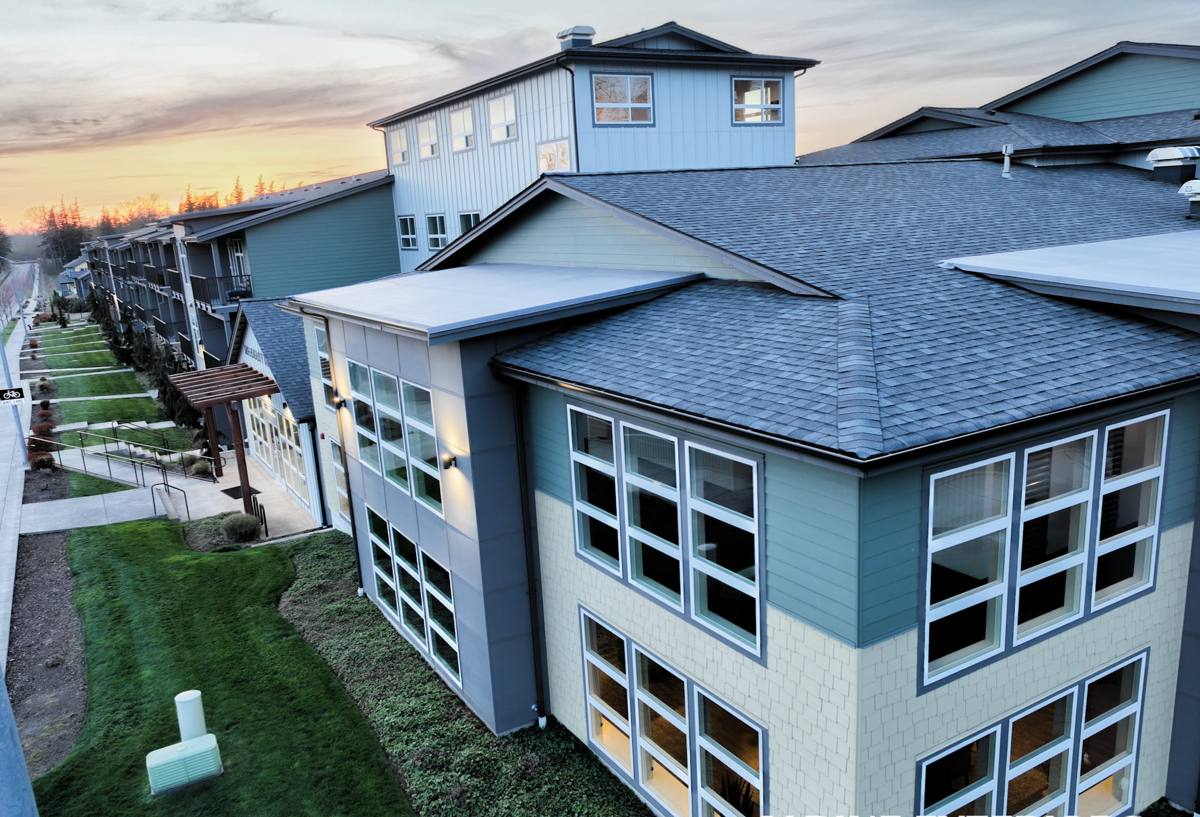
What Custer's Climate Actually Does to Siding
Salt Air
Airborne salt is corrosive to fasteners, flashing, and any metal trim tying into the siding system. Over time it can also accelerate the breakdown of paint films and caulking, which are the first line of defense against water intrusion. Homes closer to Birch Bay and the shoreline feel this more than homes set back inland, but Custer is close enough that it's a real factor, not a theoretical one.
Driving Rain
Whatcom County storms don't always come straight down. Wind-driven rain gets pushed sideways into siding joints, butt seams, and anywhere trim meets a wall. Siding that's caulked or flashed correctly sheds that water. Siding with gaps, failed caulk, or missing flashing lets it track behind the surface, where it can sit against sheathing and framing for weeks between dry spells.
Moss and Algae Season
Shaded walls, roof-adjacent siding, and anything under overhangs or tree cover stay damp longer here than in drier climates. That extended dampness is exactly what moss and algae need to establish. Beyond the cosmetic staining, moss holds moisture directly against the siding surface, which is a slower but real contributor to rot in wood-based products and finish degradation on any material.
Signs a Custer Home Needs Siding Repair
Some damage is obvious. A lot of it isn't, especially from ground level. Here's what we look for, and what homeowners can check for themselves before calling anyone out:
- Soft or spongy spots when pressed, especially near the bottom of walls or below windows
- Visible cracking, splitting, or buckling in individual boards or panels
- Paint that's peeling, bubbling, or failing in patches rather than evenly across a wall
- Dark streaking, green or black staining, or thick moss growth on shaded or north-facing sections
- Gaps opening up at seams, corners, or where siding meets trim, window casings, or the foundation
- Nail heads popping out or visible fastener corrosion
- Interior clues: peeling paint on inside walls, musty smells, or warped baseboards near an exterior wall
Any one of these can be minor. Several together, or damage that's spreading from one location, usually means moisture has been getting behind the siding for a while.
What a Correct Repair Actually Involves
A lot of siding "repair" in this region is really just cosmetic patching — caulk over a gap, a quick paint touch-up, a board swapped without checking what's behind it. That approach might hide a problem for a season, but it doesn't fix it, and in a climate that stays wet as much of the year as Whatcom County does, hidden problems get worse, not better.
A repair done right starts with finding out why the damage happened, not just patching where it shows. That means:
- Removing the damaged section fully, not just cutting out the worst of it
- Checking the water-resistive barrier and sheathing underneath for rot, staining, or softness
- Verifying flashing above windows, doors, and any horizontal trim is intact and correctly lapped
- Replacing damaged sheathing or framing before any new siding goes back up, if it's found
- Installing new siding material with correct fastening, clearances, and sealed seams
- Matching the finish so the repair doesn't stand out as a patch job for the next twenty years
Skipping the second and third steps is the single most common reason siding repairs fail early. The surface looks fixed, but the cause of the original damage is still there.
Why Material Choice Matters for Repairs, Not Just New Siding
When we're called out to a Custer home for a repair, the existing siding is often a wood-based product, vinyl, or an older fiber cement that's showing exactly the kind of wear you'd expect from years of salt air and rain exposure — swelling at seams, moisture damage at the bottom courses, or finish failure on sun- and weather-exposed walls. We only install James Hardie fiber cement siding, and that's a deliberate standard, not just a brand preference.
For repair work specifically, it matters because a patch is only as good as the material going into it. Hardie's fiber cement is non-combustible, engineered to resist moisture-driven swelling and cracking, and available in HZ5 formulations built for harsher, wetter climates like this one. Its factory-applied ColorPlus finish is baked on and warranted separately from the substrate, which means a repaired section can be color-matched with a finish that's designed to hold up the same way the surrounding siding will, rather than a field-painted patch that starts weathering differently right away.
We won't tell a homeowner their existing vinyl, LP SmartSide, cedar, or primed spruce siding is worthless — plenty of it is still functional. But when a repair calls for replacing a section outright, or when a home has enough recurring damage that a full re-side makes more sense than another round of patches, Hardie is what we recommend and what we install. It's the product we trust to hold up to another decade of Whatcom County winters.
Repair vs. Full Re-Side: How We Help You Decide
| Factor | Repair Likely Makes Sense | Re-Side Worth Considering |
|---|---|---|
| Extent of damage | Isolated to one or two areas | Recurring across multiple walls |
| Underlying structure | Sheathing and framing test sound | Rot found in more than one spot |
| Age of existing siding | Under 15-20 years, otherwise in decent shape | Near or past expected service life |
| Cause of damage | One-time event (impact, isolated flashing failure) | Systemic moisture or material breakdown |
| Appearance goals | Match is achievable and acceptable | Homeowner wants a consistent, uniform result |
We'll always tell you honestly which side of this table your home falls on. A lot of the time, a targeted repair is the right call and we'll say so — we're not trying to sell a full re-side when a section repair will genuinely hold up.
Our Repair Process
- Inspection: We walk the exterior, check every reported problem area, and look at spots that commonly fail in this climate even if they weren't mentioned — north-facing walls, below-window sections, and anywhere trim meets siding.
- Diagnosis: We identify the actual cause — failed caulk, missing or damaged flashing, material breakdown, moss-driven moisture, or something else — not just the visible symptom.
- Written scope and estimate: You get a clear explanation of what needs to happen and why, with pricing before any work starts.
- Repair: Damaged material comes out, the substrate gets checked and corrected if needed, and new material goes in with proper fastening, flashing, and sealing.
- Finish and cleanup: The repaired area is finished to match as closely as possible, and the site is cleaned up before we leave.
Cost Factors for Custer Siding Repairs
| Factor | Why It Affects Cost |
|---|---|
| Size of the damaged area | More linear footage means more material and labor |
| Substrate condition | Rotted sheathing or framing adds repair scope beyond the siding itself |
| Accessibility | Second-story sections or areas needing staging cost more to reach safely |
| Material match | Matching an existing color or profile can take more time than a straightforward swap |
| Underlying cause | Fixing flashing or water barrier issues adds work beyond replacing boards |
We don't quote broad numbers without seeing the damage in person — the range between a small trim repair and a repair involving structural rot is too wide to be useful as a general estimate. What we do promise is a straightforward, itemized quote with no pressure to upsell a repair into a full re-side unless that's genuinely what the home needs.
Why Hire a Crew That Already Works in Custer
A contractor who works this part of Whatcom County regularly already knows which walls take the worst of the driving rain, how fast moss reestablishes itself on shaded siding here, and what salt air does to fasteners and finishes over a five- or ten-year span. That's not something you get from a crew that mostly works drier, inland climates and treats every siding job the same way.
It also matters for follow-through. A local crew is easy to reach if a repair needs a warranty check or a follow-up visit, and has a reputation in the area worth protecting. We'd rather do a repair right the first time than get a call back next winter because a patch didn't hold through the rain.
Get a Straightforward Estimate
If you're seeing soft spots, cracking, staining, or gaps in your siding, it's worth having it looked at before the next wet season does more damage. We'll give you an honest read on whether it's a repair or something bigger, with no pressure either way. Use the form below to request a free estimate for your Custer home.