 Birch Bay Siding
 Semiahmoo's Coastal Climate and What It Does to Siding
Homes along Semiahmoo, tucked against the water in the Birch Bay area of Whatcom County, sit in one of the harder climates in Western Washington to keep a house dry and looking good. The combination of salt-laden air off the water, wind-driven rain that comes in sideways instead of straight down, and a long, damp moss season that can run from fall through spring puts real, compounding stress on exterior siding. It's not one big event that wears siding out here — it's the slow accumulation of thousands of small exposures.
Salt air is corrosive to exposed metal fasteners, trim, and flashing, and it also holds moisture against the wall longer than dry air would. Driving rain doesn't just wet the surface of a wall — on a north or west-facing elevation with reduced roof overhang, it can drive water sideways into laps, seams, and butt joints that were never designed to handle constant lateral pressure. And moss doesn't just look bad on a roof; when it colonizes siding, trim, and the base of walls, it holds standing moisture against the material for weeks at a time, which is exactly the condition that causes rot, paint failure, and substrate breakdown.
Any siding replacement done in Semiahmoo has to be planned around these three factors specifically, not around a generic "Pacific Northwest" climate assumption. A product and installation detail that performs fine forty miles inland in a drier microclimate can fail years earlier here.
Why This Matters More on Waterfront and Near-Waterfront Lots
The closer a home sits to the water, the more concentrated these effects become. Wind has fewer trees and structures to break it up before it hits the house, salt spray travels further inland on stormy days, and homes on exposed lots take direct weather from multiple directions rather than being shielded by a single prevailing wind pattern. If your home has an unobstructed view of the water, it's also taking unobstructed weather.
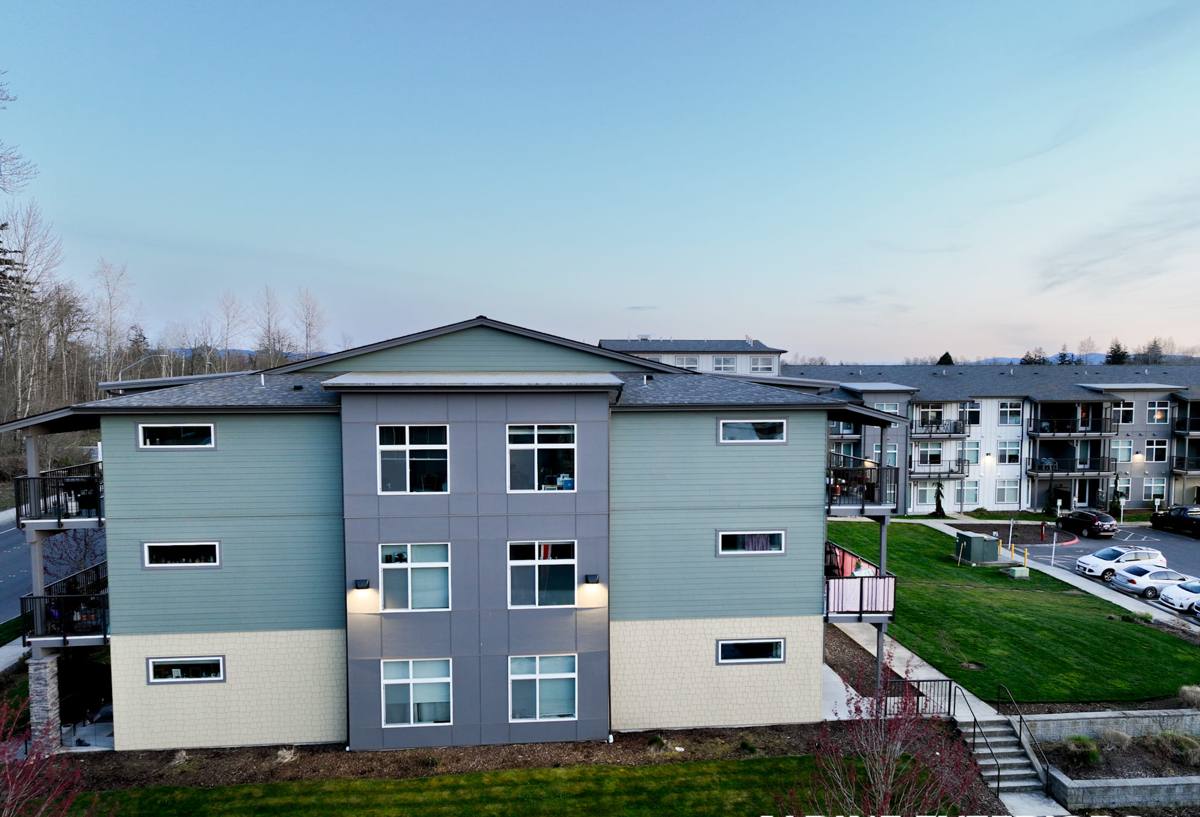
Signs a Semiahmoo Home Needs Siding Replacement, Not Just Repair
Not every siding problem means a full tear-off. But in this climate, small problems tend to spread faster than homeowners expect, because moisture that gets behind siding here doesn't dry out quickly between storms. Here's what tells us a home needs full replacement rather than a patch:
- Soft, spongy, or crumbling wood siding, especially near the bottom courses, corners, and under windows
- Paint that keeps failing within a year or two of repainting, even after proper prep
- Visible gaps, cupping, or warping in lap siding boards
- Persistent moss or dark staining that returns within months of cleaning
- Soft spots in sheathing found during a poke test at trim and penetrations
- Siding that's original to a home built more than 20-25 years ago, especially wood, hardboard, or older vinyl
- Multiple separate repair calls in the last few years without the underlying problem going away
If you're only seeing one or two of these, a targeted repair may still make sense. Once moisture damage shows up in more than one location, or the siding material itself is simply worn out, replacement is almost always the more honest recommendation — patching a wall that's failing everywhere just delays a bigger job and adds cost.
Why We Install Only James Hardie Fiber Cement
We've made a deliberate decision as a company to install James Hardie fiber cement siding exclusively. We don't install vinyl, LP SmartSide, Cemplank, Allura, primed spruce, or cedar. That's not a marketing position — it's a standard we hold because of what we've seen these climate conditions do to alternative products over time.
Vinyl siding is affordable and low-maintenance in mild conditions, but it's a thin plastic product that expands, contracts, and can become brittle with age and UV exposure. In a location with regular high wind, vinyl's mechanical fastening system relies on the panels being able to move freely, and wind-driven rain can find its way behind and through vinyl laps more easily than a solid fiber cement plank. Wood and primed spruce look excellent when new, but they're organic material — in a climate with a long wet, mossy season, wood siding needs consistent, disciplined maintenance to avoid rot, and even well-maintained wood has a shorter realistic service life here than fiber cement. Engineered wood products like LP SmartSide use a strand-based wood substrate that, while treated, is still wood at its core and depends on flawless caulking and painting discipline to keep moisture out over decades.
James Hardie fiber cement is a cement, sand, and cellulose fiber composite. It doesn't rot, it's not attractive to pests, and it holds up to direct wind-driven rain far better than wood-based products because it isn't an organic material that absorbs and swells with moisture the way wood does. It's also non-combustible, which is a genuine safety advantage regardless of climate. Hardie's ColorPlus factory-applied finish is baked on in a controlled environment, which gives it more consistent coverage and better fade resistance than field-applied paint, and it comes with a real limited warranty. For a coastal Whatcom County property that's going to take decades of salt air and driving rain, we think the trade-offs favor fiber cement clearly enough that we don't offer the alternatives.
What a Correct Siding Replacement Actually Involves
The material is only part of the story. A James Hardie installation that's going to perform well in a Semiahmoo wind-and-rain environment depends just as much on what happens underneath the siding as the siding itself. Skipping or rushing any of the following steps is where most premature siding failures actually start.
Tear-Off and Sheathing Inspection
Full replacement starts with removing the old siding down to the sheathing so we can actually see what's underneath. This is the point where hidden rot, soft sheathing, or old moisture damage from a leak that was never addressed gets found and dealt with — not covered back up.
Weather-Resistive Barrier
A correctly lapped weather-resistive barrier (WRB) goes over the sheathing before any siding goes on. In a driving-rain environment, the WRB is doing real work — it's the layer that stops any water that does get past the siding from reaching the sheathing and framing. Seams, laps, and penetrations need to be sealed and shingled correctly, not just stapled up quickly.
Flashing at Every Penetration
Windows, doors, hose bibs, vents, and any other wall penetration need proper flashing that directs water back out, not into the wall cavity. This is one of the most common places we find prior installation shortcuts on older homes, and it's usually where the worst rot damage is discovered.
Correct Fastening and Clearances
James Hardie panels and lap siding have specific fastener spacing, embedment depth, and clearance requirements — including gaps from grade, roof lines, and decks — that are part of keeping the manufacturer's warranty valid and keeping water from wicking up into the bottom edge of the siding. Corrosion-resistant fasteners matter more here than in a drier inland climate.
Caulking and Joint Treatment
Butt joints, corners, and trim intersections need to be treated correctly per Hardie's installation specifications. In a salt-air, high-moisture environment, the quality of this detail work is a major factor in how long the finish and the joints hold up before they need attention.
Comparing Siding Options for a Semiahmoo Property
| Factor | James Hardie Fiber Cement | Vinyl | Wood / Primed Spruce |
|---|---|---|---|
| Wind-driven rain resistance | Strong — rigid, dense board resists lateral water intrusion | Moderate — laps can allow wind-driven water behind panels | Weak to moderate — depends entirely on paint/caulk maintenance |
| Salt air / corrosion exposure | Not affected by salt; use corrosion-resistant fasteners | Panel itself unaffected, but fasteners and trim can corrode | Salt air accelerates paint breakdown and moisture uptake |
| Moss and moisture tolerance | Does not rot; cleans without structural risk | Does not rot, but moss traps moisture against wall assembly | Prolonged moss contact is a leading cause of wood rot |
| Fire resistance | Non-combustible | Combustible | Combustible |
| Typical maintenance | Occasional wash; factory finish holds color for years | Low, but cracks/fades with age and impact | Regular repainting and caulk inspection required |
Our Siding Replacement Process, Step by Step
- On-site assessment — we walk the exterior, check for moisture damage, and evaluate how sun, wind, and water exposure hit each elevation of the home.
- Written scope and product selection — we go over Hardie product lines, profiles, and ColorPlus color options suited to the home and setting.
- Tear-off and sheathing repair — old siding comes off, damaged sheathing is identified and replaced, and the wall is prepped for a clean install.
- WRB and flashing installation — the weather barrier and all penetration flashing go in before a single piece of siding is hung.
- Siding installation — Hardie panels or lap siding are installed to manufacturer spec, with correct fastening, clearances, and joint treatment.
- Trim, caulking, and final detailing — corners, trim boards, and joints are finished and sealed.
- Final walkthrough — we go over the finished work with you before calling the job done.
Keeping Moss and Moisture From Coming Back
New siding lowers your risk, but Semiahmoo's climate doesn't stop producing moss and moisture just because the siding is new. A few habits go a long way toward protecting the investment:
- Trim back vegetation and tree cover that keeps walls shaded and damp longer than necessary
- Keep gutters clear so overflow doesn't run directly down the face of the siding
- Rinse siding periodically, especially north-facing and shaded walls where moss tends to establish first
- Watch grade and landscaping so soil or mulch isn't piled up against the bottom edge of the siding
- Address any new gaps in caulking at trim and penetrations before the wet season sets in
None of this is heavy maintenance — it's the kind of upkeep any coastal Whatcom County home benefits from, and it matters less with fiber cement than it would with wood, since the material itself isn't at risk of rotting even if moss does show up.
What to Expect During Your Project
Timeline on a full siding replacement depends on the size of the home, how much sheathing repair is needed once the old siding comes off, and the weather window we're working in. Because we're dealing with a genuinely wet climate, we plan projects around realistic weather stretches rather than rushing work into a rain event, which protects both the open wall assembly during construction and the quality of the finished installation. We'll walk you through a realistic schedule before work starts, including what happens if weather causes a short delay partway through — that's a normal part of building in this region, not a sign of a problem.
Why a Crew That Already Works Semiahmoo Matters
Siding installation on a coastal Whatcom County home isn't identical to siding installation inland, and a crew that hasn't worked this specific stretch of coastline doesn't always know that going in. Wind exposure, the right flashing details for driving rain, how aggressively moss establishes on shaded elevations, and how salt air affects fastener choice are all things you learn by doing the work here repeatedly — not from a general training manual. A crew already familiar with Semiahmoo and the surrounding Birch Bay area also tends to have a better read on realistic weather windows for scheduling, local permitting expectations, and the kind of exposure differences that show up lot to lot along this coastline.
If your Semiahmoo home's siding is showing its age or you're just trying to plan ahead before the next wet season, we're happy to take a look and give you a straightforward, no-pressure assessment. Fill out the form below to request a free estimate.