 Birch Bay Siding
 Building Custom Decks That Hold Up in Semiahmoo
Homes in and around Semiahmoo sit close enough to the water that the air itself works against a deck year-round. Salt-laden moisture moves further inland here than most homeowners expect, driving rain comes in sideways off Semiahmoo Bay and the Strait during winter storms, and the long, wet Whatcom County shoulder seasons keep every horizontal surface damp for months at a time. A deck built with generic, big-box assumptions about "outdoor lumber" tends to show corrosion, soft spots, and moss within a few seasons out here. A deck built for this specific environment doesn't.
This page covers what a custom deck actually needs to survive and look good on a Semiahmoo-area property, what correct construction looks like from the framing up, and how we approach these projects from first estimate to final walkthrough.
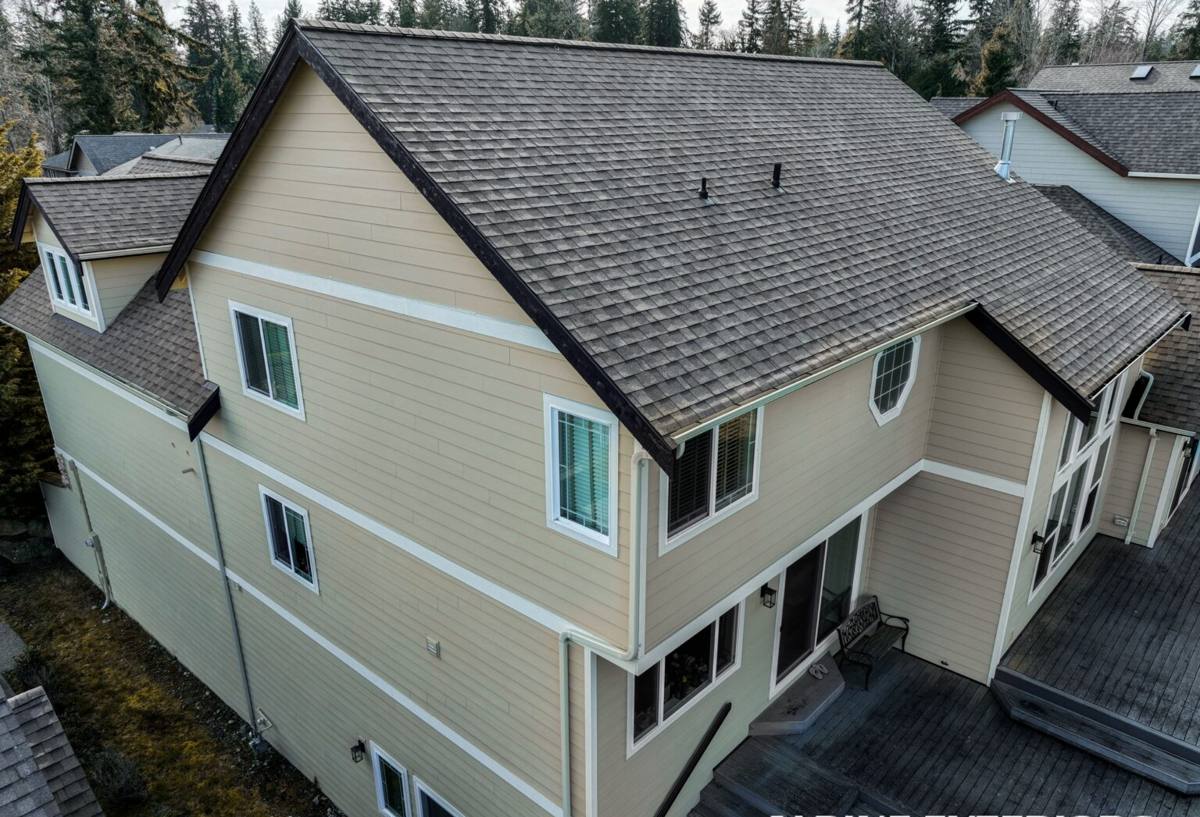
What Salt Air and Coastal Rain Actually Do to a Deck
It's worth understanding the failure modes before talking about fixes, because they explain every material and hardware decision that follows.
Corrosion, Not Just Rot
Standard steel fasteners and connectors corrode faster near saltwater exposure, even when a deck isn't directly waterfront. Airborne salt settles on metal surfaces and accelerates rust, which weakens joist hangers, screws, and structural hardware from the inside long before the problem is visible from the surface.
Moisture That Never Fully Leaves
Driving rain forces water into joints, end grain, and fastener holes that a vertical rain event would never reach. Combined with our long wet stretches, wood fibers stay saturated longer than manufacturer specs assume, which is where premature warping, cupping, and fastener pop start.
Moss and Organic Growth
Whatcom County's moss season isn't a cosmetic footnote — moss and algae hold moisture against decking boards and framing, and on stair treads and ramps it becomes a genuine slip hazard. Any deck without deliberate airflow and drainage planning will grow moss in the shaded, low-sun months regardless of the decking material chosen.
Choosing a Decking Material for a Semiahmoo Property
There's no single "best" decking material — there's a best material for a given budget, maintenance appetite, and how close the home sits to salt exposure. Here's how the common options actually compare in this climate:
| Material | Upfront Cost | Coastal/Moisture Durability | Maintenance Needed | Typical Lifespan |
|---|---|---|---|---|
| Pressure-treated wood | Lowest | Fair — needs sealing to perform | Annual cleaning + re-sealing every 2-3 years | 10-15 years |
| Cedar | Moderate | Good natural resistance, but softens with constant damp | Regular cleaning + periodic oil/stain | 15-20 years |
| Composite (capped) | Higher | Very good — resists moisture absorption and salt staining | Periodic washing, no sealing/staining | 25-30 years |
| PVC decking | Highest | Excellent — fully moisture-proof board | Lowest — occasional washing | 30+ years |
For homes with direct exposure to marine air, we generally steer clients toward capped composite or PVC — not because wood is a bad product, but because the maintenance schedule needed to keep wood performing well in this specific climate is a real, recurring commitment. If a homeowner wants the look and feel of real wood and is prepared for that upkeep, we'll build it right and tell them honestly what the maintenance calendar looks like.
Railings and Fasteners Matter As Much As the Decking
A composite deck fastened with the wrong hardware will still fail early near salt air. We use stainless steel or coated fasteners rated for coastal and ACQ-treated lumber contact, and we spec connectors and joist hangers built for marine-grade exposure, not the standard interior-rated hardware sold as a default at most suppliers.
What a Correctly Built Deck Frame Requires Here
Ledger Flashing and Wall Connection
Where the deck ties into the house, the ledger board and flashing detail is the single most common point of hidden water damage on older decks in this area. Driving rain pushes water behind poorly flashed ledgers, and by the time it shows up as a soft spot on siding or in the rim joist, real structural repair is often needed. We flash this connection to shed water away from the house, not just seal it and hope.
Footings in Coastal Soil Conditions
Many Semiahmoo-area lots have sandy or fill soil near the water, which behaves differently than inland clay soils under footing loads. Footings need to be sized and set to the actual soil conditions on the lot and to current Whatcom County frost depth and load requirements, not a one-size assumption carried over from a different site.
Joist Protection
Cut ends and drilled holes in framing lumber are where treatment coverage is weakest and rot starts first. We treat and cap exposed cuts and use joist tape on composite and PVC decking substructures to keep water from wicking into the frame from above.
Drainage, Airflow, and Moss Prevention
Moss control isn't a maintenance add-on — it's a design decision made before the first board goes down.
- Board spacing and orientation set for real drainage, not just appearance
- Under-deck airflow maintained so framing and the underside of decking can actually dry between rain events
- Grading and gutter/downspout coordination so roof runoff isn't dumping onto or under the deck
- Stair and walking-surface material chosen with slip resistance in mind for wet, shaded conditions
- Skirting installed with vents rather than sealed solid, so the crawlspace beneath the deck can breathe
A deck that's designed this way needs far less intervention to stay moss-free — occasional washing rather than scraping and treating growth every spring.
Design Considerations for Semiahmoo Waterfront Lots
Wind and Exposure
Open water exposure means more sustained wind loading on railings and any overhead structures like pergolas. Railing posts and connections get sized for that load, not just code minimums written for a sheltered inland lot.
Orientation and View
Custom decks in this area are often built specifically to capture water views, which usually means larger spans, more exposed railing footage, and sometimes multi-level layouts to work with sloped waterfront lots. Each of those design choices changes the structural plan, so we design the frame around the layout the homeowner actually wants rather than fitting the view around a standard deck shape.
Permitting
Deck projects in Whatcom County typically require a permit once size, height, or attachment to the home cross certain thresholds, and waterfront-adjacent parcels can carry additional setback or shoreline considerations depending on the specific lot. We handle this as part of the project rather than leaving it for the homeowner to sort out.
Our Process for a Semiahmoo Deck Project
1. On-Site Estimate
We walk the property, look at soil conditions, existing drainage, sun/shade exposure, and how the deck will tie into the home, and talk through material options honestly based on the budget and maintenance appetite the homeowner actually wants.
2. Design and Material Selection
We finalize layout, decking material, railing style, and any built-in features (stairs, lighting, built-in seating) and confirm permit requirements before any demolition or ordering.
3. Demolition and Site Prep
Old decking and framing, if present, is removed and the site is assessed for any hidden ledger or framing damage before new construction starts — this is often where older decks reveal water damage that wasn't visible from the surface.
4. Framing and Structural Work
Footings, ledger flashing, joists, and hardware go in to the standard described above — this is the part of the job that determines whether the deck lasts 10 years or 30, and it's the part that's completely hidden once decking is installed.
5. Decking, Railing, and Finish Work
Decking, railings, stairs, and any trim or lighting are installed, and the site is cleaned up and walked through with the homeowner before we consider the job finished.
Why Hire a Crew That Already Works in Semiahmoo
A contractor who mostly builds decks inland doesn't run into salt-air fastener corrosion, driving-rain ledger failures, or moss-season drainage problems often enough to build around them by default. Working regularly in the Birch Bay and Semiahmoo area means we've already seen how the specific combination of coastal exposure and Whatcom County rainfall wears out decks that weren't built for it — and we build accordingly the first time, rather than treating it as a callback repair a few years later.
We're also familiar with the local permitting process and the practical realities of working on waterfront and near-waterfront lots, which keeps projects moving without avoidable delays.
Questions Worth Asking Before You Build
Before committing to a deck project in this area, it's worth getting clear answers on a few things:
- What fastener and hardware grade will actually be used, not just the decking brand
- How the ledger connection to the house will be flashed
- Whether footing depth and sizing account for the specific soil on your lot
- What the realistic maintenance schedule looks like for the material you choose
- Whether a permit is required for your project and who's handling that process
If you're planning a custom deck for a home in the Semiahmoo area, we're happy to walk the property and put together a straightforward, no-pressure estimate — just fill out the form below to get started.