 Birch Bay Siding
 Why Point Roberts Decks Take a Beating
Point Roberts sits on its own point of land, surrounded by water on three sides, which means every deck out there gets more weather than a deck built even a few miles inland. Salt-laden air off the water works into fasteners and hardware year-round. Wind-driven rain hits decks side-on instead of just falling straight down, so water gets under railings, into end-grain, and behind ledger boards that a typical deck design assumes will stay relatively dry. Because the marine layer keeps humidity up for much of the year, moss and algae also get a long growing season on any deck surface that doesn't see full sun or good airflow underneath.
None of this means a deck in Point Roberts is doomed — it means the repair has to account for conditions a deck twenty miles inland never sees. We work on decks throughout Whatcom County's coastal areas, and Point Roberts is consistently one of the toughest environments in our service area for wood, fasteners, and hardware alike.
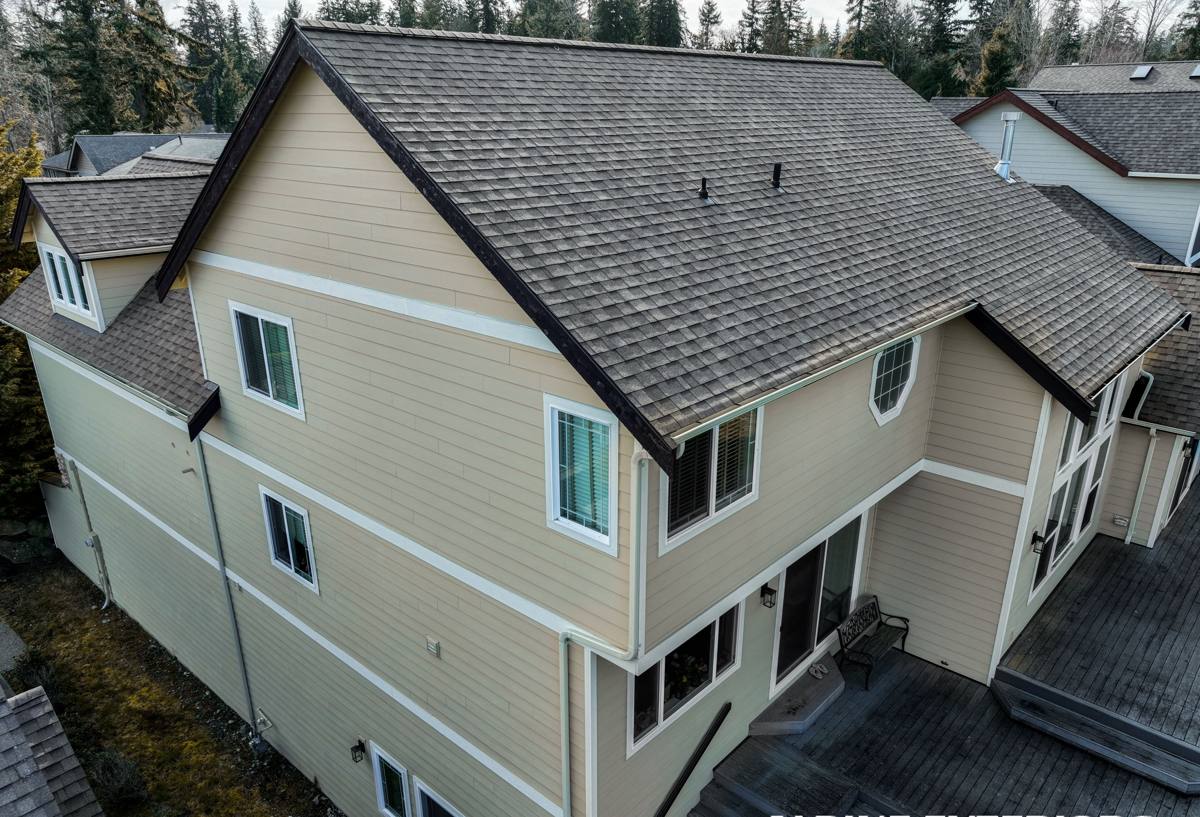
Common Deck Repair Issues We See in Point Roberts
Ledger Board and Framing Rot
The ledger board — the piece that bolts the deck to the house — is the single most important structural connection on most decks, and it's also the piece most likely to trap water if the flashing behind it has failed or was never installed correctly. In a driving-rain climate, a marginal ledger flashing detail that might last for years inland can fail much sooner out here. We check the ledger connection and the flashing behind it on every repair call, even when the complaint we were called out for is somewhere else on the deck entirely.
Deck Surface Wear, Moss, and Algae
Wood decking that stays damp for long stretches develops soft spots, cupping, and splinter-prone graying. Moss and algae add a slip hazard on top of that, especially on north-facing decks or decking that sits close to grade or under tree cover. Pressure washing clears the surface temporarily, but if moss keeps returning within a few months, that's usually a sign of a moisture or airflow problem underneath the deck, not just a cleaning problem.
Railings, Posts, and Stairs
Guardrail posts take a lot of abuse from wind load, and if the post base or the bolts holding it are corroding or rotting, that is a safety issue, not a cosmetic one. Stair stringers exposed to standing water at the base are another common failure point — we see stringer rot most often where a stair lands on grade without a proper footing or drainage path.
Fastener and Hardware Corrosion
Salt air corrodes exposed metal faster than most homeowners expect. Deck screws, joist hanger nails, and post hardware that would hold up fine in a drier inland location can rust, streak, or weaken within a few seasons here if they weren't rated for a coastal environment in the first place. Rust streaking around fastener heads is often the first visible clue that the hardware underneath needs a closer look.
Repair or Replace? How We Make the Call
Not every deck problem means a full rebuild, and not every deck can be patched. We look at three things: how much of the structural framing is actually compromised, how old the deck is relative to its expected service life, and whether the original build has a design flaw — like missing flashing or undersized footings — that will just cause the same failure again if we only fix the symptom in front of us.
| What We Find | Usually Means | Typical Approach |
|---|---|---|
| Soft or spongy decking boards only | Surface-level wood failure | Board-by-board replacement |
| Rust streaks around fasteners, hardware intact | Early-stage corrosion | Fastener and hardware upgrade |
| Soft ledger board or missing flashing | Structural connection at risk | Ledger rebuild with proper flashing |
| Multiple rotted joists or a rotted beam | Framing failure | Partial or full structural rebuild |
| Undersized or frost-heaved footings | Foundation design flaw | Footing correction before any surface work |
We'll always tell you honestly when a repair is the right call versus when you'd be spending money to delay a rebuild you'll need anyway. If the framing and footings are sound and the problems are limited to decking, railings, or hardware, repair is usually the more cost-effective route.
Our Deck Repair Process
- Inspection from the ground up. We check footings, posts, beams, joists, the ledger connection and its flashing, decking, railings, and stairs — not just the area you called about.
- Moisture and structural assessment. Soft spots get probed, not just looked at, so we know how far rot has traveled before we scope the repair.
- Written scope and options. You get a clear explanation of what's failing, why, and what the repair involves, including anything we found beyond the original complaint.
- Repair or rebuild. We replace only what needs replacing when a targeted repair is the honest answer, and we scope a fuller rebuild when the framing or footings won't support a patch.
- Hardware and fastener upgrade. Any exposed connectors, fasteners, or flashing we touch gets upgraded to coastal-appropriate materials, even when that wasn't the original complaint.
- Final walkthrough. We check railing height, stair spacing, and overall solidity together before we call the job finished.
Materials and Hardware We Use in a Marine Environment
What holds a deck together matters more here than it would in a drier inland location. We choose materials based on how they actually perform in salt air and standing moisture, not just on upfront cost.
| Component | Standard Choice | Why It Matters Here |
|---|---|---|
| Framing lumber | ACQ pressure-treated fir or hem-fir | Resists rot in the moisture load typical for this area |
| Fasteners | Stainless or heavy hot-dip galvanized deck screws | Standard coated screws corrode faster in salt air |
| Joist hangers and post hardware | Hot-dip galvanized or stainless | Lighter coatings wear through and rust from the inside out |
| Ledger flashing | Corrosion-resistant metal or membrane flashing, properly lapped | This is the connection most likely to fail if flashing is done wrong |
| Decking surface | Wood or composite, chosen with the homeowner | Each carries different maintenance needs in a moss-prone climate |
On decking material, we're honest that there's no maintenance-free option. Wood needs periodic cleaning and refinishing but is straightforward to spot-repair board by board. Composite resists rot and skips the refinishing step, but it can still grow a film of algae on shaded sections, and it isn't as simple to patch a single damaged board without the color and batch matching lining up. We'll walk through the real trade-offs for your deck's exposure rather than pushing one material as a universal fix.
Permits and Code Considerations for Point Roberts
Point Roberts is unincorporated, so building permits there run through Whatcom County's permitting process rather than a local city hall. Most straightforward repair work — replacing boards, swapping hardware, patching framing — doesn't trigger a permit, but structural rebuilds, footing changes, and railing modifications often do. We handle the parts that touch code directly:
- Guardrail height and baluster spacing on any railing we rebuild
- Stair rise, run, and handrail requirements when stairs are part of the job
- Ledger attachment and flashing per current structural requirements
- Footing size appropriate for the site conditions
If a repair crosses into permit territory, we'll tell you up front rather than after the fact — a rebuilt deck that doesn't meet current code can turn into a problem at resale or insurance time down the road.
Why a Crew That Already Works Point Roberts Matters
Point Roberts is geographically part of Whatcom County, but it's cut off from the rest of the county by water and by an international border — the practical route in and out runs through Canada. That's not a small detail for a construction crew. It means border crossing times factor into scheduling, materials and tools have to be planned for in full since you can't just run back to the shop on a whim, and a crew unfamiliar with the crossing can lose half a day to logistics before a single board gets replaced.
We build our Point Roberts schedule around that reality: material lists confirmed before we cross, tools staged so we're not making return trips, and repair days planned so weather and crossing times don't turn a two-day repair into a week-long one. That's the practical value of hiring a crew that already treats Point Roberts as a normal part of its territory instead of a special trip.
Keeping a Repaired Deck in Good Shape
A repair is only as good as the upkeep that follows it, especially in a climate that keeps decks damp for a good part of the year. A little seasonal attention goes a long way toward keeping moss and rot from coming back.
- Sweep debris off the deck regularly — trapped leaves and needles hold moisture against the surface
- Clean moss and algae buildup before it gets thick enough to hide surface damage underneath
- Check that gaps between boards stay clear so water can drain instead of pooling
- Look at fastener heads once or twice a year for early rust streaking
- Confirm gutters and downspouts near the deck aren't dumping extra water onto or under it
- Re-seal or refinish wood decking on the schedule the product calls for, not just when it starts looking worn
If you're not sure what to look for, a quick seasonal walk-through with a contractor costs far less than catching a problem after it's already turned into a structural repair.
Get a Straight Answer on Your Deck
If your Point Roberts deck has soft spots, rust streaks, stubborn moss, or just feels less solid than it used to, we're happy to take a look and give you a clear, honest read on what's actually going on — repair, partial rebuild, or otherwise. Reach out for a free, no-pressure estimate using the form below.