 Birch Bay Siding
 A Different Kind of Coastal Exposure
Point Roberts sits on its own peninsula at the edge of the Strait of Georgia, and homes there take on weather most inland Whatcom County properties never see. The exposure is constant: salt-laden air off the water, wind-driven rain that hits siding sideways instead of straight down, and a wet season that stretches long enough to grow moss on anything shaded or slow to dry. Siding installed here has to be chosen and installed with that specific exposure in mind, not treated like a standard Birch Bay or Blaine job with the same wind and water pressure.
We install siding throughout the Birch Bay area, and Point Roberts is part of that service area. The material, the flashing details, and the fastening all need to account for a coastal site that gets more direct wind and salt exposure than most of the homes a few miles inland.
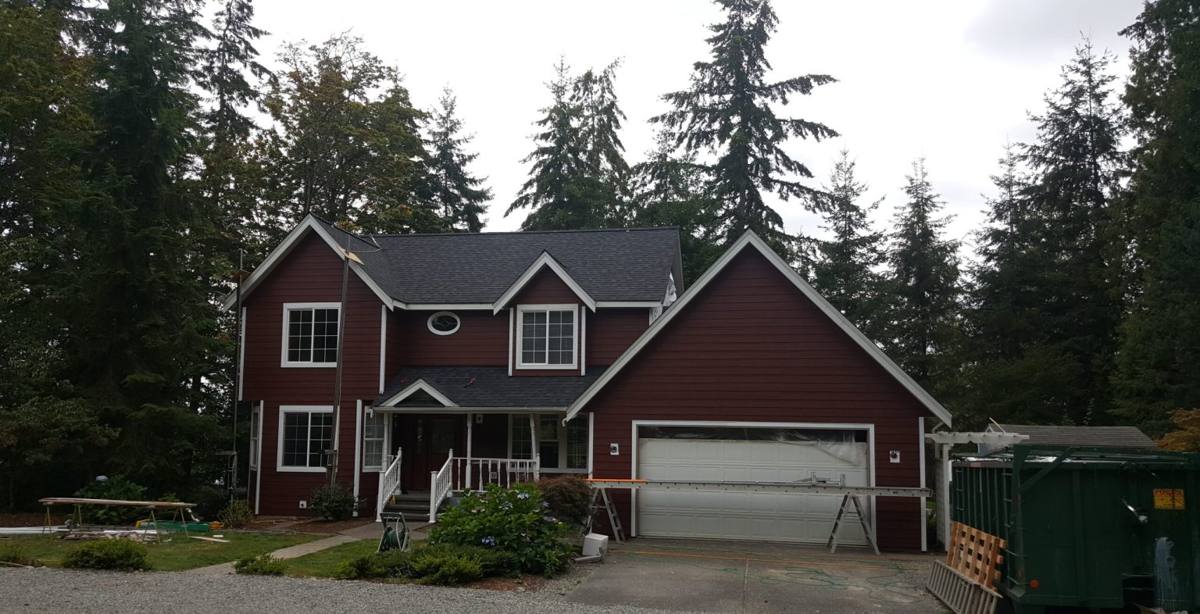
What Salt Air, Rain, and Moss Actually Do to Siding
Salt Air and Corrosion
Airborne salt doesn't just sit on the surface — over years it works into fasteners, trim joints, and any exposed metal flashing. Uncoated or under-rated hardware corrodes faster near the water than it would a few miles inland, and once fasteners start to fail, the siding panels they hold move, gap, and let water behind the cladding. The fix isn't a different siding color or texture — it's using corrosion-resistant fasteners and flashing rated for coastal exposure, and detailing the install so water never has a reason to sit against metal.
Wind-Driven, Horizontal Rain
Rain that comes off open water rarely falls straight down. It drives sideways under eaves, around window and door trim, and into any gap that a calmer inland site would never test. Siding that relies on caulk alone to keep water out will eventually fail in this kind of exposure — the water finds the seam, caulk shrinks and cracks over a few seasons, and moisture gets behind the cladding before anyone notices from the ground. Correct installation treats caulk as a secondary defense, with flashing and a proper weather-resistive barrier doing the real work of keeping water out.
The Long Moss and Mildew Season
Whatcom County's wet season runs long, and on a shaded, damp, salt-exposed site like Point Roberts, siding surfaces that stay damp for extended stretches are prone to moss and mildew growth — especially on north- and west-facing walls that get less direct sun. Moss holds moisture against the surface, which shortens the life of whatever's underneath it. Siding material, panel orientation, and even how tight the install sits to landscaping all affect how much of a moss problem a homeowner ends up dealing with for the life of the siding.
Why Point Roberts Installs Take More Planning
Point Roberts is a peninsula community reached by crossing into Canada and back — it's not a job a crew treats like any other stop on the schedule. Material deliveries, tool and equipment staging, and crew logistics all have to be planned around that border crossing, and a contractor who hasn't worked the area before often underestimates it. That's part of why some contractors are reluctant to take Point Roberts jobs at all, or quote them at a premium without a clear reason.
Working the area regularly means we already know how to plan material orders so a shortage doesn't mean a mid-project delay, and how to schedule crew time so the job isn't stretched out by avoidable back-and-forth. That planning doesn't show up in the finished siding, but it's the difference between a job that runs on schedule and one that drags.
What a Correct Siding Installation Actually Involves
Siding is a system, not just a visible surface. On an exposed site like this, every layer underneath the panels matters as much as the panels themselves.
- A continuous weather-resistive barrier installed with the correct lap and taping, with no gaps for wind-driven rain to exploit
- Flashing at every window, door, and roof-to-wall intersection, including kickout flashing where a roofline meets a sidewall to direct water into the gutter instead of behind the siding
- Corrosion-resistant fasteners driven to the manufacturer's specified pattern and depth — not just "close enough"
- Proper clearance gaps at trim, corners, and butt joints so panels can expand and contract without buckling or pulling apart
- Correct siding-to-grade and siding-to-deck clearances so splashback and standing water don't sit against the bottom course
- Caulking used only where the manufacturer specifies it — not as a substitute for proper flashing
- Ventilation behind the cladding maintained where the assembly calls for it, so moisture that does get in can dry out instead of being trapped
Skip or rush any one of these steps and the siding can still look fine from the curb for a year or two — the problems show up later, as trapped moisture, rot in the sheathing, or fasteners backing out. On a site with this much wind and salt exposure, there's less margin for a shortcut to go unnoticed.
The James Hardie System We Install
We install James Hardie fiber cement siding exclusively — we don't install vinyl, LP SmartSide, or other engineered wood or fiber cement alternatives. That's a standard we hold across every job, including Point Roberts, because fiber cement handles this kind of coastal exposure in ways other common siding materials don't.
Fiber cement is non-combustible and dimensionally stable, meaning it doesn't expand and contract with moisture and temperature the way wood-based products do — a real advantage on a site with constant humidity swings and salt exposure. Hardie's ColorPlus factory finish is baked on under controlled conditions rather than field-painted, which gives it better resistance to fading and moisture intrusion at the finish layer than a job-site paint job typically achieves. Hardie also engineers its HZ5 product line specifically for the moisture and climate conditions of the Pacific Northwest, which is the version we install in this region rather than a formulation built for a drier climate.
None of that replaces correct installation — even the right material fails early if it's flashed or fastened wrong. But starting with a product engineered for this climate, backed by a strong transferable warranty, gives a Point Roberts home a real head start against salt, rain, and moss that a lesser-suited material doesn't offer.
Our Process, Start to Finish
- Free on-site assessment — we look at current siding condition, exposure on each elevation, and any moisture or rot already present before quoting anything
- Written estimate — scope, product line, color, and a clear cost breakdown, with no pressure to sign on the spot
- Material and logistics planning — for Point Roberts specifically, this means confirming delivery timing and crew scheduling around the border crossing before work starts
- Removal and inspection — old siding comes off, sheathing gets inspected for hidden moisture damage before anything new goes up
- Weather barrier and flashing installation — the layer that actually keeps water out, done before a single Hardie panel is hung
- Hardie panel installation — installed to manufacturer fastening and clearance specifications, not shortcuts
- Final walkthrough — trim, caulking, and touch-up checked with the homeowner before we call the job done
What Affects the Cost of a Point Roberts Siding Job
Every home is different, but the main cost factors on a job like this are consistent. This isn't a price quote — it's a guide to what actually moves the number up or down.
| Factor | Why It Matters |
|---|---|
| Home size and wall area | More square footage means more material and labor, the largest single driver of total cost |
| Number of stories | Multi-story homes need staging or lift equipment, which adds labor time and safety planning |
| Old siding removal and disposal | Tear-off adds labor and disposal cost versus installing over a compliant existing surface |
| Hidden sheathing damage | Rot found once old siding comes off has to be repaired before new siding goes on — this is the most common source of a mid-project cost adjustment |
| Trim, corners, and architectural detail | More windows, corners, and rooflines mean more flashing and cut work |
| Product line and color | Hardie offers multiple panel styles and both standard and premium ColorPlus color options |
| Site access and logistics | Point Roberts' location adds delivery and scheduling planning that a mainland Birch Bay job doesn't require |
What to Expect After Installation
Correctly installed Hardie siding is low-maintenance, but "low-maintenance" doesn't mean "no attention needed" on a site this exposed. Rinsing salt residue and organic buildup off the surface periodically, keeping gutters and downspouts clear so water sheds away from the wall rather than running down it, and keeping vegetation trimmed back from north- and west-facing walls all help keep moss from getting a foothold. None of this is difficult, and it's a fraction of what maintaining a wood-based or vinyl product in this same location would require over the same years.
The ColorPlus finish is designed to hold its color without repainting for a long time, which matters on a site where a field-applied paint job would take more of a beating from salt air and sun than it would a few miles inland.
Why a Local, Point Roberts-Experienced Crew Matters
Siding installation isn't a one-size-fits-all job, and Point Roberts isn't a one-size-fits-all site. A crew that hasn't worked this specific stretch of coastline before is more likely to underestimate the wind and salt exposure, under-plan the logistics of a border-adjacent job, or default to installation details that would be fine in a calmer inland setting but leave gaps on a peninsula home. A crew that already knows the area brings that knowledge into the estimate, the material order, and the flashing details before the first panel goes up — not as a lesson learned after a callback.
If you're planning a siding project for a Point Roberts home, we're happy to walk the property, look at what your current siding is telling us about past moisture and wind exposure, and put together a straightforward estimate — no pressure, no obligation. The form below gets you started.