 Birch Bay Siding
 Why Siding Installation in Semiahmoo Is Its Own Job
Semiahmoo sits right up against the water, and that changes what a siding job needs to survive. Homes here face a steady diet of salt-laden air, wind-driven rain coming off the bay, and long stretches of gray, damp weather that keep exterior surfaces wet far longer than homes even a few miles inland. Add in Whatcom County's moss season, which can run most of the year on shaded or north-facing walls, and you have a climate that is genuinely harder on siding than most of Western Washington.
A siding installation that would hold up fine in a drier, more sheltered part of the state can fail early here — not because the product itself is bad, but because the install didn't account for how much water and salt air this location actually sees. That's the gap we focus on closing: installing siding the way it should be done for a home that sits close to Semiahmoo Bay and the Strait of Georgia weather system, not the way a generic install would go anywhere else.
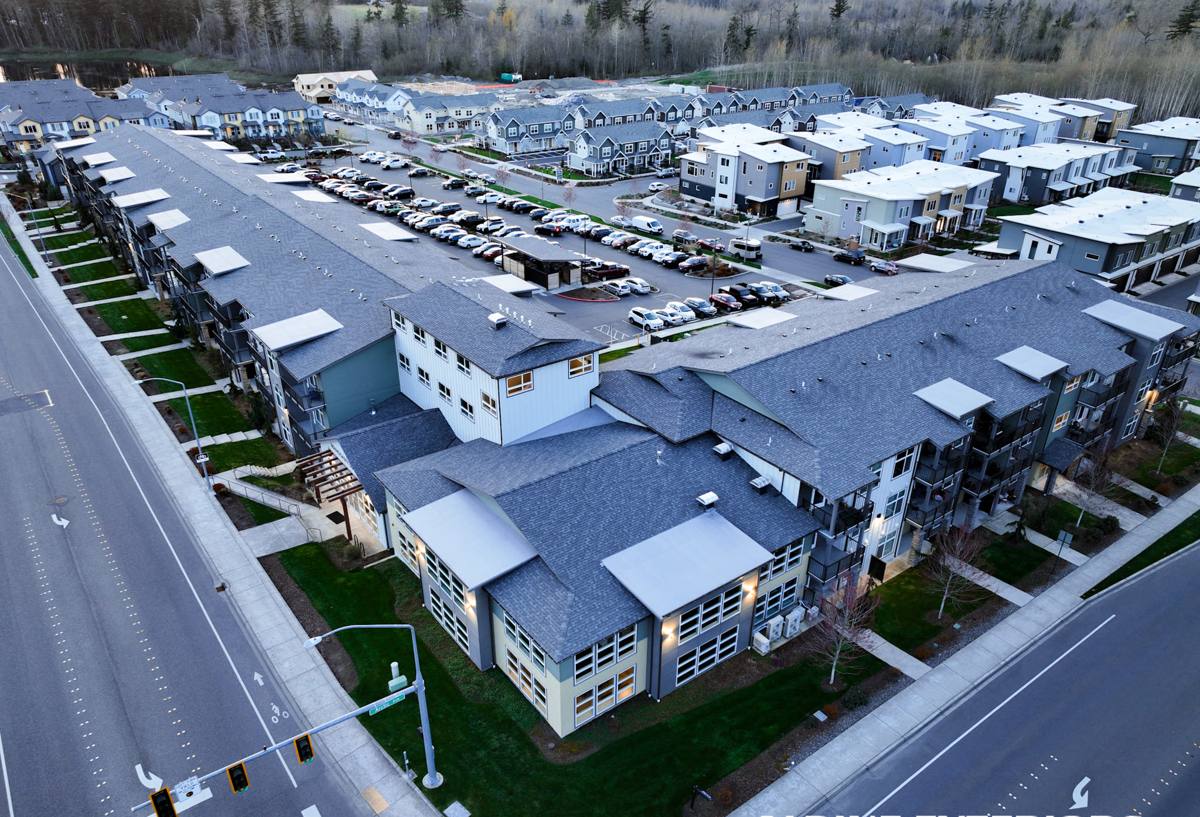
What Salt Air and Driving Rain Actually Do to a Home's Exterior
It helps to understand the specific mechanisms at work, because they point directly to what a correct installation has to address:
- Salt air accelerates corrosion on any exposed metal — fasteners, flashing, trim edges — and speeds up the breakdown of finishes that aren't rated for coastal exposure.
- Driving rain pushed by onshore wind doesn't just fall straight down; it gets forced sideways and upward into laps, seams, and butt joints that a calm-weather install might not weatherproof as carefully.
- Prolonged dampness from marine air keeps wall surfaces wet longer between rain events, which is exactly the condition moss, algae, and mildew need to establish and spread.
- Freeze-thaw cycling, even mild versions of it in this climate, can work water further into any gap that wasn't properly sealed or flashed the first time.
None of this is exotic — it's the normal cost of living near the water. But it means a siding job in Semiahmoo has less room for shortcuts than the same job would have thirty miles inland.
What Correct Installation Actually Involves
Drainage Plane and Rainscreen Gap
Behind the siding, a home needs a continuous water-resistive barrier and, ideally, a rainscreen gap that lets any moisture that gets past the siding drain and dry out instead of sitting against the sheathing. In a marine climate like this one, skipping or shortcutting the rainscreen is one of the most common reasons siding looks fine on the surface while rot develops underneath.
Flashing at Every Penetration
Windows, doors, hose bibs, light fixtures, and roof-to-wall transitions all need properly lapped flashing so wind-driven rain can't work its way behind the cladding. This is detail work that takes longer and costs more in labor than a rushed install, but it's the difference between siding that sheds water for decades and siding that traps it.
Fastening and Joint Treatment
Fiber cement siding has manufacturer-specified nailing patterns, fastener types, and minimum clearances at butt joints and corners. In a salt-air environment, using the correct corrosion-resistant fasteners — not just whatever's on the truck — matters more than it would elsewhere, since standard fasteners can start staining or failing years before their inland equivalents.
Caulk as Backup, Not Primary Defense
Caulking has a real job in a siding system, but it should never be the only thing standing between a joint and the weather. Caulk degrades faster in constant damp-dry cycling than most homeowners expect. A correct install uses flashing and lap geometry to shed water first, with sealant as a secondary layer — not the other way around.
Why We Install Only James Hardie Fiber Cement
We standardized on James Hardie fiber cement siding and don't install vinyl, LP SmartSide, primed spruce, cedar, or other fiber cement brands. That's a deliberate call, and it's especially relevant for a location like Semiahmoo:
- Non-combustible material that doesn't soften, warp, or off-gas the way some engineered wood and vinyl products can under sustained heat or moisture stress.
- ColorPlus factory finish, baked on and warrantied against fading and chipping — a meaningful advantage in a climate where field-applied paint has to fight constant moisture exposure to cure and hold properly.
- HZ5 product engineering, James Hardie's line built specifically for colder, wetter climate zones like ours, versus siding engineered for a national average climate that doesn't really exist near the water.
- A strong, transferable manufacturer warranty that stays meaningful because the product has a long track record when installed to spec — not a marketing add-on.
We're not going to tell you other siding products are junk — they're not, and each has situations where they make sense. But for homes exposed to what Semiahmoo sees off the water, we'd rather install one product correctly and stand behind it than offer several options and hope the cheaper ones hold up.
Signs Your Semiahmoo Home's Siding Needs Attention
Because of the local conditions, siding problems here tend to show up in a few recognizable patterns:
- Persistent moss or algae streaking on north- and west-facing walls that comes back within a season of cleaning.
- Soft or spongy spots near the bottom courses, corners, or under windows — a sign moisture has reached the sheathing.
- Visible rust bleeding from fastener heads or trim, more common on older installs with standard (non-coastal-rated) hardware.
- Cupping, warping, or separating boards, especially on wood or engineered-wood siding that's been through several wet seasons.
- Paint that's chalking, peeling, or needing recoating far sooner than the interval you'd expect inland.
Any one of these on its own might just mean routine maintenance. Several together, especially paired with visible damage at seams or corners, usually mean the underlying installation — not just the surface finish — needs a real look.
How Common Siding Materials Hold Up Near Semiahmoo Bay
| Material | Moisture/Rot Resistance | Salt Air Performance | Maintenance Needs | Typical Lifespan (installed to spec) |
|---|---|---|---|---|
| James Hardie fiber cement | Excellent — won't rot, swell, or absorb water like wood-based products | Strong; factory finish resists salt-driven fading and degradation | Occasional wash-down; ColorPlus finish rarely needs repainting | Decades, backed by manufacturer warranty |
| Vinyl siding | Doesn't rot, but seams and J-channels can trap moisture behind the panel | Can become brittle and discolor faster in sustained salt/UV exposure | Low, but panels crack or warp and are hard to color-match when replaced | Variable; shorter in harsh coastal exposure |
| Cedar / wood siding | Requires diligent upkeep to resist rot in a wet marine climate | Salt air accelerates weathering of finish and grain | High — regular refinishing, moss/mildew treatment, caulk maintenance | Shorter without consistent maintenance investment |
| LP SmartSide (engineered wood) | Treated for moisture resistance, but edge-sealing and field cuts are critical failure points | Sensitive to prolonged damp exposure if installation details are imperfect | Moderate; periodic repainting and careful joint inspection | Shorter than fiber cement in high-moisture coastal settings |
This isn't a claim that the other products are defective — it's a summary of the real trade-offs each one carries in exactly the kind of climate Semiahmoo has. It's also why our answer to "what do you install" is the same for every home we bid, rather than a menu of options with different long-term risk levels.
Our Installation Process, Start to Finish
- On-site assessment — we look at existing siding, sheathing condition, moisture points, and how the home is exposed to wind and rain off the water before quoting anything.
- Tear-off and sheathing check — old siding comes off and we inspect what's underneath for rot or hidden damage before closing anything back up.
- Water-resistive barrier and rainscreen — a continuous drainage plane goes on correctly, with a rainscreen gap where the wall assembly calls for one.
- Flashing at every opening — windows, doors, and penetrations get properly lapped, coastal-appropriate flashing before siding goes up.
- James Hardie installation to manufacturer spec — correct fastener type and spacing, proper clearances, and joint treatment matched to HZ5 climate requirements.
- Trim, caulk, and final detailing — sealant used as a backup layer, not a substitute for proper flashing and lap work.
- Walkthrough — we go over the finished job with the homeowner before calling it done.
Local Considerations Worth Knowing
Some Semiahmoo-area neighborhoods, particularly those in planned or resort-adjacent communities, have architectural guidelines that affect exterior color and material choices — worth checking before you commit to a look. Whatcom County permitting requirements also apply to most full siding replacements, and a crew that regularly works this area already knows what documentation is typically expected, which avoids delays mid-project.
Wind exposure also varies more than people expect across a small area like this — a wall facing open water off Semiahmoo Bay takes a different amount of wind-driven rain than a wall tucked behind a rise or tree line even a short distance away. A contractor who's worked multiple homes in the area will factor that into flashing and sealing decisions rather than treating every wall the same.
Checklist: What to Ask Before Hiring a Siding Contractor Here
- Do they have current Washington state contractor licensing and insurance, and will they provide proof?
- Can they explain their rainscreen and flashing approach specifically, not just "we install siding"?
- Do they have experience with homes in Whatcom County's coastal/marine exposure, not just inland jobs?
- Are they a certified or experienced James Hardie installer, if that's the product you want?
- Will the quote specify fastener type, house wrap/barrier product, and flashing details — or is it vague on materials?
- What does their warranty actually cover, and for how long, separate from the manufacturer's product warranty?
Living With Hardie Siding in This Climate
Even correctly installed, no siding is entirely maintenance-free near the water. What changes with James Hardie fiber cement is how little that maintenance amounts to. An occasional rinse to knock back moss and salt residue, a periodic look at caulked joints and trim, and keeping gutters and downspouts clear so water isn't dumping directly onto walls — that's most of it. There's no repainting cycle to plan around, no swelling seams to watch for, and no annual refinishing the way cedar demands. For a home taking on Semiahmoo's salt air and rain year after year, that lower maintenance burden is often the biggest practical difference homeowners notice once the job is done.
If you're weighing a siding replacement or repair for a home in the Semiahmoo area, we're happy to come take a look and give you a straightforward, no-pressure estimate — including an honest read on what your current siding and sheathing actually need, not just a sales pitch. Use the form below to get started.