 Birch Bay Siding
 Board & Batten Siding in Lynden: A Different Climate Problem Than the Coast
Lynden sits inland from Birch Bay, out in the Nooksack River valley, and that changes what siding has to deal with. You're farther from the salt air that eats at coastal homes, but you trade it for something almost as hard on a house: heavy river-bottom humidity, long stretches of driving rain off the water, and a moss season that runs longer than most homeowners expect in Whatcom County. Board and batten siding is one of the most popular looks for Lynden's mix of farmhouses, newer builds, and rural properties — but the look only holds up if the material and the install are matched to what this valley actually does to wood-adjacent products over a Pacific Northwest winter.
This page is specifically about board and batten siding for homes in the Lynden area, installed by a crew based in Birch Bay that already works this part of Whatcom County. We're not going to give you a generic rundown of a national siding trend. We're going to tell you what board and batten needs to do here, what a correct installation actually involves, and why we only install it in one material.
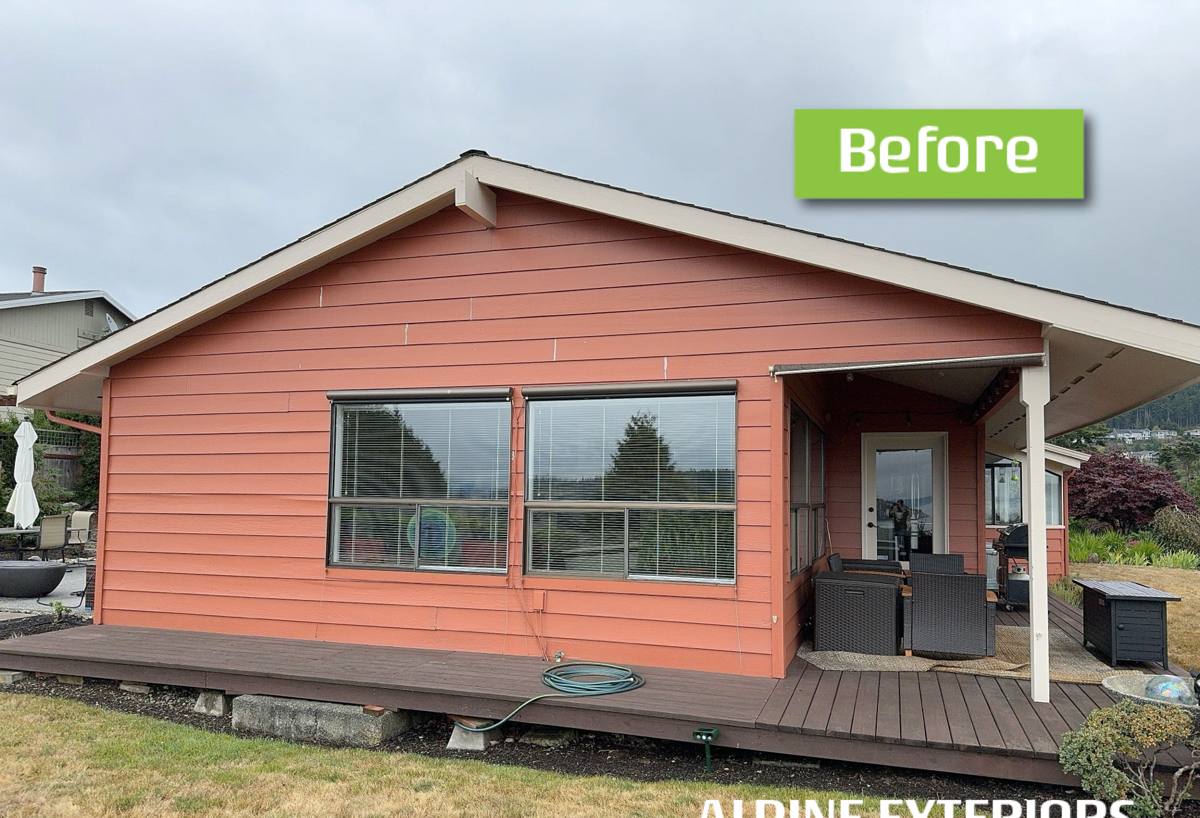
Why Board & Batten Fits Lynden Homes
Board and batten has real staying power in Lynden because it echoes the barns, outbuildings, and older farmhouses that define a lot of the area's architecture. Wide vertical boards with narrow battens covering the seams give a home a clean, linear look that reads as both traditional and current, depending on the trim and color choices around it. It works on full exteriors, on gable accents, on porches, and as a contrast material against lap siding.
The visual appeal isn't the issue. The issue is that board and batten has more vertical seams and more exposed edges per square foot than horizontal lap siding, and every one of those seams is a place water can get behind the material if it isn't detailed correctly. In a valley that stays damp for months at a stretch, that detail work is the difference between siding that looks good for decades and siding that's swelling, staining, or growing moss within a few winters.
What Lynden's Climate Specifically Does to Siding
- Sustained humidity: river-valley moisture and low-lying farmland keep the air damp longer than it stays damp in drier parts of the county, which slows drying time after every rain event.
- Driving rain: wind-driven storms push water sideways into vertical seams and batten joints, not just straight down onto the surface.
- Long moss season: shaded elevations, north-facing walls, and anything under tree cover stays wet enough to grow moss and algae for a large part of the year.
- Freeze-thaw cycling: Whatcom County gets enough cold snaps that any trapped moisture in a batten seam can freeze, expand, and force the joint open a little more each winter.
What a Correct Board & Batten Installation Requires
Board and batten looks simple from the driveway — vertical boards, thin strips covering the seams — but it's one of the less forgiving siding profiles to install correctly. Most of the failures we get called out to inspect on other contractors' work trace back to a handful of recurring shortcuts.
The details that actually matter
- Weather-resistive barrier and rainscreen gap: board and batten should sit on a drainage plane that lets any water that gets past the surface drain and dry out behind the siding, not soak into the sheathing.
- Batten spacing over structural boards, not fasteners into the gap: battens need to land on solid backing and be fastened without pinning water against the seam.
- Flashing at every horizontal transition: window heads, water tables, and roof-to-wall intersections all need proper flashing, since board and batten's vertical run gives water a straight path down to those transitions.
- Correct fastener pattern and caulking at penetrations: board and batten has more linear feet of joint than most profiles, so fastener spacing and sealant choice matter more, not less.
- Factory-finished material where possible: field-painted boards and battens are only as good as the paint job and the substrate underneath it, and field paint doesn't hold up the same way a factory finish does.
Skip any one of these and the siding can still look right on installation day. The problems show up two, three, five winters later — which is exactly why so many board and batten call-backs happen on homes that were "installed correctly" by someone's account at the time.
Why We Only Install James Hardie Board & Batten
Board and batten gets installed in a lot of materials — vinyl, engineered wood, primed spruce, cedar. We don't install any of those. We install James Hardie fiber cement, in Hardie's board and batten profiles, and that's a deliberate standard, not a default.
Wood-based board and batten, whether it's cedar, primed spruce, or engineered wood products, depends on paint film and edge sealing to keep moisture out. In a climate like Lynden's, where the material rarely gets a long enough dry stretch to fully release moisture, that paint film is under constant stress at every seam and batten edge. Once water gets into an end grain or a seam gap, wood-based products swell, and swelling is what starts the cycle of cracking, peeling, and rot that shows up as recurring maintenance rather than a one-time job.
Vinyl board and batten avoids the rot problem but introduces a different one: it's a thin material that telegraphs waviness on longer vertical runs, it becomes brittle in freeze conditions, and it has no real fire resistance. None of that matches what we want to put our name behind on a home that's supposed to look right for decades, not years.
James Hardie fiber cement is non-combustible, holds a factory-applied ColorPlus finish that doesn't depend on field painting to perform, and is engineered specifically for Pacific Northwest moisture exposure in its HZ5 product line. It doesn't swell with humidity the way wood does, and it doesn't warp or go brittle the way vinyl does. That's why it's the only board and batten system we put on Lynden homes.
Board & Batten Material Comparison
| Material | How it handles Lynden's damp/moss climate | Maintenance burden | Fire performance |
|---|---|---|---|
| James Hardie fiber cement | Engineered for PNW moisture; factory finish resists moss staining and doesn't swell | Occasional wash; no repainting cycle | Non-combustible |
| Cedar / primed spruce | Absorbs moisture at seams and end grain; prone to swelling and rot in sustained damp | Repainting/staining every few years, caulk maintenance | Combustible |
| Vinyl | Doesn't rot but can warp, fade, and crack in freeze-thaw cycling | Low, but limited repair options once damaged | Combustible, can deform near heat |
| Engineered wood (LP-type) | Better moisture resistance than raw wood but still edge- and seam-sensitive | Moderate; edge sealing and caulk inspection needed | Combustible |
Our Process for a Lynden Board & Batten Job
Every board and batten project we run in the Lynden area follows the same sequence, because skipping steps is exactly how the seam and moisture problems described above end up on a house.
- On-site assessment: we look at wall orientation, tree cover, roof drainage, and existing moisture damage before we ever talk product or price.
- Tear-off and sheathing check: old siding comes off and we inspect sheathing for rot or soft spots before anything new goes up — you don't cover a problem, you fix it first.
- Weather-resistive barrier and drainage plane: a proper WRB and rainscreen gap go in before a single board is hung.
- Flashing at every transition: windows, doors, water tables, and roof lines get flashed correctly, not caulked over as a shortcut.
- Hardie board and batten install: boards and battens go up to manufacturer spec, with correct fastener spacing and clearances.
- Final walkthrough: we go over the finished job with you before we consider it done.
Common Board & Batten Mistakes We See on Other Contractors' Work
When we're called out to look at an existing board and batten installation that's having problems, the same handful of issues come up again and again:
- Battens face-nailed directly over seams with no gap for drainage, trapping water instead of shedding it
- Missing or undersized flashing at window heads, letting water track down behind the boards
- No rainscreen gap, so the siding sits tight against the sheathing with nowhere for moisture to dry out
- Wood-based boards installed with unsealed cut ends, giving moisture a direct entry point
- Caulk used as a substitute for flashing at horizontal transitions instead of as a supplement to it
Why a Crew That Already Works Lynden and Birch Bay Matters
Board and batten detailing isn't one-size-fits-all — how you handle drainage and flashing shifts depending on wall exposure, tree cover, and how much sustained moisture a given elevation actually sees. A crew that works Whatcom County regularly already understands the difference between what a south-facing wall needs versus a shaded north wall near tree cover, and how that changes fastener choice, gap sizing, and where moss is most likely to become a maintenance issue down the line. That's not something you learn from a spec sheet — it's something you learn from doing the work in this specific climate, on this specific type of housing stock, over and over.
It also means straightforward accountability. We're not a crew passing through the county on a project-by-project basis — we're based in Birch Bay and working this region regularly, which is exactly the kind of contractor relationship you want for exterior work that's supposed to last decades.
Maintenance Checklist for Board & Batten in a Damp Climate
- Rinse siding down once or twice a year, especially shaded and north-facing walls prone to moss
- Keep gutters clear so overflow doesn't run down the face of the siding and saturate seams
- Trim back tree cover and vegetation that keeps a wall shaded and damp longer than it needs to be
- Inspect caulking at trim and penetrations annually, even with a factory-finished material
- Address any moss or staining early — it's easier to rinse off than to let it establish and hold moisture against the surface
What Affects the Cost of a Board & Batten Project
| Factor | Why it matters |
|---|---|
| Wall square footage and complexity | More corners, gables, and transitions mean more cut boards, flashing, and labor time |
| Sheathing condition | Rot or moisture damage found during tear-off needs repair before new siding goes on |
| Board and batten width and reveal | Wider boards and batten spacing change material quantities and the finished look |
| Trim and accent detailing | Window and door trim, corner boards, and water table details add labor and material |
| Color and finish selection | Factory ColorPlus finishes vary in cost by color line but eliminate a future repainting cycle |
If you're weighing board and batten for a home in the Lynden area, we're glad to walk the property, look at what your specific walls and exposure are dealing with, and give you a straightforward, no-pressure estimate. Use the form below to get started.