 Birch Bay Siding
 Deck Building in Lynden, Built for Whatcom County Weather
Lynden sits inland from Birch Bay, but it doesn't escape the weather patterns that shape everything we build in this part of Whatcom County. Wet winters, long stretches of low sun, and moisture that lingers in shaded yards all put real stress on an outdoor deck. Add the salt-tinged air that drifts in off the bay on a west wind, and you've got a set of conditions that will find every weak point in a deck within a few seasons if the job wasn't done right the first time.
We build and repair decks for homeowners throughout the Lynden and Birch Bay area, and the decks that hold up aren't the ones with the fanciest railing or the newest composite color. They're the ones where the structure underneath — the footings, the ledger connection, the flashing, the fastener choice — was handled correctly before a single board of decking ever went down. That's where we focus, and it's why local homeowners call us back for the next project.
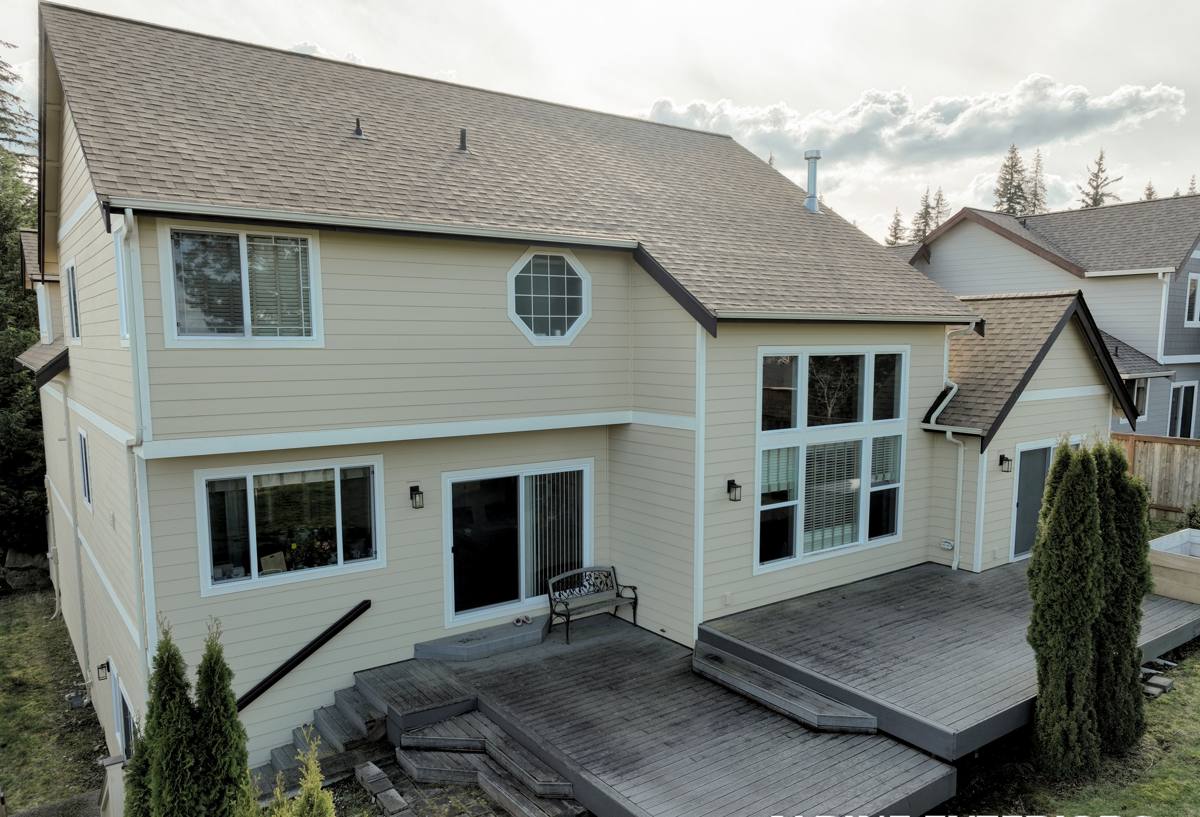
What Lynden's Climate Does to an Improperly Built Deck
Whatcom County doesn't get extreme heat or heavy snow loads most years, but it makes up for that with sheer duration of moisture exposure. A deck here spends more days damp than dry across a typical year. That changes the math on what materials and details actually matter.
Driving Rain and Standing Water
Rain in this region often comes in sideways on a west or southwest wind, which means it doesn't just fall on a deck's surface — it drives into railing joints, under ledger boards, and into any gap where end grain is exposed. Decking boards installed tight together with no drainage gap trap water between boards, and that's where rot and mildew start first, long before the surface finish shows any wear.
Moss and Algae Season
Shaded decks, north-facing decks, and decks under mature trees in the Lynden area can stay damp for weeks at a stretch during the fall and winter. That's ideal for moss and algae growth, which isn't just a cosmetic problem — a moss-covered deck surface holds moisture against the wood or composite far longer than a bare one, and it turns dangerously slick underfoot.
Salt Air Corrosion
Being close enough to Birch Bay to catch salt-laden air means fasteners, brackets, and any exposed metal hardware are working against corrosion from day one. Standard interior-grade screws and generic joist hangers rust and weaken faster here than they would inland, and a rusted hanger under a deck is a structural problem, not a cosmetic one.
What a Correctly Built Deck Actually Involves
A deck is a structure first and a surface second. The visible decking boards get all the attention, but the parts that determine whether a deck lasts 10 years or 30 are mostly hidden.
Footings and Framing
Footings need to sit below frost depth and bear on solid, undisturbed soil — not on fill dirt or a shallow pour that seemed adequate at the time. Whatcom County's clay-heavy soils in many areas hold water, and a footing that isn't sized and set correctly can shift over a few wet seasons, which shows up later as a deck that's developed a slope or bounce.
Ledger Board Attachment and Flashing
Where a deck attaches to the house is the single most common failure point we find on older decks in this area. A ledger board that's lag-bolted to the rim joist without proper flashing lets water track directly into the house framing behind it — often for years before anyone notices, because the damage is hidden behind the ledger itself. Correct flashing, with proper overlap and a drainage path away from the house, is not optional in a climate this wet.
Fasteners and Hardware
We use corrosion-resistant, coated or stainless fasteners and hardware rated for exterior and coastal-adjacent exposure. It costs more up front than standard hardware store screws, but replacing a rusted-out joist hanger means tearing into a finished deck — a repair nobody wants to pay for twice.
Board Spacing and Drainage
Proper gap spacing between deck boards lets water shed through instead of pooling on the surface. We also pay attention to airflow underneath the deck itself — a low deck with poor ventilation underneath stays damp longer after every rain, which shortens the life of both the joists and the decking.
Our Deck Building Process
Every deck project we take on in the Lynden area follows the same basic sequence, whether it's a full rebuild or new construction.
- On-site assessment. We look at the site conditions — sun exposure, drainage, soil, proximity to the house's siding and roofline — before recommending materials or layout.
- Design and material selection. We walk through decking material, railing style, and structural layout based on how you'll use the space and what the budget supports.
- Permitting. Most deck projects above a certain height or size require a permit through the local jurisdiction. We handle that process as part of the job.
- Footings and framing. This is the stage that determines the deck's lifespan, and it's the stage we spend the most care on, even though it's the least visible once the job is done.
- Flashing and ledger attachment. Done correctly the first time, so water is directed away from your home's structure, not into it.
- Decking, railing, and finish work. Boards, railing, stairs, and any built-in features go in last, with attention to consistent spacing and clean fastener lines.
- Final walkthrough. We go over the finished deck with you, including basic care and what to watch for as it weathers in.
Decking Material Options for This Climate
There's no single "best" decking material — the right choice depends on your budget, how much upkeep you want to take on, and how the deck is situated relative to sun and shade.
| Material | How It Handles Local Weather | Maintenance |
|---|---|---|
| Pressure-treated wood | Solid performer when properly sealed and re-coated; needs attention on shaded or damp sites | Annual cleaning, periodic sealing/staining |
| Cedar | Naturally rot-resistant and handles moisture well, but softer and more prone to surface wear | Regular cleaning, periodic finish maintenance |
| Composite decking | Resists rot and doesn't need staining, but can stay damp longer on shaded decks and needs regular cleaning to prevent moss/algae buildup | Periodic washing; no sealing required |
| PVC decking | Fully synthetic, very moisture-resistant, holds up well in shaded or salt-air conditions | Low — occasional washing |
We're honest with clients about trade-offs rather than pushing whatever has the highest markup. Composite and PVC products cost more upfront but reduce the sealing and staining cycle that wood requires. Wood costs less to install but only performs well long-term if the homeowner keeps up with maintenance — which, in a climate this wet, means more than a once-a-decade coat of stain.
Common Problems We Find on Older Decks in the Lynden Area
- Ledger boards attached without flashing, with hidden rot in the house rim joist behind them
- Undersized or shallow footings that have allowed the deck to settle unevenly over time
- Rusted fasteners and hangers from non-coated hardware not rated for this climate
- Moss buildup on shaded surfaces that's been left untreated, accelerating surface decay
- Decking boards installed with no drainage gap, trapping water and speeding up rot
- Railing posts that were never properly through-bolted to the frame, creating a safety issue over time
Most of these problems aren't visible from a quick look at the deck surface. That's exactly why they go unnoticed until a board gives way or a railing post wobbles — by which point the fix is bigger and more expensive than it would have been if it were caught early.
Permits and Local Building Considerations
Deck permitting requirements vary by height, size, and whether the deck is attached to the house, and Whatcom County and local municipal codes both come into play depending on exactly where a Lynden property sits. Guardrail height, stair geometry, and footing depth are all governed by code, not preference — these aren't areas where cutting corners saves meaningful money, since they're also the areas an inspector checks first. We handle the permitting and inspection process as a standard part of the job so you're not left navigating it on your own.
Maintenance Checklist for Whatcom County Decks
Whatever material your deck is built from, a little seasonal attention goes a long way in this climate. We give every client a version of this list at the final walkthrough.
- Sweep debris and standing leaves off the deck surface regularly, especially in fall
- Clean moss and algae off the surface before it builds up, using a deck-safe cleaner rather than a pressure washer alone
- Check railing posts and stair connections annually for looseness
- Inspect the ledger board area where the deck meets the house for any signs of staining or soft wood
- Re-seal or re-stain wood decking on the schedule recommended for the specific product used
- Keep gutters and downspouts near the deck clear so runoff isn't draining directly onto or under it
- Check under the deck once a year for adequate airflow and no standing water
Why Hire a Crew That Already Works in Lynden and Birch Bay
A deck built to a generic national standard isn't the same as a deck built for this specific climate. Crews who don't regularly work in Whatcom County sometimes miss the details that matter most here — the flashing detail that keeps driving rain out of a ledger connection, the hardware grade that won't rust out in salt air, the footing depth that accounts for local soil and frost conditions. We work in Lynden and the surrounding Birch Bay area regularly, which means we're not guessing at how a deck will hold up here — we're seeing the results of past projects and adjusting our approach based on what actually happens to decks in this environment over time.
If you're planning a new deck or need an honest look at what's going on with an existing one, we're happy to come take a look. Reach out for a free, no-pressure estimate using the form below, and we'll walk the site with you and talk through what your deck actually needs.