 Birch Bay Siding
 Building New in Sumas? Windows Are a One-Shot Job
When you're framing a new home in the Sumas area, the window install happens once, at a specific point in the build sequence, and then it gets buried behind siding, trim, and drywall for the next several decades. There's no "we'll fix it later" with a new-construction window. If the flashing sequence is wrong or the rough opening wasn't prepped correctly, the problem doesn't show up at the final walkthrough — it shows up two or five or ten years later as a soft spot in the wall sheathing or a stain creeping down from a header. Getting it right the first time, while the wall is still open, is the entire job.
We install new-construction windows for builders and homeowners across Whatcom County, and the Sumas area comes with its own set of considerations — mostly tied to how much moisture this part of the county deals with over a typical year, and how that moisture interacts with a brand-new building envelope before it's ever been tested by a winter.
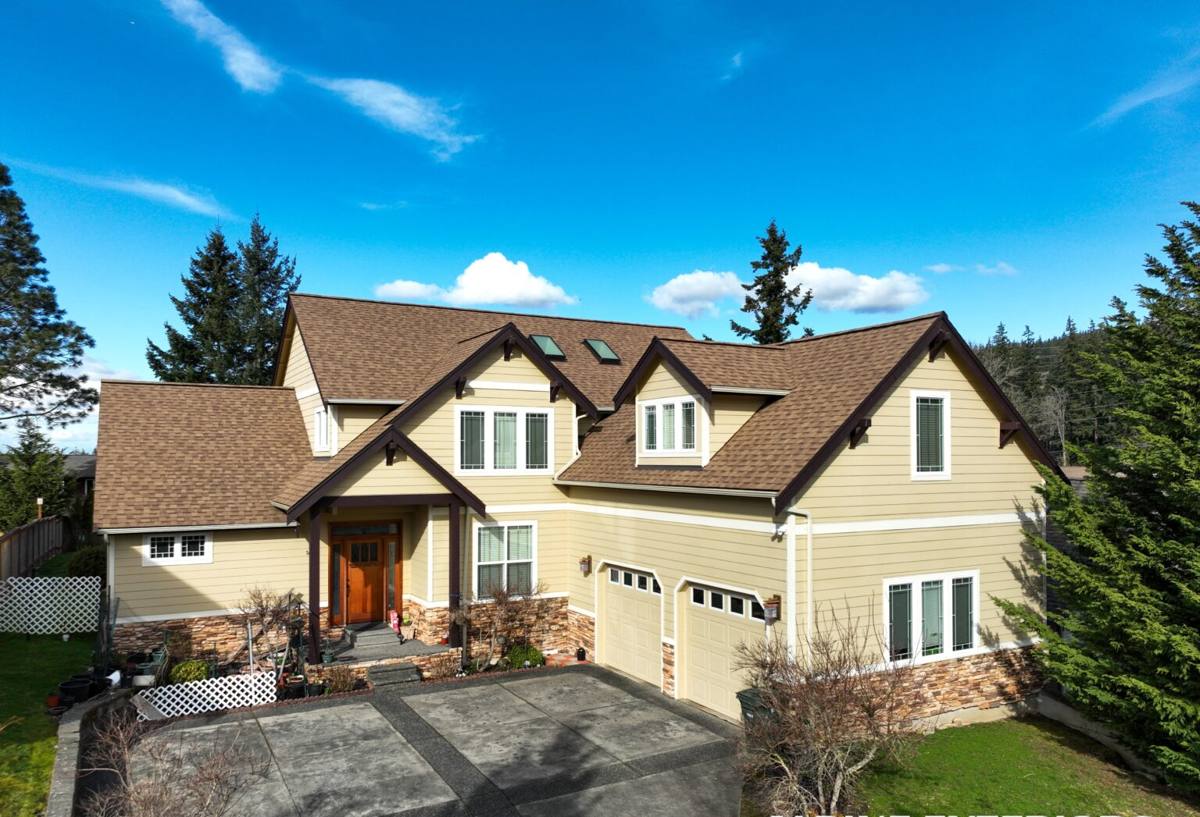
What Whatcom County Weather Does to a Window Opening
Whatcom County homes deal with a long, wet stretch of the year, and new construction is particularly exposed during that window between framing and dried-in status. Around Birch Bay, that means salt-laden air working on any exposed metal fasteners or trim. Further inland toward Sumas, it's less about salt and more about sustained rain events, saturated ground, and a moss season that runs longer than most homeowners expect — moss and algae growth on north-facing walls and anything that stays damp and shaded for weeks at a stretch.
What that means for a new-construction window opening specifically:
- Rough openings sit exposed to weather for days or weeks before the window goes in — any water that gets into the sheathing or framing during that window needs a way out, not a place to pool.
- Driving rain in this region doesn't just fall straight down — wind-driven rain pushes water sideways and upward under trim and flanges, which is why lap sequencing (not just caulk) is what actually keeps water out.
- A long damp season means any organic debris, sawdust, or standing moisture left in a sill pan before the window is set will not simply dry out on its own — it stays wet and starts causing problems from day one.
None of this is exotic. It's standard building science. But it only works if it's followed in order, on every opening, not just the ones that are easy to get to.
New Construction vs. Replacement: Why the Install Method Is Different
A lot of homeowners assume window installation is window installation. It isn't. New-construction windows have a nailing flange built into the frame, and that flange is designed to be integrated directly into the wall's water-resistive barrier (WRB) — the housewrap or building paper — before siding goes on. Replacement windows, by contrast, get set into an existing finished wall with no flange, relying on interior and exterior trim and sealant instead.
On a new build, we have access to the open wall, which is an advantage — but it also means there's no room for shortcuts, because everything we do gets covered up and becomes permanent. The flange has to be fastened correctly, the WRB has to lap over it in the right order (not sealed on top the wrong way, which traps water instead of shedding it), and the sill has to be pitched and pan-flashed so any water that does get past the exterior cladding drains back out instead of sitting on the framing.
Where New Construction Windows Go Wrong
Most of the water problems we see traced back to new-construction window installs come from a small number of repeatable mistakes: WRB taped in the wrong sequence so water runs behind it instead of over it, no sill pan or a sill pan that isn't sloped to drain, fasteners driven through the flange at the wrong spacing or angle, and gaps at the corners of the rough opening that never got sealed because they were hidden behind the flange before anyone checked.
The Flashing and Water-Management Sequence We Follow
There's a specific order of operations for a new-construction window, and it's not optional. We follow this sequence on every opening:
- Confirm the rough opening is square, plumb, and sized correctly to the window's actual dimensions — not just "close enough."
- Install a sloped sill pan flashing at the bottom of the opening so any water that reaches the sill drains outward, not into the framing.
- Set the window plumb, level, and square in the opening, shimmed correctly so the frame isn't racked or bowed.
- Fasten the nailing flange per the manufacturer's schedule — spacing and fastener type matter for both structural performance and warranty coverage.
- Integrate the WRB over the flange in a shingle-lap sequence: sides first, then the head flashing last, so water always sheds down and over the layer below it.
- Seal and flash the head with a drip cap detail so water is directed out and away from the top of the opening, not down behind the window.
- Check operation — the sash opens, closes, and locks correctly once it's fastened, before we move to the next opening.
That last step matters more than people expect. A window that was in perfect factory condition can bind or fail to seal properly if the frame gets racked slightly during installation. We check every unit before we call it done.
Picking the Right Window for a Sumas-Area Build
Frame material is a real decision on new construction, not just a finish preference. Here's how the common options compare for a Whatcom County build:
| Frame Material | Moisture & Damp-Season Performance | Maintenance | Typical Cost Position |
|---|---|---|---|
| Vinyl | Good — won't rot, resists moss and algae staining better than painted wood | Low — occasional cleaning | Most affordable |
| Fiberglass | Very good — dimensionally stable through wet/dry and freeze/thaw cycles | Low | Mid to upper-mid |
| Wood-clad | Good on the exterior clad face; interior wood needs protection from condensation | Moderate — interior finish upkeep | Higher |
| Aluminum | Fair — prone to condensation and thermal transfer in our cool, damp climate | Low, but condensation issues need managing | Varies |
We don't push one material on every job — it depends on the home's design, budget, and how the builder wants the elevations to read. What we do insist on is that whatever frame material is chosen, it carries a manufacturer installation instruction sheet we can follow and reference, because that documentation is often what determines whether the window's warranty holds up later.
Washington Energy Code and Your Window Order
New construction in Washington has to meet the state energy code's window performance targets — U-factor for heat loss and, depending on orientation and glazing area, solar heat gain coefficient (SHGC). These numbers get checked against your building department's energy compliance path, so the windows ordered for the job need to match what's on the approved plans, not just look similar. On a new build we coordinate with the builder or homeowner early, before windows are ordered, to confirm the specified units actually meet the code path the house is permitted under. Catching a mismatch after the windows are on-site costs everyone time and money; catching it before the order goes in costs nothing.
Our Process, Start to Finish
For a new-construction job in the Sumas area, our process typically runs like this: we walk the framed openings with the builder or homeowner before install day to confirm sizes and check for any framing issues that need to be resolved first. We coordinate install timing with the framing and WRB schedule — windows go in after the wall is wrapped, not before, so the flashing lap sequence works correctly. We install and flash every opening to the sequence above, and we do a final check of operation and seal on each unit before we consider that opening complete. If we're working alongside a general contractor, we coordinate directly with their schedule so window install doesn't become the item holding up siding or interior work.
A Pre-Install Checklist for Sumas New Builds
Whether we're doing the full install or you're comparing notes against another contractor's proposal, this is what should be true before windows go in on a new build here:
- Rough openings are framed square, plumb, and sized to the actual window unit — not assumed from the plan set
- WRB (housewrap) is installed and ready to integrate with the flange in proper shingle-lap order
- Sill pan flashing material is on-site and specified to slope water outward
- Ordered windows match the U-factor and SHGC values on the approved energy code compliance path
- Manufacturer installation instructions are available for the specific window model being installed
- Fastener type and spacing are confirmed against the manufacturer's schedule, not a generic assumption
- A plan exists for how long openings will sit exposed before install, and how they'll be protected if weather moves in
Why a Local Birch Bay Crew Matters for a Sumas Build
We work new-construction jobs across Whatcom County, and that local footprint matters in a few concrete ways. We know how this county's building departments review energy code submittals, which cuts down on back-and-forth during inspection. We know how long a wet stretch can run here and plan install sequencing around it instead of getting caught with open walls during a multi-day rain event. And because we're not driving in from out of the area, we can be back on-site quickly if a builder's schedule shifts — which, on any new build, it eventually will. A new-construction window job done right the first time doesn't need a callback. That's the standard we hold ourselves to on every opening, whether it's one window or the whole house.
If you're framing a new home in the Sumas area and want a crew that will coordinate directly with your builder's schedule and get the window install done right the first time, we're happy to walk the job and put together a free, no-pressure estimate.