 Birch Bay Siding
 Windows Built for What Sumas Weather Actually Does
A window in Sumas has a harder job than a window in a drier climate. Between salt-laden air moving in off the water, long stretches of driving rain, and a moss season that never really ends, the exterior of a home here is under near-constant low-grade attack. Windows sit right at the seam between conditioned interior space and that weather, which makes them one of the first places problems show up — and one of the easiest places to get a repair wrong if the person doing the work isn't used to building for this specific climate.
Custom windows aren't just about matching an odd-shaped opening or getting a particular look. In a lot of older Sumas homes, custom is the only option that actually fits, seals, and holds up. Off-the-shelf sizing works fine in newer subdivisions built to standard framing dimensions. It works a lot less well on a home that's been added onto, settled over the decades, or framed to measurements nobody uses anymore.
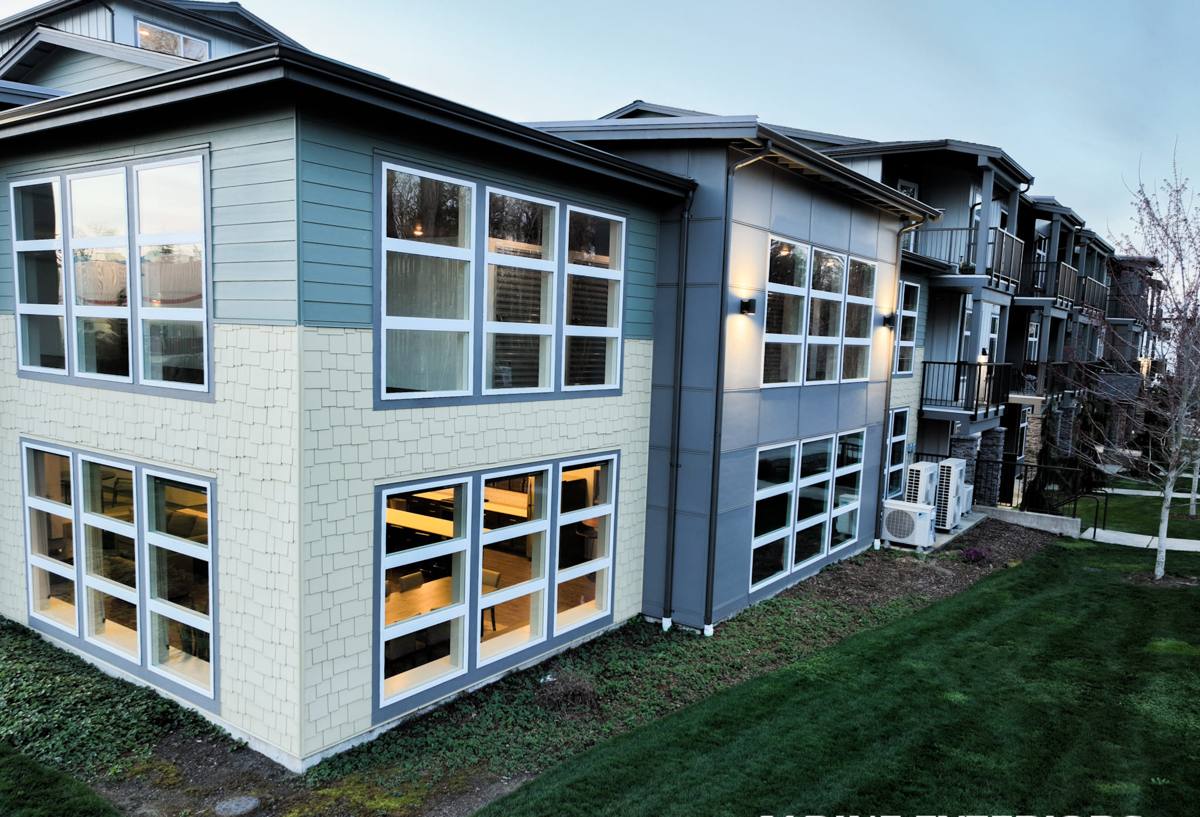
What Whatcom County Weather Does to Windows Over Time
Salt Air and Metal Components
Salt air doesn't just affect siding and roofing — it works on window hardware too. Cheaper latches, cranks, and balance mechanisms corrode faster near the coast than they would inland. Once hardware starts sticking or binding, homeowners force it, and that's usually when a window frame or sash actually cracks.
Driving Rain and Wind-Driven Water
Straight-down rain is easy for almost any window to handle. Sideways, wind-driven rain — which this area gets regularly — is what actually tests a window's flashing and seals. Water finds the smallest gap in a sill pan, a poorly lapped flashing detail, or a bead of caulk that's dried out and cracked. Once it's past the exterior barrier, it can sit inside the wall cavity for a long time before anyone notices a stain or soft spot.
Moss and Constant Moisture
A long moss season means extended stretches where humidity stays high and surfaces stay damp, even without active rain. Wood window components that aren't properly clad or sealed can hold moisture longer than they would in a drier climate, which accelerates rot at corners and joints. It also means condensation on interior glass is more common in winter, especially with older single-pane or poorly sealed units.
Signs a Sumas Home Actually Needs New or Custom Windows
Not every window problem means full replacement, but these are the signs worth taking seriously before they turn into a bigger repair:
- Visible gaps, warping, or soft wood at the frame or sill
- Windows that are hard to open, close, or lock — a sign of frame movement or hardware failure
- Persistent condensation between panes, which usually means a failed seal on a double- or triple-pane unit
- Drafts you can feel near the frame even when the window is fully closed
- Visible staining or discoloration on interior trim or drywall below or beside a window
- A musty smell in a room that gets worse in damp weather
- Peeling paint or bubbling on the exterior trim surrounding the window
Any one of these on its own might just need a repair. Several of them together, especially on an older home, usually points toward replacement being the more cost-effective long-term move.
What "Custom" Actually Means for Window Replacement
Custom windows get used as a catch-all term, but in practice it covers a few distinct situations that come up often in older Sumas properties:
Non-Standard Openings
Homes built or renovated before modern standard sizing became common often have openings that don't match any stock window size. Custom manufacturing means the window is built to the actual opening, rather than the opening being reframed to fit a stock size — which saves on labor and avoids disturbing more of the wall than necessary.
Architectural or Specialty Shapes
Arched tops, angled bays, and other specialty shapes need to be manufactured to spec rather than pulled off a shelf. Getting the measurements and the installation detailing right on these matters more than on a standard rectangular window, since there's less forgiveness in the flashing and trim work.
Matching an Addition to the Original Structure
When a home has been added onto over the years, it's common to find two or three different window styles and ages on the same house. Custom sizing lets a homeowner bring an addition's windows into visual and functional alignment with the rest of the home, rather than living with a mismatch.
Choosing Materials and Glass for This Climate
The right material and glass package depends on budget, the home's age and style, and how exposed a particular wall is to wind and rain. Here's how the common options generally compare for a coastal Whatcom County property:
| Frame Material | Moisture Resistance | Maintenance | Typical Fit |
|---|---|---|---|
| Vinyl | Very good — won't rot, minimal corrosion risk | Low | Most homes; strong value for the climate |
| Fiberglass | Excellent — very stable in wet, temperature-swinging conditions | Low | Homes wanting durability and a higher-end finish |
| Wood (clad exterior) | Good if cladding and seals are properly maintained | Higher — interior wood still needs periodic attention | Historic or architecturally sensitive homes |
| Solid wood, unclad | Poor to fair in this climate without diligent upkeep | High | We generally steer homeowners away from this on exposed elevations |
On glass, double-pane with a good low-E coating is the baseline we recommend for this region. Triple-pane adds real value on north- and west-facing walls that take the brunt of wind-driven rain, and for homeowners prioritizing energy performance through the winter months. It costs more up front, and for interior or protected elevations it's not always worth the premium — that's a conversation we have honestly during the estimate rather than upselling by default.
What a Correct Installation Actually Involves
The window unit itself is only part of the job. Most window failures we see in this climate trace back to installation shortcuts, not a bad product. A correct installation includes:
- Removing old units carefully and inspecting the framing and sill for hidden rot before anything new goes in
- Installing a proper sill pan to direct any water that gets past the window back out, not into the wall
- Flashing integrated correctly with the home's existing water-resistive barrier, lapped so water always sheds outward and down
- Sealing and insulating the gap between the window frame and rough opening — not just caulking the exterior trim
- Exterior sealant applied at the right joints, leaving weep paths clear so the window can drain as designed
- Interior trim reinstalled or replaced cleanly, with attention to matching existing finishes
Skipping the flashing and sill pan details is the single most common cause of hidden water damage behind a "new" window a few years down the line. It doesn't show on the surface at first, which is exactly why it matters who's doing the install.
Our Process From Estimate to Cleanup
- On-site assessment — we look at existing openings, framing condition, and any signs of past water intrusion before quoting anything.
- Honest scoping — we tell you plainly if a window needs custom manufacturing versus a standard-size replacement, and what drives the cost difference.
- Accurate measurement and ordering — custom units are built to the actual opening, so measurement precision at this stage avoids delays later.
- Careful removal and inspection — old windows come out with attention to what's underneath, and we flag any rot or damage before proceeding.
- Installation to the details above — flashing, sill pans, sealing, and insulation done to hold up against driving rain, not just pass a quick visual check.
- Cleanup and walkthrough — we walk the finished work with you before we consider the job done.
Why Hire a Crew That Already Works in Sumas
Window installation isn't identical everywhere. A crew that mostly works in drier inland climates may not think twice about flashing details or sill drainage that are non-negotiable here. A crew that works Whatcom County regularly already knows how the salt air, the rain patterns, and the moss season interact with different materials — and builds accordingly, without needing to relearn it on your home.
Local familiarity also means straightforward scheduling and follow-up. If a question comes up six months after installation, you're dealing with a crew that's still working in the area and stands behind what they installed — not chasing down a company that moved on to other regions.
Get a Straightforward, No-Pressure Estimate
If you're weighing a repair against replacement, or you've got an odd-sized opening that's been giving you trouble, we're happy to take a look and give you a straight answer — including when replacement isn't actually the right call yet. Use the form below to request a free estimate for custom window services in Sumas.