 Birch Bay Siding
 Siding Built for the Sumas Side of Whatcom County
Homes in and around Sumas deal with a different mix of weather stress than people expect from "just another rainy corner of Washington." You get long stretches of damp, low-light winter weather, driving rain that comes in sideways off the wind, and a moisture load that never really dries out until late spring. Add the salt-tinged marine air that rolls through this part of Whatcom County and you have a climate that is genuinely hard on exterior building materials. Birch Bay Siding Company installs James Hardie fiber cement siding exclusively, and pages like this one exist because Sumas homeowners deserve a straight explanation of what their siding is actually up against — not a sales pitch.
This page covers what local homes need from their siding, what a correctly done Hardie installation looks like, how our process works from first visit to final walkthrough, and why hiring a crew that already works this area matters more than it might seem.
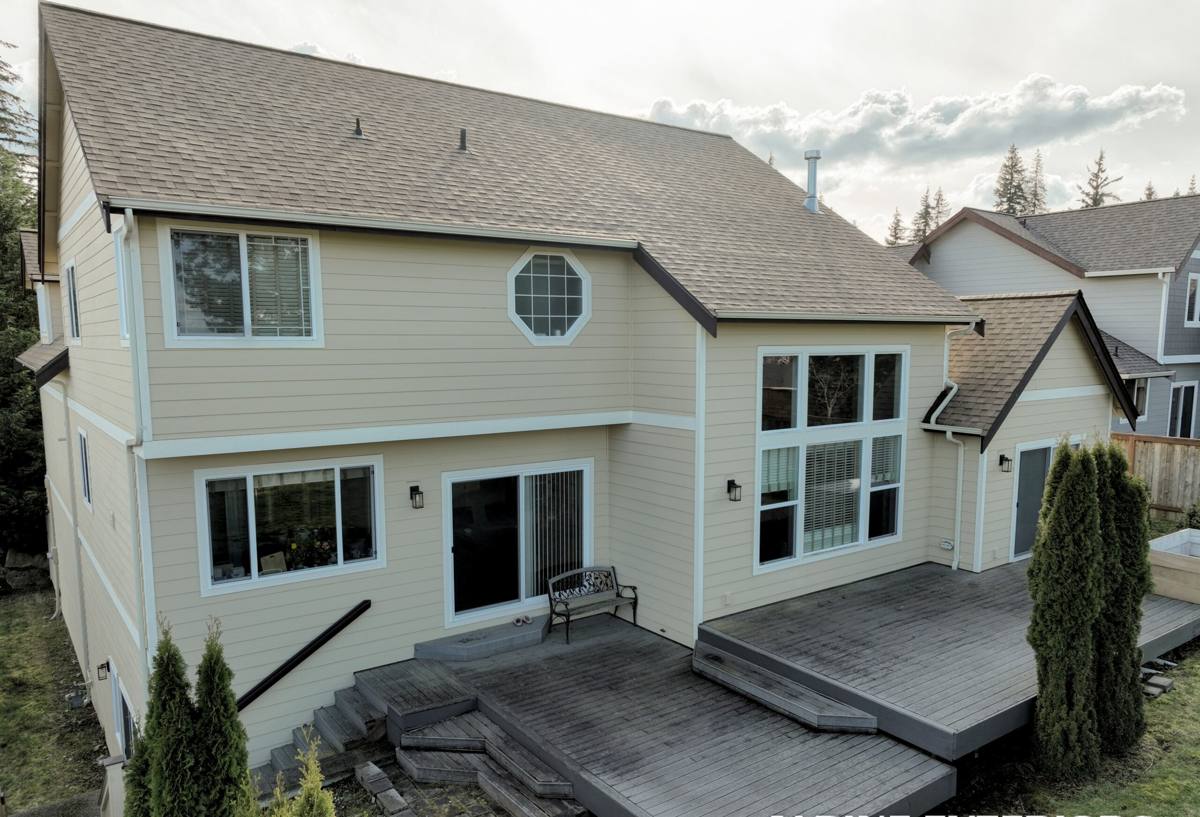
What Sumas-Area Homes Are Actually Fighting
Moisture That Doesn't Let Up
The biggest long-term threat to siding here isn't a single storm — it's the accumulation of moisture over months. Rain, fog, and humidity keep exterior walls damp for extended periods, especially on north- and west-facing walls that don't get much direct sun to dry them out. Siding that absorbs water, swells, or delaminates under that kind of repeated exposure is going to show it within a few years, not a few decades.
Driving Rain and Wind-Driven Water
Wind-driven rain doesn't fall straight down — it gets pushed sideways and upward into laps, seams, and trim joints. Any weak point in the siding system, whether it's a poorly caulked seam or a butt joint that wasn't flashed correctly, becomes an entry point for water intrusion. Over time that shows up as soft trim, staining, or rot in the sheathing behind the siding — problems that are expensive to fix precisely because they're hidden until they're bad.
Moss, Mildew, and Organic Growth
Long moss season is a fact of life in this part of the state. Moss and algae thrive on surfaces that stay damp and shaded, and they don't just look bad — sustained organic growth holds moisture against the siding surface longer, which accelerates whatever degradation process is already happening underneath. Siding that resists moss growth and cleans up easily saves homeowners real maintenance time every year.
Salt-Influenced Air
Even homes that aren't directly on the water get some benefit — or in this case, some burden — from the salt air moving through the region. Salt exposure accelerates corrosion of fasteners and metal flashing components and can be tough on paint finishes that weren't engineered for it. It's a slower threat than driving rain, but it adds up over the life of a home.
Why We Standardized on James Hardie
We don't install LP SmartSide, vinyl, Cemplank, Allura, primed spruce, or cedar. That's not a marketing angle — it's a decision based on what holds up in exactly the conditions described above. Fiber cement in general resists moisture, fire, and pests better than wood-based or wood-composite products, but not all fiber cement is built or backed the same way. James Hardie engineers its HZ5 product line specifically for climates with heavy moisture exposure and temperature swings, which describes this part of Whatcom County well.
The ColorPlus factory-applied finish matters here more than in drier climates. A factory-baked finish resists fading and moisture penetration far better than field-applied paint, which means fewer repaint cycles and a longer-lasting, more consistent look across the whole house — including under the kind of persistent shade and dampness that promotes moss growth. James Hardie also backs its products with a strong, transferable limited warranty, which carries real value if you ever sell the home.
| Material | Moisture Behavior | Moss/Algae Resistance | Long-Term Maintenance |
|---|---|---|---|
| James Hardie Fiber Cement (HZ5) | Engineered for high-moisture climates; won't swell or rot | Factory finish resists organic growth buildup | Occasional cleaning; repaint cycle measured in decades |
| Vinyl | Doesn't absorb water but can warp, crack in cold snaps, and trap moisture behind loose panels | Growth still forms on the surface, especially in shaded areas | Low upfront, but replacement (not repair) is often the only fix |
| Cedar / Primed Spruce | Absorbs moisture readily; prone to swelling, splitting, rot | Highly susceptible without constant upkeep | Frequent repainting/sealing; shortest realistic lifespan here |
| LP SmartSide / Composite Wood | Better than raw wood but still moisture-sensitive at cut edges and seams | Moderate; depends on finish quality and upkeep | Edge sealing and finish maintenance is an ongoing requirement |
What a Correct Installation Actually Involves
James Hardie siding performs the way it's designed to only when it's installed to the manufacturer's specifications. This is the part of the job that's easy to shortcut and hard for a homeowner to inspect after the fact, which is exactly why it matters who does the work.
- Proper water-resistive barrier and flashing details at every window, door, and penetration — this is where most water intrusion problems actually start
- Correct fastener type, spacing, and placement per Hardie's specifications, not generic siding nailing patterns
- Manufacturer-specified gaps and clearances at the bottom of the siding (away from grade, decks, and roofing) so moisture has somewhere to go
- Sealed and flashed butt joints rather than relying on caulk alone to keep water out
- Correct starter strip and z-flashing installation at horizontal transitions
- Painted or factory-finished cut edges — an exposed raw edge is a moisture entry point waiting to happen
Skipping or rushing any one of these steps doesn't show up on day one. It shows up in year three or four as staining, soft spots, or trim failure — long after the crew that did the work has moved on.
Our Process for Sumas-Area Homes
1. On-Site Assessment
We look at the current siding, the condition of the sheathing underneath where accessible, drainage around the foundation, roofline interaction, and the specific exposure each side of the house gets to wind and rain. A north-facing wall in a shaded yard needs different attention than a wall that gets afternoon sun.
2. Product and Line Selection
We walk through the relevant Hardie product lines and profiles — lap siding, panel siding, shingle-style — and help you land on the combination that fits the home's design and this climate's demands, not just what looks good in a brochure.
3. Prep and Moisture Management
Before any new siding goes up, we address the water-resistive barrier, flashing, and any existing moisture damage. Installing new siding over a compromised moisture barrier just hides a problem instead of solving it.
4. Installation to Manufacturer Spec
Fastening, clearances, joint treatment, and flashing details are done to James Hardie's published specifications — the same standard that keeps the manufacturer's warranty intact.
5. Final Walkthrough
We go over the finished work with you, including how to care for the siding going forward and what routine moss/algae cleaning looks like given the local climate.
What to Check Before Hiring Anyone for This Kind of Work
- Do they install to the manufacturer's written fastening and flashing specifications, or their own general practice?
- Will they show you what's happening at the water-resistive barrier and flashing, not just the finished siding?
- Do they have experience with the specific moisture and moss conditions of this part of Whatcom County, not just general siding installation?
- Is the warranty they're offering tied to correct installation, and do they stand behind that installation directly?
- Are they clear about which products they do and don't install, and why?
Why Local Experience in This Area Matters
A crew that already works the Birch Bay and Sumas area has seen how driving rain behaves against real rooflines here, knows which wall orientations collect the most moss, and has already worked through the flashing details that keep water out under these specific conditions. That's different from general siding experience picked up in a drier climate or a different wind pattern. It's the difference between a crew that's guessing based on a spec sheet and one that's confirmed, house after house in this region, what actually holds up.
Get a Straight Answer About Your Siding
If you're weighing a siding replacement on a Sumas-area home, we're happy to take a look and give you an honest read on what your house needs — no pressure, no upsell on products we don't believe in. Request a free estimate below and we'll walk the property with you.