 Birch Bay Siding
 Deck Repair Built for Sumas Conditions
A deck in Sumas doesn't fail the same way a deck in a dry climate does. Around here, the damage is slow and often hidden until it isn't. Long stretches of driving rain soak into end grain and fastener holes. Shaded areas under trees or against the house stay damp for days after a storm passes, which is exactly what moss needs to take hold. Add in the marine-influenced air that moves through this part of Whatcom County, and you get a steady cycle of wet-dry-wet that works on wood fibers, metal fasteners, and footings year after year.
None of that means a deck is doomed. It means deck repair here has to account for moisture first, cosmetics second. A repair that only addresses the top surface — sanding, staining, replacing a board or two — without checking what's happening underneath is a repair that will need to be redone in a year or two. We build our process around finding where water is actually getting in and fixing that, not just covering it up.
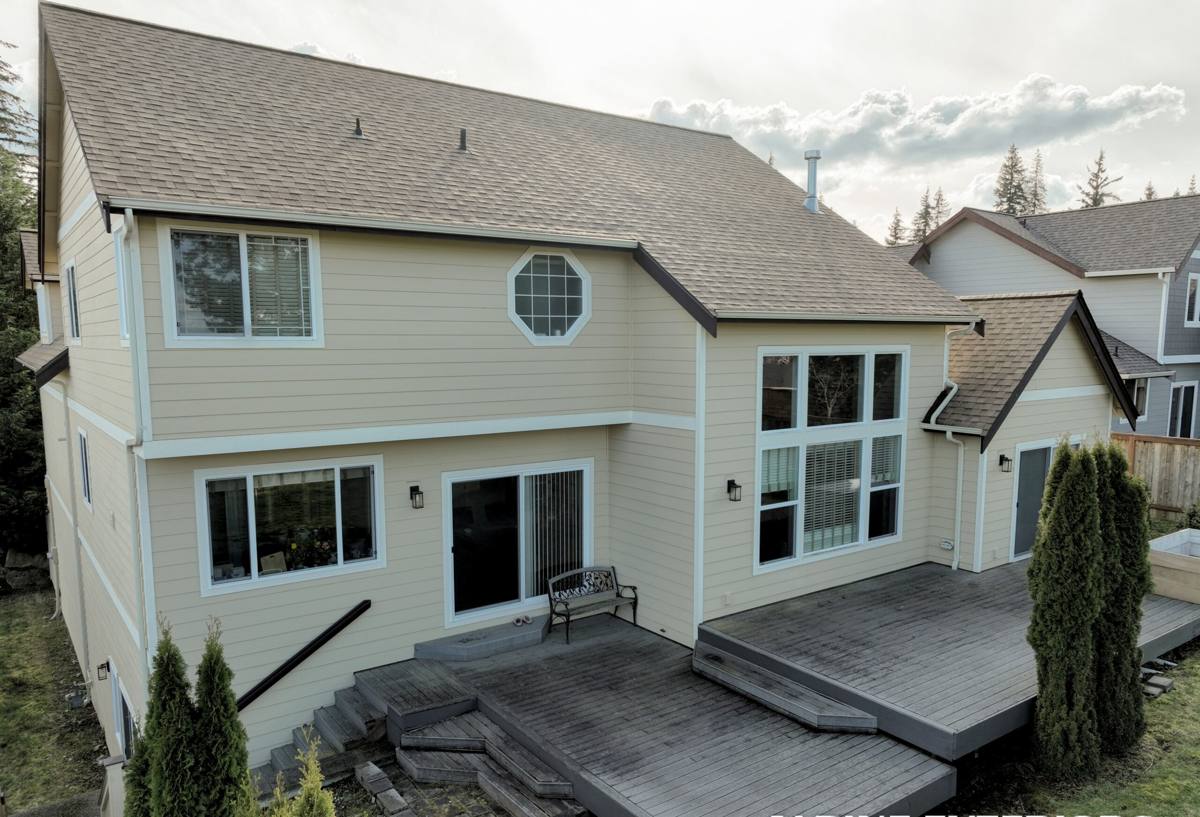
Signs Your Sumas Deck Needs Attention
Most deck problems announce themselves quietly before they become safety issues. Homeowners in this area should walk their deck a couple times a year and look for the following:
- Soft or spongy spots when you press on decking boards, especially near the house or along the edges
- Green or black staining that keeps coming back within weeks of cleaning
- Gaps opening up between boards, or boards that have started to cup or crown
- Rust streaks running down from screw or nail heads
- Any wobble in the railing when you lean on it
- Visible daylight or a gap where the deck meets the house (a sign the ledger board flashing may have failed)
- Stair stringers that flex or creak more than they used to
- Post bases sitting in standing water or visibly rotted at the bottom
One or two items on this list might mean a targeted repair. Several at once, especially anything involving the ledger board or posts, usually means it's time for a full structural look before anyone uses the deck heavily.
What a Correct Deck Repair Actually Involves
Starting with the structure, not the surface
A deck is only as good as what you can't see: the ledger board connection to the house, the joists underneath, the posts and footings holding it off the ground, and the hardware tying it all together. We check these before we ever talk about new decking material.
The ledger board and flashing
This is where the deck attaches to your house, and it's the single most common point of hidden rot we find. If the flashing behind it was installed poorly, or has failed over years of driving rain, water runs behind the ledger and into the rim joist and wall framing. This can be happening for a long time before it shows up as a soft spot or a stain, which is why we check this connection directly rather than assuming it's fine.
Joists, posts, and footings
We check joists for soft spots, splitting, and rust at the hangers. Posts get checked at the base, where they meet the ground or a footing, since that's where moisture sits longest. Footings that have shifted or settled unevenly can throw off the whole structure even if the visible wood looks okay.
Fasteners and hardware
Older decks were sometimes built with fasteners that aren't rated for ground contact or long-term wet exposure. Corroding screws, nails, or joist hangers are a repair item on their own, even if the wood around them still looks sound, because failing hardware is what turns a stable deck into an unstable one.
Decking, railings, and stairs
Once the structure is confirmed sound (or repaired), we address the surface: replacing damaged boards, resetting loose railings, tightening or rebuilding stair stringers, and dealing with moss and staining at the source rather than just pressure-washing it away for a season.
Repair, Resurface, or Full Rebuild?
Not every deck needs the same level of work. The right call depends on how much of the structure is still sound versus how much has been compromised by years of moisture. Here's how we generally think about it:
| Option | What It Covers | Best For |
|---|---|---|
| Spot repair | Replacing individual damaged boards, tightening hardware, resealing a compromised joint | Decks with isolated damage and a sound structure overall |
| Resurface | New decking boards and railings over an inspected, repaired structure | Decks where the frame is solid but the surface has taken the brunt of the weather |
| Structural rebuild | Replacing ledger, joists, posts, or footings, then rebuilding the surface | Decks with rot at the ledger, posts, or multiple framing members |
We'll always tell you honestly which category your deck falls into after a real inspection — not the option that happens to cost more.
Materials We Repair and Replace With
What we use depends on what's already there and what you want going forward. Pressure-treated lumber is still a solid, economical choice for framing and is what most existing Sumas decks are built on, but it does require ongoing maintenance — sealing or staining every couple of years — to keep moisture out of the wood. Cedar offers a nicer appearance and natural rot resistance but comes at a higher cost and still needs periodic upkeep in this climate.
Composite decking has become a common request for resurfacing jobs because it doesn't absorb water the way wood does and resists moss growth better on the surface. We're upfront about its trade-offs too: composite is heavier, costs more upfront, and if the underlying structure isn't sound, composite boards won't fix that — they'll just sit on top of a problem. We don't sell composite as a cure-all; we recommend it when it fits the situation and the budget.
Whatever material we use, fasteners and hardware get matched to it correctly — mixing incompatible metals or using hardware not rated for exterior, ground-level moisture is a shortcut that shows up as rust and failure within a couple of seasons, and we don't take that shortcut.
Our Deck Repair Process
- Inspection: We walk the entire deck, check the ledger and flashing, get under the deck to look at joists and posts, and test railings and stairs.
- Honest assessment: We tell you what we found in plain terms — what's failing, what's still fine, and what your realistic options are.
- Written estimate: A clear scope of work and price before anything is touched, no surprise add-ons mid-job.
- Repair work: Structural fixes first, then decking, railings, and stairs, using materials and fasteners matched to your deck and budget.
- Cleanup and walkthrough: We clean up debris and walk the finished repair with you so you know exactly what was done and what to watch for going forward.
Permits and Local Code
Structural deck work — anything involving the ledger connection, footings, posts, or railing height and spacing — can trigger permit requirements depending on the scope of the job. Cosmetic repairs, like replacing a few boards, generally don't. We'll tell you upfront if your project needs a permit and handle that conversation with the local building department rather than leaving it for you to sort out. Skipping a required permit on structural work isn't worth the risk — it can complicate things later if you ever sell the home or file an insurance claim.
Why a Crew That Already Works in Sumas Matters
Deck repair isn't just carpentry — it's carpentry that has to account for how this specific area holds moisture, how long moss season runs, and what kind of driving rain the deck actually takes on through fall and winter. A crew that works Whatcom County regularly has already seen how local decks fail and knows to check the ledger flashing first instead of guessing. That familiarity means a faster, more accurate inspection and fewer surprises once repair work starts.
It also means someone who can get to your property without a long-distance trip charge eating into your budget, and who's still local if a question comes up after the work is done.
Keeping a Repaired Deck in Good Shape
Once a deck is repaired, a little seasonal upkeep goes a long way in this climate:
- Clean moss and debris off the surface and out of gaps between boards before it can hold moisture through the wet season
- Re-seal or re-stain wood decking on the schedule appropriate to the product — don't wait until it visibly looks dry and gray
- Keep gutters and downspouts clear so runoff isn't dumping extra water onto or near the deck
- Check the ledger flashing and post bases once a year, since these are the first places moisture problems start again
If you're noticing soft spots, rust, persistent moss, or a deck that just doesn't feel as solid as it used to, we're happy to take a look. We offer free, no-pressure estimates for Sumas homeowners — just an honest inspection and a straight answer about what your deck actually needs. The form below will get you started.