 Birch Bay Siding
 Composite Decking Built for Sumas Conditions
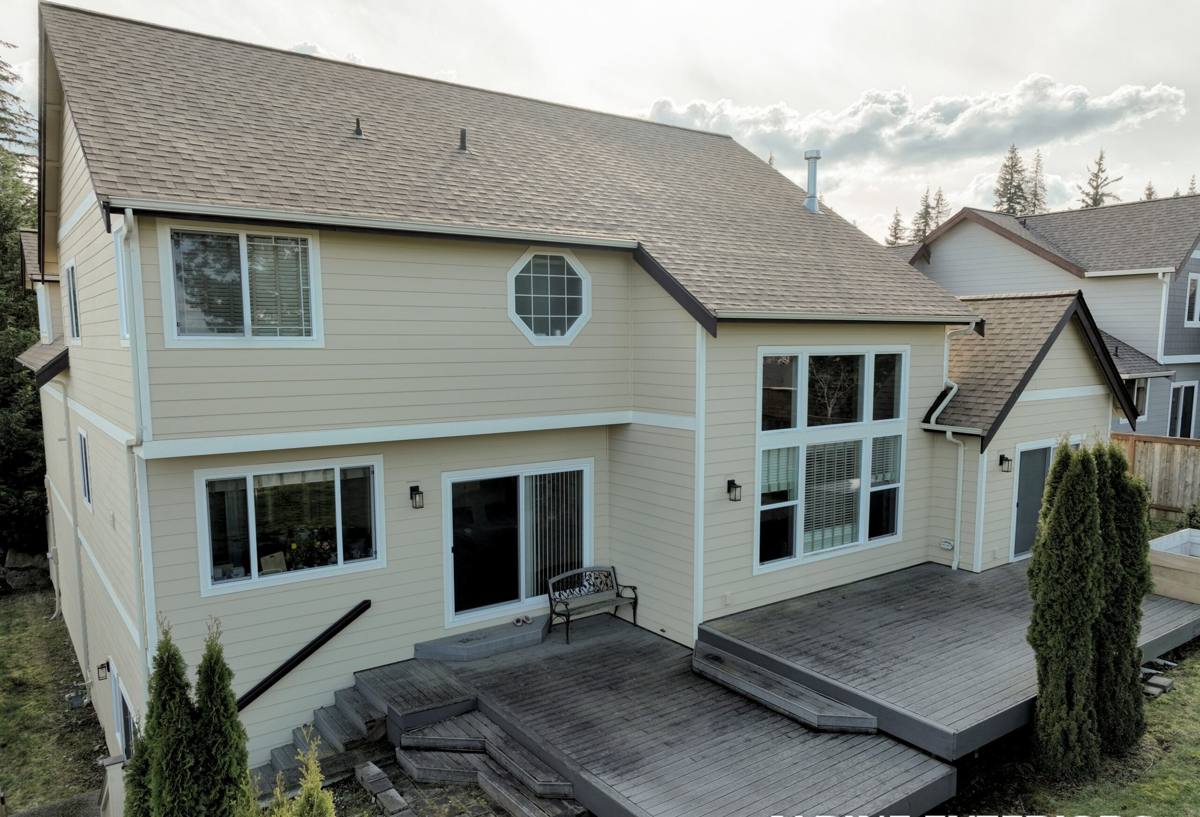
Sumas homeowners deal with a specific mix of weather that most decking material was never designed for: salt-laden air moving in off the water, driving rain that finds every seam and gap, and a moss season that can stretch for months. A deck that looks great in the showroom doesn't always hold up once it's sitting outside through a Whatcom County winter. Composite decking, installed correctly, is one of the few options that stands up to that combination year after year without turning into a maintenance chore.
This page covers what composite decking actually needs to perform well in Sumas specifically — not generic decking advice, but the details that matter for homes in this part of Washington.
What This Climate Does to a Deck
Before talking about materials, it helps to understand what a deck in Sumas is actually up against over the course of a year.
Salt Air
Airborne salt doesn't just affect homes right on the water. It travels, settles on surfaces, and accelerates corrosion on anything metal — fasteners, brackets, railing hardware. Over time it can also dull finishes and speed up fading on lower-quality decking products.
Driving Rain
Rain that comes in sideways during a storm gets pushed under railings, into board gaps, and against the house where the deck ledger attaches. Standing water and trapped moisture are the actual cause of most deck failures — not the rain itself, but what happens when it has nowhere to go.
Long Moss Season
Shade, moisture, and mild temperatures are exactly what moss wants. Once moss and algae get a foothold on a deck surface, they hold even more moisture against the boards and create a slip hazard that gets worse with every rain. A deck surface with poor drainage or the wrong texture will grow moss faster than one built and finished with this climate in mind.
Why Composite Makes Sense Here
Wood decking can look beautiful, but in a climate like this it demands a lot to stay that way — regular sealing, sanding, and constant vigilance against rot, splitting, and moss growth. Composite decking, particularly capped composite products, is built to resist moisture absorption, which is the single biggest factor working against any deck material here.
| Factor | Wood Decking | Composite Decking |
|---|---|---|
| Moisture absorption | Absorbs water, prone to swelling, cupping, rot | Resists absorption, especially capped composite |
| Moss/algae resistance | Porous surface holds moisture, moss takes hold quickly | Denser, less porous surface, easier to keep clean |
| Maintenance | Annual sealing/staining, sanding over time | Periodic washing, no sealing or staining needed |
| Fastener corrosion risk | Exposed fasteners can rust and stain the wood | Hidden fastener systems reduce exposure and staining |
| Upfront cost | Lower material cost | Higher material cost, lower lifetime maintenance cost |
| Lifespan in this climate | Shorter without diligent upkeep | Longer with minimal upkeep |
We're not against wood decking as a concept — it has its place, and some homeowners prefer the look and are willing to keep up with it. But given what salt air, driving rain, and moss season do to an exposed wood surface here, we steer most Sumas homeowners toward composite because it holds up with far less ongoing effort.
What a Correct Composite Deck Installation Actually Involves
Composite boards are only as good as what's underneath and around them. A lot of deck problems we get called out to fix aren't a materials failure — they're an installation shortcut that let water do damage it never should have had the chance to do.
Substructure and Framing
The joists, beams, and posts underneath the visible decking need to be sized correctly and protected from moisture, since this is where rot starts even on a composite deck. We use joist tape or an equivalent moisture barrier on the framing to keep water from soaking into the wood substructure over time.
Drainage and Spacing
Board spacing has to account for both composite expansion and drainage. Too tight, and water pools instead of shedding; too loose, and the deck feels unfinished and debris collects in the gaps. Getting this right matters more here than in a dry climate, because the deck spends so much of the year wet.
Ledger Attachment and Flashing
Where the deck attaches to the house is the single most common source of hidden water damage. Proper flashing at the ledger board keeps driving rain from working its way behind the siding and into the wall structure — a problem that can go unnoticed for years if it's not done right the first time.
Fasteners and Hardware
With salt air in the mix, we use corrosion-resistant, coated, or stainless fasteners and hardware rather than standard galvanized options that will show rust streaks and weaken faster near the coast.
Railings and Stairs
Railing posts need solid blocking and correct attachment to the framing — not just to the decking boards — so they don't loosen over time from wind and everyday use. Stair stringers and treads need the same drainage thinking as the main deck surface.
Our Process for a Sumas Deck Project
- On-site assessment — we look at sun/shade exposure, drainage direction, existing structure (if replacing a deck), and how the space will actually be used.
- Design and material selection — board layout, railing style, and composite product selection based on budget, appearance, and how much sun or shade the deck gets.
- Permitting — most deck projects in Whatcom County require a permit; we handle that process as part of the job.
- Demolition and substructure work — removing any existing deck and building or reinforcing the framing to current code.
- Moisture protection — joist tape, ledger flashing, and proper post footings before a single composite board goes down.
- Installation — hidden fastener systems where possible for a clean surface and fewer exposed metal points for salt air to attack.
- Final walkthrough — checking rail stability, stair safety, and drainage before we call the job done.
Choosing a Composite Product That's Right for This Climate
Not all composite decking is built the same, and the right choice depends on your budget and how much you want to think about the deck once it's installed.
Capped vs. Uncapped Composite
Capped composite has a protective outer shell bonded around a wood-plastic composite core. That cap is what actually resists moisture absorption and staining — it's the reason capped products carry longer warranties than uncapped ones. Given how much moisture this deck will see over a year, we generally recommend capped composite for anything exposed to the weather rather than exposed cores.
Color and Heat
Darker composite boards absorb more heat on sunny days and can show dust, pollen, and mineral residue from rain differently than lighter tones. It's a small thing, but worth discussing before you pick a color, especially for a deck that gets afternoon sun.
Surface Texture
A textured or grooved composite surface handles wet conditions better underfoot than a smooth, glossy finish. In a climate where the deck is wet more months than not, slip resistance is a practical safety factor, not just a style choice.
Warranty Structure
Composite warranties vary by manufacturer and product tier — some cover structural integrity only, others include staining and fade. We walk through what's actually covered before you commit, rather than letting a "25-year warranty" headline do the talking without the fine print behind it.
Living With a Composite Deck Here
Composite decking cuts maintenance dramatically compared to wood, but "low maintenance" doesn't mean "no maintenance" — especially through a Whatcom County moss season.
- Rinse or wash the deck surface periodically to keep pollen, dirt, and organic buildup from giving moss and algae something to grab onto.
- Keep gutters and downspouts near the deck clear so runoff isn't dumping extra water directly onto the surface or substructure.
- Trim back overhanging branches and shrubs where practical to reduce shade and let the deck dry out between rains.
- Check railing posts and stair connections once a year for any looseness, even though composite boards themselves won't rot.
- Clear debris from between boards where it collects, since trapped organic material is what feeds moss growth fastest.
Questions to Ask Before You Hire a Deck Contractor
Whether you call us or someone else, these are the things worth confirming before signing a contract for composite decking in this area:
- Will the substructure be protected with joist tape or an equivalent moisture barrier, not just bare treated lumber?
- What fastener and hardware materials will be used, given the salt air exposure?
- Is a permit required for this project, and who is pulling it?
- Is the recommended composite product capped, and what does the manufacturer warranty actually cover?
- How will the ledger board be flashed where the deck meets the house?
- What does board spacing look like for drainage versus appearance?
Why a Crew That Works Sumas Matters
Deck-building isn't just about following a manufacturer's install guide — it's about knowing how a specific product and installation approach hold up under the conditions a home actually faces. A crew that regularly works in Sumas and the surrounding Whatcom County area has already seen how salt air affects hardware over a few seasons, how fast moss establishes itself on a poorly drained surface, and where driving rain tends to find the weak points in a build. That experience shows up in the small decisions — fastener choice, flashing details, board spacing — that determine whether a deck is still performing well in ten years or already showing problems in three.
We also stay local for the parts that happen after installation: warranty support, a question about maintenance, or a look at how the deck is holding up after its first winter. That's harder to get from a crew that installed your deck once and moved on to the next county.
Get a Free, No-Pressure Estimate
If you're weighing composite decking options for your Sumas property, we're happy to take a look, talk through what your specific site and sun/shade exposure call for, and give you a straightforward estimate — no pressure, no upsell. Fill out the form below to get started.