 Birch Bay Siding
 Metal Roofing for Sumas Homes
Sumas sits at the far edge of Whatcom County, tucked against the Canadian border where the Nooksack River valley opens into flat farmland below Sumas Mountain. It's not a waterfront town, but a roof out here still takes a real beating over a full year: driving rain that comes in on a slant more often than it falls straight down, a moss season that can run most months on shaded and north-facing roof planes, and valley humidity and fog that keep a roof deck damp longer after a storm than a more exposed, higher-elevation site would. Metal roofing handles that combination better than most other roofing materials available, provided it's specified and installed correctly for what this particular climate does to a house.
We install and repair metal roofing on homes in and around Sumas, working alongside our siding, window, and deck services so a property's exterior gets treated as one connected system rather than a stack of separate trades. This page focuses specifically on what metal roofing means for a Sumas roof: what the local climate demands, what a correct installation actually involves, and how our process works from first look to finished job.
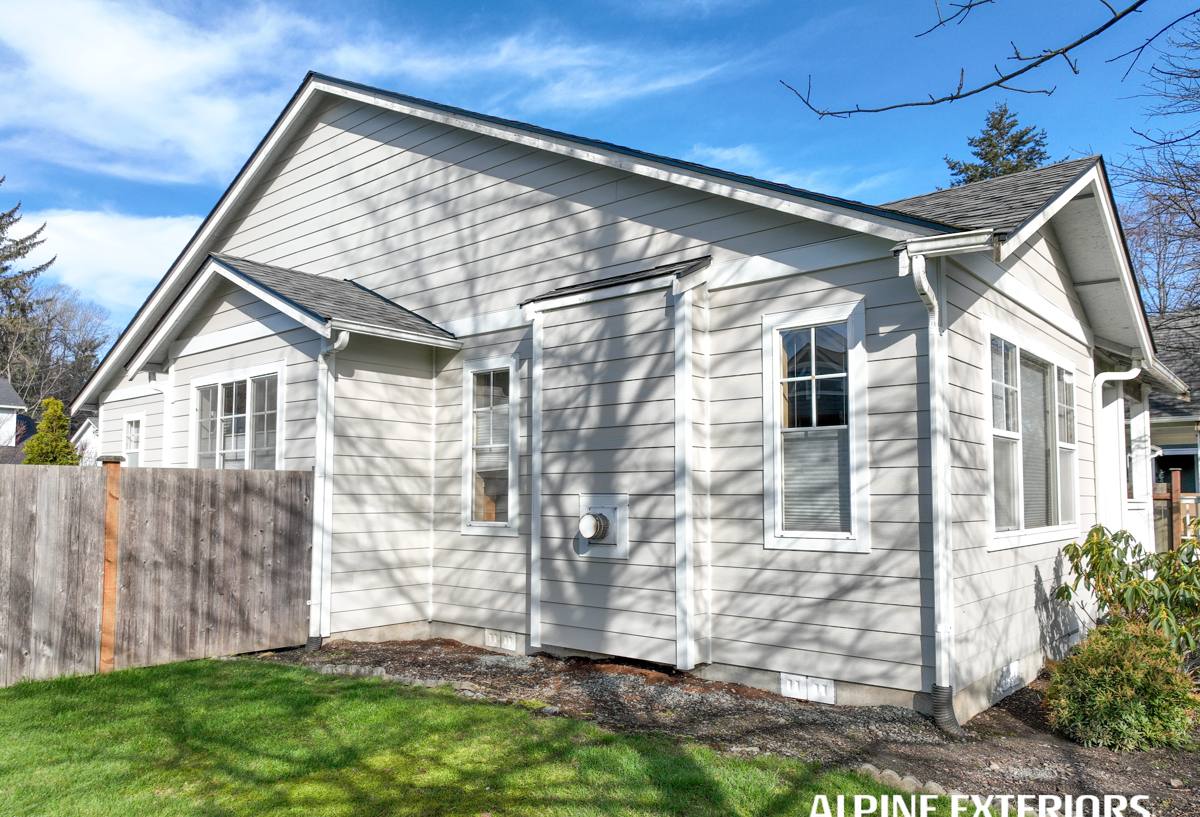
What a Sumas Roof Has to Deal With
Driving Rain and Roof-to-Wall Transitions
Wind pushes rain sideways into roof valleys, chimney flashing, and the transitions where a roof meets a wall or dormer far more often here than a simple annual rainfall figure would suggest. Those transition points are where most roof leaks actually start, on metal or any other material, so flashing detail matters as much as the panels themselves.
A Moss Season That Doesn't Let Up
Mild temperatures, tree cover, and consistent moisture add up to a long moss and mildew season across this part of the county, and shaded or north-facing roof slopes are usually the first place it shows up. Asphalt shingles have a rough, granular surface that gives moss spores something to grip and organic matter to feed on. A smooth metal panel gives moss far less to hold onto, which is one of the more practical, day-to-day advantages metal roofing offers a Sumas property.
Valley Humidity, Fog, and Freeze-Thaw
Sumas sits low in the Nooksack valley, and low ground holds fog and dampness longer than higher, more exposed terrain. That extra dwell time matters for a roof deck — the longer it stays damp, the more chance there is for slow rot to set in underneath the roofing material if ventilation isn't doing its job. Winter cold snaps add a freeze-thaw dimension on top of that dampness, which is harder on materials that absorb and hold moisture than it is on a roofing system that sheds water cleanly and dries out fast. This is a different exposure than we deal with on coastal jobs closer to the bay, where salt air is the dominant corrosion concern; in Sumas, sustained valley moisture and freeze-thaw cycling do most of the work, which changes what we prioritize in fastener choice and coating spec.
Wind From the Fraser Valley Corridor
Sumas sits near the mouth of the corridor that funnels cold air down out of the Fraser Valley in British Columbia, and homes here can see stronger, colder wind events during winter cold snaps than towns farther south in the county. That wind tests panel fastening, ridge and edge detailing, and flashing more than a calmer inland site would, which is part of why installation quality matters as much as the roofing material itself.
Why Metal Roofing Fits This Kind of Exposure
Metal roofing isn't the right fit for every home or every budget, but for a property dealing with sustained valley moisture, a long moss season, and real wind exposure, the case for it is a strong one.
- Moss and organic growth resistance: A smooth painted or coated metal surface gives moss and algae far less to grip than a textured asphalt shingle, which cuts down on the recurring cleaning and treatment a shingle roof needs in this climate.
- Fast water shedding: Standing seam panels in particular move water off the roof quickly along continuous vertical seams, which matters on a property where fog and valley humidity already slow down natural drying.
- Wind performance: Properly fastened metal panels resist wind uplift better than shingles, which have more individual edges for wind to catch. That matters on a property exposed to outflow wind events off the Fraser Valley corridor.
- Long service life: A correctly installed metal roof commonly outlasts two or more asphalt shingle roofs over its lifetime, which changes the long-run math even though the upfront cost is higher.
- No granule loss: Asphalt shingles shed granules as they age, which shows up in gutters and downspouts and signals the underlying material is breaking down. Metal panels don't have that failure mode.
None of that means metal roofing is maintenance-free. Fastener heads, sealant at penetrations, and coating condition all need periodic attention, and a poorly installed metal roof can still leak, dent, or develop coating failure early. The material only performs the way it's supposed to when the installation behind it is done right.
Choosing the Right Metal Roofing System for a Sumas Home
| System | Best Use | Why It Fits This Area |
|---|---|---|
| Standing seam panels | Most residential roofs, especially steeper pitches | Concealed fasteners and raised seams shed wind-driven rain and moss buildup better than any exposed-fastener option |
| Exposed-fastener panels (corrugated or ribbed) | Outbuildings, shops, barns, lower-slope structures | Lower material cost fits agricultural and outbuilding budgets common on Sumas properties, with less concern about curb appeal |
| Stone-coated steel panels | Homeowners who want a shingle or shake look with metal performance | Textured coating gives a traditional appearance while keeping the wind and moss resistance of steel underneath |
| Aluminum panels | Properties where fastener and panel corrosion resistance is a priority | Aluminum resists corrosion differently than coated steel and holds up well under sustained valley moisture over decades |
Panel gauge, finish, and color all factor into the final choice, and there are real trade-offs between them in cost, appearance, and long-term performance. We'll walk through those options against your roof's specific pitch, exposure, and budget rather than defaulting to whatever's easiest to install.
What Correct Metal Roof Installation Involves
Panel choice only gets a Sumas roof halfway there. The rest comes down to installation detail, and this is where a lot of problems on metal roofs actually originate:
- Ice-and-water shield at eaves, valleys, and penetrations: Given how much freeze-thaw cycling and driving rain this area sees, these are the spots most likely to take on water and need the extra protection layer underneath the metal.
- Proper underlayment across the full deck: A high-temperature synthetic underlayment protects the roof deck if wind ever drives moisture past a seam or fastener, which matters more on a wind-exposed valley property than a sheltered lot.
- Fastening pattern matched to panel type and local wind exposure: Standing seam clips need to allow for thermal expansion and contraction as the metal heats and cools; exposed-fastener panels need correct screw spacing and torque so gaskets seal without over-compressing.
- Flashing at every transition: Chimneys, vent pipes, skylights, and roof-to-wall junctions all need custom-formed flashing integrated with the panel system, not generic trim pieces caulked into place.
- Ventilation that lets the deck breathe: In a valley climate where fog and humidity linger, a roof deck that can't dry out between storms is at risk for rot underneath the metal even though the surface itself sheds water well.
Repair, Recover, or Full Tear-Off
Not every metal roofing job on a Sumas property means starting from bare deck. A damaged panel section, a fastener that's backed out and started leaking, or flashing that's failed around a single penetration can often be repaired without touching the rest of the roof. But converting from an aging asphalt or wood shake roof to metal almost always means a full tear-off, since metal roofing depends on a sound, properly underlaid deck underneath it rather than a layer over old shingles. If your existing roof deck has taken on moisture over time, that needs to be addressed before new metal goes down, not covered over.
Our Process, Start to Finish
- A roof walk and inspection, checking deck condition, existing ventilation, valleys, and every penetration
- An honest conversation about whether the situation calls for repair, a partial replacement, or a full metal re-roof
- Panel system, gauge, and color selection based on your roof's pitch, exposure, and budget
- Tear-off and deck inspection, repairing any soft or rotted sheathing before anything new goes down
- Underlayment, ice-and-water shield, and flashing installed to spec at every eave, valley, and penetration
- Panel installation with fastening and expansion detail matched to the system and this area's wind exposure
- A final walk-through so you understand what was done and what maintenance, if any, to expect going forward
Cost Factors for Metal Roofing in Sumas
| Factor | What It Affects | Why It Matters Here |
|---|---|---|
| Panel system and gauge | Material cost and long-term durability | Heavier-gauge panels and standing seam systems cost more but hold up better under sustained wind and moisture |
| Tear-off vs. new deck | Labor scope and timeline | Older roofs in this valley climate often have hidden deck moisture damage that needs repair before new metal goes on |
| Roof complexity | Flashing and labor time | More valleys, dormers, and penetrations mean more custom flashing, which is where leaks most often start |
| Ventilation upgrades | Attic and deck moisture management | A valley climate with lingering fog and humidity needs ventilation that actually lets a roof deck dry out |
| Site access | Labor time and equipment needs | Rural and agricultural properties around Sumas can have longer driveways or wider staging needs than an in-town lot |
Metal roofing generally costs more upfront than asphalt shingles, though the gap has narrowed over recent years as material costs on both sides have shifted. Exact numbers depend on your roof's size, pitch, and complexity, which is why we give a real estimate after walking the property rather than quoting off a generic price sheet.
Signs a Sumas Roof Needs Attention
- Moss buildup in valleys or on north-facing slopes that keeps returning shortly after cleaning
- Granule loss showing up in gutters or downspouts on an aging asphalt roof
- Rust staining, lifted seams, or loose fasteners on an existing metal roof
- Soft spots or sagging visible from inside the attic near roof-to-wall transitions
- Water staining on interior ceilings near exterior walls, especially after a windy storm
- Flashing that's visibly lifted, cracked, or missing sealant around chimneys, vents, or skylights
Why a Local Crew That Already Works Sumas Matters
A crew that works this part of Whatcom County regularly understands how valley fog, driving rain, and Fraser Valley wind events actually behave on real roofs here over a full year, not just how a panel system performs on a spec sheet. That experience shapes practical decisions on install day: where extra ice-and-water shield is worth the added material, which valleys and transitions need the most flashing attention, and how to fasten panels for wind loads this specific corridor produces. We're also used to the layout of Sumas's rural and agricultural properties — longer driveways, outbuildings and barns alongside the main house, and site access that looks different from a tight in-town lot — so staging and scheduling don't turn into surprises on the day the crew shows up.
If your Sumas home or outbuilding needs a new metal roof, a repair, or just an honest opinion on whether your current roof still has good years left in it, we're glad to take a look. Reach out using the form below to schedule a free, no-pressure estimate.