 Birch Bay Siding
 Why Point Roberts Roofs Wear Out Faster Than You'd Expect
Point Roberts sits on its own small peninsula, exposed to open water on most sides, which means roofs here take on a different kind of punishment than roofs just a few miles inland. Salt-laden marine air works on exposed metal and fasteners year-round. Driving rain off the water pushes moisture sideways into laps and flashing that would stay dry on a more sheltered home. And the long, wet Whatcom County shoulder seasons keep shaded roof planes damp long enough for moss and algae to take hold and spread.
None of this means Point Roberts homes need exotic materials or gimmicks. It means the ordinary parts of a roofing job — underlayment choice, fastener type, flashing detail, ventilation balance — matter more here than they would in a drier, more sheltered part of the county. A new roof installed without those details in mind will look fine for a year or two and then start showing problems early: streaking, soft decking at the eaves, corroding nail heads, moss creeping up from the north-facing slope.
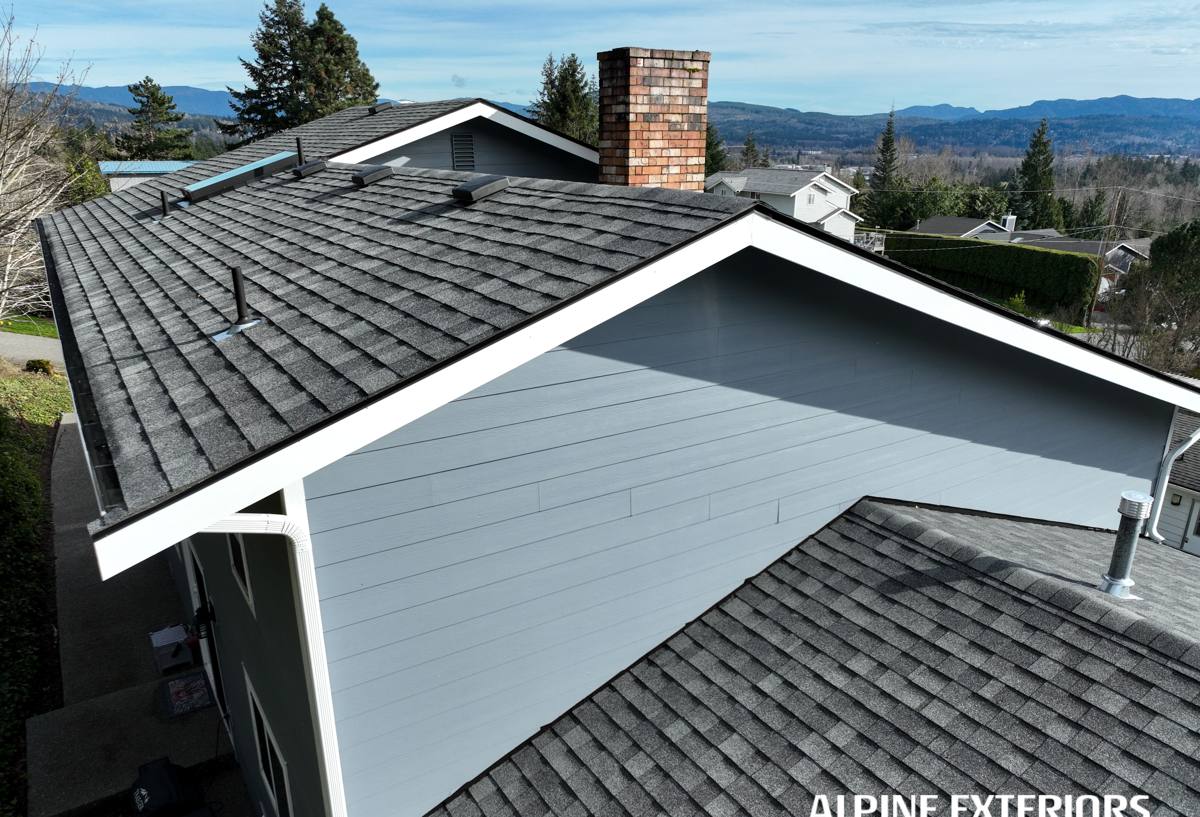
What a Correct New Roof Installation Actually Involves
"New roof" covers a lot of ground, and the difference between a roof that lasts and one that doesn't usually comes down to what happens under the shingles, not the shingles themselves.
Tear-Off and Deck Inspection
We remove the old roofing down to the deck rather than layering over it. That's the only way to actually see the plywood or plank sheathing underneath, catch any soft or delaminated spots — usually from long-term moisture intrusion at valleys, chimneys, or old flashing — and replace only what needs it. Roofing over a compromised deck just hides the problem under a brand-new warranty period.
Underlayment and Ice-and-Water Shield
In a climate with this much driving rain, underlayment choice is not a place to cut corners. We use self-adhering ice-and-water membrane at eaves, valleys, and roof-wall intersections — the spots most likely to see wind-driven water forced backward under the shingle line — with synthetic underlayment across the rest of the field.
Flashing at Every Transition
Chimneys, skylights, dormers, and roof-to-wall junctions are where most leaks actually start, not the open field of shingles. Correct step flashing, counter-flashing, and valley metal, properly lapped and sealed, matter more to a roof's lifespan than almost anything else on the job.
Balanced Ventilation
Intake at the soffits and exhaust at the ridge need to work together. Unbalanced ventilation traps moisture in the attic, which shortens shingle life from underneath and feeds the kind of persistent dampness that lets moss and mildew take hold on north-facing slopes.
Choosing a Roofing Material for a Marine Climate
There's no single "best" roofing material for Point Roberts — the right choice depends on your budget, your roof's exposure, and how much maintenance you want to do. Here's how the common options compare in this specific climate.
| Material | Typical Lifespan Here | Salt-Air Performance | Moss/Algae Resistance | Maintenance |
|---|---|---|---|---|
| Architectural asphalt shingle | 20-30 years | Good with corrosion-resistant fasteners and flashing | Moderate; algae-resistant lines available | Low; periodic moss removal recommended |
| Standing seam metal | 40-50+ years | Very good with proper coating and fastener spec | High; sheds moisture quickly | Very low |
| Cedar shake/shingle | 20-30 years with upkeep | Fair; needs consistent maintenance in damp shade | Low without regular treatment | High; requires ongoing care |
Architectural asphalt shingle remains the most common choice for Point Roberts homes because it balances upfront cost with solid performance when the underlayment and flashing are done correctly. Metal roofing carries a higher installed cost but pays that back in longevity and near-zero maintenance, which appeals to owners of second homes who aren't on-site to keep up with upkeep. Cedar has a natural look many people want, but in a climate this damp it demands real maintenance discipline to avoid moss and rot — we'll always tell you honestly what that commitment looks like before you choose it.
Fasteners and Flashing: The Corrosion Detail Most Crews Skip
Standard electro-galvanized nails and flashing hold up fine in a dry inland climate. In salt-influenced marine air, they can start showing rust streaks and losing holding strength years before the shingles themselves are due for replacement. We spec hot-dip galvanized or stainless fasteners and corrosion-resistant flashing metals on Point Roberts jobs specifically because of that exposure — it's a small cost difference at install time that avoids a much bigger problem ten years down the road.
Moss, Shade, and the Long Wet Season
Moss doesn't damage a roof by itself, but it holds moisture against the shingle surface and lifts shingle tabs as it grows, which shortens the life of the roofing underneath it. North-facing slopes and areas shaded by trees are the most common trouble spots. A new roof installation is the right time to address this at the source: proper ventilation to reduce attic and deck moisture, zinc or copper strips near the ridge on shade-prone slopes to slow regrowth, and shingle products with built-in algae resistance where it makes sense for the home. None of this eliminates the need for occasional moss removal, but it stretches the interval out considerably.
Working in Point Roberts: Why Local Experience Matters
Point Roberts is geographically separated from the rest of Whatcom County — land access runs through Canada. That's not a small detail for a roofing job. It affects how materials get delivered, how crews schedule their day, and how quickly a contractor can respond if weather closes in mid-tear-off and the roof needs to be dried in fast. A crew that hasn't worked the area before is learning that logistics on your project's timeline. A crew that already builds Point Roberts jobs into its regular schedule has those logistics solved before your project starts.
It also matters because a lot of Point Roberts homes are seasonal or part-time residences. Owners aren't always on-site during the work, so clear written scopes, photo updates, and reliable phone or email communication matter more than they would for a job where the homeowner is watching from the driveway every day.
Our New Roof Installation Process
- On-site inspection and estimate. We look at the existing roof, decking condition where visible, ventilation setup, and any problem areas before writing a scope.
- Written scope and material selection. You get a clear breakdown of materials, underlayment, flashing approach, and ventilation plan — not just a square-footage price.
- Permitting. We handle the required permitting so the job is documented and inspected properly.
- Tear-off and deck inspection. Old roofing comes off, the deck is inspected, and any soft or damaged sheathing is replaced.
- Underlayment, flashing, and roofing installation. Ice-and-water shield at vulnerable areas, correct flashing at every transition, then the roofing material itself.
- Ventilation check. Intake and exhaust venting are confirmed to be balanced for the finished attic space.
- Final walkthrough and cleanup. We review the finished roof with you and make sure the site is clear of debris and fasteners.
What to Check Before You Hire a Roofing Contractor
- Current Washington State contractor license and bonding, verifiable through the state's license lookup
- Active liability insurance, with proof available on request
- A written scope that names the underlayment, flashing, and ventilation approach — not just "shingle roof, X square feet"
- A clear warranty explanation covering both materials and workmanship, in writing
- A track record working in Point Roberts or similarly exposed, hard-to-access locations
- A plan for weather contingencies during tear-off, since an open deck can't sit exposed if conditions turn
Cost Factors for a New Roof in Point Roberts
Every roof is priced individually, but the main variables are consistent: total roof size and pitch, how many layers of old roofing need to come off, the amount of deck repair required, material choice, and the complexity of flashing details around chimneys, skylights, and valleys. On top of the standard factors, Point Roberts jobs can carry a modest logistics premium tied to material delivery and scheduling around the peninsula's access. As a very general range, a full asphalt shingle re-roof on an average single-family home often falls somewhere in the low-to-mid five figures, with metal roofing running higher and cedar landing in between depending on scope. The only way to know your actual number is a proper on-site estimate — square footage alone doesn't tell the whole story.
If you're planning a new roof for a Point Roberts home, we're happy to take a look and walk you through what your specific roof needs, with no pressure to decide on the spot. Use the form below to request a free estimate.