 Birch Bay Siding
 Siding Repair in Nooksack: Why This Corner of Whatcom County Is Tough on Siding
Homes in the Nooksack area near Birch Bay deal with a specific combination of weather that wears on exterior siding faster than most homeowners expect. Salt-tinged marine air drifts in off the water, driving rain comes sideways during fall and winter storms, and a long, damp moss season keeps north-facing walls and shaded corners wet for weeks at a time. None of that is dramatic on its own, but stacked together year after year, it is exactly the kind of slow, cumulative exposure that finds every weak point in a siding system: a gap at a butt joint, a missed caulk line, a nail that backed out, a corner where water was never given a clean path off the wall.
Siding repair in this kind of climate is not just about making a wall look presentable again. It is about restoring the water management behind the surface — the flashing, the laps, the fastening, the drainage plane — so the same failure does not reappear in twelve months. That is the standard we hold every Nooksack-area repair to.
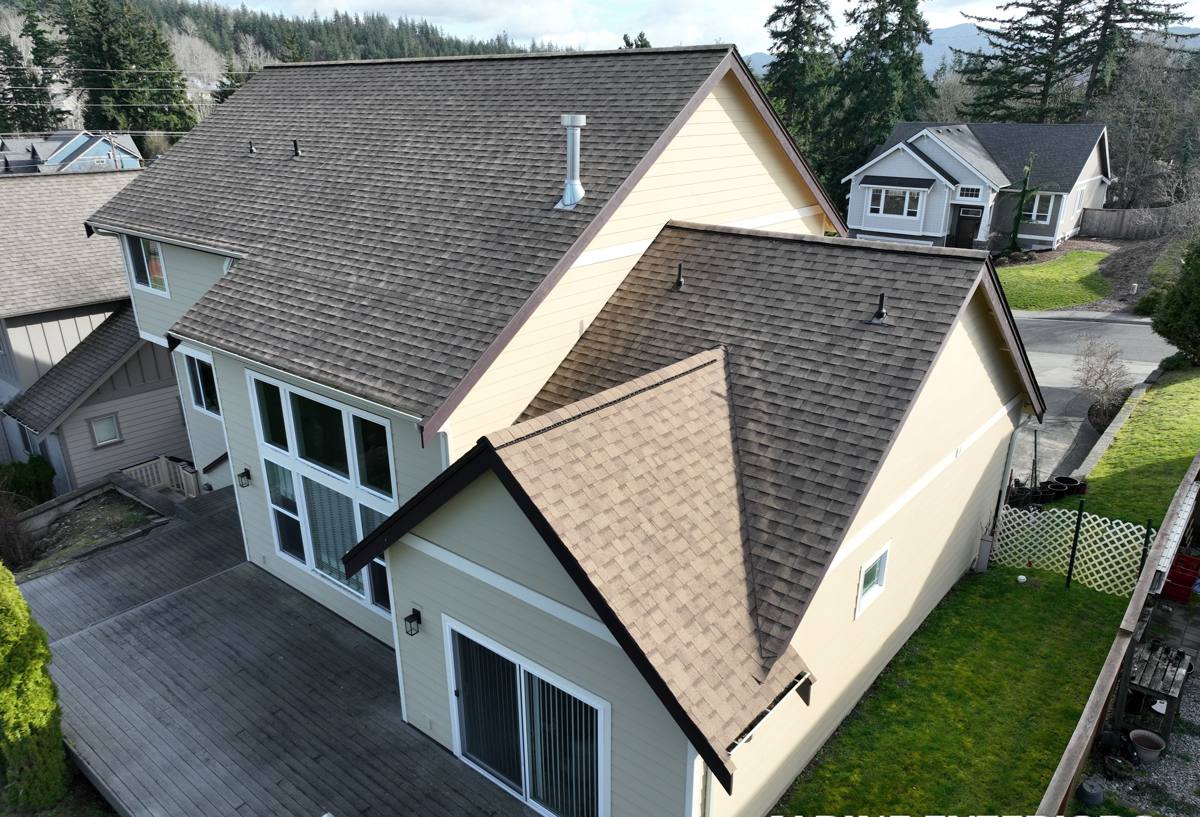
Signs a Nooksack Home Needs Siding Repair
Because moisture damage often starts behind the siding before it is visible on the surface, homeowners in this area should treat certain signs as an invitation to get a closer look, not just a cosmetic nuisance.
- Soft, spongy, or discolored siding near ground level, downspouts, or under windows
- Persistent moss or dark streaking on north- and west-facing walls that keeps returning after cleaning
- Cracked, split, or bowed boards, especially wood or engineered wood siding that has taken on water
- Bubbling, peeling, or chalky paint that suggests moisture is moving through the siding rather than shedding off it
- Gaps opening up at butt joints, corners, or trim where caulk has failed or shrunk
- Visible fastener heads, popped nails, or siding that has started to separate from the wall
- Interior clues — a musty smell, a soft spot on drywall, or a stain near an exterior wall
Any one of these on its own might be minor. Several together, especially on a wall that takes the brunt of storm-driven rain, usually means water has been getting behind the cladding for a while.
Why Small Problems Don't Stay Small Here
In a drier climate, a small gap in siding might sit for years without consequence. In Whatcom County, with rain loading and a marine air moisture load that rarely lets a wall fully dry out, the same gap becomes an entry point that sheathing, framing, and insulation absorb over an entire wet season. Repairing early, before the damage spreads past the siding itself, is almost always the cheaper and simpler path.
What a Correct Siding Repair Actually Involves
A repair that only addresses what's visible from the driveway is a temporary fix. A repair done correctly works through several layers, in order:
- Diagnose the source, not just the symptom. A stained board is often a downstream effect of a flashing or drainage problem elsewhere. Replacing the board without fixing the source just delays the next repair.
- Open up the affected area. This means pulling the damaged siding and checking the water-resistive barrier, flashing, and sheathing underneath for rot, staining, or softness — not guessing based on the surface.
- Repair or replace the substrate if needed. Damaged sheathing or framing gets addressed before any new siding goes back on. Covering rotten wood with new siding just hides the problem for another season.
- Re-establish proper water management. Flashing, weep paths, and lap sequencing get corrected so water sheds down and out rather than pooling or wicking behind the wall.
- Install matching siding correctly. Fastening pattern, joint treatment, and caulking follow manufacturer specification, not shortcuts.
- Finish and blend. Paint or factory finish is matched as closely as possible so the repair doesn't stand out as a patch.
Skipping steps two through four is the single most common reason a "repaired" section fails again within a year or two.
Repair vs. Replacement: How We Make the Call
Not every problem area needs a full re-side, and not every repair is worth doing instead of replacing a full wall or elevation. We look at scope, age, and material condition together before recommending either path.
| Factor | Favors Repair | Favors Replacement |
|---|---|---|
| Extent of damage | Isolated to one wall, corner, or a handful of boards | Spread across multiple elevations or recurring in several spots |
| Underlying sheathing | Sound once opened up and inspected | Soft, delaminated, or rotted over a wide area |
| Siding material | Still available or closely matchable, in otherwise good shape | Discontinued, faded unevenly, or a product with known long-term issues |
| Age of existing siding | Under roughly 10-15 years with isolated failure | Nearing or past expected service life for its material |
| Root cause | A single fixable defect (flashing, caulk, fastening) | A systemic issue — wrong product for the climate, chronic moisture path |
When a home's siding is failing broadly rather than in one or two isolated spots, we'll say so directly. A patchwork of repairs on siding that's reached the end of its useful life usually costs more over time than doing the job right once.
Our Siding Repair Process
For Nooksack-area homeowners, the process is straightforward and starts with an honest look, not a sales pitch.
- On-site inspection. We look at the damaged area and the whole exterior — problems on one wall often hint at similar risk elsewhere, especially on sides that take the most weather.
- Clear diagnosis. We explain what's actually happening behind the siding, what caused it, and what it will take to fix it correctly — including if the answer is "this section is fine, that one isn't."
- Written scope and estimate. You get a plain-English description of the work, not a vague line item.
- Careful removal and inspection. Damaged material comes off cleanly, with sheathing and framing checked before anything goes back.
- Correct rebuild. Flashing, drainage, and fastening are restored to spec before new siding is installed.
- Final walk-through. We review the finished repair with you and explain anything worth keeping an eye on going forward.
Why We Repair and Replace With James Hardie Fiber Cement Only
We install and repair with James Hardie fiber cement exclusively — not vinyl, not LP SmartSide, not cedar, not primed spruce. That's a deliberate standard, not a limitation. In a climate with this much sustained moisture exposure and moss growth, the material a repair is matched with matters as much as the workmanship.
Fiber cement is non-combustible and dimensionally stable, so it doesn't expand, contract, or absorb water the way wood-based products can. James Hardie's HZ5 product line is engineered specifically for climates like ours, with a factory-applied ColorPlus finish that resists the fading and moisture intrusion that plain paint on wood-based siding is more prone to over time. When we do a repair, we're not just patching a wall — we're extending a system that's built to hold up to the next twenty years of the same salt air and rain that caused the original problem.
For homeowners currently dealing with siding that isn't James Hardie, we'll still repair what we can and give you a straight answer on how much longer that material is likely to hold up — and what replacing it with Hardie would look like when the time comes.
Why Hiring a Crew That Already Works in Nooksack Matters
Siding repair is local work in a very literal sense. A crew that regularly works the Nooksack and greater Birch Bay area already understands how this specific stretch of Whatcom County weather behaves — where moss builds up fastest, which wall orientations take the worst of the driving rain, and how quickly a small gap turns into a real problem if it sits through a wet season. That local pattern recognition shows up in faster, more accurate diagnosis and fewer surprises once a wall is opened up.
It also means accountability. A contractor based in and working this region regularly has a reputation to maintain here, not just a one-time job to finish. That's worth as much as the material spec when you're trusting someone to get behind your walls and fix what they find.
What Repairs Typically Cost
Every home is different, but the factors below drive most of the variation in a siding repair estimate:
| Cost Factor | Why It Matters |
|---|---|
| Size of the affected area | A single board is a very different job than an entire elevation |
| Condition of the sheathing underneath | Rotted sheathing or framing adds carpentry work beyond the siding itself |
| Access | Second-story or hard-to-reach walls take more time and equipment |
| Color and profile matching | Matching existing siding exactly can be simple or require creative solutions on older homes |
| Root-cause fixes | Correcting flashing or drainage issues is necessary work, not an upsell |
We'll always separate what's required to fix the problem correctly from anything optional, so you know exactly what you're paying for and why.
If you're seeing early signs of siding trouble on a Nooksack-area home, or you already know a section needs attention, we're glad to take a look. Estimates are free, there's no pressure, and you'll get a straight answer about what your siding actually needs — simply fill out the form below to get started.