 Birch Bay Siding
 Siding Replacement Built for Sumas Weather
Sumas sits in a corner of Whatcom County where the weather doesn't do anything halfway. Winters bring long stretches of driving rain, humidity lingers most of the year, and anything shaded or tucked against tree cover grows moss faster than most homeowners expect. Add in the general dampness that rolls through the whole county off the water and the nearby foothills, and you've got a climate that is genuinely hard on exterior siding. We've replaced enough siding on homes in this part of Whatcom County to know exactly which failure patterns show up first, and which materials hold up and which ones quietly give in.
This page is about one thing: full siding replacement for homes in the Sumas area, done with James Hardie fiber cement, installed the way the manufacturer specifies. Not a general overview of every siding product on the market — a straight answer to what your home needs and how we handle the job from first look to final caulk line.
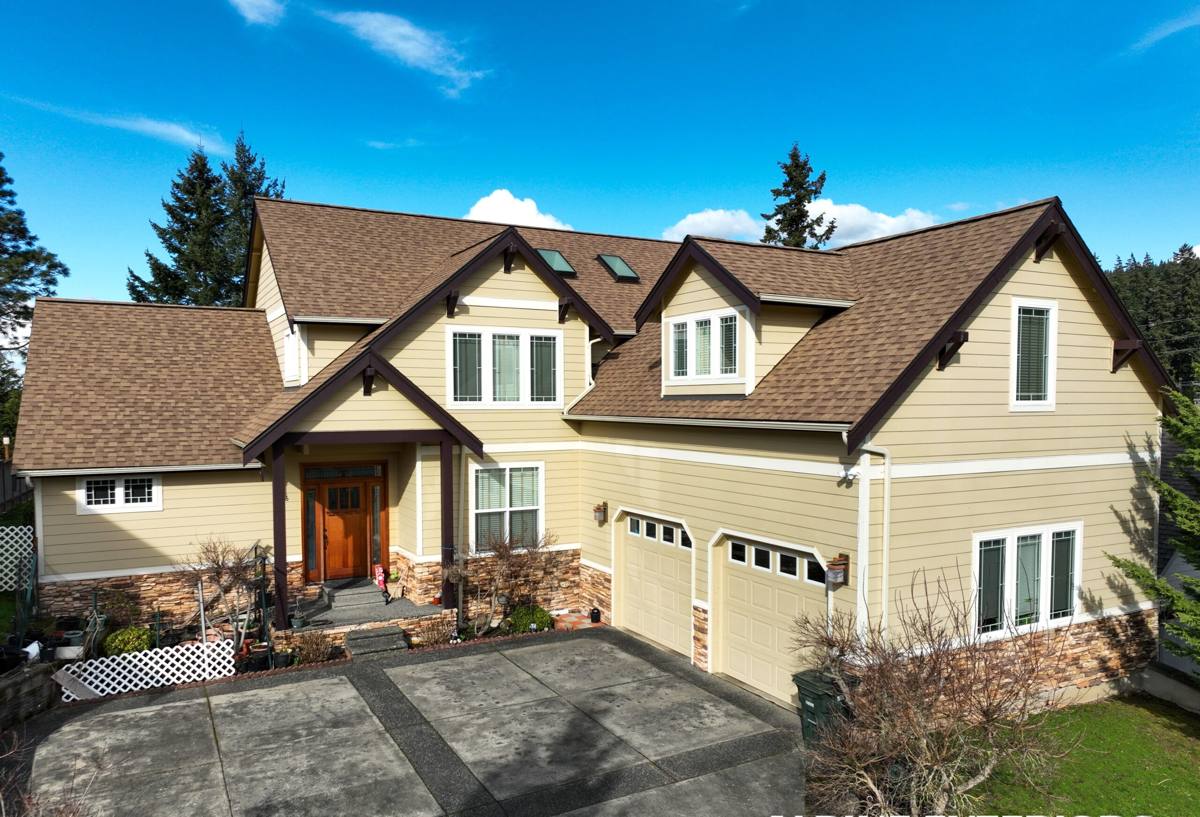
What Sumas' Climate Does to Siding Over Time
Moisture That Doesn't Let Up
Whatcom County doesn't get short, hard downpours as much as it gets long, steady, driving rain that finds every gap, seam, and nail hole in a siding system. Wind-driven rain pushes water sideways into laps and joints that were never designed to handle it, and it's rarely a single storm that causes damage — it's years of repeated soaking and drying that wears down whatever's on the wall.
Moss and Organic Growth
Shaded walls, north-facing elevations, and anything near overhanging trees stay damp long enough for moss and mildew to take hold. On some siding materials that's just cosmetic. On others, sustained moss growth traps moisture against the surface and accelerates rot, swelling, or paint failure underneath.
Salt-Influenced Air
Homes closer to the water deal with a steady dose of salt-laden air that corrodes fasteners, dulls finishes, and speeds up the breakdown of lower-grade materials. Even homes further inland aren't fully insulated from it — the same weather systems that carry moisture through the county carry that salt exposure with them, just in smaller doses.
None of this is unusual for the Pacific Northwest. But it means "good enough" siding — the kind that performs fine in a dry climate — often underperforms here within a decade.
Signs a Sumas Home Needs Siding Replacement, Not Another Repair
- Boards that are soft, spongy, or crumbling when pressed, especially near the bottom edges and around window trim
- Paint that won't hold anymore, even after a fresh coat — a sign moisture is moving through the material itself
- Visible warping, buckling, or gaps opening up at the seams
- Persistent moss or dark staining that comes right back after cleaning
- Rising energy bills with no other explanation, often pointing to compromised insulation behind failing siding
- Interior signs — musty smells, peeling paint on inside walls, or damp drywall near exterior walls
If you're seeing one or two of these, a repair might still make sense. If you're seeing several, or the siding is original to a home built more than 20-25 years ago, replacement is almost always the more honest recommendation — patchwork on failing siding just delays the same problem.
What Correct Siding Replacement Actually Involves
A proper replacement isn't just stripping old boards and hanging new ones. Done right, it includes:
- Full tear-off of the old siding down to the sheathing, not installation over existing material
- Sheathing inspection and repair — replacing any rotted or water-damaged framing before it gets covered up
- A correctly installed weather-resistive barrier that manages bulk water and lets vapor escape
- Proper flashing at every window, door, and penetration — the single most common point of failure on poorly done jobs
- Manufacturer-specified fastening, gapping, and clearances for the new siding material
- Correct caulking and sealing only where the manufacturer calls for it — over-caulking traps moisture just as badly as under-caulking
Skip any one of these steps and you can end up with brand-new siding hiding the same moisture problems it was supposed to fix.
Why We Install James Hardie Fiber Cement — and Nothing Else
We standardized on James Hardie siding for every replacement we do, including here in the Sumas area, and we don't install vinyl, LP SmartSide, Cemplank, Allura, primed spruce, or cedar. That's not a marketing position — it's a decision built around what actually holds up to this kind of weather.
The trade-offs with the alternatives
Vinyl siding is affordable and low-maintenance in mild climates, but it can warp or crack in temperature swings and it's not the product to rely on if you want a long, worry-free lifespan in a wet, high-moss climate. Engineered wood products like LP SmartSide perform well when installation and caulking are followed to the letter, but they're wood-based at the core, which means they're less forgiving of the sustained moisture exposure common in this county. Other fiber cement brands like Cemplank and Allura are legitimate competitors to Hardie on paper, but we've standardized our crews, our warranty conversations, and our supply chain around one system so we can guarantee consistent results — spreading across multiple product lines works against that. Primed spruce and cedar are beautiful materials, but real wood siding in Whatcom County means an ongoing commitment to re-staining, re-sealing, and moisture monitoring that most homeowners underestimate going in.
Why Hardie fits this climate
James Hardie fiber cement is non-combustible, dimensionally stable across temperature and humidity swings, and factory-finished with ColorPlus technology, so the color coat is baked on before it ever reaches your home rather than applied on-site where weather can compromise it. Hardie's HZ5 product line is engineered specifically for climates like ours — freeze-thaw cycles, sustained moisture, and long damp seasons. It resists moisture intrusion far better than wood-based products, doesn't feed moss growth the way some organic materials do, and comes with a strong, transferable manufacturer warranty when installed to spec.
Comparing Siding Options for a Sumas Home
| Material | Moisture Resistance in Wet Climates | Maintenance Burden | Typical Lifespan | Fire Rating |
|---|---|---|---|---|
| James Hardie Fiber Cement | Excellent | Low — occasional wash, no repainting for years | 30-50 years with proper install | Non-combustible |
| Vinyl | Fair — can trap moisture behind panels | Low, but prone to warping/cracking | 15-25 years | Combustible |
| LP SmartSide / Engineered Wood | Good if perfectly maintained | Moderate — caulk and paint upkeep is critical | 20-30 years | Combustible |
| Cedar / Primed Spruce | Fair — wood is moisture-sensitive by nature | High — regular staining/sealing required | 15-25 years with diligent care | Combustible |
This table reflects general industry behavior, not a claim about any specific competitor's product performing poorly — it's simply why we chose the material we did for a climate like this one.
Our Siding Replacement Process for Sumas Homes
1. On-Site Assessment
We walk the exterior, check for hidden moisture damage, evaluate the sheathing where accessible, and talk through what we're seeing in plain language — no pressure, no scare tactics.
2. Honest Scope and Estimate
You get a clear, written estimate that spells out what's included: tear-off, sheathing repair if needed, house wrap, flashing, Hardie product line and color, and trim work.
3. Tear-Off and Repair
Old siding comes off completely. Any water-damaged sheathing or framing gets repaired before anything new goes up — this is the step that gets skipped on cut-rate jobs and causes problems years later.
4. Weather Barrier and Flashing
We install the weather-resistive barrier and flash every penetration point according to Hardie's installation guidelines, because this is what actually keeps driving rain out, not the siding surface itself.
5. Hardie Installation
Panels or planks go up with correct fastening patterns, gapping, and clearances from grade, roofing, and trim, following James Hardie's published specifications for our climate zone.
6. Final Walkthrough
We walk the finished exterior with you, point out the details, and make sure you understand your warranty coverage before we consider the job done.
What to Check When Hiring a Siding Contractor in Whatcom County
- Do they carry current Washington contractor licensing and adequate liability insurance?
- Will they show you a written scope that includes sheathing repair as a possibility, not an unpleasant surprise?
- Do they install to the manufacturer's specific instructions for our climate zone, or a generic one-size-fits-all approach?
- Can they explain, without hedging, why they chose the materials they install?
- Do they have real, ongoing experience working in Whatcom County's specific rain and moss conditions, not just siding experience in general?
A crew that already understands how Whatcom County weather behaves on a wall will catch problems a generic siding installer might miss entirely — that local pattern recognition is worth as much as the material itself.
Get a Straight Answer for Your Sumas Home
If your siding is showing its age, or you just want an honest read on whether repair or replacement makes more sense, we're happy to take a look. No pressure, no hard sell — just a clear assessment and a straightforward estimate for a James Hardie siding replacement built to handle what this part of Whatcom County throws at it. Reach out using the form below for a free, no-obligation estimate.