 Birch Bay Siding
 Why Point Roberts Roofs Age Differently
Point Roberts sits on its own peninsula on Boundary Bay, surrounded on three sides by saltwater and cut off from the rest of Whatcom County by the international border. That geography is part of what makes it a beautiful place to own a home — and part of what makes roofing here harder than in a typical inland neighborhood. Salt-laden air off the water accelerates corrosion on exposed metal fasteners, flashing, and vents. Driving rain off the Strait pushes water sideways under poorly lapped shingles and worn flashing instead of just running straight down. And the long, damp shoulder seasons common to this part of Washington give moss and algae months at a time to gain a foothold on north-facing slopes and shaded roof planes.
None of that means a roof in Point Roberts needs to be exotic or over-built. It means the details — underlayment choice, flashing quality, ventilation, and fastener selection — matter more here than they would in a drier, more sheltered part of the state. A roof replacement done with those details right will outlast one that was installed the same way you'd install it fifty miles inland.
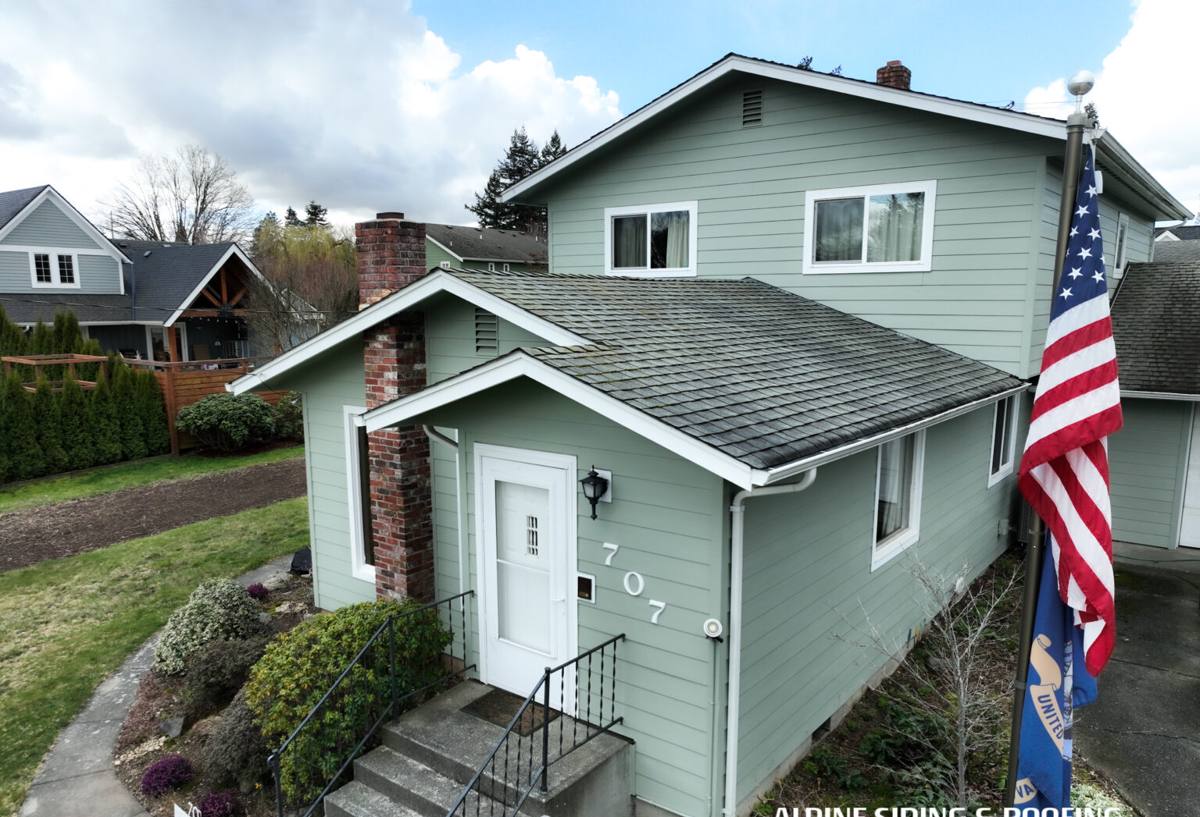
Signs a Roof Needs Replacing, Not Just Patching
Not every roof problem calls for a full tear-off. But in a coastal climate like this one, small issues tend to compound faster, so it's worth knowing when repair stops making sense.
- Shingles are curling, cupping, or losing granules in large patches, especially on the sides that face prevailing wind and rain
- You're seeing daylight through the attic decking, or insulation shows signs of moisture staining
- Moss has worked its way under shingle edges rather than just sitting on the surface
- Flashing around chimneys, skylights, or vent pipes is rusted, lifted, or was never properly stepped into the roof plane
- The roof is past 20-25 years old (for asphalt composition) and has had more than one round of repairs already
- Multiple leaks have shown up in different areas rather than one isolated spot
A roof with one of these signs might still be repairable. A roof with several of them, especially combined with age, is usually cheaper to replace outright than to keep patching one section at a time.
Repair vs. Replace: A Practical Comparison
| Situation | Repair Usually Makes Sense | Replacement Usually Makes Sense |
|---|---|---|
| Roof age | Under 15 years | 20+ years, especially with prior repairs |
| Leak pattern | Single, isolated source | Multiple leaks in different areas |
| Shingle condition | Localized damage (storm, tree limb) | Widespread granule loss or curling |
| Decking | Solid, no soft spots | Soft or rotted decking found during inspection |
| Moss/algae | Surface growth, easily cleaned | Growth under shingle tabs or staining decking |
What a Correct Roof Replacement Actually Involves
A roof replacement is more than swapping old shingles for new ones. In a wet, salt-exposed environment like Point Roberts, the layers underneath the shingles do most of the real work of keeping water out.
Tear-Off and Deck Inspection
We remove the old roofing down to the deck rather than layering over it. That's the only way to actually see the plywood or plank decking underneath, which is where moisture problems usually hide. Any soft, delaminated, or rotted decking gets replaced before anything new goes down — installing new shingles over a weak deck just guarantees a shorter roof life.
Underlayment and Water Barrier
Underlayment is the roof's backup layer if wind-driven rain gets past the shingles, which happens more often on an exposed coastal property than most homeowners realize. We use synthetic or self-adhered underlayment appropriate to the roof's exposure, with self-adhered ice-and-water shield along eaves, valleys, and any low-slope transitions where water is most likely to back up.
Flashing
Flashing failures, not shingle failures, cause most roof leaks. Chimneys, skylights, sidewalls, and vent penetrations all need step flashing, counter-flashing, or pipe boots installed correctly and sealed — not just caulked over old, corroded metal. In a salt-air environment, we pay particular attention to fastener and flashing material choice so it isn't the first thing to fail again in a few years.
Ventilation
A roof that can't breathe traps moisture in the attic, which shortens the life of the decking and the shingles from underneath. Proper ridge and soffit ventilation matters everywhere, but it matters more in a humid coastal climate where attic moisture has fewer dry, low-humidity days to fully escape.
Choosing Materials for a Point Roberts Roof
There's no single "correct" roofing material for every home here — the right choice depends on your roof's exposure, slope, budget, and how long you plan to own the home. What matters is understanding the honest trade-offs of each option rather than picking based on price alone.
| Material | Coastal Performance | Maintenance | Typical Lifespan |
|---|---|---|---|
| Architectural asphalt shingle | Good, with quality underlayment and flashing | Periodic moss/debris removal | 25-30 years |
| Standing seam metal | Very good corrosion resistance when properly coated/fastened | Low; occasional fastener check | 40-50+ years |
| 3-tab asphalt shingle | Fair; less wind resistance than architectural | Similar to architectural, shorter life | 15-20 years |
| Wood shake | Poor in prolonged damp/moss conditions without diligent upkeep | High; regular treatment needed | Varies widely with maintenance |
We generally steer homeowners away from wood shake in this specific climate, not because it's a bad product everywhere, but because sustained moisture and moss pressure on shaded, damp roof planes make it a high-maintenance choice here. That's a professional judgment about fit for this environment, not a knock on the material itself.
Our Roof Replacement Process
Homeowners deserve to know what's actually happening on their roof, in order, rather than just seeing a crew show up and a dumpster fill up.
- Inspection and estimate. We walk the roof (weather permitting) and the attic, note the condition of the decking, flashing, and ventilation, and put together a written scope and price — not just a per-square number.
- Material selection. We go over the trade-offs above based on your specific roof's exposure and your budget, and confirm color and manufacturer before ordering.
- Scheduling around weather. Roof tear-offs are timed around forecast windows, with the home protected against sudden rain during an open roof.
- Tear-off and deck repair. Old roofing comes off, decking is inspected and repaired as needed, and debris is contained and hauled off site.
- Underlayment, flashing, and ventilation installed. These layers go in correctly before a single shingle or panel is placed.
- Final installation and cleanup. Roofing material is installed to manufacturer specification, the property is cleaned of nails and debris (including a magnetic sweep), and we walk the finished roof with you.
Moss, Algae, and Long-Term Care
A new roof in Whatcom County will eventually face the same moss pressure as the one it replaced — that's the climate, not a defect. What changes with a correctly installed replacement is how well the roof handles it. Proper flashing keeps moss growth from turning into a leak path. Adequate ventilation keeps the decking dry underneath even when the surface stays damp longer through fall and winter. And a few simple habits extend the life of any roof here:
- Keep gutters clear so water doesn't back up under the shingle edges
- Trim back overhanging branches that keep roof sections shaded and slow to dry
- Have moss gently removed (not pressure-washed, which can strip granules) before it works under shingle tabs
- Schedule a roof check after major windstorms, which are common off the Strait
Why Local Experience Matters in Point Roberts
Point Roberts is a U.S. exclave — the only road access is through Canada, which means material deliveries, equipment, and debris hauling all have to account for a border crossing that most roofing crews never think about. A contractor who hasn't worked here before can run into real delays getting a dumpster or a load of shingles onto the property, or scheduling a crew's daily crossing. We already account for that in scheduling and logistics, so a Point Roberts job doesn't turn into a longer, more disrupted project than it needs to be.
Beyond logistics, a crew that's worked other roofs in this specific stretch of coastline knows which flashing details and material choices actually hold up against this exposure, versus what looks fine on paper but wears out early against salt air and driving rain. That's the kind of judgment that only comes from having done the work here before, not just nearby.
Before You Hire: A Quick Checklist
- Ask for a written scope that names the underlayment, flashing, and ventilation approach — not just the shingle brand
- Confirm the estimate includes decking inspection and a per-sheet price for any replacement needed
- Ask how the crew handles logistics and scheduling specific to Point Roberts
- Check that the contractor carries current Washington contractor registration and insurance
- Get manufacturer warranty terms in writing, and understand what's covered by labor warranty versus material warranty
If your roof is showing its age, or you just want an honest read on whether repair or replacement makes more sense for your home, we're happy to take a look. Reach out for a free, no-pressure estimate using the form below.