 Birch Bay Siding
 Why Point Roberts Windows Take More Than a Standard Install
Point Roberts sits on its own peninsula at the far edge of Whatcom County, surrounded on three sides by water and cut off by land from the rest of Washington. That geography is exactly why windows fail faster here than in a lot of inland communities. Homes get direct exposure to salt-laden air coming off the water, driving rain that hits window walls at an angle instead of straight down, and a damp, shaded moss season that stretches longer than most homeowners expect. None of that is exotic weather — it's typical for this stretch of the Salish Sea coastline — but it does mean a window that's fine in a sheltered inland neighborhood can start showing seal failure, frame rot, or hardware corrosion years earlier out here.
Custom windows for this area aren't about fancy shapes or oversized glass, though we do plenty of that too. "Custom" here mostly means sizing, materials, and installation details matched to a specific house and its specific exposure — a south-facing wall that catches wind-driven rain needs different flashing and sealant detailing than a sheltered north wall on the same home.
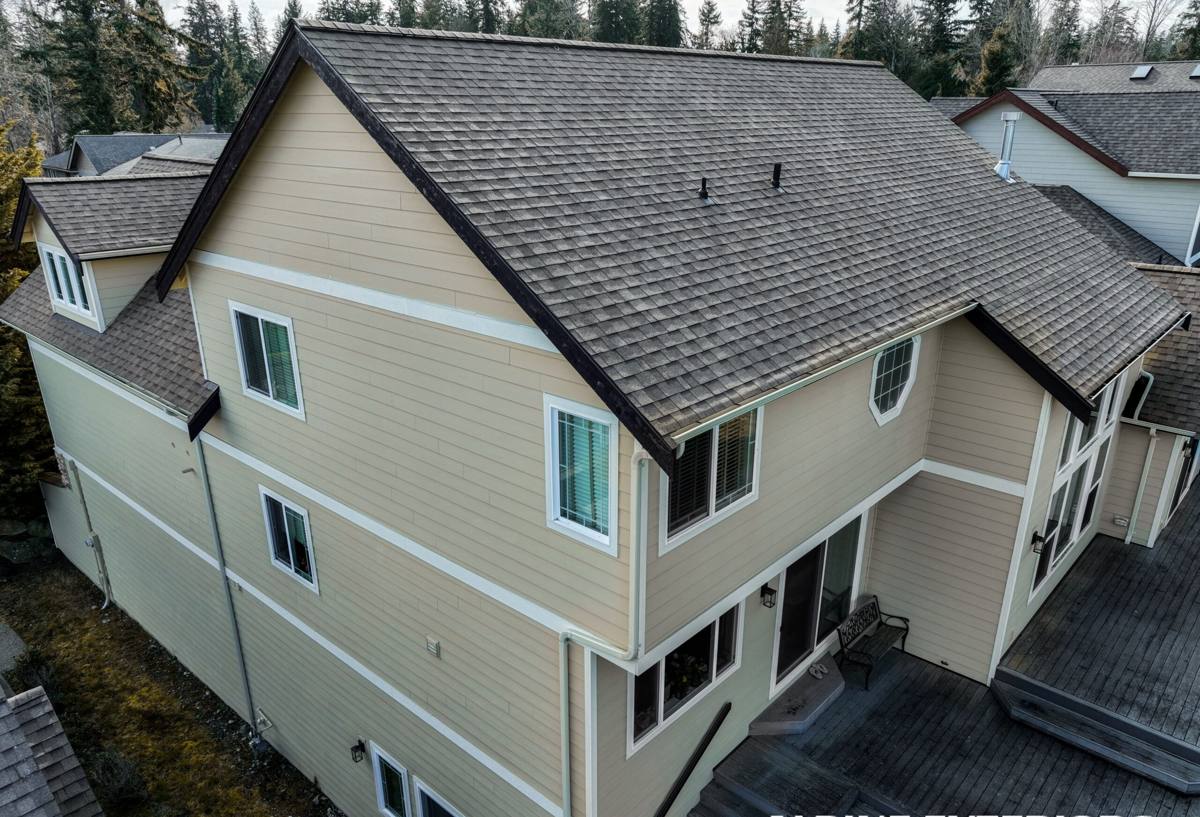
What Salt Air, Rain, and Moss Actually Do to a Window
Salt air
Airborne salt settles on and around window components and accelerates corrosion on anything metal — hinges, cranks, screws, and lesser-grade cladding fasteners. It also breaks down some sealant formulations faster than inland exposure would, which shows up as hazy or failed seals on double- and triple-pane units years before the glass itself is a problem.
Driving rain
Wind off the water pushes rain sideways into wall assemblies, not just down onto sills. That means flashing, sill pan design, and the seal between the window unit and the rough opening matter more here than the window brand itself. A well-built window installed with poor flashing details will leak; a modest window installed correctly usually won't.
Moss and prolonged dampness
Shaded sides of homes, tree-lined lots, and the generally long damp season common to Whatcom County give moss and mildew more time to establish on sills, trim, and cladding around window openings. Left alone, that moisture holds against wood trim and speeds up rot at the most vulnerable point of the whole assembly — the perimeter where the window meets the wall.
Signs a Point Roberts Home Needs Window Attention
- Fogging or a permanent haze between panes (failed seal, not a cleaning issue)
- Soft or discolored wood trim around the frame, especially on the bottom sill
- Visible moss or dark streaking building up on sills or exterior casing
- Drafts you can feel near the frame even when the window is fully latched
- Cranks, locks, or hardware that have stiffened, corroded, or stopped closing tight
- Condensation forming on interior glass or frames during cool, damp stretches
- Paint or finish peeling specifically around the window opening rather than the whole wall
Any one of these on its own isn't an emergency. Several together, especially on a wall that takes direct wind and rain, usually means the window and the surrounding flashing are past the point where caulk and touch-up will hold.
What a Correct Custom Window Job Involves
Accurate measuring and opening assessment
Every opening gets measured individually rather than assumed to match a stock size, and we check the condition of the rough opening itself — sheathing, existing flashing, and any hidden water damage — before ordering anything. On older Point Roberts homes this step often turns up moisture issues that predate the current windows.
Material and glass selection matched to exposure
A window on an exposed, water-facing wall doesn't need to be a different brand than one on a sheltered wall, but it often benefits from upgraded weatherstripping, corrosion-resistant hardware, or a different glazing package. We size that decision to the actual wall, not a blanket spec for the whole house.
Flashing and sealant detail, not just the window itself
This is where most long-term failures actually start. Proper sill pan flashing, correctly lapped house wrap or building paper, and a sealant that's rated for exterior, marine-adjacent exposure are what keep driving rain out of the wall cavity. We treat this as equal in importance to the window unit — because if it fails, it doesn't matter how good the window was.
Interior and exterior finish work
Trim, casing, and sill work get finished to shed water rather than trap it, with attention to the same moss- and rot-prone details that caused problems on the old windows in the first place.
Comparing Frame Materials for This Climate
| Material | How it handles salt air and rain | Maintenance in a moss-prone climate |
|---|---|---|
| Vinyl | Doesn't corrode; performs well against salt air and moisture when installed correctly | Low — occasional cleaning, no repainting |
| Fiberglass | Very stable, resists warping and corrosion, holds up well long-term near water | Low — durable finish, minimal upkeep |
| Aluminum | Strong but prone to corrosion over time unless properly coated; can pit in salt-heavy exposure | Moderate — coatings and hardware need periodic attention |
| Wood | Attractive but most vulnerable to driving rain and prolonged dampness without diligent upkeep | High — repainting, sealing, and rot checks needed regularly |
| Wood-clad | Exterior cladding protects the wood core from direct weather, better suited to coastal exposure than bare wood | Moderate — interior wood still needs occasional attention |
We're honest with homeowners about this table: there's no single "best" material for every wall of every house. A north-facing, sheltered window can wear painted wood well for decades. The same wood window on a direct, wind-driven wall is a maintenance commitment most owners underestimate. We'll tell you which situation you're in before you buy.
Our Process on a Point Roberts Window Project
- Free on-site assessment of the openings, existing window condition, and any hidden moisture or rot
- Straightforward recommendation on materials and glazing based on each wall's actual exposure, not a one-size pitch
- Written estimate covering material, labor, flashing, and finish work — no vague allowances
- Scheduling that accounts for weather windows, since installation goes faster and seals better in a dry stretch
- Removal of old units with attention to what's found underneath, and repair of any sheathing or framing issues before new windows go in
- Installation with proper flashing, sealant, and insulation detail around every opening
- Finish work on trim and casing, plus a walkthrough so you know what to watch for going forward
What Affects Cost
| Factor | Why it matters here |
|---|---|
| Number and size of openings | Larger or more numerous windows mean more material and labor, straightforwardly |
| Exposure of each wall | Direct wind-and-rain walls may need upgraded flashing or hardware, adding labor and material cost |
| Condition of existing openings | Hidden rot or water damage found during removal adds repair work before the new window goes in |
| Frame material chosen | Vinyl and fiberglass generally cost less upfront than wood or wood-clad options |
| Glazing package | Upgraded seals or coatings for marine exposure add cost but reduce long-term seal failure |
| Access and site logistics | Point Roberts' location can affect scheduling and material delivery timing compared with more centrally located jobs |
We won't quote a per-window price without seeing the openings — anyone who does is guessing, and on a job where flashing detail matters as much as it does here, guessing leads to change orders. What we will say honestly: budget windows installed poorly cost more over ten years, in rot repair and redo work, than mid-range windows installed with correct flashing and sealant the first time.
Living With Windows in a Moss-Season Climate
Even a well-installed window needs a little seasonal attention in this environment. Rinsing salt residue off exterior glass and frames periodically, clearing debris and moss buildup from sills and tracks, and checking that weep holes on vinyl or fiberglass frames stay clear all extend the life of the installation. None of this is heavy work — it's the difference between a window that looks and seals well for its full service life and one that starts showing problems early because moisture and organic growth were left to sit against the frame.
Why a Crew That Already Works Point Roberts Matters
Point Roberts' geography — an exclave reached by land only through Canada — is a real logistical factor for any contractor, not a minor detail. Crews who don't regularly work this area often underestimate scheduling, material delivery timing, and border-crossing logistics, which turns into delays or rushed installs. We already service Birch Bay and this end of Whatcom County, so a Point Roberts job is a normal part of our route and planning, not a special trip that gets shortcuts because it's inconvenient. That matters most on the details that don't show up until year three or four — the flashing behind the trim, the sealant in the corner joints — because those are the details a crew unfamiliar with this coastline's exposure is more likely to underestimate.
If your Point Roberts home has windows showing early wear, fogging, drafts, or moss and moisture buildup around the frames, we're happy to take a look. Reach out for a free, no-pressure estimate using the form below and we'll give you a straight assessment of what your windows actually need.