 Birch Bay Siding
 Building New in Semiahmoo? The Windows Have to Match the Site
Semiahmoo sits right up against the water, which means every new home here is fighting a different battle than a house fifteen miles inland. Salt-laden air, wind-driven rain off the Strait, and a wet season that stretches long enough to grow moss on just about anything that holds moisture — all of that starts working on a building the day it's framed. New-construction windows are your chance to build the envelope right the first time, before drywall, siding, and trim make corrections expensive. We install new-construction windows across Birch Bay and the surrounding Whatcom County shoreline, and Semiahmoo's exposure is one of the more demanding sites we work.
New construction is not the same job as a replacement window. On a replacement, we're working around existing siding and trim, often using a pocket or insert method that leans on the old frame for support. On new construction, there's no old frame — we're setting the window into open rough openings with a nailing flange, which means the flashing and water management decisions we make now become permanent parts of the wall assembly. There's no going back and fixing a bad flashing detail after the siding's up without tearing into finished work.
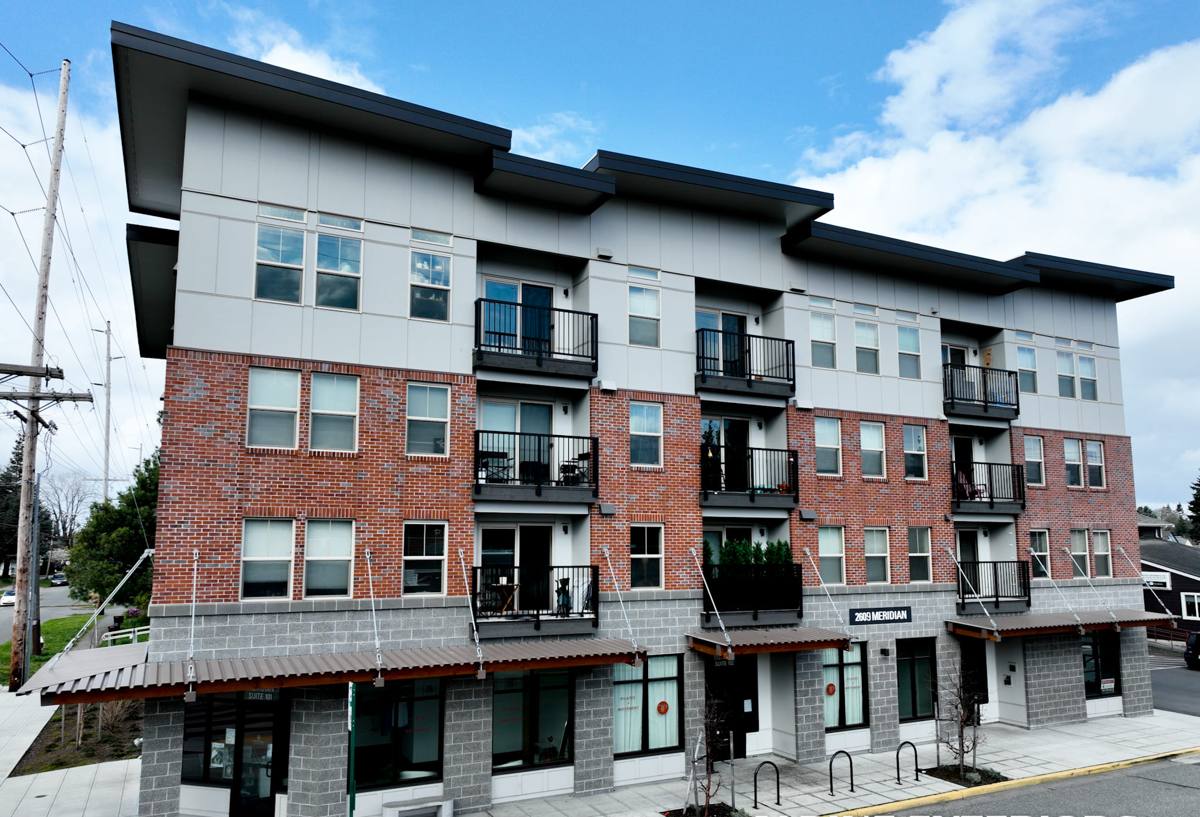
What Semiahmoo's Climate Actually Does to a Window System
Salt Air
Airborne salt off the water accelerates corrosion on anything metal — hinges, cranks, screws, and especially lower-grade aluminum cladding or hardware. It also breaks down cheap gaskets and seals faster than they'd wear inland. This is less about the glass and more about every moving part and every fastener in the assembly.
Driving Rain
Wind-driven rain doesn't just fall on a window — it gets pushed sideways and upward, testing every seam. A window that would stay dry in a calm downpour can leak in Semiahmoo's wind-and-rain combination if the flashing isn't lapped correctly or if the sill pan is missing. This is the single biggest cause of hidden water damage we find in new builds along the coast.
Moss and Sustained Moisture
Whatcom County's moss season is long — shaded, north-facing walls and horizontal trim ledges stay damp for months at a time. Moss and algae hold water against the wall assembly, which is a slow but real threat to any wood trim, sill, or sheathing that isn't properly flashed and sealed. It's not dramatic, but it's constant, and it's exactly the kind of thing that shows up as rot five or ten years down the road if it's ignored at install.
Frame Materials and Glass: What Holds Up on This Site
There's no single "best" window for every home, but on a Semiahmoo lot we steer clients toward materials and glass packages that are proven against salt air and sustained wet weather, and we're honest about the trade-offs of each.
| Frame Material | How It Handles This Climate | Trade-Offs |
|---|---|---|
| Vinyl | Won't corrode from salt air, low maintenance, good value | Lower-end vinyl can look plasticky; quality varies a lot by manufacturer |
| Fiberglass | Very stable in temperature swings and moisture, excellent long-term durability near the water | Higher upfront cost than vinyl |
| Aluminum-clad wood | Warm interior look, exterior metal takes weather well if properly finished | Cladding seams and fasteners need good detailing to resist salt corrosion; more maintenance-sensitive |
| Bare wood exterior | Classic look, fine in protected locations | Highest maintenance burden on an exposed, salt-air, high-rain site — we generally steer clients away from this on Semiahmoo's shoreline-facing walls |
On glass, we spec dual-pane, low-E units as a baseline for this region — the marine layer and temperature swings between water and land make good thermal performance worth the modest upfront cost. Argon-filled units are standard on most lines we install and add a real efficiency bump for a small price difference. Impact or laminated glass is worth discussing on street-facing or wind-exposed elevations, but it's a judgment call based on the specific lot, not something every window on the house needs.
Where New Construction Windows Actually Fail — And How We Prevent It
Almost every window leak we've diagnosed on a new build traces back to the installation, not the window unit itself. The window is only as good as the water management around it.
Sill Pan Flashing
Every rough opening gets a sloped, sealed sill pan before the window goes in, so any water that does get past the window has somewhere to drain instead of sitting on bare sheathing. This is non-negotiable on a site with this much driving rain.
Flashing Sequence
Housewrap and flashing tape have to be layered in the correct shingle-lap order — sill, then jambs, then head flashing over the top — so water sheds downward and outward at every layer, the same way roof shingles work. Getting this sequence backward is one of the most common mistakes we see corrected on new builds we're brought in on after the fact.
Nailing Flange Fastening
Every flange nailing point specified by the manufacturer gets used — skipping fasteners to save time creates gaps where wind-driven rain can work its way behind the flange over time.
Sealant Selection
Not all caulks and sealants hold up to sustained UV and salt exposure. We use sealants rated for the specific substrate and exposure, not whatever's cheapest at the moment.
Our Process for New Construction in Semiahmoo
- Plan review: We look at window schedules, rough openings, and elevation exposure before anything is ordered — coastal-facing walls sometimes get a different glass or hardware spec than sheltered ones.
- Rough opening check: Every opening is verified square, level, and correctly sized before install day, catching framing issues while they're still cheap to fix.
- Sill pan and flashing install: Sloped sill pans and shingle-lapped flashing go in before the window ever touches the opening.
- Window set and shim: Units are set plumb, level, and square, then shimmed and fastened at every specified flange point.
- Insulation and air-seal: Gaps between the frame and rough opening are filled with a low-expansion foam or backer rod and sealant — never packed tight enough to bow the frame.
- Exterior trim and final seal: Head flashing, trim, and sealant beads are finished to shed water away from the opening, not trap it against the wall.
- Walkthrough: Every window gets operated, checked for square reveal, and inspected before we call the job done.
Mistakes We See on New Builds Near the Water
- Sill pans skipped or improvised with sealant alone instead of a proper sloped pan
- Flashing tape applied out of sequence, directing water behind the housewrap instead of over it
- Nailing flanges only partially fastened to save install time
- Bare wood trim used on shoreline-facing elevations with no plan for the added maintenance
- Standard hardware and fasteners used where corrosion-resistant options would hold up longer against salt air
- Windows ordered off a generic spec sheet without accounting for which elevation faces the water and wind
What Drives the Cost on a New-Construction Window Package
| Factor | Why It Matters Here |
|---|---|
| Frame material | Vinyl is the most economical; fiberglass and clad-wood cost more but handle salt air and moisture with less long-term maintenance |
| Glass package | Low-E and argon are near-standard; impact-rated or laminated glass adds cost, usually worth targeting only on exposed elevations |
| Number and size of openings | Larger units and more openings mean more labor for flashing and sealing, not just more window cost |
| Exposure of the elevation | Water-facing walls sometimes warrant upgraded flashing details or hardware, which adds modest labor time |
| Access and site conditions | Difficult staging or upper-story work adds labor time beyond the window units themselves |
We give straightforward, itemized quotes rather than a single lump number, so you can see where the money is going and make informed trade-offs — for example, choosing fiberglass on the water-facing wall and vinyl on the sheltered side rather than one grade for the whole house.
Why a Crew That Already Works This Area Matters
Semiahmoo isn't a huge market, but it's a distinct one — the exposure, wind patterns, and moisture load are different from a Birch Bay lot set back from the water, and different again from an inland Whatcom County build. A crew that's already worked this stretch of shoreline knows which elevations tend to need extra flashing attention, which fastener grades hold up, and how long the wet season really runs here versus what a general spec sheet assumes. That's not something you can fully substitute with a generic install checklist — it comes from having done the work on homes like yours, in this specific place.
It also matters for accountability. If a question comes up two or three years after your build — a stuck sash, a drafty reveal, a spot of trim that's holding moisture — you want a crew that's still local, still reachable, and that stands behind its own flashing details rather than a install team that's moved on to another region.
After Install: Keeping New Windows Performing Long-Term
New-construction windows installed correctly need very little from you, but a few habits go a long way on this site: rinse salt film off frames and glass a couple times a year, especially on water-facing elevations; keep gutters and downspouts clear so runoff isn't sheeting down over window heads; and check caulking lines annually for cracking or separation, since UV and salt exposure will eventually wear even good sealant. Catching a hairline sealant gap early is a five-minute fix — ignored for a couple of wet seasons, it can turn into trim repair.
If you're planning a new build or an addition in Semiahmoo or elsewhere around Birch Bay, we're glad to walk the plans with you and put together a straightforward, no-pressure estimate — just fill out the form below.