 Birch Bay Siding
 Point Roberts Roofs Take a Different Kind of Beating
Point Roberts sits on the tip of a peninsula surrounded by Boundary Bay and the Strait of Georgia, part of Whatcom County but physically cut off from the rest of Washington State by water and the Canadian border. That location is what makes it a beautiful place to own a home — and it's also why roofs out there wear differently than roofs ten miles inland. There's no ridge or tree line breaking the wind off the water, salt spray rides in with every storm, and the marine layer keeps things damp enough, long enough, that moss barely takes a season off. When a storm does real damage to a roof out here, it usually isn't an isolated event — it's the latest hit on a roof that's already been softened up by everything that came before it.
This page covers what storm damage roof repair actually looks like for a Point Roberts home, what we check for, and why a crew that already knows the area does a better job of it than one that doesn't.
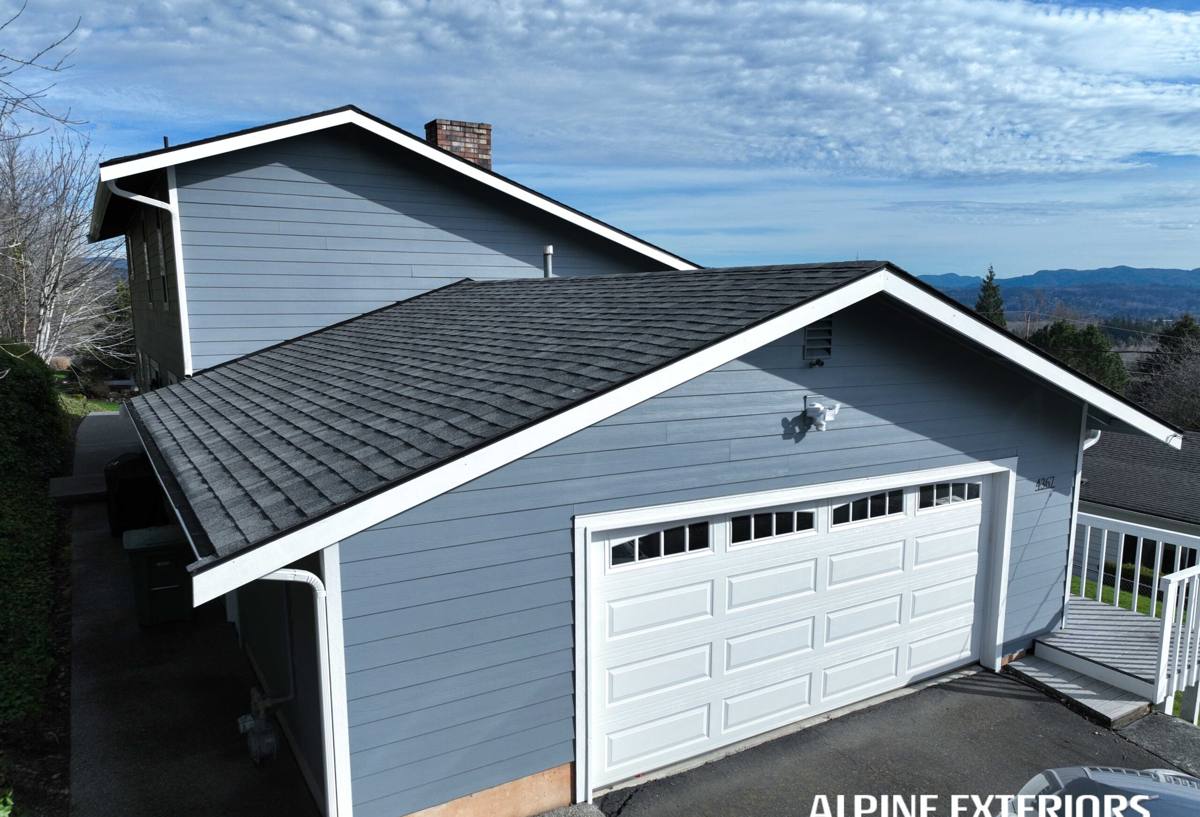
What Salt Air, Rain, and Moss Actually Do to a Roof
Salt Air and Metal Fatigue
Salt-laden air accelerates corrosion on anything metal on a roof — flashing, fasteners, drip edge, vent stacks, gutter hardware. Corroded fasteners back out or lose their grip, and pitted flashing stops sealing the way it should at valleys, chimneys, and roof-to-wall transitions. A storm that would just rattle a roof somewhere inland can be enough to open a seam that salt air has already been quietly working on for years.
Driving Rain and Wind-Driven Water
Storms moving through the Strait tend to bring rain sideways, not straight down. Wind-driven rain doesn't need a hole to get in — it just needs an edge to work under. Shingles with lifted tabs, undersized nail patterns, or aging sealant strips are all it takes for water to get pushed backward, underneath the roofing material, and down into the deck.
Moss and a Roof Deck That Never Fully Dries
Whatcom County's mild, wet winters mean moss and algae have a much longer growing season here than in drier climates. Moss holds moisture directly against the shingle surface, lifts shingle edges as it spreads, and shades the roof so it never fully dries between rains. A roof carrying heavy moss going into a storm is a roof that's already compromised — the moss doesn't cause the leak by itself, but it sets up the conditions for one.
Signs a Point Roberts Roof Has Storm Damage
Some storm damage is obvious. A lot of it isn't — it shows up as a slow leak weeks later, once water has already found its way into the attic or wall cavity. After any significant wind or rain event, it's worth checking for:
- Shingles that are missing, cracked, curled at the edges, or visibly out of alignment with the rest of the roof plane
- A sudden increase in granules collecting in gutters or at downspout outlets
- Soft or spongy spots underfoot in the attic, especially near valleys or chimneys
- Water stains, discoloration, or sagging on interior ceilings after a storm
- Flashing that's visibly bent, lifted, or separated from a chimney, skylight, or sidewall
- Fresh moss growth concentrated along an area where a shingle edge has lifted
- Debris punctures from wind-blown branches, especially on roofs near mature trees
- Gutters pulled loose or sagging from wind load or ice weight
What a Correct Storm Damage Repair Actually Involves
A storm damage repair that's done right is more than swapping out the shingles you can see from the ground. The visible damage is usually just where the storm finally broke through — not necessarily the full extent of what needs attention.
A proper repair includes:
- Deck inspection at the damaged area — if the sheathing underneath has taken on water or started to soften, patching over it just hides the problem
- Matching materials as closely as possible to the existing roof so the repair blends in and performs consistently with the surrounding field
- Correct flashing work at any valley, chimney, or penetration in the repair zone — flashing is where the majority of leaks actually originate, not the shingle field
- Proper underlayment reinstalled under the repaired section, not skipped to save time
- Fastening to code, not just "close enough" — under-nailed shingles are one of the most common causes of repeat wind damage
Cutting corners on any one of these is how a homeowner ends up paying for the "same" repair twice.
Our Process for Point Roberts Storm Repairs
1. On-Site Assessment
We inspect the roof itself — not just from a photo or a satellite image — and check the attic from the inside where access allows. Storm damage often shows up differently on the underside of the deck than it does from the roof surface.
2. Documentation
If you're filing an insurance claim, we document the damage clearly with dated photos and a written scope, so your adjuster has what they need without guesswork or delay.
3. A Straight Answer on Repair vs. Replacement
We'll tell you honestly whether this is a targeted repair or whether the roof's overall condition means a repair won't hold for long. We're not in the business of selling a full replacement when a repair will genuinely do the job — or patching a roof that's past the point where patching makes sense.
4. The Repair Itself
Work is done to match your existing roofing system, with attention to the flashing, underlayment, and fastening details covered above — not just the shingles visible from the driveway.
5. Cleanup and Walkthrough
We clear debris, check gutters and downspouts near the repair area, and walk the work with you before we call it done.
Repair or Replace? What Actually Drives That Decision
Not every storm-damaged roof needs to come off. The right call usually comes down to a handful of factors, not just the size of the visible damage.
| Factor | Favors Repair | Favors Replacement |
|---|---|---|
| Roof age | Within the first half of its expected service life | Nearing or past its expected service life |
| Extent of damage | Isolated to one section or slope | Spread across multiple slopes or the whole roof |
| Deck condition | Sheathing is sound under the damaged area | Sheathing shows rot or soft spots |
| Moss and algae staining | Light, surface-level growth | Heavy, long-term growth with shingle lifting underneath |
| Repair history | First or second repair on this roof | Multiple prior repairs in the same areas |
| Material availability | Existing shingle color/style still matches available stock | Discontinued material makes a seamless match impossible |
Why a Crew That Already Works in Point Roberts Matters
Point Roberts is unusual in a way that directly affects contractor availability: the only practical land route in and out crosses an international border. That means any crew coming to do the work needs proper documentation, has to account for border wait times, and often has to plan material deliveries around that crossing rather than just loading a truck and driving over. A lot of contractors simply don't want to deal with that logistics overhead for a single small repair — which is part of why it can be harder to get a timely response out here than it is in Birch Bay or Blaine proper.
A crew that already works this community has that logistics figured out, understands the specific way salt air, wind exposure, and moss combine on roofs in this location, and isn't seeing Point Roberts' conditions for the first time when your storm damage needs attention. That familiarity translates into fewer surprises, fewer return trips, and a repair that's built for the actual conditions your roof faces — not generic conditions.
Preventing the Next Round of Storm Damage
Once a repair is done, a little upkeep goes a long way toward keeping the next storm from causing a repeat problem:
- Keep gutters and downspouts clear so wind-driven rain has somewhere to go instead of backing up under the roof edge
- Address moss growth before it spreads across a slope, not after shingles have already started lifting
- Have flashing checked periodically, especially around chimneys and skylights, since flashing failures are a leading cause of leaks that get blamed on "the storm" when they'd been developing for a while
- Trim back branches that overhang the roof to reduce both debris impact and the shade that keeps moss thriving
- Get a roof looked at after any major wind event, even if nothing looks obviously wrong from the ground
If your Point Roberts roof has taken a hit this storm season, we're happy to come take a look and give you a straight, no-pressure assessment of what it actually needs. Use the form below to request a free estimate.