 Birch Bay Siding
 Building Decks for Point Roberts' Peninsula Climate
Point Roberts sits on its own peninsula at the southern tip of the Tsawwassen headland, surrounded on three sides by water and cut off by land from the rest of Whatcom County. That geography is part of what makes the community special, and it's also exactly why decks here take more abuse than decks fifteen miles inland. Homes on or near the water face a steady diet of salt-laden air, wind-driven rain that gets pushed sideways under eaves and railings, and a damp shoulder season each fall and winter where moss and algae get a real foothold on anything that stays wet too long.
A deck built to a generic spec sheet will survive that environment for a while. A deck built for it — with the right fasteners, the right ledger flashing, the right gap spacing, and a finish schedule that actually gets followed — will still be solid and good-looking a decade later. That difference is the whole reason to hire a crew that already works this stretch of the county instead of a builder who's never dealt with a marine exposure before.
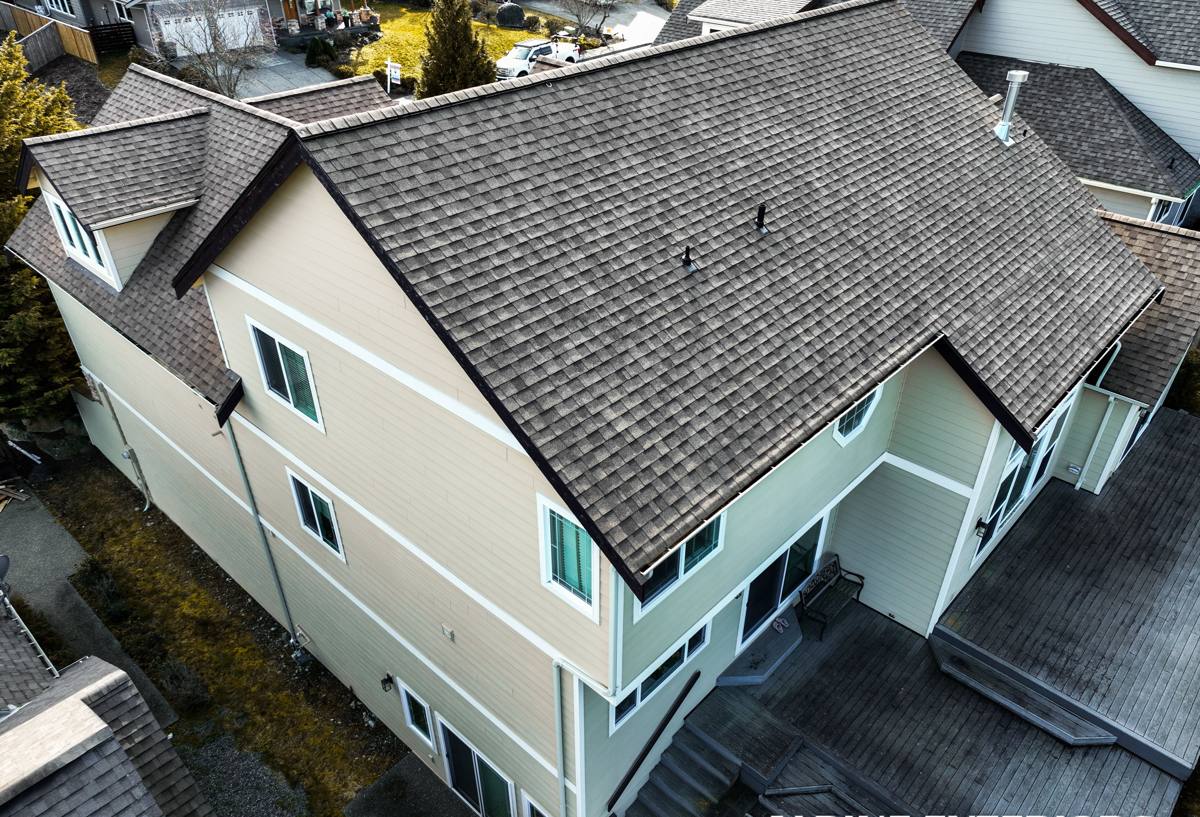
What Salt Air and Driving Rain Actually Do to a Deck
It helps to understand the failure modes before talking about the fix, because it changes what you should be willing to pay for.
Salt Air and Metal
Airborne salt accelerates corrosion on anything metal — fasteners, joist hangers, post bases, and railing hardware. Standard galvanized coatings that hold up fine twenty miles inland can start showing rust streaks within a few seasons this close to the water. Once a fastener starts corroding, it loses holding strength long before it looks obviously bad, which is a structural problem hiding behind a cosmetic one.
Driving Rain and Water Intrusion
Rain here doesn't just fall straight down — wind pushes it under railings, into ledger connections, and behind fascia boards. Any point where the deck attaches to the house, or where two deck boards butt together, is a place water can get in and then have nowhere to go. Trapped moisture behind a ledger board is one of the more common — and more expensive — problems we get called out to fix on older decks in this area.
The Moss Season
Whatcom County's wet months run long, and a deck surface that doesn't drain and dry quickly becomes a moss and algae farm. Beyond looking neglected, moss holds moisture against the decking material and makes the surface genuinely slick — a real slip hazard on stairs and ramps, not just a cosmetic issue.
What a Correctly Built Deck Looks Like Out Here
None of this requires exotic materials — it requires getting the ordinary details right, consistently, in the places most builders rush.
- Ledger flashing done properly. A metal flashing cap over the ledger board, with self-adhering waterproof membrane behind it, keeps water from ever reaching the house's rim joist.
- Stainless or coated fasteners rated for the exposure. On a waterfront or near-waterfront lot, standard galvanized hardware is the wrong call — we spec fasteners and hangers rated for corrosive/coastal exposure.
- Board gapping sized for wet-season swelling. Decking expands and contracts with moisture. Gaps set too tight trap water between boards; gaps set correctly let it drain and let air move underneath.
- Proper slope away from the house. A deck that's dead level holds water. A slight built-in slope moves it off the surface before it sits and breeds moss.
- Post bases that keep wood off standing water. Post bases raised above the concrete surface, not embedded in it, keep the end grain of a post from sitting in a puddle every winter.
- Ventilated substructure. Airflow under the deck matters as much as what's visible on top — a substructure that can't breathe stays damp long after a storm passes.
Decking Material Choices for This Environment
There's no single "right" material for every budget and every home, but each option behaves differently in salt air and constant moisture, and it's worth knowing the trade-offs before you decide.
| Material | How it handles this climate | Maintenance |
|---|---|---|
| Pressure-treated wood | Affordable and structurally solid, but end grain and fastener points need diligent sealing near salt air | Annual cleaning and re-sealing to prevent moss and checking |
| Cedar | Naturally rot-resistant and handles moisture well; still needs protection at cut ends and fastener points | Periodic oiling or staining to hold color and resist moss |
| Composite decking | Consistent performance in wet, salty conditions; won't splinter, rot, or absorb moisture the way wood does | Occasional washing; no sealing or staining required |
| PVC/capped polymer | Fully sealed surface handles driving rain and salt exposure with minimal water absorption | Low — mainly rinsing off moss spores before they take hold |
For most Point Roberts projects near the water, we lean toward composite or capped polymer decking specifically because it removes the sealing/staining maintenance cycle that's easy to fall behind on in a place where a lot of properties are used part-time. Wood is still a legitimate choice for owners who want that look and are committed to the upkeep — we'll size the maintenance conversation to how the deck will actually be used.
Substructure and Framing: Where Decks Actually Fail First
Most visible deck failures — soft spots, sagging rail posts, a ledger pulling away from the house — trace back to the framing underneath, not the decking on top. This is the part that doesn't show in photos and is also the part most likely to get shortcut on a budget build.
We build the substructure to handle the moisture load this location sees every winter: treated or naturally durable framing lumber, corrosion-rated structural hardware, joist tape on top of joists to shed water before it reaches the wood, and connections sized to the actual span and load rather than the minimum the code allows. It costs more up front than skipping these steps. It's also the difference between a deck that needs a rebuild in twelve years and one that needs a rebuild in thirty.
Railings, Stairs, and Fasteners in a Corrosive Environment
Railing hardware and stair stringers take a lot of exposure because they're often more open to wind-driven rain than the deck surface itself, which sometimes has a roof or the house itself for partial shelter. We spec railing post connections and stair stringer hardware for the exposure level of the specific site — a deck facing open water gets a different hardware spec than one tucked on a more sheltered side of the house. Cable rail and metal baluster systems in particular need corrosion-rated components, or the hardware becomes the weak point in an otherwise solid railing.
Our Process for a Point Roberts Deck Project
- On-site assessment. We look at sun/wind exposure, drainage, existing structure condition if this is a replacement, and how close the site sits to open water or salt spray.
- Material and layout conversation. We walk through decking material trade-offs, railing style, and layout based on how you actually use the space — entertaining, grilling, water access, whatever it is.
- Design and permitting. We handle the plans and permitting through Whatcom County as needed, sized correctly for the deck's height, attachment, and footprint.
- Framing and structural work. This is where the corrosion-rated hardware, ledger flashing, and proper drainage slope get built in — not added later.
- Decking, railing, and finish work. Installed with the gap spacing and fastening pattern appropriate to the material and this climate.
- Final walkthrough. We go over what maintenance (if any) the material needs and what to watch for seasonally.
Why Local Experience Matters for This Project
Point Roberts' access situation — reached by land through Canada, or by water or air — means not every contractor is set up to work here efficiently, and that can affect both cost and how a project gets scheduled and staged. A crew that already works this part of Whatcom County has that logistics figured out, already knows which fastener and flashing specs actually hold up on this peninsula, and isn't learning the local climate's failure modes on your project. That experience shows up in fewer callbacks and a deck that's still tight and solid well past the point a generic build would be showing problems.
Maintenance Checklist for a Point Roberts Deck
- Rinse salt residue and debris off the surface a few times a year, more often in winter storm months
- Check railing and stair hardware annually for early corrosion, especially on the ocean-facing side of the house
- Keep gutters and downspouts near the deck clear so runoff isn't dumping extra water onto the structure
- Sweep standing leaves and moss off the surface before they hold moisture through the wet season
- Inspect ledger flashing and the house connection point once a year for gaps or staining
- For wood decking, stay on top of the sealing/staining schedule rather than catching up after damage shows
If you're planning a new deck or replacing one that's showing its age in Point Roberts, we're happy to come take a look and give you a straightforward, no-pressure estimate — just fill out the form below.