 Birch Bay Siding
 Point Roberts Takes the Full Brunt of the Marine Climate
Point Roberts sits at the tip of a peninsula, surrounded on three sides by water, which means it gets the marine climate of Whatcom County in a more concentrated form than homes set back from the shoreline. It's also a genuinely unique piece of geography: physically attached to the Tsawwassen Peninsula in British Columbia rather than to the rest of Washington, it's still very much a Whatcom County community, and reaching it by land means crossing the international border. That geography shapes the climate a house has to withstand — near-constant exposure to salt-laden wind, driving rain that doesn't just fall but gets pushed sideways into walls, and a moss and mildew season that runs long and hard on shaded or north-facing exteriors.
We install siding, and on Point Roberts homes specifically, we install James Hardie fiber cement exclusively. That's not a general policy we apply everywhere without thinking about it — it's the material and installation approach that actually holds up against what this particular stretch of coastline does to a house year after year.
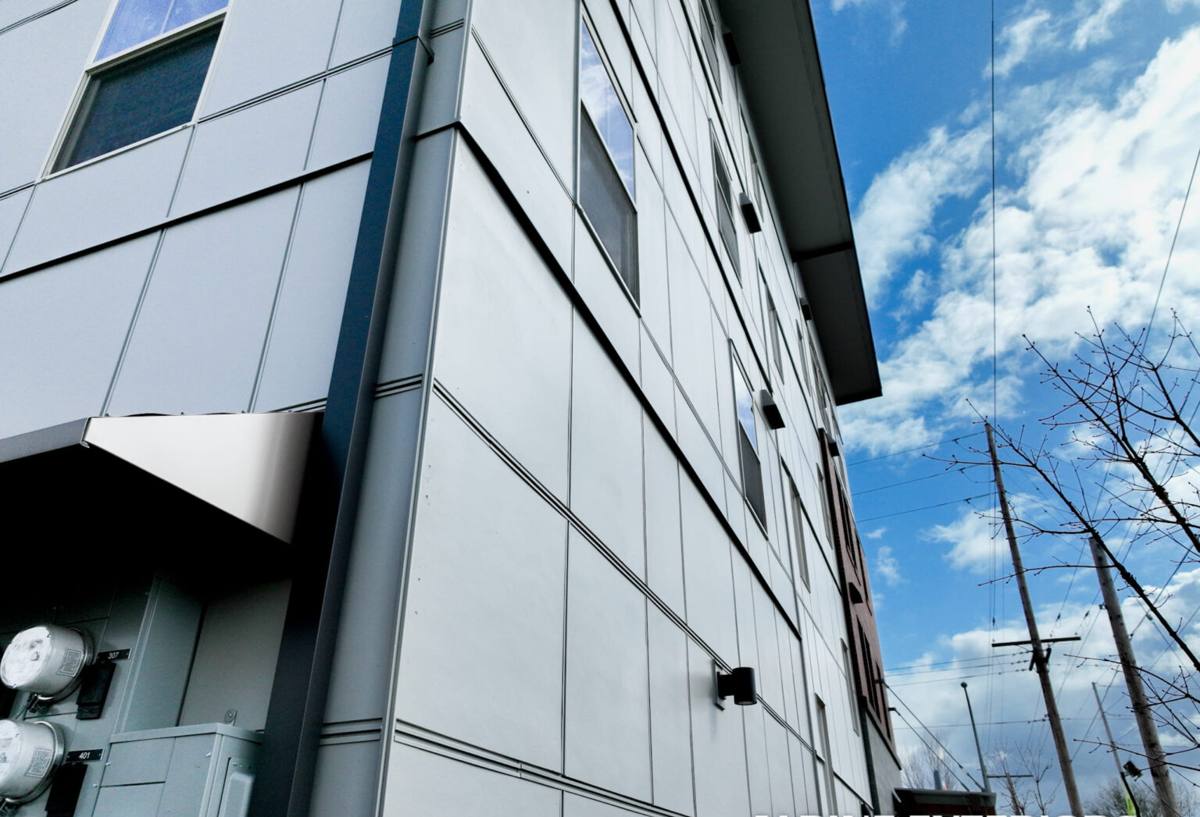
What Salt Air, Driving Rain, and Moss Actually Do to a House Here
Salt-Laden Air and Corrosion
Being surrounded by open water means Point Roberts homes deal with more direct salt exposure than most inland Whatcom County properties. Salt in the air accelerates corrosion of fasteners, flashing, and any exposed metal trim, and it breaks down lower-quality paint and finishes faster than a drier climate would. Every material choice on the exterior of a home here — not just the siding panels themselves, but the nails, screws, and flashing behind them — has to be selected with that corrosion exposure in mind from the start.
Wind-Driven, Sideways Rain
A peninsula with open exposure on multiple sides also means more sustained wind, and wind-driven rain behaves differently than a straight-down shower. It gets forced sideways into siding laps, window and door flashing, and any gap in the water-resistive barrier behind the cladding. A siding system that would perform fine in a sheltered, inland yard can fail here specifically because it was never designed to shed water that's arriving at an angle, under pressure, for hours at a time.
A Moss Season That Doesn't Really End
Mild temperatures, shade, and near-constant moisture add up to a moss and mildew season that runs most of the year on the shaded sides of a Point Roberts home. Any siding material that's even slightly porous, or that holds moisture against its own substrate, becomes a growth surface over time. On most properties here, the north-facing walls and anything shaded by trees will need real scrutiny — moss doesn't just look bad, it holds water against the siding and accelerates whatever underlying problem already exists.
Why Fiber Cement Is the Right Material Here — And Why We Only Install James Hardie
Fiber cement siding is built from cement, sand, and cellulose fibers, cured into a dense, dimensionally stable board. It doesn't absorb and release moisture the way wood-based products do, it doesn't feed a fire, and it holds its shape through the wet-to-dry cycling that a coastal climate puts every exterior material through. That baseline performance is why fiber cement is the right category of material for a Point Roberts home in the first place — but the specific brand and installation matter just as much as the category.
We install James Hardie exclusively, and we don't install LP SmartSide, vinyl siding, Cemplank, Allura, primed spruce, or cedar. Each of those products has a legitimate place in the market, and plenty of homeowners elsewhere are satisfied with them. But for this exposure, we've made a professional call based on what we've seen hold up and what hasn't:
- Non-combustible core: Fiber cement doesn't burn the way wood-based siding can, which matters for safety and can matter for insurance considerations as well.
- Factory-applied ColorPlus finish: The color is baked on under controlled factory conditions instead of brushed on in the field, which resists fading, chalking, and moisture intrusion far longer than site-applied paint exposed to salt air.
- Climate-engineered HZ5 formulation: Hardie's HZ product lines are engineered by region, and the HZ5 formulation is built for areas with heavy moisture exposure and freeze-thaw cycling — a good match for a wind-exposed peninsula like this one.
- Dimensional stability: Fiber cement doesn't swell, cup, or warp the way engineered wood products can when they take on repeated moisture over a wet season.
- A strong transferable warranty: James Hardie backs its product with one of the more robust warranty structures in the siding industry, provided the installation follows their published specification.
That last point matters more than people expect. We'd rather install one system we can fully stand behind than offer a lower-cost alternative that quietly shifts long-term maintenance risk onto the homeowner. On a property that already gets more weather exposure than most, that trade-off isn't worth it.
What a Correct Installation Looks Like on a Point Roberts Home
Fasteners, Flashing, and Clearances
Fiber cement only performs the way it's designed to when the installation matches Hardie's specification, not a generic approach borrowed from a drier climate. That means corrosion-resistant fasteners of the correct type and spacing, proper clearance between the siding's bottom edge and grade or roof lines so water can't wick upward, and flashing detailed to shed water outward at every window, door, and penetration rather than trapping it behind the panel.
Joints, Caulking, and Factory-Mitered Corners
Every horizontal and vertical joint in a siding installation is a potential entry point for wind-driven water. We rely on factory-mitered corners where they're practical and properly backed, sealed joints elsewhere, using sealants rated for the movement and UV exposure this climate puts them through. A joint that's caulked loosely or with the wrong product will fail well before the siding panels themselves show any wear.
Drainage Behind the Panel
Even a well-installed rain-screen system assumes some moisture will get behind the cladding eventually — the question is whether it can get back out. Proper drainage detailing behind the panels gives incidental moisture a path to escape instead of sitting against the wall assembly. On a wind-exposed property like this, that drainage plane is doing real, constant work, not sitting there as a theoretical backup.
Comparing Siding Options for a Point Roberts Home
| Material | Salt & Moisture Behavior | Wind Performance | Typical Maintenance |
|---|---|---|---|
| James Hardie fiber cement | Dimensionally stable, factory finish resists salt and moisture damage | Rated for high-wind installation when installed to spec | Periodic washing; no repainting needed for years with ColorPlus |
| Vinyl | Can become brittle over time and doesn't stop wind-driven water on its own | Can crack, warp, or blow loose in sustained wind exposure | Low upkeep but limited repair options once damaged |
| LP SmartSide (engineered wood) | Wood-based core is more sensitive to sustained moisture exposure | Performs adequately but relies heavily on correct field sealing | Edge sealing and caulking need regular inspection |
| Cedar | Attractive but absorbs and releases moisture, prone to rot in shaded, wet areas | Can cup or split under wind and moisture cycling | Regular refinishing and moisture monitoring required |
This is a general comparison, not a verdict against every use case — vinyl and engineered wood both have homeowners who are happy with them in gentler climates. On a peninsula that gets this much direct salt and wind exposure, though, the gap between fiber cement and the alternatives shows up faster and more visibly than it would a few miles inland.
Why Local Experience With Point Roberts Specifically Matters
Point Roberts isn't reachable the way most of Whatcom County is. Getting a crew, tools, and material there and back means crossing the international border, which adds a layer of scheduling and logistics that a contractor based well away from the area typically hasn't had to plan around. Material deliveries, crew arrival times, and even simple return trips for a forgotten part all need to be built into the schedule rather than handled on the fly. A crew that already works this area treats that as routine planning; a crew encountering it for the first time treats it as a surprise that eats into the job timeline.
That logistics factor is on top of the climate factor. A contractor who understands both — how to plan a job around the border crossing and how to detail a fiber cement installation for sustained salt and wind exposure — is in a different position than one who's simply extending their normal service area onto a peninsula they don't usually work.
Our Process for a Point Roberts Siding Project
We start with an on-site assessment of the existing siding and the wall assembly behind it, looking specifically at how the current exterior has handled moisture and wind exposure over time. From there, we put together a clear written scope and a realistic timeline that accounts for the border crossing and material logistics up front, not as an afterthought once the job is underway. During installation, the flashing, fastener, and drainage details covered above are standard practice on every job, not optional upgrades quoted separately. We finish with a walkthrough so the scope of work matches what actually went on the house.
A Checklist Before You Hire a Siding Contractor for Point Roberts
- Ask what siding material they install and why, and whether they'll put it in writing with a manufacturer-backed warranty
- Confirm current Washington contractor licensing and active liability insurance
- Ask specifically how they plan crew and material logistics around the border crossing
- Ask how they detail flashing and joints for wind-driven, sideways rain, not just standard rainfall
- Get a clear, written scope of work and timeline before signing anything
If you're weighing your options for siding on a Point Roberts property, we're glad to walk the exterior with you and give an honest read on what it actually needs. Reach out below for a free, no-pressure estimate.