 Birch Bay Siding
 Why Point Roberts Roofs Take a Different Kind of Beating
Point Roberts sits out on its own peninsula in Whatcom County, surrounded on three sides by water and exposed to weather that a roof three miles inland never has to deal with. Salt-laden air off the water works on exposed metal and granule coatings year-round. Wind-driven rain off the water finds every gap in flashing and underlayment that a calmer climate would forgive. And the long, wet, low-sun stretch from fall through spring keeps roof surfaces damp long enough for moss and algae to take hold and spread. None of this makes asphalt shingle roofing a bad choice here — it's still the most practical, cost-effective option for the vast majority of homes in this area. But it does mean the material, the detailing, and the maintenance schedule all need to account for a coastal Whatcom County climate rather than a generic one.
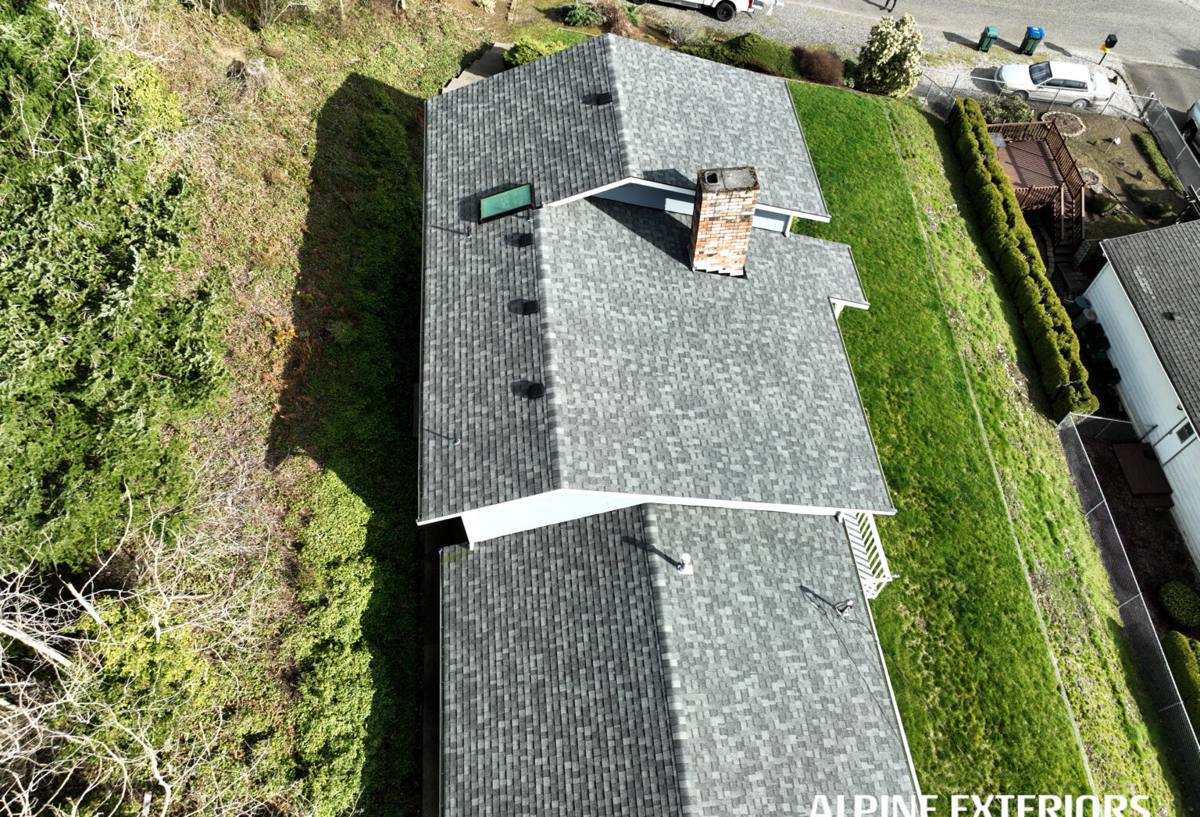
What Asphalt Shingles Need to Hold Up Here
Not every asphalt shingle is built the same way, and the difference matters more on an exposed, moisture-heavy peninsula than it does on a sheltered inland lot. For Point Roberts homes, we look at three things before we recommend a product: wind rating, algae resistance, and how the shingle sheds water at the granule level.
Wind Exposure
Homes closer to open water take steadier, harder gusts than homes tucked behind trees or other structures. A shingle with a higher wind rating and a stronger factory sealant strip is worth the modest upgrade in cost on an exposed lot — the failure point in a wind event is almost always the seal between shingles, not the shingle material itself.
Algae and Moss Resistance
Standard shingles will eventually show the dark streaking caused by algae, and in a climate this wet, moss isn't far behind. Shingles with algae-resistant granules — typically copper or zinc compounds blended into the granule coating — slow that growth significantly. It's not a permanent fix, but it buys years of cleaner roof life before moss gets a foothold.
Color and Granule Wear
Darker shingles absorb more heat and tend to show granule wear a little sooner, while lighter colors hide algae streaking less well. Neither factor should override how a color looks against the home, but it's worth knowing that color choice has a small, real effect on both moss visibility and long-term granule loss.
The Moss Problem
Moss is the single biggest long-term threat to an asphalt shingle roof in this part of Washington, and Point Roberts' combination of shade, moisture, and mild temperatures gives it an especially long growing season. Moss holds water directly against the shingle surface, which accelerates granule loss and, over years, can work its way under shingle edges and lift them. Once that happens, water finds a path underneath instead of running off.
A correctly installed shingle roof won't stop moss spores from landing, but it can slow moss down and make it far easier to manage:
- Zinc or copper strips installed near the ridge let rain carry trace metal ions down the roof, which inhibits moss growth on the surfaces below
- Keeping gutters and valleys clear of debris removes the organic matter moss needs to establish itself
- Trimming back overhanging branches reduces the shade and standing moisture that let moss spread in the first place
- Soft washing on a normal schedule removes moss before it has time to root into the granule layer
What a Correct Asphalt Shingle Installation Involves
A shingle roof is only as good as what's underneath it. Most leaks we're called out to investigate trace back to a detail at a valley, penetration, or edge — not a failure of the shingles themselves.
Underlayment and Ice-and-Water Barrier
Synthetic underlayment goes down across the full deck as the primary water barrier beneath the shingles. In vulnerable areas — eaves, valleys, and around chimneys or skylights — we add a self-adhering ice-and-water membrane. In a climate where wind-driven rain can push water uphill under shingles, this membrane is what keeps that water from ever reaching the deck.
Flashing and Penetrations
Every valley, chimney, vent pipe, and skylight is a break in the shingle field, and every one needs properly formed metal flashing tied into the underlayment correctly — not just caulked over. Caulk fails; properly lapped and sealed metal flashing doesn't.
Ventilation
A roof deck that can't breathe traps moisture from inside the home, which shortens shingle life from underneath, out of sight. Balanced intake at the eaves and exhaust at the ridge keeps the attic space at a stable temperature and moisture level, which matters just as much in a damp coastal climate as it does anywhere else — arguably more.
Fastening and Nailing Pattern
Manufacturer nailing patterns exist for a reason, and on higher-wind lots we adjust fastening to match the shingle's rated wind speed rather than defaulting to the minimum spec. Under-nailed shingles are one of the most common causes of early wind damage.
Warranty Structure
Asphalt shingles typically carry two separate warranties: a manufacturer's material warranty covering defects in the shingle itself, and a workmanship warranty from whoever installs it. The manufacturer warranty is only as good as the installation underneath it — most manufacturers can void material coverage if the roof wasn't installed to their published specifications, which is one more reason the underlayment and flashing details matter as much as the shingle brand.
Signs Your Point Roberts Roof Needs Attention
Most roofing problems give some warning before they turn into an active leak. Worth checking for, or having a professional check for you:
- Granules collecting in gutters or at downspout outlets, a sign shingles are wearing down
- Dark streaking or green-black patches on north-facing or shaded slopes
- Visible moss clumps, especially along ridges, valleys, or the lower edge of the roof
- Curling, cupping, or lifted shingle edges, particularly on wind-exposed slopes
- Soft spots or sagging when viewed from the ground or attic
- Daylight visible through the roof deck from inside the attic
- Water stains on interior ceilings, especially near chimneys, skylights, or valleys
Our Process for Point Roberts Roofing Jobs
Assessment
We start on the ground and in the attic before we ever get on the roof — checking for interior staining, ventilation issues, and signs of past repairs that might indicate a recurring problem area. Then we do a full roof walk to document deck condition, flashing, moss coverage, and shingle wear.
Materials and Scope
Based on the home's exposure — how close it sits to open water, how much shade and moss pressure it has, how steep the roof is — we put together a materials list and a written scope that spells out underlayment, ice-and-water coverage, flashing work, and ventilation changes, not just "new shingles."
Tear-Off and Deck Check
Old roofing comes off down to the deck so we can actually see what's underneath — soft or delaminated sheathing doesn't show up until the old shingles are gone, and it's far cheaper to address during a re-roof than to patch around later.
Installation and Cleanup
Underlayment, flashing, and shingles go on in that order, with attention to every valley and penetration along the way. We do a full magnetic sweep and site cleanup before we consider the job finished, not just a shingle count.
Comparing Asphalt Shingle Options for This Climate
| Shingle Type | Typical Wind Rating | Algae/Moss Resistance | Best Fit For |
|---|---|---|---|
| 3-tab | Lower | Standard granules only | Budget projects, sheltered lots |
| Architectural/laminate | Higher | Available with AR granules | Most Point Roberts homes |
| Impact-resistant architectural | Highest | Available with AR granules | Fully exposed, waterfront-adjacent lots |
For most homes on the peninsula, a mid-to-upper-tier architectural shingle with algae-resistant granules strikes the right balance between upfront cost and how well it holds up to salt air, wind, and moss pressure over the years. Fully exposed lots closer to open water are where the extra cost of an impact-rated product tends to pay for itself.
Why Hiring a Crew That Already Works Point Roberts Matters
Point Roberts is a U.S. exclave — the only way in or out by road is through Canada — and that changes practical things about a roofing project that a contractor unfamiliar with the area won't plan for. Material deliveries, crew scheduling, and permitting all need extra lead time built in compared to a job on the mainland side of Whatcom County. A crew that already works this peninsula regularly has that logistics figured out before your project starts, instead of learning it on your timeline. Permitting for a re-roof also runs through Whatcom County, and a crew that pulls permits here regularly moves through that process faster than one doing it for the first time.
Local experience also means we've already seen how homes here weather over time — which slopes take the worst of the wind, which roof lines collect moss fastest, which details tend to fail first in this specific combination of salt air and driving rain. That's knowledge a contractor who roofs mostly inland simply doesn't have reason to build.
Keeping Your Roof Sound After Installation
A correctly installed asphalt shingle roof in this climate is not a set-it-and-forget-it product. A simple annual check — clearing gutters and valleys, looking for early moss growth, confirming flashing and sealant around penetrations are still sound — catches small issues while they're still small. Skipping that check is how a minor moss patch turns into a lifted shingle, and a lifted shingle turns into a deck repair.
If you're not sure what condition your current roof is in, or you're planning ahead for a replacement, we're happy to take a look and give you a straightforward assessment — no pressure, no inflated scare tactics, just what we actually see. Use the form below to request a free estimate for your Point Roberts home.