 Birch Bay Siding
 Siding Replacement Built for a Point Roberts Property
Point Roberts occupies an unusual spot on the map: a U.S. exclave in Whatcom County, connected to the rest of Washington State only by water or air, and reachable by land solely through Canada. That geography shapes more than how residents get groceries or how a contractor plans a job — it puts the community on a small peninsula with water on three sides, which means homes here take on a steadier, more direct dose of marine weather than most inland Whatcom County properties ever see. Salt air, driving rain, and a moss season that barely takes a break all wear on exterior siding faster than homeowners moving from a drier climate tend to expect.
We install James Hardie fiber cement siding exclusively, and we work in Point Roberts regularly enough to know what that specific exposure does to a house over time. This page covers what a siding replacement in Point Roberts actually needs to hold up, what a correct installation involves, and how our process accounts for the logistics of working in a community that sits apart from the rest of the county.
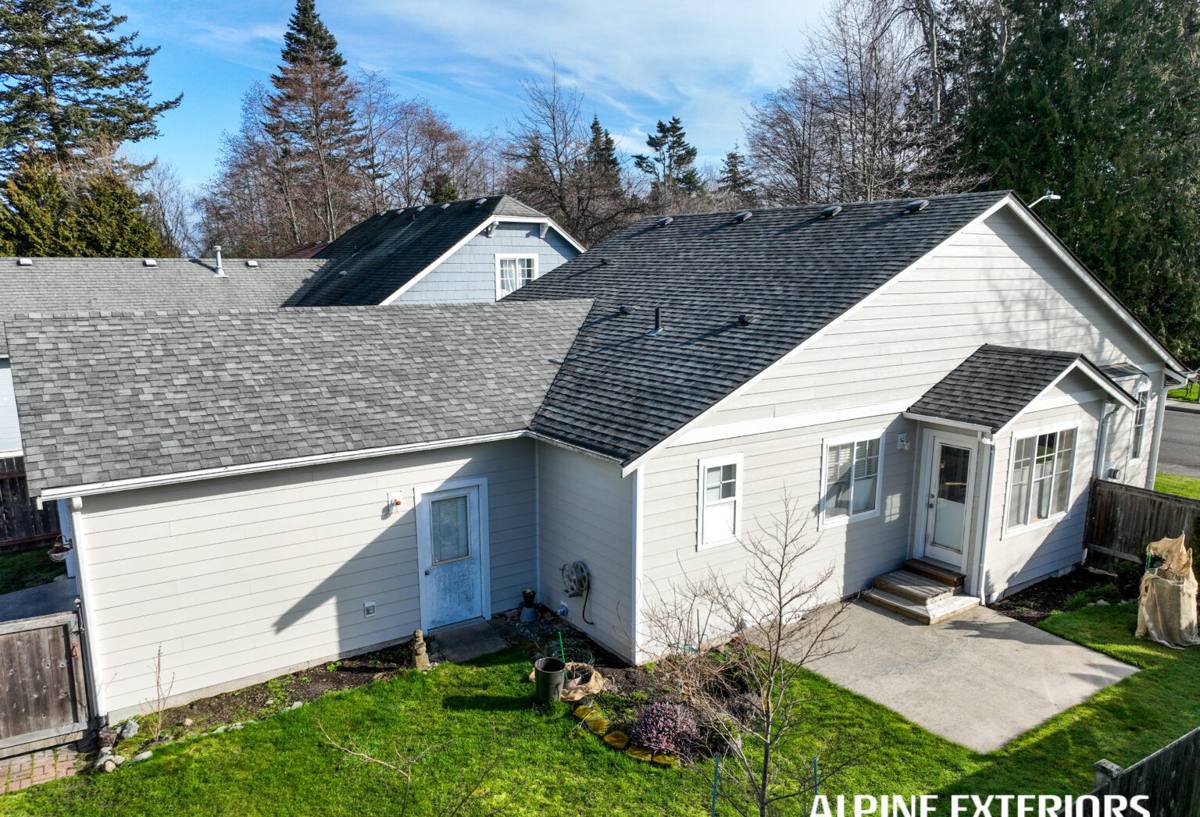
What Point Roberts' Climate Does to Siding
Salt Air From Multiple Directions
With Boundary Bay on one side and the Strait of Georgia on the other, Point Roberts homes don't get a single prevailing wind and salt exposure the way many mainland properties do — they take it from more than one direction depending on the season and the storm track. Salt-laden air accelerates corrosion in fasteners, flashing, and any exposed metal trim, and it breaks down lower-grade paints and finishes faster than a more sheltered site would ever show. On a peninsula this exposed, siding material and hardware choices carry more weight than they would a few miles inland.
Driving Rain and Open Wind
There's not much high ground or windbreak on a small peninsula, so storms coming off the water tend to arrive with real force behind them. Rain gets pushed sideways into wall assemblies, window flashing, and roof-to-wall transitions instead of simply falling straight down and running off. That wind-driven pattern puts more stress on siding laps, joints, and trim than the region's rainfall totals alone would suggest, and it's exactly the kind of moisture load that finds gaps a less careful installation would leave behind.
A Moss Season That Runs Most of the Year
Mild temperatures and near-constant humidity give moss and mildew a long growing season across Whatcom County, and Point Roberts' surrounding water doesn't shorten that window. Shaded, north-facing walls and tree-covered lots are usually first to show it, and any siding material with even a little surface porosity becomes a growth surface over time. Left unaddressed, sustained moss and mildew growth holds moisture directly against the wall behind it, which is how a cosmetic problem turns into a structural one.
Seasonal and Part-Time Occupancy
A meaningful share of homes in Point Roberts are used seasonally or part-time rather than lived in year-round, which changes how siding problems tend to surface. A leak or a failing seam that would get noticed and addressed quickly in a full-time residence can go unnoticed for weeks or months in a home that only sees regular use part of the year. That makes durable, low-maintenance siding more valuable here than in a community where every house has someone checking on it daily — there's less margin for a material that needs frequent attention to perform well.
Signs a Point Roberts Home Needs Siding Replacement
- Soft or spongy siding when pressed, especially low on the wall or around window and door trim
- Moss or dark staining that returns quickly after cleaning, particularly on shaded or north-facing walls
- Visible cracking, warping, or cupping in existing siding boards
- Paint that's peeling, bubbling, or chalking well ahead of schedule
- Gaps opening up at seams, corners, or trim joints
- Rust staining around fasteners or trim, more common this close to salt water
- Rising energy bills that suggest the wall assembly isn't sealing the way it used to
- Interior signs — musty smells, soft drywall, or staining on walls that back up to the exterior
Why James Hardie Fiber Cement Is What We Install
We used to install a wider range of siding products. We narrowed to one system after seeing, repeatedly, which materials actually held up on exposed, salt-air peninsula properties like the ones in Point Roberts, and which ones turned into maintenance problems within a handful of years.
- Non-combustible core: Fiber cement doesn't feed a fire the way wood-based siding products can, which matters for both household safety and insurance considerations.
- Factory-applied ColorPlus finish: The color is baked on under controlled factory conditions rather than brushed on in the field, so it holds up longer against fading, chalking, and moisture exposure than site-applied paint.
- Climate-engineered HZ product lines: Hardie's HZ5 formulation is built for regions with sustained moisture exposure and freeze-thaw cycling, which fits an exposed, marine-influenced property like a Point Roberts home well.
- Dimensional stability: Fiber cement doesn't swell, cup, or warp the way engineered wood products can after repeated wetting off the water.
- Strong transferable warranty: Hardie backs correctly installed siding with one of the stronger warranty structures in the industry, which matters most on a property that may not get checked on every week.
We don't install LP SmartSide, vinyl siding, Cemplank, Allura, primed spruce, or cedar. Each of those products has a place in the broader market and homeowners elsewhere who are happy with them. But for a peninsula property exposed to salt air and driving rain from more than one direction, and often used seasonally rather than checked on daily, we've made a professional call to install one system we fully stand behind rather than offer something cheaper that quietly shifts maintenance risk onto the homeowner over time.
Comparing Siding Materials for This Exposure
| Material | Moisture Behavior | Upkeep in Salt Air | Fit for a Part-Time Residence |
|---|---|---|---|
| James Hardie fiber cement | Dimensionally stable, resists swelling and warping | Low; factory finish resists fading and moisture intrusion | Strong — holds up well between visits |
| Vinyl siding | Can warp or distort under heat and settle over time | Low upfront, but seams and fasteners are exposure points | Weaker — early failure can go unnoticed longest |
| LP SmartSide / engineered wood | Wood-based core is moisture-sensitive at cut edges and joints | Moderate; edge sealing and caulk need regular attention | Weaker — needs upkeep a part-time home may not get |
| Cedar / primed wood | Absorbs and releases moisture readily | High; needs regular refinishing in wet, salty air | Weakest — deteriorates fastest without consistent care |
What a Correct Siding Replacement Involves
Material choice only gets a Point Roberts home halfway there. The rest comes down to installation detail, and on an exposed peninsula lot, skipping any of it tends to show up faster than it would somewhere more sheltered.
- Full tear-off and sheathing inspection: Old siding comes off so the crew can actually see the wall sheathing underneath and catch rot or hidden moisture damage before it's covered back up.
- Rain screen drainage gap: A small cavity behind the siding lets any moisture that does get past the exterior surface drain and evaporate instead of sitting against the sheathing.
- Correct fastener type and spacing: Hardie specifies fastener placement and corrosion-resistant fastener grades for a reason — loose spacing or the wrong fastener is one of the more common causes of early siding failure we see on tear-offs in salt-air settings.
- Properly lapped house wrap and flashing: Every seam and penetration needs to shed water downward and outward, especially on walls taking wind-driven rain directly off open water.
- Sealed butt joints and trim transitions: Open or poorly sealed joints are where salt-laden moisture finds its way behind the siding first.
- Correct clearance from grade: Siding installed too close to the ground can wick moisture up from wet soil regardless of how well the rest of the installation is done.
None of this is exotic — it's the manufacturer's own installation spec, followed consistently rather than shortcut on the parts that are hardest to see once the job is finished.
Repair vs. Full Replacement
Not every siding problem calls for a full tear-off. An isolated impact-damaged section, a failed piece of trim around a window, or minor storm damage can often be repaired and matched into existing Hardie siding without redoing the whole wall. But if moisture has been tracking behind the siding for a while — which is more likely to go unnoticed on a home that isn't occupied full-time — or the home still has an older, non-Hardie product nearing the end of its service life, patching usually just delays a bigger job while hidden damage keeps spreading underneath. We'll tell you plainly which situation you're actually looking at once we've had a look at the wall.
Our Process for a Point Roberts Siding Replacement
We start with an on-site assessment of the existing siding and wall assembly, looking specifically for how moisture and salt exposure have affected the home so far — which is especially important on a property that may sit unoccupied for stretches at a time. From there we put together a clear, written scope, product selection, and timeline before any work begins.
Because Point Roberts is reachable by land only through Canada, we build material delivery and crew scheduling into the project timeline from the start rather than treating it as an afterthought. That means ordering and staging Hardie product, fasteners, and flashing materials with enough lead time that a border crossing delay doesn't stall the job midway through a tear-off with a wall exposed to weather. It's a logistical detail that doesn't come up on a typical mainland Whatcom County job, and it's one we plan around as a matter of routine rather than figuring out on the fly.
Once materials and crew are staged, the work follows the sequence above: tear-off and sheathing inspection first, then house wrap, flashing, and drainage detailing, then the Hardie siding and trim itself. We finish with a walkthrough of the finished work and what little ongoing maintenance the new siding actually needs.
Cost Factors for a Point Roberts Siding Project
| Factor | What It Affects | Why It Matters Here |
|---|---|---|
| Tear-off vs. overlay | Labor scope and access to the wall sheathing | Tear-off reveals hidden moisture and rot damage common under older siding exposed to salt air |
| Substrate condition | Repair costs before new siding goes on | Long-term trapped moisture, sometimes unnoticed on part-time residences, can rot sheathing and framing |
| Home size and trim complexity | Material quantity and labor time | More corners, gables, and window trim mean more joints that need to be detailed correctly |
| Material and crew logistics | Scheduling and lead time | Deliveries and crew travel route through Canada, so staging materials early avoids mid-project delays |
| Site access | Labor time and staging needs | Peninsula lots and seasonal-home driveways can have different staging requirements than an in-town mainland lot |
These are general cost drivers, not a quote. Every home's exposure and existing condition is different, so we walk the property in person before putting a real number on the work rather than estimating over the phone.
Why Hiring a Crew That Already Works Point Roberts Matters
A contractor who occasionally takes a job out here can still do competent work, but a Point Roberts project has variables that don't come up on a typical mainland Whatcom County job — border-crossing logistics for materials and crew, a peninsula's multi-directional salt exposure, and a higher share of homes that sit unoccupied between visits, which changes how much a homeowner can rely on catching a small problem early. Working this community regularly means we're not solving those logistics for the first time on your project. We've seen which installation details hold up against this specific mix of salt air, driving rain, and moss, and we plan the scheduling side of the job so a border crossing doesn't turn into a delay that leaves a wall exposed longer than it should be.
That familiarity also shows up in smaller judgment calls — which walls take the worst of the wind off the water, where extra flashing attention is worth the time, and how to communicate clearly with an owner who may not be on-site to answer questions mid-project the way a full-time resident would be.
If your Point Roberts home needs a siding assessment, a repair, or a full replacement, we're glad to take a look and give you a straightforward, honest read on what it actually needs. Reach out using the form below to schedule a free, no-pressure estimate.