 Birch Bay Siding
 Window Replacement Built for Sumas' Wet, Mossy Climate
Sumas sits at the edge of Whatcom County, and homes here deal with the same weather pattern that shapes construction decisions across the whole county: long stretches of driving rain, damp air for much of the year, cooler nighttime temperatures, and a moss season that can stretch from early fall well into spring. Windows are one of the first places that weather finds a way in. A window that's failing doesn't just let cold air through — it lets moisture through, and moisture is what actually damages a house, not cold.
When a window's seals fail or its frame starts to break down, water works its way into the wall cavity around it. In a climate like ours, that moisture doesn't dry out quickly between rain events. It sits, it feeds rot in the surrounding framing and trim, and it can turn into mold you never see until the drywall or siding around the window is already compromised. Replacing windows correctly in Sumas isn't just about comfort or a lower heating bill — it's about stopping water at the one place in the wall that's built to open and close.
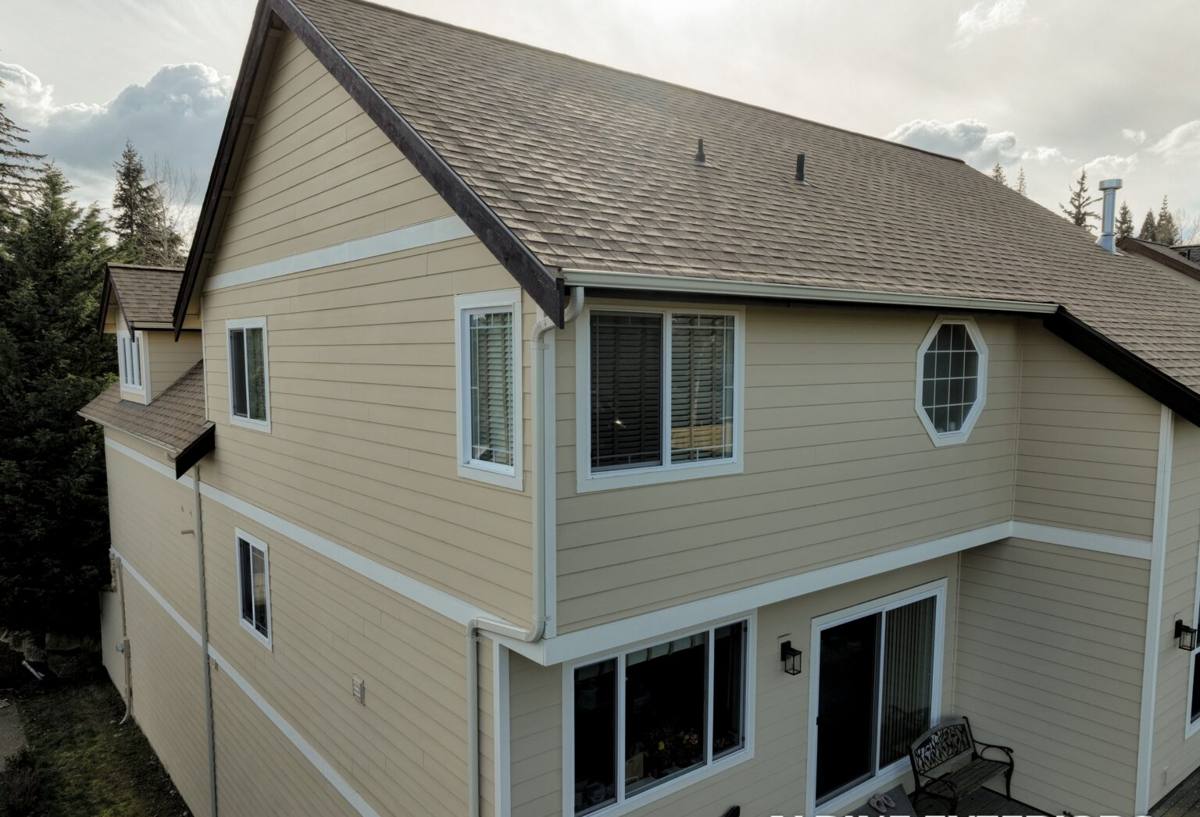
Signs Your Windows Are Past Their Useful Life
Most homeowners don't think about their windows until something is obviously wrong, but by the time a window is obviously failing, it's often already let moisture into the wall. Here's what we tell Sumas homeowners to watch for:
- Fogging or a milky haze between the panes of a double-pane window (the seal has failed and the gas fill is gone)
- Noticeable drafts near the frame, even with the window fully latched
- Wood trim or sill that feels soft, looks dark, or has visible mildew
- Windows that are hard to open, close, or lock, or that no longer sit square in the frame
- Visible gaps, cracked caulking, or daylight showing around the frame from outside
- A heating bill that's crept up without any other explanation
- Moss, algae, or green staining building up on the sill or lower frame
Any one of these on its own might not be urgent. Several at once, especially on windows that catch the weather from the prevailing direction, usually means it's time to plan a replacement before the next wet season does more damage behind the wall.
What a Correct Installation Actually Involves
Window replacement looks simple from the outside — old window out, new window in — but the difference between a window that lasts twenty-plus years and one that leaks within a couple of winters comes down to details most homeowners never see once the trim is back on.
Removing the Old Window Without Damaging the Opening
The rough opening around a window is often the most vulnerable part of the wall. Cutting corners during removal — prying too hard, ignoring existing rot, not checking the sill and framing underneath — sets up problems for the new window before it's even set in place. We check the condition of the opening every time and address any rot or soft framing before a new window goes in, not after.
Flashing and Moisture Management
This is the step that matters most in a climate that gets as much driving rain as ours does. A new window needs a proper sill pan to catch and direct any water that gets past the exterior seal, and flashing tape integrated correctly with the house's weather-resistant barrier so water sheds down and out, not into the wall. Skipping or rushing this step is the single biggest reason window replacements fail early in wet climates — the window itself can be perfectly good and still leak because of what's underneath it.
Sealing and Insulating the Gap
The gap between the new window frame and the rough opening needs to be filled with a low-expansion, window-rated foam or backer rod and sealant — not just caulk around the outside trim. Done right, this stops both air infiltration and condensation from forming inside the wall cavity, which is a common source of hidden mold in older homes around here.
Choosing the Right Window for This Climate
Frame material matters more in Whatcom County than in drier parts of the state, because whatever you choose is going to spend most of the year wet. Here's how the common options compare for a coastal-influenced, moss-prone climate like Sumas':
| Frame Material | Moisture Behavior | Maintenance | Typical Lifespan |
|---|---|---|---|
| Vinyl | Won't rot or corrode; handles constant moisture well | Low — occasional cleaning | 20–30+ years |
| Fiberglass | Very stable in wet/dry cycling, minimal expansion or contraction | Low | 25–35+ years |
| Wood or wood-clad | Handsome, but the wood core is vulnerable if any seal fails | Higher — painting, sealant checks | Varies widely with upkeep |
| Aluminum | Durable but conducts cold and can condense in our humidity | Low | 20–30 years |
For most Sumas homes, we lean toward vinyl or fiberglass frames because they hold up to sustained moisture without the ongoing maintenance a wood frame demands. That's a judgment call based on how much upkeep an owner wants to take on, not a claim that wood windows can't work here — they can, if the owner is committed to staying on top of the finish.
Glass Packages: Double-Pane vs. Triple-Pane
Double-pane windows with a Low-E coating and argon gas fill are the standard upgrade for this region and perform well against both heat loss and condensation. Triple-pane goes further on insulation value and can help on rooms that face the weather directly, but it adds cost and weight, and for most homes the difference is marginal compared to a good double-pane unit installed correctly. We'll walk through both options against your specific windows and orientation during the estimate rather than defaulting to the most expensive option.
Our Process, Start to Finish
- Free on-site estimate. We measure every opening, check the condition of the existing frames and sills, and talk through what you actually want out of the replacement — energy performance, noise reduction, easier operation, or just stopping a known leak.
- Product selection. We go over frame material and glass package options in plain terms, with honest trade-offs, not a sales pitch toward whatever has the best margin.
- Scheduling around the weather. Because openings are exposed during the swap, we plan install days around forecasted rain whenever possible and protect open walls if conditions change.
- Removal and install. Old windows come out carefully, the opening gets inspected and repaired if needed, and the new window goes in with proper flashing and sealing at every step.
- Final walkthrough. We test every operable window, check the seals, and walk the job with you before we consider it done.
What Drives the Cost of Window Replacement
Every home is different, and we'd rather give you real numbers from an actual estimate than a generic price list that doesn't match your house. What we can tell you is what moves the price up or down:
| Cost Factor | Effect on Price |
|---|---|
| Number of windows replaced at once | Per-window cost typically drops with volume |
| Frame material (vinyl, fiberglass, wood-clad) | Vinyl is generally most affordable; wood-clad runs highest |
| Glass package (double vs. triple-pane, coatings) | Upgraded glass adds cost but improves performance |
| Window size and style (fixed vs. operable, custom shapes) | Larger and custom units cost more than standard sizes |
| Condition of the existing opening | Hidden rot or framing repair adds labor and material cost |
| Access (second story, tight clearances) | Harder access adds labor time |
The only way to get an accurate number is to have someone look at your actual windows and openings, which is why our estimates are free and don't come with pressure to sign anything on the spot.
Why It Matters to Hire a Crew That Actually Works This Area
Window replacement done wrong is expensive to fix twice — once for the bad install, once for the water damage it caused. A crew that regularly works Sumas and the rest of Whatcom County has already seen how this climate treats window openings on homes of different ages and construction types, and knows where problems tend to show up first. That familiarity shows in small decisions on the job: how much flashing overlap to use, how to handle an opening with existing moisture damage, and how to schedule around a weather pattern that doesn't give you many dry-week stretches to work with.
It also matters for the part of the job that happens after installation. If a seal ever needs a second look or a warranty question comes up, a local crew can get back to your house quickly instead of scheduling you weeks out because your job is outside their normal service area.
What to Ask Before You Hire
- Are you licensed, bonded, and insured to work in Washington State?
- Do you handle flashing and sill pan installation, or just set the window and caulk around it?
- What's your warranty on labor, separate from the manufacturer's warranty on the window itself?
- Can you show examples of similar window replacement work in this area?
- How do you handle it if rot or damage is found once the old window comes out?
Caring for New Windows After the Install
New windows still need some basic upkeep in a climate like ours. Rinse frames and tracks periodically to keep grime and moss spores from building up, especially on north-facing or shaded windows that stay damp longer. Keep an eye on the exterior caulking line where the frame meets the siding, and clear any weep holes on the sill so water can drain out instead of pooling. None of this is heavy maintenance — it's the same kind of seasonal check most Whatcom County homeowners already do for their siding and gutters.
If your windows are fogging, drafting, sticking, or just showing their age, we're happy to come take a look. We'll give you a straight assessment of what's going on, a free estimate with no pressure to commit, and options that actually fit your home and your budget — use the form below to get started.