 Birch Bay Siding
 Windows Built for the Birch Bay Village Climate
Birch Bay Village sits close enough to the water that salt air is part of daily life, not an occasional nuisance. Add Whatcom County's long, wet winters and the moss season that follows, and you've got a set of conditions that will find every weak point in a window's frame, seal, or flashing detail. Vinyl frames chalk and stiffen faster near salt spray. Wood sashes that aren't properly sealed take on moisture and start to swell or rot from the inside out, often before there's any visible sign on the exterior face. Aluminum frames without a thermal break turn into cold, damp surfaces that sweat condensation onto sills and trim.
None of this means Birch Bay Village homes need exotic materials. It means the window unit, the flashing, and the installation all have to be matched to what this specific stretch of coastline actually does to a house over a decade or two. That's the standard we hold every window replacement job to here.
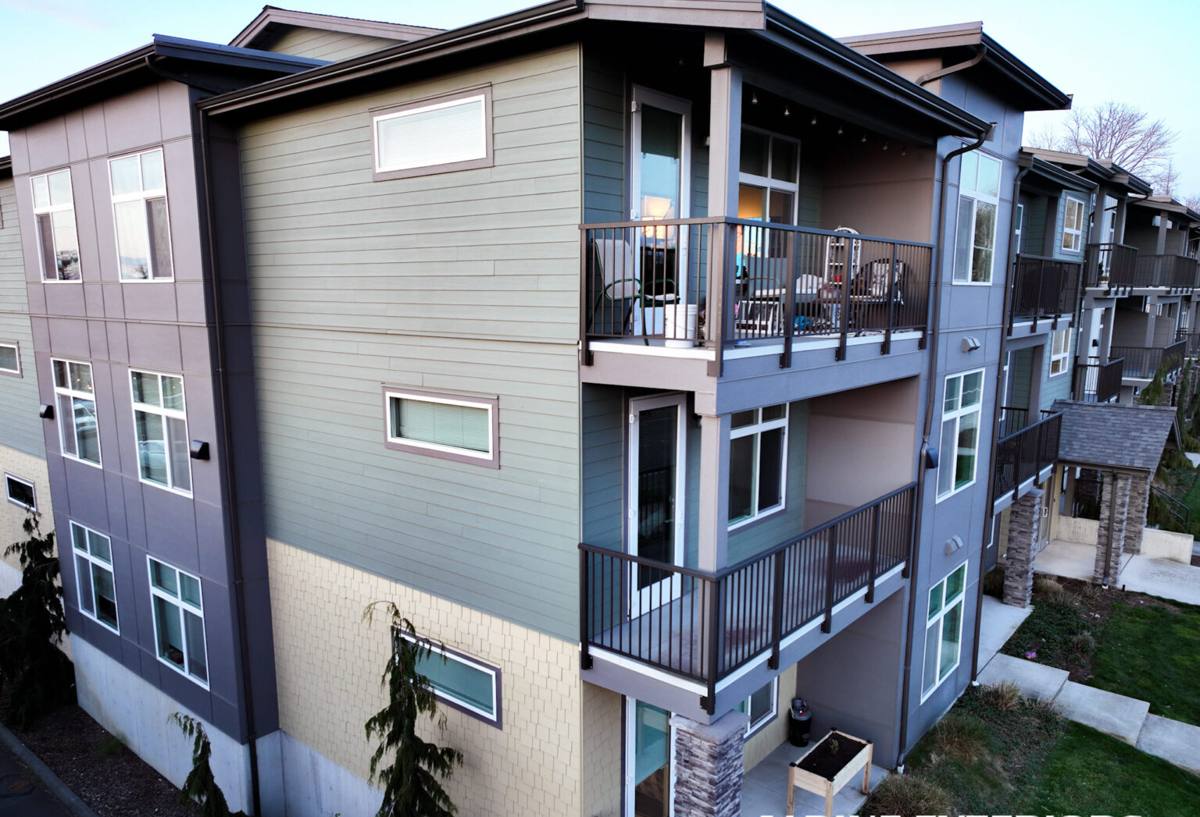
What Local Homes Actually Need From a Window Replacement
Frame Material That Handles Salt Air
For most Birch Bay Village homes, a quality vinyl window with UV-stable, marine-grade compounding is the practical choice — it won't corrode, and it doesn't need repainting. Fiberglass is a strong step up where budget allows, especially on south- and west-facing walls that catch the brunt of wind-driven rain, because it expands and contracts less than vinyl across our temperature swings and holds paint or factory finish longer under salt exposure. Bare aluminum, unless it's a modern thermally broken product, is generally not what we recommend this close to the water — it conducts cold straight through and is more prone to pitting and corrosion over time.
Sealed, Multi-Point Locking Sashes
Driving rain doesn't just hit a window — in a coastal wind event it hits it sideways and sometimes upward. Sashes need a compression seal and, on operable units, multi-point locks that pull the sash tight against the weatherstripping on all sides. A single center-latch design that only compresses in the middle leaves the corners loose enough for wind-driven water to work its way in over a few seasons.
Glass Package for Condensation Control
Double-pane, low-E glass with an argon fill is the baseline we install almost everywhere in this area — it cuts heat loss and keeps interior glass surfaces warmer, which matters when you're trying to avoid the condensation and eventual mold growth that shows up on cold, damp mornings. Homes with rooms that run consistently humid — laundry areas, lower-level living space — benefit from a warm-edge spacer system, which keeps the glass edge warmer and reduces the fogging ring that often forms around the perimeter of older double panes.
What a Correct Installation Involves
The window unit itself is maybe half the job. The other half — flashing, sealant, and how the new unit ties into the existing wall assembly — is what actually determines whether the house stays dry. This is where a lot of window jobs go wrong, and it rarely shows up until a wall cavity has been wet for a year or two.
- Remove the old unit and inspect the rough opening for hidden rot, soft framing, or prior water staining before anything new goes in
- Repair or replace any compromised sheathing or framing — never install a new window over a damaged opening
- Install self-adhered flashing membrane at the sill and jambs in the correct shingle-lap sequence so water sheds outward, not into the wall
- Set the window plumb, level, and square, with proper shimming so the frame isn't under stress that can crack corner welds or bind the sash
- Seal and insulate the gap between frame and rough opening with a compatible low-expansion foam or backer rod and sealant — never packed tight enough to bow the frame
- Finish exterior trim and caulking with a sealant rated for marine/coastal exposure, not a general-purpose caulk that will shrink and crack within a season or two
Skip the flashing detail, or use the wrong sealant at the exterior trim, and the window can look perfect for a year or two while water is already getting into the wall behind it. That's the failure mode we're most careful to prevent.
Comparing Frame Materials for Coastal Whatcom County
| Frame Material | Salt Air Resistance | Maintenance | Typical Fit for Birch Bay Village |
|---|---|---|---|
| Vinyl (marine-grade) | Good — won't corrode | Low — no painting needed | Solid, cost-effective standard choice |
| Fiberglass | Very good — stable in temperature swings | Low to moderate | Best for exposed walls facing wind and rain |
| Wood (clad exterior) | Fair — depends entirely on cladding integrity | Higher — interior wood needs periodic attention | Best where a wood interior look is a priority |
| Bare aluminum | Poor — prone to pitting, condensation | Moderate | Generally not recommended this close to the water |
These are general guidelines, not hard rules — the right choice also depends on your home's exposure, existing trim details, and budget. We'll walk through the honest trade-offs for your specific walls during the estimate rather than pushing one product line by default.
Cost Factors for Birch Bay Village Window Replacement
Every home is different, but the same handful of factors drive most of the price variation we see on window replacement jobs in this area:
| Factor | Why It Matters |
|---|---|
| Number and size of openings | More units and larger glass area both add material and labor time |
| Frame material selected | Vinyl, fiberglass, and clad-wood carry different material costs |
| Rough opening condition | Hidden rot or framing damage found during removal adds repair scope |
| Full-frame vs. insert replacement | Full-frame replaces flashing and trim too; inserts reuse the existing frame where it's still sound |
| Access and site conditions | Second-story openings or tight site access can add labor time |
We won't quote a job sight unseen — a real number requires seeing the openings, the current frame condition, and how the wall assembly is built.
Insert Replacement vs. Full-Frame Replacement
Not every window needs to come out down to the studs. If the existing frame is still structurally sound, dry, and square, an insert replacement — where the new window is set into the old frame — is faster, less invasive, and often the more economical option. But if there's any sign of water intrusion, rot, or a frame that's out of square, an insert just traps the existing problem behind a new window. In that case full-frame replacement, with new flashing and trim, is the only way to actually fix what's wrong rather than cover it up. We'll tell you honestly which situation you're in — this is one of the first things we check during an estimate visit.
Why a Crew That Works Birch Bay Village Specifically Matters
Window replacement done right depends on details that are easy to get wrong if you're not used to building for this particular coastline. A crew that regularly works Birch Bay Village already knows how far salt spray typically carries inland on this stretch of Whatcom County, which wall orientations take the worst of the driving rain, and what moss and moisture buildup tends to do to trim and sills that aren't properly flashed. That's the difference between a window install that looks right on day one and one that's still performing correctly ten winters from now.
We also carry the practical local knowledge that speeds up a job — realistic delivery timelines for the products we install, what permitting looks like for window replacement in the county when it applies, and how to sequence work around the wet season so openings aren't left exposed longer than necessary.
Signs It's Time to Replace Rather Than Repair
- Visible fogging or a persistent haze between the panes of a double-pane window — the seal has failed and can't be restored
- Soft or spongy wood at the sill or lower frame corners
- Windows that are difficult to open, close, or lock, especially after painting or seasonal humidity swings
- Noticeable drafts or cold spots near the frame even with the window fully closed
- Visible gaps, cracked caulking, or daylight showing around the frame from inside
- Condensation forming on the interior frame or sill regularly during colder months
Some of these are simple repairs. Others are early signs of a bigger moisture problem building behind the trim. We're straightforward about which is which rather than defaulting to a full replacement recommendation every time.
Our Process for Birch Bay Village Window Jobs
We start with an on-site look at every opening being replaced, checking existing frame condition, flashing, and any signs of past water intrusion before we talk products or pricing. From there we walk through frame material and glass options suited to your home's exposure, give you a clear written estimate, and schedule the work around weather rather than rushing openings during an active rain system. On installation day, each opening is inspected, flashed, set, and sealed before we move to the next — we don't leave multiple openings open at once longer than necessary in a climate where an afternoon squall can roll in without much warning.
If you're weighing a window replacement for a home in Birch Bay Village, we're glad to take a look and give you a straight assessment — no pressure, no upsell, just what your windows actually need. Fill out the form below for a free estimate.