 Birch Bay Siding
 Window Installation Built for the Nooksack Area
Nooksack sits close enough to Birch Bay and the Strait of Georgia that homes here deal with the same weather punishment as the waterfront, even a few miles inland. Salt-laden air, long stretches of driving rain, and a moss season that seems to run most of the year all work on window frames, sills, and seals in ways that inland Washington homes never experience. Window installation done right in this part of Whatcom County isn't just about picking a style and popping it into the opening — it's about understanding how water, wind, and salt move around a house here and building the installation to handle it.
We work on homes throughout the Birch Bay area, including Nooksack, and we see the same failure patterns over and over: windows that looked fine going in but were never properly flashed or sealed for this climate, and started failing within a handful of years. This page covers what actually matters for a correct window installation in this area, and what our process looks like from estimate to final cleanup.
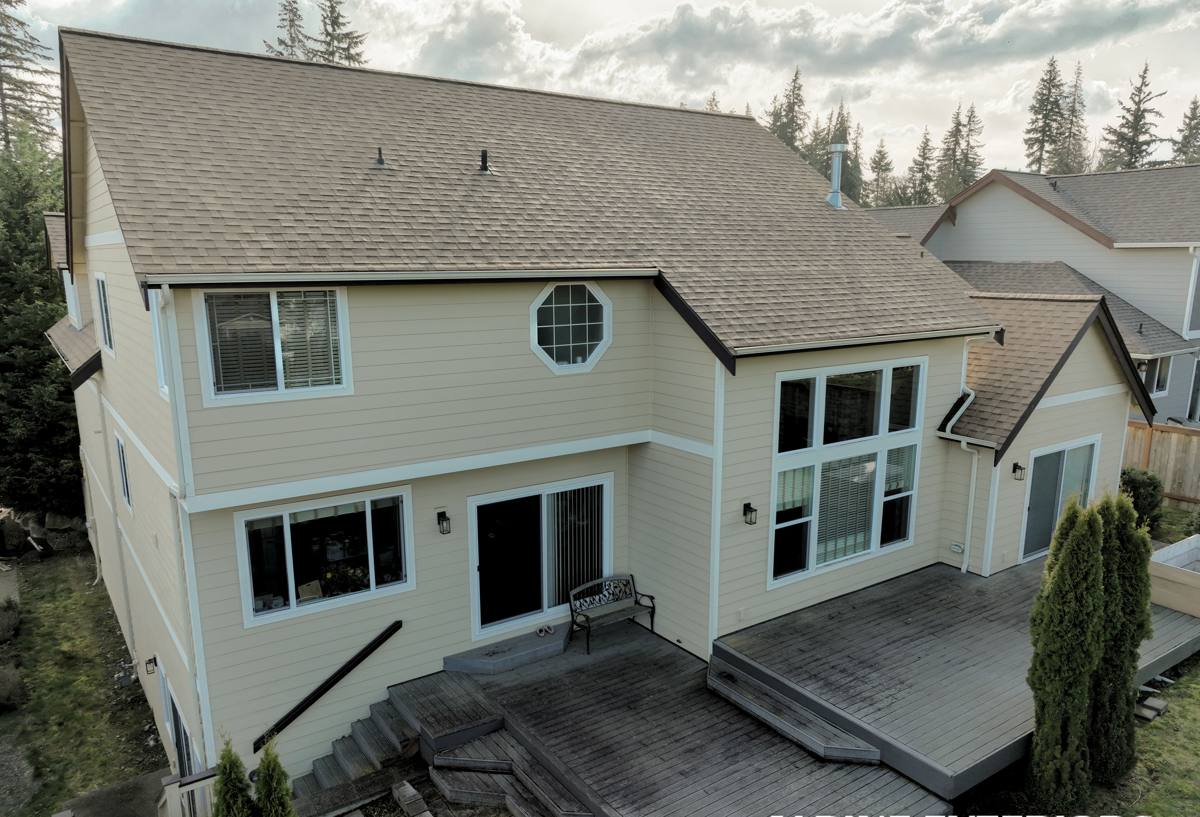
What Coastal Whatcom County Weather Does to Windows
It helps to understand the specific stresses at work before talking about installation methods or materials.
Salt Air
Even set back from the water, Nooksack gets salt-carrying wind off the Strait, especially during winter storms. Salt accelerates corrosion on metal window hardware, fasteners, and cladding, and it can degrade certain sealants faster than manufacturers' standard warranty testing accounts for. Over time, salt exposure is one of the biggest reasons window hardware seizes up or corrodes years before it should.
Driving Rain
Rain in this region rarely falls straight down. Wind off the water pushes it sideways into wall assemblies and window openings, which is exactly the condition that exposes a poorly flashed installation. A window that would be fine in a calmer climate can leak here within a season or two if the flashing and drainage plane weren't done correctly.
Moss and Sustained Moisture
Long wet seasons mean moss and algae get a foothold anywhere moisture lingers — on sills, in corners, along trim. Beyond being unsightly, sustained moisture against wood trim or an improperly sealed frame is a slow path to rot. Once moisture gets behind a window frame in this climate, it often doesn't fully dry out before the next rain arrives.
Signs a Nooksack Home Needs Window Attention
Homeowners in this area usually notice one or more of these before calling us:
- Visible moss, algae, or dark staining building up on sills or lower trim
- Fogging or condensation between panes on double- or triple-glazed units, meaning the seal has failed
- Soft or spongy wood around the frame or sill when pressed
- Drafts or a noticeable temperature difference near the window on windy days
- Difficulty opening, closing, or locking — often from swollen frames or corroded hardware
- Visible daylight or gaps around the frame from outside
- Paint or finish peeling specifically around the window, not the rest of the wall
- Water stains on interior drywall or trim below or beside the window
Any one of these on its own might just need a repair. Several together, especially on windows original to the house, usually points to a replacement being the more sensible long-term move.
What a Correct Installation Actually Involves
The window unit itself is only part of the job. In this climate, the flashing and sealing details around it matter as much or more than the window brand.
Removal and Opening Prep
Once the old window is out, we inspect the rough opening for rot, water damage, or prior flashing mistakes before anything new goes in. Installing a new window into a compromised opening just hides the problem behind new trim — it doesn't fix it.
Flashing and Water Management
This is the step that separates a window that lasts from one that leaks. Proper flashing creates a shingled, gravity-fed path so any water that gets behind the siding or trim drains back out rather than pooling at the sill or working into the wall cavity. Given how much driving rain this area sees, we don't treat this as optional or generic — sill pans and properly lapped flashing tape are standard on every installation we do.
Sealing and Insulation
Low-expansion foam or backer rod and sealant around the frame perimeter closes air gaps without bowing the frame out of square. Exterior sealant joints get chosen for adhesion and flexibility in wide temperature and moisture swings, not just lowest cost.
Hardware and Finish
Corrosion-resistant fasteners and hardware matter more here than in drier inland climates. We also make sure trim and caulking lines are finished cleanly, since sloppy exterior sealant is often where the next moss patch or leak starts.
Full-Frame Replacement vs. Insert Windows
One of the first decisions on a window project is whether to do a full-frame replacement or an insert (pocket) installation into the existing frame. Both have a place, but the right call depends on the condition of what's already there.
| Factor | Insert (Pocket) Window | Full-Frame Replacement |
|---|---|---|
| Existing frame condition | Requires a sound, square, dry frame | Works even if the old frame has rot or damage |
| Access to flashing | Limited — relies on existing flashing | Full access to redo flashing and sill pan correctly |
| Best fit for this climate | Only when the existing frame is verified sound | Preferred whenever there's any doubt about water history |
| Labor and disruption | Faster, less exterior/interior disturbance | More involved, but resets the whole opening |
| Glass area | Slightly reduced due to nesting inside old frame | Full original opening size retained |
Given how often we find hidden moisture damage in older frames in this area, we're conservative about recommending inserts unless we can confirm the existing frame and flashing are genuinely sound. When in doubt, a full-frame replacement costs more upfront but doesn't leave a water problem sealed up behind new trim.
Choosing Window Materials for This Climate
Material choice affects how well a window holds up to salt air and sustained moisture over the years. There's no single right answer for every home, but the trade-offs are worth understanding.
| Material | Strengths in This Climate | Trade-offs |
|---|---|---|
| Vinyl | Won't rot, resists moisture well, no repainting needed, good value | Limited color flexibility; quality varies a lot between manufacturers |
| Fiberglass | Very stable, resists warping, holds paint well, strong against salt corrosion on hardware side | Higher upfront cost than vinyl |
| Wood / Wood-Clad | Classic appearance, good insulator | Exposed wood needs consistent maintenance in a wet, salty climate; higher risk of rot if finish is neglected |
| Aluminum | Strong, slim sightlines | Poor insulator and prone to condensation; hardware needs corrosion-resistant coatings near salt air |
For most Nooksack-area homes, we steer homeowners toward vinyl or fiberglass for the exposure this climate delivers — both hold up to salt and rain with minimal upkeep. We'll still install wood or wood-clad windows when that's what a homeowner wants for the look, but we're upfront that they'll need more consistent maintenance out here than they would in a drier part of the state.
What Drives the Cost
Every home is different, so we don't quote sight unseen, but these are the main factors that move the price up or down on a window project in this area:
| Factor | Effect on Cost |
|---|---|
| Full-frame vs. insert installation | Full-frame costs more but is often necessary here due to hidden moisture damage |
| Window material (vinyl, fiberglass, wood) | Fiberglass and wood typically cost more than vinyl |
| Number and size of openings | More or larger windows increase labor and material cost |
| Existing rot or framing repair | Hidden damage found during removal adds cost, but skipping the repair isn't a real option |
| Access and site conditions | Second-story or hard-to-access windows take more time |
| Trim and exterior finish work | Matching existing trim profiles or repainting adds to the scope |
Whole-house replacements typically run into the thousands of dollars per window installed, with wide variation based on the factors above — we'll give you real numbers for your home after a walk-through, not a generic online estimate.
Our Process, Start to Finish
- Walk-through and assessment — we inspect existing windows, frames, and any signs of moisture or rot before recommending anything.
- Honest recommendation — insert vs. full-frame, material options, and a clear explanation of why, based on what we find at your home.
- Written estimate — itemized so you know what you're paying for, with no surprise add-ons sprung on you mid-job.
- Careful removal — old units come out cleanly, and we inspect the opening before anything new goes in.
- Correct flashing and sealing — sill pans, lapped flashing, and appropriate sealants sized for this climate's rain and salt exposure.
- New window installation — set plumb, level, and square, with proper shimming and fastening.
- Interior and exterior finish — trim, caulking, and touch-up work done to a clean, weathertight standard.
- Final walkthrough — we check operation, seals, and finish with you before calling the job done.
Why a Local Crew Matters for Nooksack Homes
Window installation isn't a one-size-fits-all trade. A crew that mostly works drier inland climates can do a technically fine installation that still fails here within a few years, simply because they didn't account for how much water this region throws at a house or how salt air treats hardware and sealants over time. We work Birch Bay and the surrounding Whatcom County communities, including Nooksack, regularly enough to know which details actually matter locally — which flashing approaches hold up, which sealants perform over multiple wet seasons, and which materials are worth the extra cost out here versus which ones aren't.
That local track record also means we're not guessing about how a house in this area typically ages. We've seen what happens to window installations that skip proper flashing, and we build every job to avoid repeating those same failures on your home.
Get a Free, No-Pressure Estimate
If your windows in the Nooksack area are showing their age — drafts, fogged glass, moss buildup, or stiff hardware — it's worth having a local crew take a look before small issues turn into structural repairs. Use the form below to request a free estimate. We'll walk the property, give you a straight assessment of what's actually needed, and answer your questions without any pressure to sign on the spot.