 Birch Bay Siding
 Windows in Cottonwood Beach Do a Harder Job Than Windows Inland
A window a few miles inland deals with rain and sun. A window in Cottonwood Beach deals with all of that plus salt-laden air coming off Birch Bay, wind-driven rain that hits siding and glazing at an angle instead of straight down, and a moss and mildew season that can stretch for months in a wet Whatcom County winter. None of that means a window installation here needs to be exotic or overbuilt. It means the details that get skipped on an easy inland job — flashing sequence, sealant choice, frame material, drainage at the sill — are exactly the details that determine whether a Cottonwood Beach window still looks and performs well in ten years or starts showing problems in three.
This page is about window installation specifically for homes in and around Cottonwood Beach. If you're comparing options for a full replacement, a partial upgrade after storm damage, or new windows on an addition, the goal here is to give you a straight, honest picture of what the job actually involves in this environment before you get quotes.
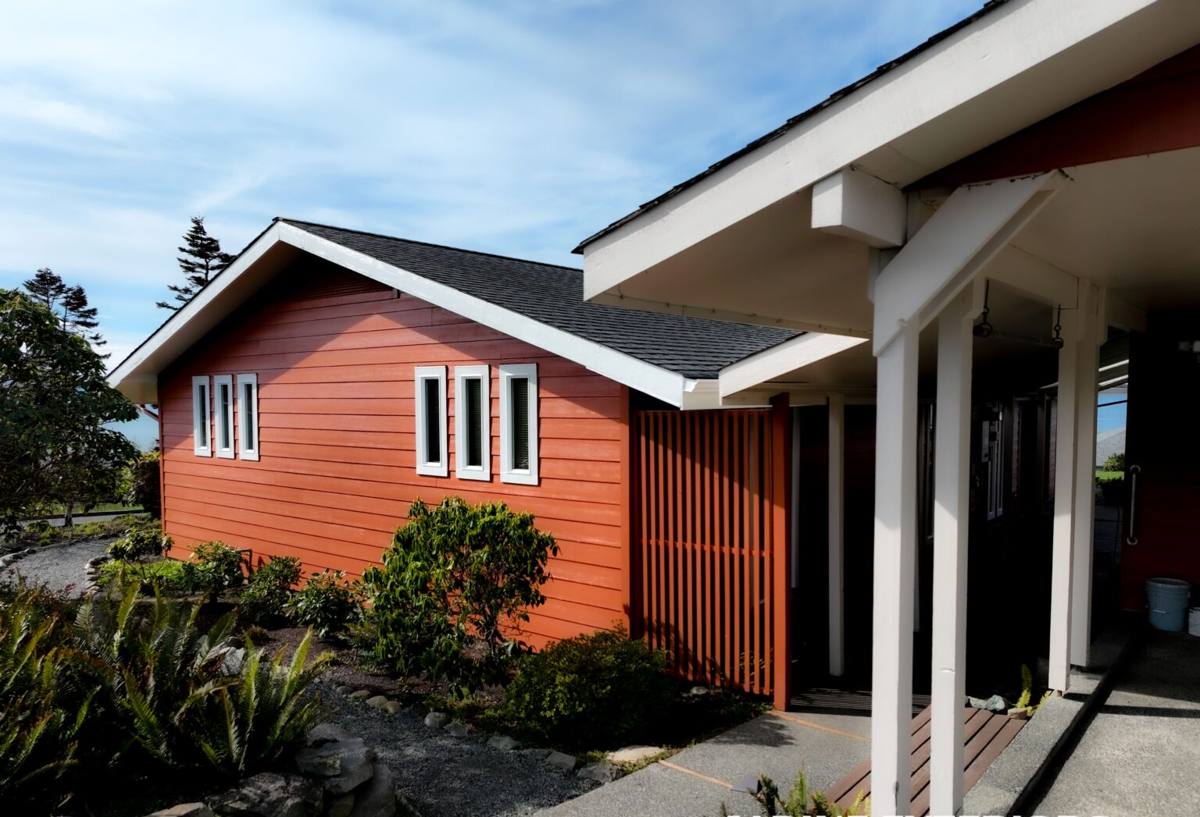
What Salt Air, Rain, and Moss Actually Do to a Window Over Time
It helps to understand the specific ways coastal exposure wears down a window, because it explains almost every recommendation on this page.
Salt Air and Metal Components
Salt in the air accelerates corrosion on anything metal — hinges, cranks, screen frames, and especially lower-grade aluminum components. Over years, that corrosion can make windows harder to open and close, and it can attack fasteners that are holding the window frame itself in place. This is why hardware quality and metal type matter more here than they would on a house set back from the water.
Driving Rain and Water Intrusion
Wind off the bay pushes rain sideways, not just down. That means water finds its way into gaps and seams that would stay dry in calmer conditions. If flashing, sill pans, and sealant weren't installed correctly the first time, driving rain is what eventually finds that mistake — often as a soft spot in the wall, a stained sill, or trim that stays damp long after the rain stops.
Moss, Mildew, and Prolonged Dampness
A long moss season means more days where wood trim, sills, and the areas immediately around a window stay damp instead of drying out between rains. Untreated or poorly sealed wood components are especially vulnerable — moss and mildew growth on and around a window isn't just cosmetic, it's a sign that moisture is sitting somewhere it shouldn't be, which shortens the life of caulking, wood trim, and eventually the window frame itself.
Signs a Cottonwood Beach Home May Need New Windows
Not every drafty window needs full replacement, but certain signs point specifically to coastal wear and tear rather than ordinary age. Look for:
- Visible corrosion or pitting on hinges, cranks, or window hardware
- Wood sills or trim that feel soft, spongy, or stay damp days after rain
- Moss or dark mildew staining concentrated around window frames rather than elsewhere on the siding
- Fogging or moisture trapped between panes of double-pane glass, which means the seal has failed
- Windows that are noticeably harder to open, close, or lock than they used to be
- Noticeable cold drafts or air movement felt near the frame on windy days
- Peeling paint or bubbling on interior sills or trim near the window
- Visible gaps between the window frame and the surrounding wall or trim
Any one of these on its own might just need a repair or a resealing. Several of them together, especially on windows facing the water or prevailing wind, usually mean it's time to talk about replacement.
Choosing the Right Window Material for a Marine Environment
Every window material has tradeoffs. In a salt-air, high-moisture environment like Cottonwood Beach, those tradeoffs matter more than they would somewhere drier and further from the water.
| Material | Corrosion / Moisture Resistance | Maintenance | Notes for This Area |
|---|---|---|---|
| Vinyl | Good — won't rust or corrode | Low, occasional cleaning | Solid, budget-friendly choice; quality varies a lot between manufacturers, so frame construction matters |
| Fiberglass | Excellent — very stable in wet, salty conditions | Low | Higher upfront cost, but holds up well against expansion, contraction, and coastal weathering over time |
| Wood-clad | Depends on cladding quality; wood core is vulnerable if the seal fails | Higher, needs monitoring | We're selective about where we recommend clad wood here, since a compromised seal invites the exact wood rot this climate causes |
| Aluminum | Weak against salt air unless marine-grade and properly finished | Moderate | Standard aluminum is one of the first things to show corrosion near the water; we avoid it for this reason |
We're upfront that we steer most Cottonwood Beach homeowners toward vinyl or fiberglass, not because other materials are bad products everywhere, but because they hold up more predictably in salt air and repeated wet-dry cycles without demanding ongoing upkeep. If you love the look of wood-clad windows, we'll talk through what it actually takes to protect that investment here rather than just selling you the window.
What a Correct Installation Actually Involves
The window itself is only part of the job. In this climate, how it's installed matters as much as what's installed.
Flashing and Water Management
Every opening needs a sill pan to catch and direct any water that gets past the window, plus flashing tape or membrane integrated with the house's weather-resistant barrier in the correct shingle-lap order — so water is always directed outward and downward, never trapped behind the siding. Skipping or rushing this step is the single most common cause of hidden water damage around windows, and it's invisible from the outside once the trim goes back on.
Sealing and Insulation
The gap between the window frame and the rough opening needs to be insulated and sealed with the right materials — not overfilled with expanding foam that can bow the frame, and not left with gaps that let air and moisture through. Exterior sealant needs to be a product rated for the joint size and movement it'll see, applied to clean, dry surfaces.
Fit and Level
A window that's out of square or not properly shimmed will bind, won't seal fully when closed, and puts uneven stress on the frame — all of which show up as problems years down the road, not on day one. Getting this right the first time is far cheaper than fixing it later.
Our Installation Process
- On-site assessment. We look at existing windows, framing condition, and any signs of past water intrusion before recommending anything.
- Material and product selection. We walk through the material comparison above based on your budget, the window's exposure, and how the home is used.
- Accurate measurement. Every opening gets measured individually — older Cottonwood Beach homes often have openings that aren't perfectly uniform.
- Removal and opening inspection. Once the old window is out, we check the rough opening and sheathing for any hidden rot or moisture damage before installing anything new.
- Sill pan, flashing, and WRB integration. This is the step described above, and it's non-negotiable regardless of window brand or price point.
- Setting, shimming, and fastening the window. Leveled, squared, and secured according to the manufacturer's fastening schedule.
- Insulating, sealing, and trim work. Interior and exterior finish work completed and sealed against the weather.
- Final walkthrough. We test operation, check the seal, and confirm everything is weathertight before we consider the job done.
Cost Factors for Cottonwood Beach Window Installation
We don't post fixed pricing because every home and every opening is different, but these are the factors that actually move the number:
| Factor | Impact on Cost |
|---|---|
| Window material (vinyl vs. fiberglass vs. wood-clad) | Moderate to high |
| Number of windows being replaced at once | High — per-window cost usually drops with volume |
| Window size and configuration (single, double-hung, sliders, custom shapes) | Moderate |
| Condition of the existing rough opening (any rot or damage found once old window is out) | Variable, sometimes significant |
| Accessibility (second story, tight side yards, difficult approach) | Low to moderate |
| Interior and exterior trim work required | Moderate |
| Old window disposal and site cleanup | Low |
As a very general guide, straightforward vinyl replacements tend to run from the low hundreds to around a thousand dollars per window installed, with fiberglass and larger or custom units running higher. The only way to get a real number is a walkthrough, since hidden rough-opening damage is common enough on older coastal homes that we won't guess a firm price sight unseen.
Permits and Local Considerations in Whatcom County
Window replacement projects in Washington are generally subject to state energy code requirements around glazing performance, and depending on the scope of work, a permit may be required through the local jurisdiction. We handle that conversation as part of the process rather than leaving you to sort it out — we'll tell you upfront if your project needs a permit and won't skip that step to save time. Beyond permitting, we also factor in the practical realities of building near open water: wind exposure on the bay-facing side of a home, and making sure new windows and their flashing are matched to the level of exposure that side of the house actually gets, not just the manufacturer's general specifications.
Why a Crew That Already Works Cottonwood Beach Matters
Window installation isn't a one-size-fits-all trade, and coastal Whatcom County isn't a one-size-fits-all climate. A crew that mostly works drier, inland areas may not think twice about flashing details or hardware corrosion that are routine considerations for us because we see their consequences regularly on homes exposed to Birch Bay's wind and salt air. Working in this specific area repeatedly also means we're familiar with the kinds of older construction and rough-opening conditions common to Cottonwood Beach homes, so there are fewer surprises mid-project — and when a hidden issue does turn up behind an old window, we know how to address it correctly rather than just covering it back up.
If you're weighing whether it's time to replace windows on a Cottonwood Beach home, or you want a straight opinion on whether a repair will hold or a full replacement makes more sense, we're happy to take a look. Reach out for a free, no-pressure estimate using the form below — we'll walk the exterior with you, answer questions honestly, and give you a real assessment before any work is scheduled.