 Birch Bay Siding
 Window Installation Built for Bellingham's Marine Climate
Bellingham and the surrounding Birch Bay area sit right where the Salish Sea meets Whatcom County's marine weather pattern — salt-laden air off the water, long stretches of driving rain in fall and winter, and a moss season that seems to run most of the year on shaded, north-facing walls. Windows here take a different kind of beating than windows in a dry inland climate. Vinyl gaskets and seals age faster in salt air. Wood-adjacent trim stays damp longer under moss and lichen growth. Wind-driven rain finds any gap in flashing that a drier climate would never expose. A window installation that looks fine on day one but wasn't detailed for this environment tends to show its problems within a few winters — fogged glass, soft trim, or water tracking down the interior wall during a hard southwesterly storm.
We install windows across Whatcom County with that reality built into the process from the start, not treated as an afterthought. That means flashing details sized for wind-driven rain, fasteners and hardware chosen to resist salt corrosion, and glass packages that keep up with Washington's energy code without fighting condensation in our damp winters.
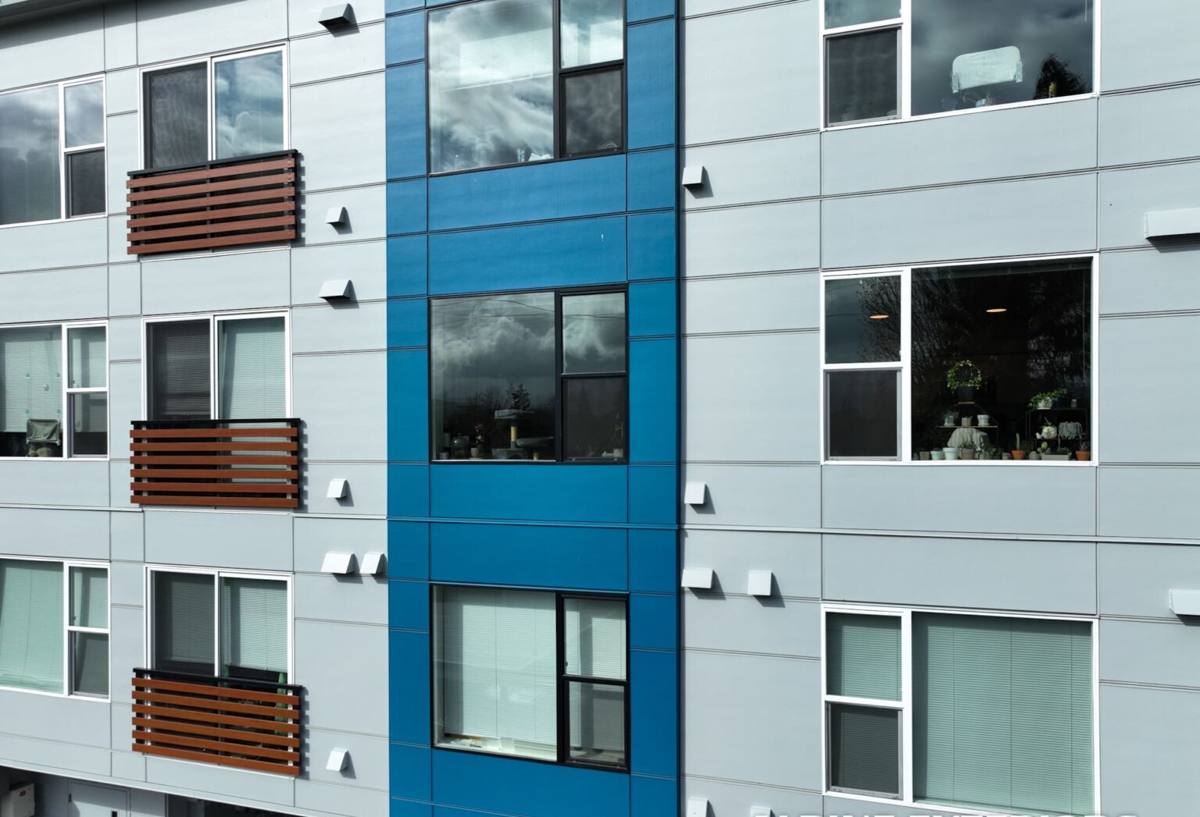
Signs a Bellingham Home Needs New Windows
Homeowners usually call us for one of a handful of reasons. Recognizing them early can save you drywall, trim, and framing repair down the line.
- Condensation or fogging between the glass panes — the seal has failed and the insulating gas is gone
- Persistent condensation on the inside of the glass even when the seal is fine, which usually points to a single-pane or poorly performing older window struggling with our humid winters
- Visible gaps, drafts, or a noticeable temperature difference near the window on a windy day
- Soft, discolored, or moss-covered trim and sill boards around the frame
- Windows that are difficult to open, close, or lock — frames can swell and warp with repeated wet-dry cycles
- Paint that keeps failing on the exterior casing no matter how often it's redone
Any one of these is worth a look. Several at once, especially on the same wall, usually means water has been getting behind the window for a while and it's worth checking the sheathing and framing while the window is out, not just swapping the unit.
What a Correct Window Installation Actually Involves
The window itself is often the easy part. The install details are what determine whether that window lasts 25 years or leaks in five. In a climate like ours, we pay particular attention to a few things that are easy to skip and hard to fix later.
Sill Pans and Flashing
Every opening should get a sloped sill pan that directs any water that gets past the window to the outside, not into the wall cavity. Flashing tape needs to be lapped correctly — always shingle-style, so water sheds down and out, layered with the weather-resistive barrier so nothing ever laps the wrong direction. On a wall exposed to driving rain off the water, this detail matters more than the brand of window going into the hole.
Sealants and Backer Rod
Gaps around the frame get backer rod and a quality exterior sealant rated for our temperature swings and UV exposure, not just a bead of caulk squeezed in at the end of the job. Interior air sealing matters too — a window that's sealed well on the outside but leaks air on the inside will still fog and feel drafty.
Fasteners and Hardware
Near salt air, standard fasteners corrode faster than people expect, sometimes staining siding or trim before the window itself shows any problem. We use corrosion-resistant fastening appropriate for coastal exposure, and we check hardware finishes for the same reason.
Insulation Around the Frame
The gap between the window frame and the rough opening needs to be filled with a low-expansion foam or fiberglass insulation — not packed so tight it bows the frame, and not left hollow, which creates a cold spot and a path for moisture-laden air to condense inside the wall.
Full-Frame Replacement vs. Insert Windows
One of the first decisions on any project is whether to do a full-frame (also called "new construction") replacement or an insert (pocket) replacement that fits inside the existing frame. Both have a place, and the right call usually depends on the condition of what's already there.
| Factor | Full-Frame Replacement | Insert Replacement |
|---|---|---|
| Best used when | Existing frame or sill shows rot, moss damage, or water intrusion | Existing frame is sound and square |
| Access to flashing and sheathing | Full access — can correct old flashing mistakes | Limited — works with what's already in place |
| Glass area | Can often be maximized to original opening size | Slightly reduced by the new frame nesting inside the old one |
| Labor and cost | More labor, higher cost | Faster install, lower cost |
| Good fit for coastal/wet exposures | Yes, especially where past water damage is suspected | Only if the existing frame has no hidden moisture history |
We'll tell you honestly which one your situation calls for. If a wall has a history of moss buildup or you can see staining below a window, we'd rather open it up and check the framing than install a new window over a problem that's still there.
Choosing Windows for a Whatcom County Climate
Vinyl, fiberglass, and wood-clad windows all have a place, and the right choice depends on your budget, your home's style, and how much exposure that particular wall gets.
- Vinyl — the most budget-friendly option and performs well when it's a quality product with welded (not mechanically fastened) corners, which hold up better against wind and rain infiltration over time
- Fiberglass — more dimensionally stable through temperature swings, holds paint well, and is a strong choice for larger openings or homes with more direct weather exposure
- Wood-clad — gives you a wood interior with a lower-maintenance exterior cladding, but any exposed end grain or cladding seam needs to be detailed carefully in a wet climate, since wood-clad units are less forgiving of installation shortcuts than vinyl or fiberglass
On glass, we spec low-E coatings and argon fill as the standard, and we make sure the U-factor meets Washington State Energy Code requirements for our climate zone. Beyond code minimums, a tighter U-factor pays off in a house that stays comfortable through Whatcom County's damp, windy winters and reduces the interior condensation problems that older single-pane and early double-pane windows are known for.
Our Window Installation Process
The steps don't change much from job to job, but the care at each one is what separates a window that performs for decades from one that needs attention again in a few years.
- On-site assessment of existing windows, framing, and any signs of past moisture intrusion
- Honest recommendation on full-frame vs. insert replacement, and on window material and glass package for that wall's exposure
- Careful removal of the old unit with inspection of the sheathing and framing before anything new goes in
- Sill pan and flashing installed and lapped correctly with the weather-resistive barrier
- New window set level, plumb, and square, then fastened with corrosion-resistant hardware
- Frame gap insulated, interior and exterior sealed, and exterior trim finished to match the home
- Final operation check — every window should open, close, and lock smoothly before we call the job done
Window Installation and Siding: Why Timing Matters
Because we're primarily a siding contractor, we see the two jobs together more than most window-only installers do. If your siding is aging and you're also due for new windows, doing them in the same project has real advantages: the wall gets opened up once instead of twice, flashing between the window and the new siding can be integrated properly from the start, and you avoid paying for new siding to be cut into and patched around an older window a year or two later. If your siding is in good shape and only the windows need attention, we install windows as a standalone job too — but we'll always flag it honestly if we see signs the siding or sheathing behind a window is part of the problem.
Why a Crew That Already Works Bellingham Matters
Window installation done right depends on understanding the specific conditions of the wall you're working on, and that's easier when it's not your first project in the area. We know how differently a west-facing wall exposed to Birch Bay's open water behaves compared to a sheltered wall on the same house, and we plan flashing and material choices accordingly. We also work around this region's rain patterns rather than fighting them — sealants and exterior finishing need dry conditions to cure properly, and a crew unfamiliar with local weather can end up rushing that step or working in marginal conditions. Being local also means we're reachable if a question comes up after the job is done, not a name in another county you have to track down.
If you're weighing new windows for a home in Bellingham, Birch Bay, or elsewhere in Whatcom County, we're happy to take a look and give you a straight assessment — no pressure, no inflated scope. Fill out the form below for a free estimate.