 Birch Bay Siding
 Why Terrell Creek Roofs Take a Different Kind of Beating
Terrell Creek sits close enough to the water that salt air is part of daily life, and that air doesn't just corrode gutters and flashing slowly over decades — it accelerates the breakdown of anything with exposed metal fasteners or thin galvanized coatings. Add in driving rain that comes sideways off Birch Bay during winter storms, and you get wind-driven water finding its way under shingles and around penetrations that would stay dry in a calmer inland climate. Whatcom County's moss season is also longer than most homeowners expect, often running from fall through spring wherever a roof stays shaded or doesn't get enough sun to dry out between rains. None of this means a roof is doomed — it means repairs here have to account for conditions that a generic roofing checklist doesn't cover.
We work on Birch Bay roofs regularly, and Terrell Creek homes show a fairly consistent pattern: moss buildup on north-facing slopes, flashing fatigue around chimneys and vents, and granule loss on older asphalt roofs that have taken more freeze-thaw and rain cycles than the same shingle would see in a drier region. Understanding that pattern is what separates a repair that actually holds from one that fails again in a year.
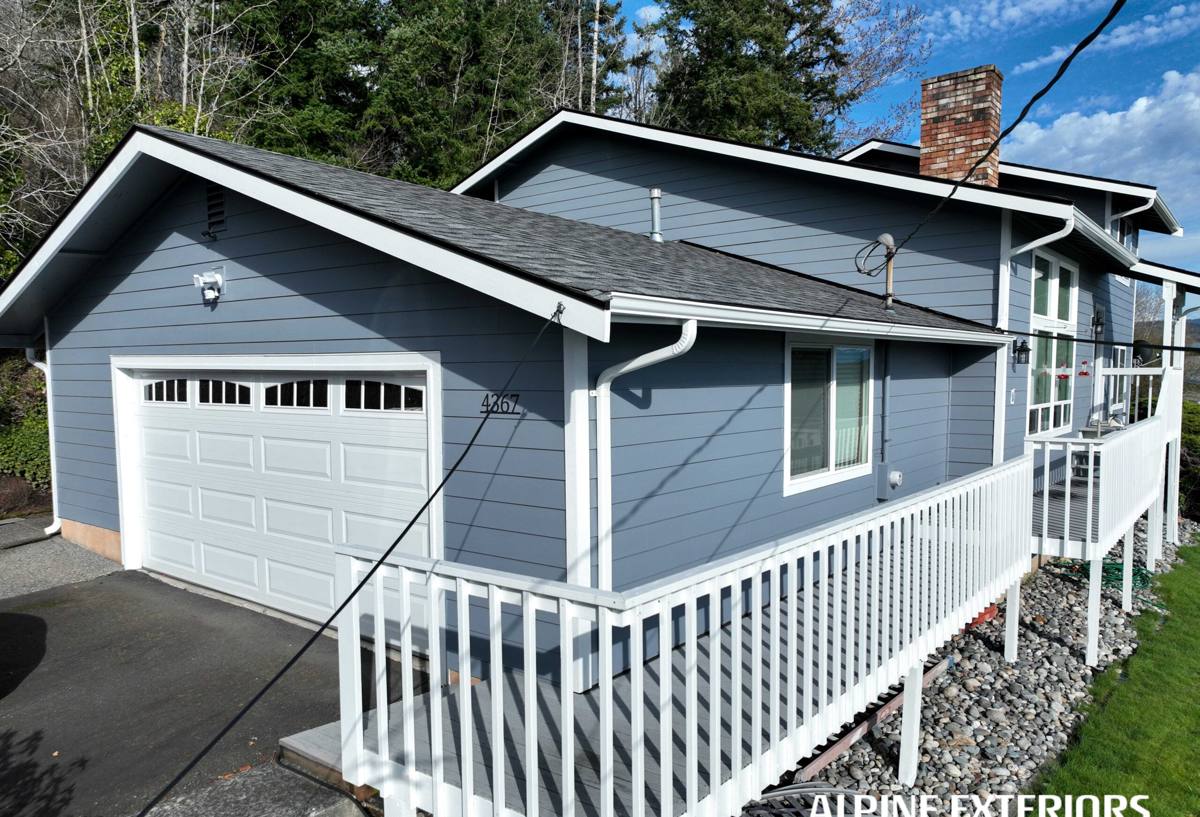
Signs Your Terrell Creek Roof Needs Repair, Not Just a Look
Most roof failures don't start as leaks — they start small and quiet, and by the time water is visible inside the house, the damage underneath is usually further along than the stain suggests. Here's what we tell Terrell Creek homeowners to watch for between inspections:
- Moss mats thick enough to lift shingle edges, not just surface discoloration
- Granules collecting in gutters or at downspout outlets
- Curling, cupping, or cracked shingles, especially on south- and west-facing slopes
- Rust streaks or soft spots around chimney, vent, and skylight flashing
- Dark ceiling stains, musty attic smell, or visible daylight through the roof deck
- Sagging or spongy spots when walking the roof or viewing from a ladder
- Gutters pulling away from the fascia, which lets water track behind the roof edge instead of off it
Any one of these is worth a look. Two or more together usually means the roof is past the point where a homeowner can safely assess it from the ground.
What a Correct Roof Repair Actually Involves
Diagnosing the Real Problem First
A repair that just covers the spot where water is showing up inside the house often misses the actual entry point, which can be several feet away depending on the roof's slope and how water travels under the shingles. Before we touch anything, we trace the leak back to its source — that means checking flashing, underlayment condition, nail patterns, and the shingle courses above the stain, not just patching where the ceiling looks worst.
Flashing and Penetrations Come First
The majority of roof leaks we find in this area don't come from the shingle field — they come from flashing around chimneys, plumbing vents, skylights, and roof-to-wall transitions. Salt air and constant moisture accelerate fastener corrosion at these points faster than on the open roof surface, so a repair that reseats and properly seals flashing often solves problems that a shingle-only patch never would.
Matching, Not Guessing
When a section needs replacing, we match shingle type, color, and exposure as closely as the existing roof allows, and we tie new material into the surrounding courses correctly rather than surface-nailing a patch on top. A repair that's structurally sound but visually obvious usually means shortcuts were taken underneath too.
| Situation | What's Involved | When It Makes Sense |
|---|---|---|
| Localized flashing or vent leak | Remove and reseat flashing, replace corroded fasteners, reseal properly | Roof and underlayment are otherwise sound; leak is isolated to one penetration |
| Section or slope replacement | Strip shingles on the affected slope, inspect and repair deck as needed, install new material tied into good sections | Damage is limited to one area but underlayment or deck needs attention |
| Storm or wind damage repair | Replace missing/lifted shingles, check surrounding fasteners, inspect deck for water intrusion | After a windstorm or heavy rain event with visible missing material |
| Full roof replacement | Complete tear-off, deck inspection and repair, new underlayment and roofing system | Repairs are becoming frequent, roof is near the end of its service life, or damage is widespread |
Moss, Algae, and the Maintenance Cycle
Moss doesn't just sit on top of shingles — its roots work into the granule layer and gradually lift shingle edges, which is exactly where wind-driven rain gets underneath. In Terrell Creek's shaded, moisture-heavy microclimate, moss can re-establish within a season if it's only scraped off the surface. We remove moss carefully rather than power-washing it, since high-pressure washing strips granules and shortens the shingle's remaining life faster than the moss itself would. Where it makes sense, we'll also talk through zinc or copper strip installation near the ridge, which lets rainwater carry trace metal down the roof slope and discourages regrowth without chemical treatment on every visit.
This is a case where the cheapest short-term fix — a quick pressure wash — often costs more over a few years than a slower, correct removal paired with a low-maintenance prevention step.
Our Terrell Creek Roof Repair Process
- On-site inspection. We walk the roof (or inspect from ladder access where pitch or condition doesn't allow foot traffic) and check the attic from inside where accessible.
- Written diagnosis. You get a plain explanation of what's actually failing and why — not just "it needs repair."
- Transparent estimate. Scope, materials, and cost are laid out before any work starts, including whether a repair or a larger fix is the honest recommendation.
- The repair itself. Flashing, decking, underlayment, and shingle work done in the correct order so each layer actually protects the one below it.
- Site cleanup. Magnetic sweep for stray fasteners and full debris removal before we consider the job done.
- Final walkthrough. We show you what was done and what to watch for going forward.
Why a Crew That Already Works Terrell Creek Matters
Roofing in Whatcom County isn't identical from neighborhood to neighborhood. A crew that regularly works Birch Bay and Terrell Creek already knows which roof ages and pitches are common in the area, how shaded lots tend to hold moisture longer, and what flashing details typically need attention first on homes exposed to salt air off the water. That familiarity shortens the diagnosis step and reduces the chance of a repair that solves the visible symptom but misses the underlying cause.
Local presence also matters after a storm. When wind or heavy rain causes damage, a crew based nearby can respond faster than one traveling in from outside the county, and a tarped roof left too long is its own source of secondary damage.
Repair Materials We Use and Why
We use corrosion-resistant fasteners and flashing metal rated for coastal exposure rather than the minimum-grade materials that cut initial cost but fail faster in salt air. For sealants around flashing and penetrations, we use products rated for sustained UV and moisture exposure, not general-purpose caulk that hardens and cracks within a season or two. These choices cost a little more upfront but are the difference between a repair that lasts and one you're paying to redo. When a full section replacement is warranted, we'll walk you through underlayment options — including synthetic underlayments that hold up better than older felt products under the amount of rain this area sees — so you understand the trade-offs rather than just picking based on price.
Protecting the Repair After We Leave
A good repair extends the life of the roof, but a few habits on your end help it go the distance:
- Keep gutters and downspouts clear, especially heading into fall when leaves and needles build up fast
- Trim back overhanging branches that keep roof sections shaded and slow to dry
- Walk the yard after major windstorms and look for granules or debris near downspout outlets
- Schedule a moss check every year or two rather than waiting until it's visibly thick
- Address small leaks immediately — attic and deck damage compounds quickly in a wet climate
If you're seeing moss buildup, a stain on the ceiling, or you just want an honest read on where your roof stands, we're happy to take a look. Estimates are free and there's no pressure to move forward — just a clear picture of what your Terrell Creek home actually needs.